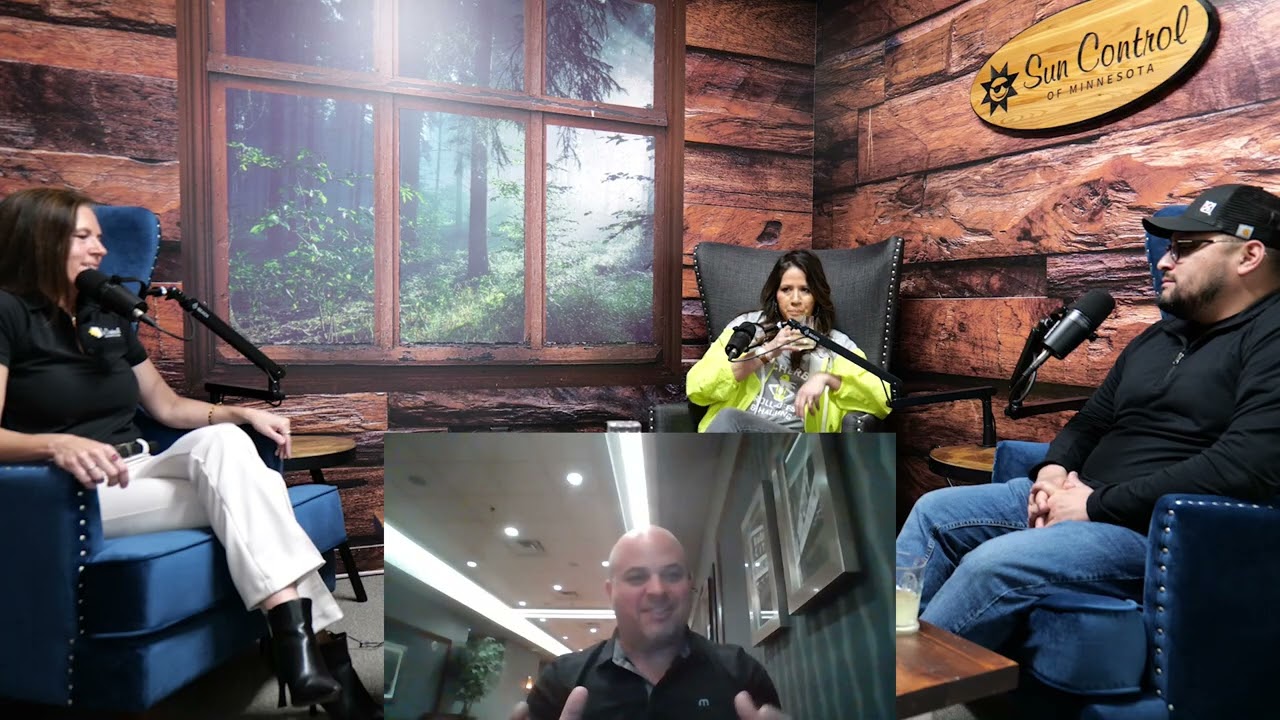
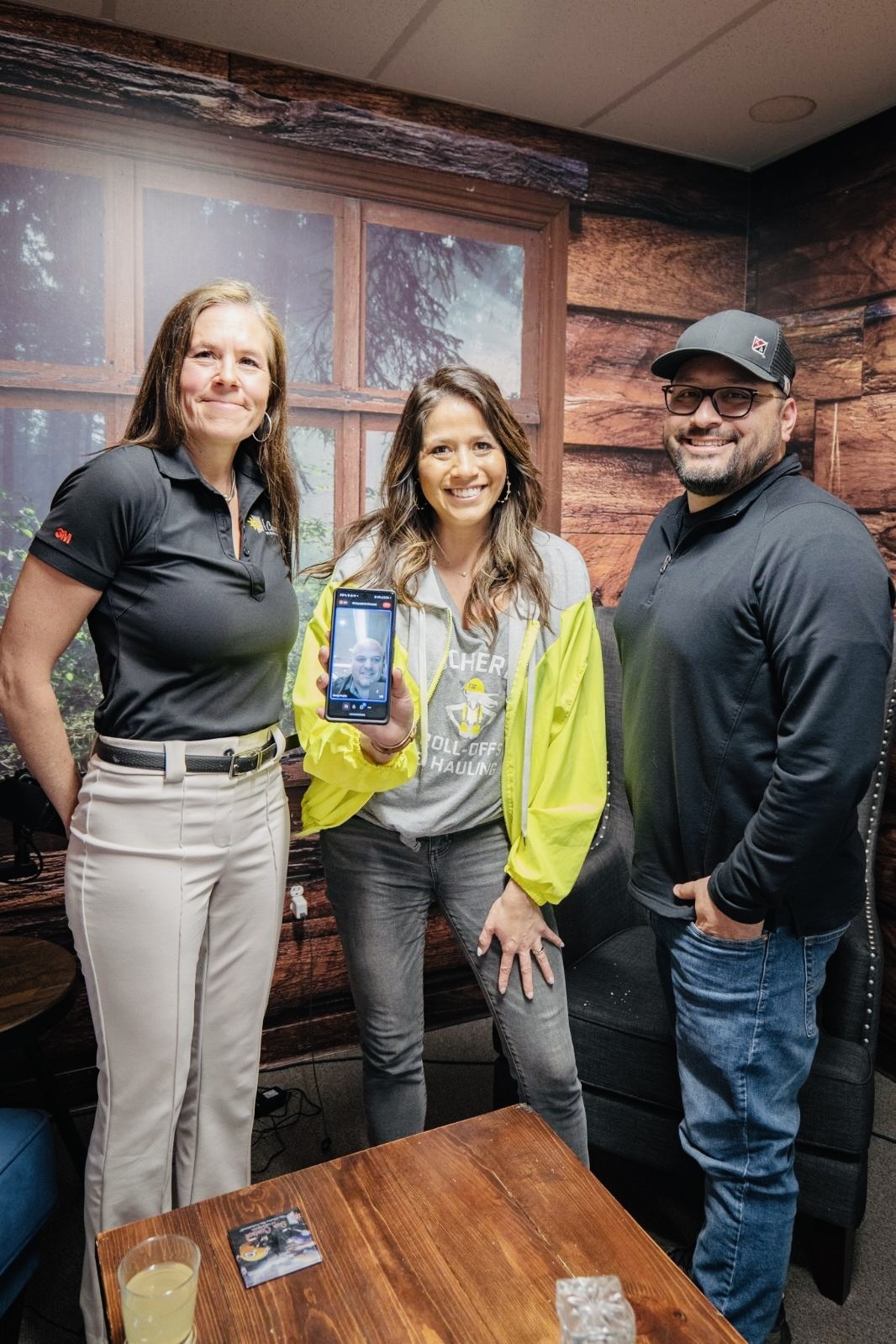
Hello everyone. I'm Karissa with Shining Light on Minnesota. I have some super phenomenal guests here today which I'm super excited to have. We have Missy with T- Scherber. We have John with Kraus Anderson and we have George with Kraus Anderson. Welcome. Thank you so much, Karissa, for having us. Exciting opportunity. You bet. Super excited to have you all here. Let's maybe kind of get the ball rolling. Missy, I've heard your story multiple times on different platforms and heard you speak and kind of tell your history. Why don't you let all the viewers kind of know a little bit about you and where you came from? Sure. Um, my name is Missy Scherber alongside my husband um own T-shirt Demolition Excavating and Rolloffs were a full service specialty contractor basically in waste management and dirt. Um, I did not come from a construction background with the exception of my grandfather um Billy Guerrero owned a trucking company. So, as a child, I have memories of him driving down the road and bringing us ice cream and spending time in his shop and never really thought of a career to be honest with you in trucking and met Trevor who drove a 1999 Peterbuilt and I thought that's the guy for me. Just kidding. He had a dumpster company at the time and um to be honest with you, I had my dream job at a nonprofit. I was a major donor officer for uh programs that I really cared about. Um, and when I met Trevor, you know, he had the dumpster business and he had kind of set it aside and said, "I'm going to start excavating and get into dirt." And I said, "What are you going to do with that dumpster company?" And he said, "I'm out. I mean, it's it's a tough line of business and I'd rather be in dirt." I said, "Well, give it to me." Um, you know that old song, give it to me, baby. So, I said, "You know what? Why don't you let me apply my skills uh and just give it a try?" and he said, "Sure, but you're not getting any training for me cuz I'll be in the field." So, I literally went to the School of Hard Knocks to take over the dumpster company 10 years ago. This is my 10th year in business as a woman in construction, which is really exciting. Um, we started at 20 trucks or 20 dumpsters, one truck. As of this month, we just purchased two new trucks from Ree Kenworth, which is a womanowned dealer. Just little side plug for her, Carrie Ree. Um, so we will be at five trucks, 150 dumpsters. So it's been an amazing journey and honestly like I've learned a lot of tough lessons along the road, but been able to strategically partner with really amazing customers and professional services that have just had our back and linked arms with us along the way as we've grown. Um, so I'm really excited to just share our story and, you know, share the platform, the mic today with one of those partners, you know, one of those companies and customers that really link arms with us and say, how can we do better in this industry and do business together and just build the greater good of the construction industry. Amazing. That's it's a great story and I know I've heard it multiple times and it still kind of gives me the chills. Just seeing from the ground up like what you've done in the industry is is fun. like as a small business owner, it's it's hard to be known and it's hard to make those connections. Very hard really just touch base. So, John, let's talk a little bit on your end. What got you into the construction industry and now you're with the giant Kraus Anderson? Let's let's hear a little bit about that. Yeah, sure. I my first job uh about a week after 8th grade was at a family-owned hardware store and carried that through all the way going into college. and it kind of just sparked the interest um you know personal hobbies in art and travel and doing different things and maybe not always sitting in an office setting all the time kind of led my you know path into construction and construction management. um have been in it, you know, now ever since. Uh worked and lived on the West Coast. Um spent some time in another Midwest city um here at Kraus Anderson, you know, contin continuing to go go and grow and yeah, that's that's really probably the best highle capture I could say. Perfect. What about you, George? You've had a strong background. Sure. So, um I've been in the industry for about I think probably 22 23 years. Um, and you know, stretches have spanned. I've traveled across the country. Um, at one point owned my own, you know, small minority business, uh, with a partner. Um, you know, and landed at Kraus. And you know, along the way before I came to Cross, I hooked up with uh Missy and Trevor, and it's just been a great relationship, and I'm super excited to to get in the saddle with them in the CPP program to see what we can't do in the market. Amazing. Why don't you tell us a little bit about what the CPP program is for the viewers that don't know? Sure. So, um it's the con the St. Paul, City of St. calls uh construction partnering program um led by Barb Blau um and it's a program that I've been involved with again for about the past five or 6 years um traditionally um what you do is you partner with a like type of of contractor right so if you're a general contractor that does carpentry and such you're teaming up with those types of folks um or if you're an earth worker you know utilities earth worker type contractor, you want to team up with those, right? That's traditionally how we've done it. And uh we're doing it a little bit different, right? We're at GC teaming up with an earthwork and dumpster and utility contractor um because we think there could be some great benefit out of getting outside the box in that relationship. Outstanding. Uh John, why don't you tell us a little bit about Kraus Anderson's history? Sure. Yeah, Kraus Anderson Construction Company is a family-owned business. It's been in operation for over 125 years. Um, primarily based in Minneapolis with regional upper Midwest offices, um, presence in the Southwest. Uh, Kraus has worked in almost every single state. Uh, that includes Hawaii, not quite yet to Alaska. Um, we have the capabilities today to work in every single state. um lot of longl lasting relationships, partnerships. There's a client base, you know, that goes through several decades. I know a client of ours were approaching the uh the fifth decade into doing work with. Uh Kraus Anderson, you know, has a couple different arms of the company. You know, George and I represent the the general contracting side. Um and so we really operate in a wide variety of markets and sector groups. um K12, housing, commercial, aviation, um just to name a few, you know, and uh really really diverse company and our project approach and and collaborating and you know, I think Kraus, again, like I've said, really really focuses on relationships and being involved in the community and really leading with that with that foot, right? Bringing that foot forward. So, perfect. So Missy, hearing about the CPP program, which you know about and their partnerships and how those work, how do those benefit you and how how do you get into those? Well, I think when you, you know, are in business, there's two types of small businesses. Either you're in business for the lifestyle. You're in the lifestyle business. You want to stay small, you know, you know, build a team of maybe five, six people and and you always maintain that. And you know, for us going into business, we knew from the get- go, like we want to build a legacy company, and we want to build a company that outlasts us and a business that not just our children want to work for, but that our staff's children want to be a part of. And so to build a legacy that deep and that wide, we knew, you know, we have to lean on those that have gone before you and learn and and really pave that path. And so I've always been inspired by generational companies and just been the one to walk in the room and say, "Hey, could I set up a lunch with you? Could I lean on your wisdom for one lunch? Um, for one coffee." And so I've always kind of been that door knocker for mentorship and for, you know, just leaning on the wisdom of others. And through that persistence over the years, I've just built some amazing relationships that have led me to actual formal opportunities like this where, you know, Kraus Anderson has a history and a legacy, not just as a company, but as of doing things for small businesses that make an impact. And knowing that history, it's like, hey, what what do we think about this? And really, George was, you know, kind of ideating how we could approach the CPP partnership differently. And it was really exciting for me because yes, I'm an Earth mover and I have a dumpster company and they're a general contractor, but at the end of the day, like business is business and relationships are relationships. and Kraus Anderson has amazing systems and processes that have helped them maintain and grow this incredible legacy and these long-standing relationships. So to formally enter into a partnership like can I learn from that? What can we take away from that? And to have Kraus Anderson open their doors and say, "Hey, how can we teach you in a way that benefits you?" Um even if it's from HR, accounting, or your proposals, like what can we do? And it's pretty humbling as a small business to to have someone that big say, "Hey, we've done this. Can we help?" Um, but also to say, "What can we learn from you? What would make your job easier on getting on our job sites? How do how do we make it easier for small and mid-size businesses to engage with a company like Kraus Anderson?" So, it's really been like a mutual exchange of information and experiences and you know to answer the question cuz people ask me a lot how do you how do you get involved and connected with companies like this and how do you get in in a formal mentor type of program with someone like Charles Anderson and it's like you show up persistency every day and you ask and you watch and you see and you admire and and you say, "Wow, how can I?" And you get curious. "Wow, can I learn from that?" And this industry is filled with a lot of good people like John and George who are like, "Yeah, yeah, absolutely. How can we open our doors and partner with you?" Because we've all needed those moments of opportunity in the construction industry. And the more we share that experience with each other, the better we'll be all around. Perfect. George, what do you feel that you strive for when you do a lot of these mentorships or what do you see as a whole Kraus Anderson wise? what what benefits from you and what where do you guys learn? So, you're a little muffled, but I I think I get the premise of what the the question you're asking here. Um, which is sort of like what we're looking for in the relationship, how it works, and is that sort of where we're going here? Yes. Um, so here's the deal. Like, this is a business, right? We're here to make money, right? And at the same time, if we can elevate um small, minority, female, or disadvantaged businesses and everybody can can not just make money but uh elevate each other in the process. That's the win-win, right? So in this relationship um I focused not just um when when we were recording um T Scherber what what I concentrated on was okay every time or many times when I've seen these relationships happen what happens is you know as the mentor you feel like you're giving giving giving but what are we getting back right and and sometimes it's it's intangible and it's some of these things that you can help with, right? Cuz that's what it's supposed to be. But if there's a business case in it, like why wouldn't we do that? And so often we team up with with again these like partners that the business case is not as compelling as if you do it with a non-like business that you can still help. And what I mean, I can I can sort of simplify it here. If I team up with a carpentry contractor in the CPP program, well, we have a carpentry division. So, what happens is I then have to start carving out pieces of our carpentry and giving away our profits at the same time you're helping a cause, right? But what if you brought in a partner and this is what we concentrate on like T Scherber who could give you amazing service with dumpsters who could bring work to the table with concrete cutting and cing where we now are getting work from them and then that we reciprocally right is that a word I don't know if reciprocally is a word reciprocate right with um projects for them, advantages to them, uh, consultation, um, business-wise in areas that they need help in. I mean, we've opened up our doors so much that we're we're, uh, bringing them into our our what we call KU, right, Kraus Anderson University, where now T. Scherber can come in and learn some leadership skills at the same tables that our folks are. So, it's it's really interconnecting this thing where when I present it to a superintendent or project manager or a vice president, president of construction, they're like, "This is a no-brainer. We all profit and we all do well and we get to elevate in the process." And that's really really what we concentrate on. So, where the CPP program is normally a pure mentorship from a like contractor, that's where we want to get outside the box. And I think that's super unique from our perspective because it yes, like we we want to be mentored and we want to learn, but also we've been in business for 10 plus years. So we're at that point where it's like we want to grow, we want to do work, we you know, and so for George to be able to see it outside of like, oh, let us help you, right? And I think sometimes that's the struggle with qualified um small businesses in these type of formal relationships is you almost feel like the smaller man, right? Like, oh yes, please help me. And then the big guys saying, "Let me help you." And then, you know, you're just helping each other and are you really growing? Are you growing each other's business objectives? Are you growing as leaders? And that's why I really appreciated the way George wanted to look at this because it's like, hey, you're a qualified business. we're a legacy company. Th those are your goals. These are our business objectives. Like let's support each other. And the elevation is just like a natural byproduct of that. And it just felt like we were on the same playing field. Obviously, we're not in the sense that KA has been in business for so long. But we were seen at the table as just like a business to do business with, equal partner, an equal partner. And I was like, this is freaking amazing. Like yes, it makes you want to really engage and put your whole heart and passion into something when it feels like a level playing field and that's the buzz word in our industry, but that's the real the realness of a 120-year contractor and a 10-year contractor sitting at the table saying, "Let's do things together on a level playing field." That's like a that's a game changer for a small business. I think a lot of times what people don't see in the mentor program and from what I've seen too is a lot of times it's a lot of give. Yes. give, give, give. And people always asking for more and it's not so much what you get back in return. So it's great for your soul saying, hey, you know, I'm helping you succeed. Yes. But on the same end, I want some reciprocation. Yes. The mutual contribution is important. What do you take from all of it, John? You know, I I I really am appreciative, you know, of being with Kraus Anderson and I I can't remember who said it, but you know, that saying, we all do better when we all do better. Absolutely. Right. And you know, George knew T. Scherber previously. I I know T. Scherber at my time at Kraus Anderson. And it really felt organic. You know, Kraus has some functions throughout the year where we really want to collaborate with trade partners. And there was, you know, I just went up went up to the table and I said, "Hey, this is who I am." Trevor was great. I was thinking, you know, hm, I think I got something. You know, and it was a little over a year ago. we joined in on a pursuit together. Um the project ultimately didn't end up moving forward, but that was really kind of the start of some relationship building and some just organic momentum. Um and then last summer I was involved in a project and their team helped with the rolloffs. Um outstanding service. the superintendent was over the moon with what with what was what he got and I hope what T Scherber got, you know, and uh so that that relationship, you know, kept going and then, you know, kind of kept in touch with Trevor on some future pursuits and then um some other things came up this spring and I think it was a really great learning experience both for myself and for Trevor and for you know um a client of ours and even though maybe T Scherber wasn't awarded the contract contract, right? It still was that learning experience and I think that's that's also what this is all about, you know, and within the CPP program, you know, networking, just getting to know people and, you know, going back to that statement, we all do better when we all do better, you know, and so then as kind of this all was happening in the last couple months, right? George said, "Hey, John, uh, what do you think of this?" And I said, "Well, George, we're all really busy. Can we can we do this together? You know, kind of. So, George and I really operate as co-leasons within Kraus Anderson and we've got some great, you know, metrics that both T-shirt and Kraus are following to kind of keep us all accountable, right? And we're we're making introductions. We're, you know, trying to open up the doors of of opportunity, right? or you know George and I may know some things that are going on and even real recently kind of for this coming summer for T Sherburn saying hey you know I go into my role decks George goes into his and vice versa with Trevor and Missy and we kind of are making those introductions happen and really collaborating and what's also great about this is you know by no means is this exclusive for either company you know you know I'll let Missy speak to T-shirts but like crowd It's a memorandum of understanding, you know, and we, you know, Kraus Anderson has this from the very top. They're completely, you know, in on this partnership. And Kraus isn't new to the CPP program. You know, we've they've participated in it for over 10 years, but, you know, commending George here for really flipping it upside down and looking at it at a different lens, I think, has been tremendous. And executive leadership is is completely on board with this. Um, so so that's been great. and and um yeah, I think I think George I think we just it's been great so far, you know, and we're still learning and I think there's we don't have it figured out, you know, and that's another great thing. I think there's a lot of humility in this in this partnership and and how we interface with each other that we're not afraid to maybe say, "Oh, that didn't work out so well," or, "Okay, how about this?" or oh you know however it may shake shake out which I think really lends to the to the relationship building and you know what Kraus stands stands behind you know for sure and just to generalize a little bit for the industry as a whole what George and John and Kraus Anderson as a company are doing I mean George is saying let's think outside the box on how we partner with small to midsize business and I think as an industry we've gotten in a rut we we've gotten in in a flow. This is what we do. These are the goals. Here's who we call. Good faith effort. Goodbye. Right. And it's it's not elevating that that word that George keeps saying. It's not elevating everyone or not. Everyone's doing better. So, just the fact that he's thinking outside the box. It's leaders in our industry saying, "How can we think outside the box with the way we partner with small businesses or small businesses thinking outside the box? How do we think outside the box with how we partner with large companies?" And then to really generalize and commend what John is saying is he went to our table, you know, at a at an expo. How many lunch and learns have small businesses done and someone an incredible opportunity like KL Anderson and John and his influence within KA? He stops by your table and he made a conscious decision to think of us on his ne next project pursuit. Did you know it fall through? Yes. But he did something so important. He said, "Instead of pushing the easy button of who I would always call on a project like this, I'm going to give someone an someone else an opportunity to chase and learn with me." And we were like that for us, I just remember it was it was a really large project. And just for us as a company, we're like, "What a compliment that this guy at the time it was this guy, now it's John." And we had the relationship. were like I mean I I remember the excitement in the office of oh my gosh John Nordby is calling us and he wants our information and we're partnering with I mean it was just it's exciting right it's a rush for us as a business and it snaps our heads up like let's do better where do we focus how do we be nimble and give them what they need and so just again to generalize us and encourage leaders within the industry how do you think outside the box how do you move away from the easy button did you call that small business at the lunch and learn. Did you give them a chance? And if if it didn't work out, did you let them learn from the process? What it did comparing apples to apples and what they're missing out on industrywide like this type of thinking is really what's going to make us all better. And and what I like too and and George I I'm pretty sure is seen too internally, you know, it's we're supported, you know, George and I through different departments and you know, do we get B do people get busy and kind of just things aren't on the front of your mind? Sure. But that's human nature, right? But I I for one, you know, throughout the company um into the different arms of the company, it's been resoundingly positive. Um we're making the introductions people internally are like absolutely John and George and it's not I mean we're we're just kind of like I said the coazons right you know it's absolutely comes from the top of the company and they say yep we're doing this and and it's you know George uh I'm not seeing much proddding or or being adamant you know we've got really great people at Kraus Anderson um in our Minneapolis office and in our and in our regional offices. Right. You know we're we're a regional general contractor. Um, so I I'm I that also makes us really really cool. You know, it's it's others that you may not see or hear the names readily, but they're like absolutely we're down. There's no barriers trying to still fight that that down. Amazing. And I think I'm I'm glad that Kraus has that, you know, and I'm really happy that, you know, Missy and Trevor feel that is that, you know, very approachable people within our organization and we're here to help, you know. Yeah. I think on on the small business side, Missy, I know you've talked a little bit about the trials and tribulations of getting to where you are today, but maybe talk a little bit more on how people like your persistent keeping on doing all the lunch and learns, everything like that. Maybe touch base on some of the like planting those seeds and what that looks like to people that don't know. You know, I had um opportunity to speak at a women in construction event two years ago, and I shared my story of like what one yes can mean to a small business or for me at the time as a woman in construction. And for me, like we I had some difficult moments. I mean, year three of the dumpster company, one of our excavation competitors buried my dumpster, graded it into a yard, was so mad that we were there. And I remember thinking, I'm done. This is devastating. I'm tired of beating my head against a wall, and I just want to do a good job. And and can we be peers? And and so that happened. And then weeks later, you know, a really influential guy in the trash industry was like, "Hey, I see you over there. How can I mentor you? What do you need? How do I want you to grow? How can I support you?" So, he said yes. Right? So, I'm getting all the nos. I'm beating my head against the wall and I get a yes. And it's like that gave me the the perseverance to keep pushing forward. You know, years go by, we're in earth moving, we're going into commercial. You know, we have some competitors. They're like, "We don't like you here. Who are you? We're this is our kind of club." And um kind of bought some workout from under us. One threatened to sue us for her name. I mean, just like the silliest things, right? And I'm thinking, are you kidding me? Is this what being in a woman a woman in dirt looks like? And if so, like, am I a threat? I could there's easier things I could do with my time than, you know, pushing dirt and fighting against this. But again then a few people came into our life and said hey we want to partner with you. We want to give you this. A few people said yes right during all the nos. And so I think as a small business owner those are the things you focus on and the nos get smaller and smaller the more you focus on the yeses and the positive. And you know, I wished well anyone that was like threatened by us or just maybe thinking this was their space. And my message always to our peers is there's so much work to go around. How do we partner? Because all of our goal in the end is to make the customer happy. So it's important that we partner together. So yeah, the trials and tribulations, they've been there and they're very real. And now, you know, we almost have 30 people. Um, I'm having to completely restructure our organization, build a stronger office team, build partnerships with professional services that are much more intentional. You know, our lawyer is now a part of our I need you on our team. Our banker, you're on my team. Like, I need you all working for us and working together. So I'm going through a new evolution as a leader that is like wow the challenges are different but at the end of the day when I focus on the people around us saying yes and the people supporting us and I just keep elevating that piece of it makes kind of the pursuit of being a entrepreneur a lot easier is like what person around me is saying yes and that's what we're going to focus on as a business and elevate which is huge. George, why don't you talk a little bit? Can I throw a plug out? Could Do you mind if I throw a plug out for for T-sh organiz their whole organization? Okay, this is how I break it down with dumpsters. You want to make a small impactful difference. Try their dumpsters out. It's a lowrisk proposition to for their foot in the door with your organization, right? Like there I guarantee you. So, I brought uh Missy uh and Trevor in at when I was at a former developer I was working for. And I'll never forget, I said, "They're doing our dumpsters." I went to the super said, "I need them to be doing the dumpsters on our job." And they're like, "Why?" And I'm like, "I want to make a difference. Like, this is low risk. Like, if they suck and they don't do it right, go drop off, go have them pick their dumpster and drop it, but give them an opportunity, right?" So I did on that project and that there were no goals or requirements or anything, right? It was a multif family building. They knocked it out the ballpark. It was a $70 million build. Knocked out the the dumpster part of it. And then in that company at that time, they were given all the other dumpster projects, dumpsters for development in that company. So, it just goes to prove that like if you give Missy and Trevor and T Scherber that just that door open for dumpsters, they're going to perform and they're going to kick butt and it's a lowrisk proposition. But then how do you go from that lowrisk proposition to giving them like an earthwork project or or utilities project, right? That's a little bit more risky. So, you know, at the end of the day, Missy and Trevor are extremely qualified to do tons of big nice projects, right? Like they don't even need to stand on their certifications or anything like that. So, next thing I did was I gave them Earthwork and utilities project um in St. Paul um and they once again knocked it out the ballpark. And a lot of the games a lot of the games and such and that you know some of these other earthwork contractors play sometimes with you know it's it's gambling. It's like moving dirt and having the right timing and everything else. Like it's it's like the most gambled tough business like construction division that exists, right? Like it's tough. You can lose big, you can win big. But I'll tell you what, the gains were off the table and that's what I really really appreciated about working with T Scherber. Um, so now we move up from that incremental try out a dumpster to they're they're providing dumpsters for that company. They're doing earthwork and utility projects for that company. So that was years ago before I was at KA. Now that I'm in KA, I've seen there's there's some heavy like-minded groups of people within our organization that John and I sort of stem from where we can use our influence in this bigger company, right, to push in the dumpster proposition like, "Hey, Mr. Superintendent, your cost is the same if not less. Your service is better. Try it out." And I really think that you just but you also as a project manager like John and I have to offset your risk. You can't go with all the same type of risk uh contractors with the same risk profile. So when I bring in a Missy and Trevor, first off, I know them now. They do great work. They're not even a risky proposition. They're the, you know, they're a preferred. But when I do things like that out the gate, right? cuz it's not just about T. Scherber and the CPP. It's about them opening doors for other contractors like them for jobs that had no goals or requirements, right? Like that's where the magic happens. That's where the relationships happen where you don't even have anything that's driving you towards having to use them, but that you trust and have a relationship and they do great work. So I think from that perspective and then I just have to commend you know Missy Trevor your organization as it's growing you guys have taken special care to take care of your customers and to make sure that you know it's harder for them because as a small you know diverse contractor if they screw up they're like people are like oh we shouldn't use see we shouldn't have risked it let's not go there right we're all the contractors mess up all the time we mess up as a general contractor, right? But Missy and Trevor have taken that time to really concentrate on on making sure that when they do screw up, which rarely do they screw up, but when they do, they fix it, right? That's the biggest thing. It's communication for sure. And George, I super appreciate you saying that because I just think it's that one project, that one yes, right? That one yes to prove yourself. And what's happens with small to mid-size businesses, they is they just outperform because that project is everything to them. And not only that, they're nimble, right? They're of the size where they can be nimble and they can cater and and you are so important to them that you they actually can tend to if they're a good contractor surprise you and you're like, "Okay, wow. There were no games there. You were on time." It's like, "Yes, this contract we stood around a table as a team and half cry ugly cried and cheered you like this was bread on the table for 30 families and we were not going to miss a step." And so that like we ingrain that into our team. We're very good to our people, but they know and understand each customer and each project as an individually is everything to us. And if you treat it like everything to you, they'll treat it like everything to them. And we will continue to do really great work for you and your family. Um, and so yeah, it is people like George thinking outside of the box, willing to say yes, not just in not risky scopes, but risky scopes. And we feel the pressure like I feel the pressure of batting up against that reputation where uh they're a disad they're a DBE they're a WBE they're an MBE can they perform and and yeah have have superintendents been let down by small businesses of course but have you ever in 20 years been let down by a big business? Of course. And what is the end result that becomes good is communication and partnership. How do we partner? We we miss this. How can we talk about it? What can we do? And it's just like, but you can only do that with relationships. So, we're very exclusive on who we work with. We are selective on on who we give our time to because we want to know that it's a mutual beneficial, supportive relationship because we all at the end of the day are trying to feed our families, go home to them with a little less stress and a little more passion for what we do every day. Yep. And I know that as you guys start to partner and work together, obstacles get bigger. there's more bumps in the roads and but what people don't see are the es and flows of the partnership. They always see hey this is a great opportunity but there's a lot of nos that happen along the way even in the partnerships. So maybe John talk a little bit about that and kind of how you guys have had a lot of ups but you've also had some downs. Sure. No, that and that I I think that really speaks to transparency, right? You know, um we converse George and I with T Scherber a lot, but I think a lot of it too is putting people putting the right people in the right rooms together, right? Um you know, George mentioned, you know, KAU, you know, our continuing ed courses and classes. you know, Kraus Anderson, family-owned private company, also has to be aware of kind of what content is going out and who's absorbing what, right? So, you know, there were conversations about, okay, these classes make sense, these maybe don't, and we just kind of, you know, pingpong off each other, you know, about what those could be. Um, you know, with our continued monthly dialogue, it's pretty open forum, right? you know, where I say, "Hey, you know, this pursuit setup is structured in such a way. You're going to need these things. Um, it's going to garner a lot of attention." Um, I'm that's all I can do. You know, it's like you got to you got to have your best number, your sharpest number, right? Um, and sometimes that works, sometimes it doesn't, right? Um, and then there's some other there's some other, you know, internal things at KA where I think the benefit is and you guys are I hope are seeing it is that nothing is really kind of off limits to bring up as an idea now. Does it actually go through the full processes? Maybe, maybe not. But, you know, George, I may maybe if you want to add comment to that, but yeah, there there's some things that have been like, "Yeah, okay, no." Or, "Oh, that seems good today, but in the following weeks, it just can't quite happen or just yet." Right. Like, it may come in the fall. Yeah. And I think too, like for us, I mean, we haven't I've experienced nos. Oh, yes. In my career. More than yes, probably. Oh, you found out about that project when we were going to work with you, but we're not. No. No. No, we have not had that experience with KA. It's been, you know what, the numbers didn't align here, but here's what we can discuss. Here's what we can learn. Here's what we thought of in the process. So, to be honest with you, Chissa, like as you bring that up, for us, our experience with Kraus Anderson and their team has not yet been no, which is amazing. It's amazing. That is a game changer. It's like cuz again I I had gotten to the point the last two years where it gets discouraging. It really does when it's just no, no, no. And again, we were getting yeses, but the nos were hard and they were sometimes harsh. And again, business is business. You move on. And you know, one of my friends was like, "Is anyone else out there crying over losing a project?" I'm like, "I know, but this this one, you know," and I'm like, "Okay, fine." You know, give me another glass of wine and I'll get over it. But we just haven't had that experience here, you know, and it's been what can we learn? How can we shift? I just so I have to just bring that up because I think that's something unique about Kraus Anderson and I was hesitant to do any more mentor relationships to be honest with you. They start to burn you out. They really had burned me out and I really um had been I go into something and I'm all in, you know, just heart, soul, everything, time and sometimes that works to my benefit and sometimes it doesn't. And so I was like, I don't know, one more. Am I going to give something like this one more shot? But I knew George and I knew like his meaning to doing good work is yes, deeper than Kraus Anderson. He has daughters. he wants to leave a legacy like he's going to come in and do this and I knew John had the same intention. So it was like yes. So you bring up the nos and how do we handle that? And I think it's just that it's never a no. It's a what can we learn? What can we learn from each other? And that is been the most amazing experience we've had. And it gives me energy to keep going, right? Okay, let's do this. How do we get creative? How can we support positioning KA to win this project that does have goals or doesn't have goals? So it's exciting. Yeah, I think completely well said. I was trying to like what nose do we like? some firm notes and I went I went right to Yeah. But that's just like internal processes that are just that are just decay. But you know, also um I I'm so excited to be a part of this, you know, George asking me to to to join in on this with him and, you know, to have executive leadership review all this because, you know, really to commend George's leadership. I think him and I are similar and like we don't want to put our name behind something and not have follow through. Like I don't, you know, George, I'll let George speak to his perspective on that, but like I'm not a definitely not a pass through guy. Like if my name's going to be on it, like let's just try to really make it work and if we don't, like we said, let's figure out another way or let's learn from it and maybe change things up the next go around. So I think that really lends to the to the partnership and kind of then who George and I take it to internally and we're kind of at the same time like yeah this is important like this is this is the company's behind this you know so so we you're you're not getting that with George and I you know we just not only is it not like the Kraus way like Kraus Anderson we there isn't a company culture like that but I think specifically with George and I you're not going to get that perfect George do you have Yep. So, John, the the one thing I wanted to throw in there was this, right? Let's be cautiously optimistic right now. And and unfortunately, that's me. Um I I want to, you know, I want to throw that flag in the ground and claim a win, but I don't want to do it until we've actually won. So, I think that Missy has a great attitude. She's like, I'm in it. I'm 100%, but I've seen a lot of waste. here's the waste I've seen in the process, right? And then, you know, I was intentional about picking John to partner with because I knew he had the same level of passion I have and that two of us could divide and conquer and do better things. So, I think we've got a good formula, but we can't claim the win until we get there, right? And I think it's a long road in front of us, right? Like, it's it's a long road in front of us. So, you know, we're taking a year by year at a time for for for in our relationship. Every year, we're going to sit down and reevaluate. We actually have meetings every month to measure where we're at because there's thing there's two things. One, you don't want to go too fast for your partner where you're just piling everything on them. And then two, you don't want to go too slow. And the name of the game is part of it. A big portion of it is can we get them some work to help them elevate in what they're doing because without the work, you know, the work puts money in their pocket to help them grow and get bigger, right? So, how can we help them get there? And it's not just get there with us, right? Like you can ask Missy. I will call Missy and Trevor if I've got friends in the market that have jobs and make sure they're aware of it and call and advocate for them. So it's bigger than Kraus Anderson, right? This is not about Kraus Anderson and their partner. This is about what can we do to partner to change the market and that's always my goal at the end of the day and that's you know Kraus Anderson ultimately they want to move that needle to another level and that's what we're trying to do here. I'm excited for 11 12 months from now. Yeah. For those measurable metrics that we have. You should have us back. We'll have you back. Yes. in about a year from now and just say okay this is where we were in the start of it and the tunnel that we saw the light on. I think it's good for the industry to see intentional work being done and the progress and you know we've brought up really important words in the industry mentorship advocacy elevating each other like these are principles that small and large businesses should be looking at absolutely to create a better industry. I mean, you want to talk about workforce and the buzzword of workforce. What does the workforce potential out there, what do they see in our industry? Do they see collaboration and partnership and elevating each other and mentorship and advocacy? Then they're going to come in. I mean, you know, with no hesitancy, that's what our industry should look like. And so, I love the important um, you know, values that George and John and you have brought up today. These are industrywide values and and especially big companies with resources. It's like what can we do to carve out a little of those resources to elevate a local business to bring value to them and to grow it from there? I think you know do we can we mentor or could we just advocate for them to win more work? Can we give them a Google review because we had a great experience? Like these are things you know that aren't just exclusive to Kraus Anderson and T Sherburn and our amazing partnership. These are things I hope that after listening to this podcast, our industry as a whole is inspired by like what one yes could I give a small business? Absolutely. What could I do to mentor someone or advocate for them? Um or I'm at a big company. Could I go to my leadership and say, I have this outside of the box idea. What if we do this? So, I I really hope because I just feel it every day what a difference it makes for us. the hope and the excitement and buying truck. I mean, just such a huge impact, right? And I always wish I could box it up and send it to our customers so they could feel like I took a video of us winning a project and I sent it to the diversity and inclusion director and I was like crying, you know, like we're just like all cheering and excited and I'm like, I wish I could box this up and send it to big businesses so they could see. Um, so again, I hope that the industry is inspired today by the really important things that that this team has brought up. for sure. And I think it's important for the younger generation. Missy, here's the best part is there's a business case in all this. That's where people are missing the boat. Like I know it rocks, it rocks my world that people don't understand that like you guys can provide the same services that some of these other folks, you know, other vendors were dealing with. And we, you know, it's not an exclusivity thing, but you have less overhead than some of these folks. you can do the same work like it's a better at the end of the day there's a business case to be made we can I can't say that but you can answer to it so like but I think everybody concentrates on the feel good part yeah you're right but what if we can win in every aspect of the game right this is not a game but like the process like and I think if people really concentrated on um advocating ing a partner or partners and vendors in the market like this. I think people would be shocked on what they could do to their everybody's bottom line. Missy and Trevor make more fees on their end. We have better service. We have better pricing. Like I don't even know how it doesn't make sense, right? That's good. And it and it the opportunities there and then you know the clients right of said project of said task are you know that's also what it's all about you know is is is giving them the confidence that hey I picked this team whatever the team that may be right you know and what other whatever trade partners it is hey I'm super glad that I did this and I want to do it again I want to do it again with those those people or those those entities right and that that's really I mean That's really important to me, right? You know, as we think of our clients, we think of what they want, you know, and and rightfully so. They are demanding. They have, you know, a bottom line. They have durations that we have to meet and and fostering and developing an arena for that to happen in in a really great way is really really important. Really really important. I think on my end, what I see from the outside looking in too is it's getting the processes set in place so it can be you can replicate it wherever you go. Yes. And for Small Business America and or anybody else looking in and listening to the podcast, they it gives them a light at the end of the tunnel thinking, hey, you know, Charles Anderson is this amazing company who's doing great work with some of their subcontractors and small businesses. How can we strive to do better and get out there cuz the younger generation these days don't know what it's like. They don't know the grind. They don't know the hustle and they don't know the whereabouts or how they can get to that point. Yeah. You ask. Yes. Ask, persevere, and find yourself a George and a John. And and and and I think it's really, you know, I think maybe a time this happens. If you had this when you're young, I'm really commend you. you know, grace and humility. And I I'm not against hearing that I pull myself up from my bootstraps on my own and I I I you know, but I mean, there's a lot of teams in a lot of different businesses. And if you can take that humility and that grace and think about, okay, how did you really start or what like what mentorship did you have? you know when you kind of say thinking of like the broader spectrum if whatever industry it is or a larger entity helping maybe an entity that's on the come up right yeah man just if you just think like okay man that break really helped or that mentorship that lasted for x duration really helped man I if I could just really pay that forward you know and help others you know and I think I I think that goes a long way it does making a difference and just That sounds like kind of you know I think you'll we'll know for to if this is successful you know we're measuring success year by year but you know maybe in four or five years if we as a partnership could bring in another CPP partner and and say hey we're at a level we're both elevated from this relationship and we bring in the next partner and sort of model what we've done and that way we're not making like the same mistakes and stuff like that like how do we learn model and I think a big part of what we're trying to do is document this and it it might not work. I mean, let's be real. Now, do I think and see it and believe in it wholeheartedly and think it's like amazing and hope it does? Yeah. And I think that but the percentages are super in our favor, right? Like this is going to work. But how do we record it and make sure we can do it in a more meaningful way? So, I think the openness of the partners to say, "Yeah, this worked for me, but these two things didn't. We don't we didn't really need that." And there's going to be specificity in the partnership that you're in. But again, it's like, how can we take this, memorialize it, learn from it, and then build up that next generation once we get T- Scherber to where they want to be. It's awesome. It's all about branding and building that one up. But like you're talking about, and it might not work. You learn from those obstacles, too. It's all a growing opportunity. So for Missy on her end, if she's seeing, hey, this isn't quite right on our end, we need to kind of etch it out or make it a little different. Let's let's try to change. Yeah. Yeah. Mhm. Yeah. Perfect. Well, growth is always important and seeing companies like both of you working together is amazing. A lot of people don't see that on the outside. And when you come from the bottom up and you work as a team and you keep going forward to make a difference in people's lives, I think is what generally is important. And Missy, you've done a lot of that with a lot of people and people look up to you and same with John and George. People will grow and be drawn in to both of your companies. Awesome. Thank you. Yes. You know what? It'd be cool too if if our efforts also, you know, spark in someone else's mind, hey, I want to go do this in a different area. It doesn't even have to be our industry. Maybe it is or maybe it's even local to the, you know, Minneapolis St. Paul metro. You know, I would love that, too, where and and I I don't even need to know it, you know, that's I'm not here for that. But if if someone's like, man, we really could do something or someone gets inspired, right? because I think that's really important as well. And when I say other industries, you know, it doesn't have to be construction, you know, it can be anywhere really and look a bunch of different ways. And I've I've enjoyed the like the organic relationship too, you know, I think with George coming in really making some introductions, you know, I've shared the kind of organic relationship I had with with Trevor just going up to him and saying hi, you know, and so that's also been been really cool and really fun to see as it goes over time here. Yeah. Well, I know as on the small business end again, kind of going back to that, but it's sometimes intimidating going up to those bigger companies when you get you go through, hey, I'm going to go and do lunch and learns here, meet and greets there, and having the the Giants, the Cross Andersons come in and say, hey, we're going to give you a minute of our time. Even just to sit down and have that conversation is huge. So, to see partnerships starting to evolve is is life-changing. So, any other thoughts on that, Missy? No, John, I think we hit it good. Perfect. Well, we really appreciate having you guys all out today. We hope that in the future we'll have you back in about a year. See the growth and keep going from that. Love it. All right. Thank you for having us. Thank you guys. Thank you.