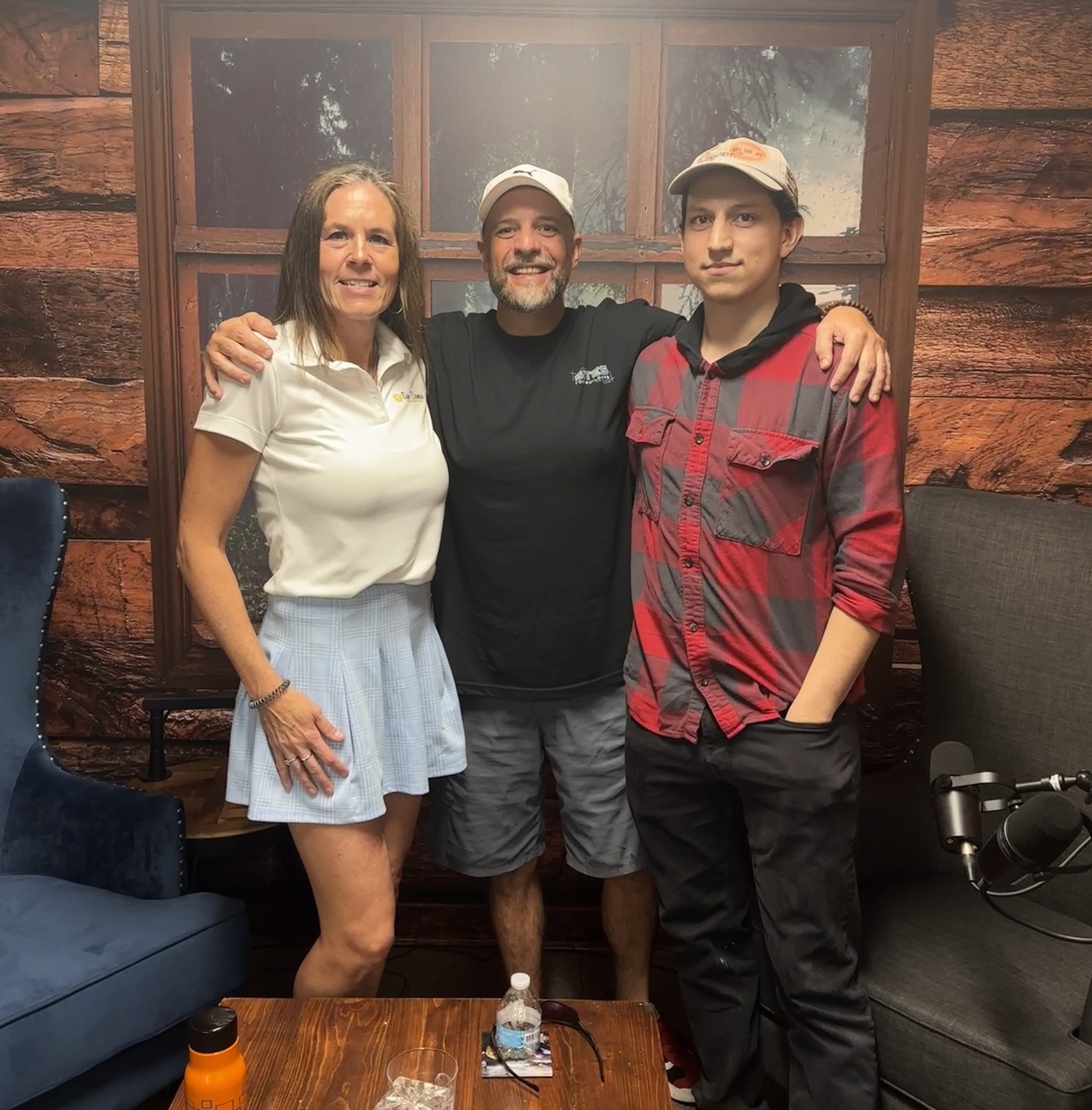
Hello everyone. It's Karissa from Shining Light on Minnesota. I am super excited. We have some new guests and some current guests. Welcome. We have Patrick from Sites for Builders and we have our very own Jorge. Welcome, guys. Thanks for the opportunity to be here. I appreciate it, Karissa. It's nice being on camera for the first time ever, you know. All right. So, Patrick, let's get started with you. Why don't you tell people a little bit about Sites for Builders and kind of how you got started. Absolutely. Sites for Builders does primarily websites, but we do print, web, and video and uh primarily serve uh the construction industry, commercial and residential builders. Um the background to that is really um about 20 years ago, I started working for myself and doing print, web, and video for clients on a freelance basis. And I did it for every industry under the sun for 10 years. And I love the variety and the creative challenges and it's uh exciting. But um I decided to serve a niche market and super serve them and better understand their challenges as far as marketing and communications, what kind of tech they might need to support a website or not need and not need to pay for and to just uh form better relationships with a smaller community. So 10 years ago, I started sites for builders and uh we've been helping our clients ever since. Nice. So what kind of area do you cover in the construction world as far as doing sites for them? uh port project portfolios, bid centers, showcasing their team, um specific projects or targeting a a specific industry or market segment for them so they might get more work in healthcare or multif family or something like that. And our clients are everything, you know, I purposely didn't pick sites for plumbers cuz it's a little too niche, right? So builders, I work with architects and engineers and interior designers and concrete professionals, uh, commercial glass, uh, general contractors, excavation. Um, it's a broad field, but it's a small community. Nice. Jorge, you got started at Foru Agency. Why don't you tell people kind of a little bit about your background and how you got rolling? Sounds good to me. Yeah, I'm the digital marketer for Sun Control and I run the marketing department for Foru Agency. Uh, it's great. It's fine. I'm the opposite of Patrick. I'm not niched down. and I kind of just help every mom and pop shop. If you have a vision and I can see it, we'll work on it. Um, been doing marketing for the past seven years now, eight years. It's a long time, but uh, yeah, it's a fun day every day. Doesn't change. So, Patrick, when people come to you, let's start maybe talking about like brand, what is important for those clients and customers when they come in the door? Absolutely. So, um, brand identity is the driving force behind all of your marketing communications. And I can't tell you how many people I meet sadly that say they don't love their logo or it's what they've always had or it's too much work to change it. And it is on everything. It's on your trucks or your business card and it's standing for your business out in the marketplace. So, I try to make a strong case for uh before investing in other marketing to get a brand you love. And that would include not just a logo, but a color palette typography solution. Ideally, a vertically and horizontally oriented version so that you can use it in whatever best suits it. As you would know, somebody produces in a wide range of materials, one sometimes better than the other. So, get that set up right up front. But the the branding itself, um, if you have a logo that's been around for a long time, um, the equity you have in the marketplace behind that logo is worth more than I can do with even my best logo design work. So, if your company's been around, has a good reputation, um, and you don't love your logo, I'd look at extending it, right? Build off it. Maybe keep the color palette or some of the shapes, some of the design elements. Don't just throw it out but try and modernize it or make it something that you are more fond of but uh try to contain and uh capture that brand equity moving forward because it's worth a ton to your business. Perfect. So you start kind of talking about branding and current what they have. Let's go a little bit deeper and get into the AI world. Sure. Is it important for people or do you suggest that people dive into the AI world and maybe start creating their own or they start using AI to help them out? You could certainly use AI to generate concepts for you and uh help you extend ideas and you know really good art is about having multiple options right that's why people who paint start with sketches right so you do rough comps first traditionally that was done by people and you'd sort of loosen yourself creative right instead of being so judgmental about each one being perfect you get wild and have a bunch of crazy ideas and then you rain in on the stuff that's too nuts but true innovation is never safe it's not from the normal accepted stuff. So you might want to push yourself creatively in that stage and one way to do it would be to engage AI and have it send you some some ideas you might not have even thought of. Um having said that I think if it's going to be your logo and your brand and what represents your company visually, there should be human beings involved. Absolutely. What about you Jorge? Uh I'm fond of AI. I think that every marketer, every person should be at least engaging with it 30 minutes, getting to know the software a little bit, see the capabilities of it. I agree. It shouldn't be doing a logo. It has absolutely no idea what emotional impact it could have or doesn't know the story behind the company to know, hey, this is going to be the best design to represent it. Um, for blogs, don't do it. Period. Uh, don't kill your website. Google's really pushing it down pretty far in the algorithm if it detects that it's AI written since it's just a reporting. It's a spam report at that point. Um, but yeah, I mean it's a great great starting place for everything. It can give you rough ideas and you can work off it. Yeah. And to build on that, um, a lot of the clients I work with don't really have a budget for a copywriter. And copy, you know, copywriting, the words on your website as well as the photos are the two most underbudgeted elements in terms of the impact that they deliver when you put some time and energy and resources towards them. But if you don't have a budget for a copywriter and you're a decent copywriter yourself, go to Chad GPG and say, "Write website copy for an organization that does this and say, I want to have a down home feel or uh more conservative or humorous and and talk to the chat GPT and say include strong calls to action and a engaging headline and these keywords that are search relevant, right?" And it'll kick you some stuff and you'll be impressed. You go, I I would I didn't even think of that headline. It's pretty good. There'll be a lot of trash in there, stuff that isn't relevant or accurate, but it is a great way to just get something started. You just basically have a kitchen full of ingredients now. And what are you going to make with it? Make it your own. My big thing is just that it keeps using the words like very high school structure. Firstly, secondly, thirdly, you have to clean it up. But other than that, great starting point that you can work with. And you're right, fact check everything because it doesn't know everything. Mhm. Let's talk a little bit about SEO. Yeah. Chad GPT AI or doing SEO through somebody that's an actual human being. What are your thoughts there? Well, it's about keyword strategy first and foremost and then you deploy that in a variety of ways from SEO, whether it's organic work that you're doing and your site build, your page titles, your alt tags, and sort of the copywriting you're doing as a human or an AI, right? But um excuse me, I lost my train of thought. Uh, no worries. Help me with the question again. Chissa search engine and should they use chat GPT to help pull up some of those words? Should they use AI? Should they go to somebody more like a person to kind of use a person that knows how to run those in Google? It's the best way to do it. I mean, analytics is there, the reporting is there. You can look at keyword research locally, nationally, what terms are getting hit hard, how much it might cost to bid on them if you wanted to do pay-per-click. um coming up with a good keyword strategy first and then getting the data behind what it might cost to buy that traffic or at least know, hey, this is there's a ton of competition on this term. This one's very similar. Let's load that in our site and get organic pull on something that's not so competitive. Um that's usually human stuff. Yep. I was going to hop on on that. And uh basically, as long as you have a good strategy or have someone that does the first initial research, you should be able to do everything pretty much hands-on, pretty simple. For example, anything local SEO related, Google reviews. If your customer leaves a review, hey, maybe just put their location, what they are, what their business name is. That way, it's searchable on Google. Um, same thing with your photos. Instead of just uploading them as P 3,000, 400, whatever it is, just rename it to who's in the photo, what the location is, a rough idea of what it's showcasing, that way it's in that metadata. It's quick stuff that takes 2 minutes to 5 minutes and will have a huge impact on it. um use tools like search atlas is the one I use. They have a free day trial, 7-day trial where you can actually just put in your business, put keywords in and it'll spit you out a plan that you even if you don't pay for the software, you already have a guideline of what to work on. So tools are available out there that you can use and it's really a person that has to do it, but the software is going to push you a long way. The other recommendation I would say for any paid effort um would be to track it in the sense that you know I I see people throw money at Google and they're getting traffic and they go look at our numbers and I go well was that because you were at a trade show or that you got Salesforce a team doing a work out in the field or was that the Google ad buy? So your ad by your SEO, you know, sort of SEM, you know, pay-per-click marketing should go to a separate landing page that has a separate contact form or even just use Google voice and get a separate phone number, but you should be able to track that this inquiry and hopefully sale was a direct result of our ad buy with Google. It shouldn't get funneled in with the rest of your traffic and you kind of wonder because business is good, our ads must be good. You should know exactly which ad brought which sales or customers and then do some AB testing. do a an ad that's maybe about a sale or a discount and another about the value or safety of the product or something like that. Try something humorous and something conservative and then watch which one pulls. And so if the humor pulls, throw out the conservative and write two more humorous ones and see which one of those pulls, right? So that AB testing is critical for uh purchasing traffic from Google. It's a nice thing about our referring links. All our fleet reps actually for some control have different QR codes that all Yeah, they go to the same landing page, but they all have a different referring link. So we know, hey, Karissa was out in X location. We know that she met these people, which is why that code got scanned. Same thing with Mark. Same thing with the installers ads. Uh, I want to say you can rely on that referring URL. However, I I don't know. You might be able to help me out on this with the iPhone new privacy regulations. It's kind of hard to keep track of all that stuff to rely on it at least for uh good data. Well, the page isn't getting hit by anybody who didn't hit it from that ad. So, you do it on a Facebook ad, boosted post or something like that. Also, you're going to get bots or trolls or whatever, but ultimately you could look at how many times that page is as loaded uh on your site versus what Facebook said it was, right? And then really, it's like what kind of sales came from it at some point. It could be five clicks on it, but if they all converted, let's go. Right? Let's jump a little bit into some our viewers might not understand or know, but all the algorithms that are out there that are changing daily. How does one stay on top of that so they know how to advertise or what the best way to advertise is? I would say stay true to your business, your core competencies, and instead of chasing the latest fed or algorithm shift, have good, genuine content about what you do and how you serve your customers. It should be informed and keywordrich, and you'd want to play the game. uh but at a base level again you know Jorge and I can take it up several notches from there but many of my customers don't they don't know what they don't know about SEO so they're a ways away from having really targeted campaigns and being at that level so I think at first it's get clear about what is your keyword strategy and how can you uh fill your site organically with that and then in terms of changing algorithms that has to do with like we said earlier don't use chat you know AI written copy they're going to push you down right have uh cross-linking get other sites that are reputable in the industry to link to you and and uh you know sort of force traffic or reputation that way. Claim your business profile. I hate to say it, but I meet people that haven't gone to Google and go, "Yeah, this is our address." And curate some reviews, right? Invite some customers that you trust to say, "Please, can you give us a review?" You can send them a link. It's real easy. But I would say that is uh way more important for people on the lower end of the equation. You you never want to chase an algorithm. It's always going to change. And it's do you want to feed the machine or do you want to feed the people that actually care about the business? Um, the biggest things you just need to see is, well, I'm gonna go kind of against it, is the trends. Like, for example, Instagram when they released their reels. You had to do a reel. That was it. They basically killed their homepage. You had to make a reel. Nowadays, if you don't make it, you're perfectly fine. As long as you're pushing out content, they're going to be recommending it. Just don't be chasing the algorithm. It's a code. Code means nothing. And at the end of the day, we're just telling stories, right? That's what matters. What's your story? That's it's not the algorithm, right? the algorithm is going to pick up on it hopefully if you craft your story well, but it should be about what you're bringing to the marketplace, how you're serving their customers, and ideally the pain points they're needing help with and how you're going to make their life easier, cheaper, safer, faster, whatever. How important is the storytelling when someone comes to you and says, "Hey, you know, here's my business. Here's everything I have." But they forget about the story. Well, it's how you delineate. I mean, I I make websites for a living. You You know, kids in high school can make websites. The tech's commoditized. It's everyone out there could do it on their own. Most of my clients I work with would prefer to be running their business or doing something else that generates more revenue or more enjoyment for them. But, you know, we make our living on service. And so, that's our story is that, you know, we're you don't start a support ticket. You call and talk to somebody on our team and we handle the problem for you or do the creative or get the item produced. Right. So, um, we help our clients identify what that is for them. How are they different than their competition? What's what makes them unique. Um, maybe it's a family approach, an old school values type thing in a flooring store like I was working with this morning. They were saying, "We are not Lowe's. We're not Home Depot and we can we can She had all these reasons why, but none of them were on our website. I can't wait to bring it to life." It's a little bit of a teeth puller sometimes when they come in asking for a website, asking for a logo. It's like, great, cool. What do you have? Well, I just want your logo, but who are you? What do you stand for? Who are who's your direct competition? Why are you better than them so we can represent it? Like, we need this information. A logo is just nothing. It's just pixels basically unless you're able to implement that message behind it. Yeah, absolutely. And um that logo becomes the visual representation of your story, right? It's the flag bearer out front and it's not a you had asked about brand. That's not something that you own, right? That it comes to life every day in the hearts and minds of your customers as they pick up the phone and call you or try and shop on your website or see your crew in the yard at at their home or their business. Uh, all of those experiences when the truck with the logo pulls up in the morning on time, that that all adds up to your brand. What you own is the opportunity to shape all those experiences into consistently positive ones. So the logo is a visual representation of that brand. Uh but the way you put it down on your letter head and uh engage with your clients and share your story with them is how it comes to life. How frequent do you think a customer coming in should change their brand a little bit or just change refresh their logo things like that or maybe not so much the color but just incorporate new ideas into it keeping it all the same as little as possible. So if sales a grid, I would say don't cuz it's working. The power of a brand comes in its consistent application. So when you see that truck going on the freeway with the target bullseye on it, your brain doesn't even have to think about it. You just know, right? And they they haven't gone, well, let's make it purple, right? There's a reason that they stay with a tried and true. And uh Pepsi and Apple have changed their logos a few times over the years, but you rarely see successful organizations make monumental changes. Um, so again to the earlier part, care about your logo up front instead of starting a business or carrying on and going, "Oh, we'll get to that later." Start right away with some uh passion about what that's going to represent and and hire somebody who is good at design to create it for you and then continue to use that. If if it gets aged or dated, you might update a font or something like that, but it should be because there are practical reasons for it, not because um quite frankly the owner's tired of looking at it. I've had clients come to me and say, "I want a new logo." And I'm like, "You're doing great and this logo is really good. Why?" And they're like, "Why? I like purple." And it's like, "Well, let's get you a room in your house painted purple." Yeah. Right. Or just, you know, say you have to separate your personal opinions from what is best for your business. And so, if you're up and running and doing great and the accountant says, "Let's go." I wouldn't rebrand. Right. I'm going to add on to that. The only reason you should rebrand is if you add another service or get rid of a service and it was your main portion of the business. Like horrible example, a plumber would never do this. But if a plumber decides to also be an interior designer, you're probably going to have to change up your logo quite a bit to represent that just because you want to get that new demographic behind it. You may acquire a business, right? So maybe a couple come and you get a new set of offerings that wasn't there. That might be a good reason to do it. or um I have worked where there's a residential arm and a commercial arm and they want yeah kind of to know it's the same parent company but it's really they're operating in different spaces different customers we talk to these clients or guests differently right so but it is the same logo we just shift a little bit about residential and commercial and then each has its own similar but different color palette right so you'd look at the pages next to each other and go oh yeah this is the same company but it's a it's a system that was planned so what do you guys find that is important in this day and age when people come to you and say I'm scared about what's happening or what's going to be coming in the future with all the computers generating AI chat GPT for the younger generation wanting to turn to everything computers instead of people how do you get them back to going to the people to get everything they need I think humanity will have to come full circle that's what we've always done I mean we used to just sit around the fire and when books came around people got worried and you know there was a radio and Tesla did his thing and we have inventions that happen right And this is just the latest shift. It is a uh happening at a pace that's unprecedented, right? The amount of information uh the dissemination of it and our access to it is is unheard of. But um I have a son graduating high school and another one's a freshman. Their jobs are going to interface with that amount of data on ways I can't even imagine. It'll be a totally different world. So I think for anyone who's interested in staying relevant with what's going on, you have to accept that it's there. I believe either we'll figure out a moral compass for that setup or not but you know you know the internet has prevent provided the same question all along right I mean not to scare any marketers graphic designers photographers but I mean AI is taking some jobs away people companies are training it on their employees work because they say they think that the machine can replace them to a degree it can however if you like for example you and I we're probably looking into AI every other day just to try to keep up with it if we use it as a tool It's never going to replace us. We should never have to be worried about that. No. And I guess there's two sides to it, too, cuz one's the tech and one's the craft. So, I remember when I was in college studying for multimedia design, and I was at a tour at a big print shop in town with my class, and we were going through the type setting room, and that's where they would lay out the letters and do type setting. And the guy was in there doing his thing and the tour guide, who was a salesperson for the company, was walking us through, and they said, "Well, this is where we do type setting." And this is, you know, this is all being replaced with what you guys do in Cork Express or In Design at the time and graphic design programs. And this guy was sitting there working and he looked up and he's like, I'm right here. Right? This guy was his craft. It's his trade. He was working at his job and the guy's walking through going, he's being replaced by you all. And I thought, I totally get it. Right? So, on the one hand, he had to take that and he either moved on and decided to pick up graphic design and desktop publishing or didn't. And the same thing with copywriters, graphic designers, illustrators. There's going to be a lot of AI generated content, but I also say the cream rises to the top. It used to be you had to have a ton of money in camera equipment to shoot good photos, and now everyone can do it on their phone. But there's still a market for photographers, an artist who understands lighting and composition and how to tell a story. So, if it's about the craft and about the messengers telling and connecting with the customer and the the client you're working with, I think there's always going to be a home for you no matter what tech is there. How easy was it? You're both kind of artistic. Aside from what you do online, tell people a little bit about your past and what you do on the outside world. I wanted to be an artist when I was a kid. I My mom was an art teacher. There was always crayons and markers and pencils around the house and I just love to draw, taking a blank page to something else. So, I tried to pursue that a bit in terms of high school and taking drawing classes, but I just didn't feel like I had the chops to be a fine artist. I looked out and everything was like it's, you know, it's like being a musician. You either make it or you don't. Seemed like a hard living. And at that time, desktop publishing had just started to hit the scene. And so I decided to pick up a mouse instead of a pencil. And I still love to draw on the weekends. I break out charcoal and pencils. And um I spend my week creating art for my customers. And I can't wait to set it in front of them and share it with them and have them tell me either they love it or big or smaller, change it, move it, or they don't like it in which case we have a new conversation before new art's created. But in that rare case, whatever, I need to be opened up to critique all the time. And I love that part of my work. I also like to pick up some pencils on the weekend and just create for the sake of creating and not have it be part of that process. Yep. Uh I'm the opposite. I was the very analytical guy, the computer science and engineer. Um I was the I was the kid that always made jokes saying the art kids were never going to get anywhere because it's art. No one thinks you can make any money out of it. I went into college for computer science and engineering and after 3 years I decided it's not what I want to do. I don't want to be locked into a computer for 40 hours out of my day just looking at the same code over and over again. So that's where I went towards the creative path. All I have to do is walk around, take photos, talk to people, occasionally sit down, make a website or two, but it's like very spontaneous what I do. There's no actual order to it. It's nice. Keeps me keeps me going from it. So excellent. So you guys sound like you have a lot of creativity to it and you that's kind of your escape on the other side being you know this is my 9 toive job but then hey I can go and have my reset and just grab the pencils be creative and or Jorge you can get out there do whatever you want come back to it and get to it. What is important for the younger generation if they want to get into website building or graphic design or anything like that? Well again like had said the bombs dropped out. you can go get Canva for free and start rolling today. So, I would say fail fast, early, and often. Don't be afraid. Um, go ahead and have um an interest and and start to scrape around. There's great documentation on YouTube or even on those sites. Um, but I'd also um encourage them to just find somebody that's doing it and pick their brain. Just sit down and go, "What kind of careers are in this space?" Or, "What programs would I really want to care about?" Or, "What outside of a Canva or an Adobe Creative Suite should I be interested in?" And that might help you go from the broad sort of graphic designer to uh where you might be able to leverage what what you're passionate about. Right? So your goal would be to unite what you're interested in and what brings you joy in life, your avocation. You unite that with your vocation, what you get paid to do. So, if you're younger and are interested in being an artist or a content creator or an influencer, whatever these days, yeah, I would absolutely um I'd look to somebody who gets the media production part of it for that and I'd look to somebody who is an uh really good influencer for the content. Uh I'm a firm believer in being self-taught. Um I started out with Web Flow, still my favorite web building platform. However, I'm sure you you've seen the ads for Framer. It's literally just Photoshop, Canva. You just drag all the elements in. You can publish it as is, and it's it's a website even though you didn't do any of the code, even though there's no sections or containers. It's just drag, drop, play, and you can make really cool custom websites. They have the the code, the CSS in the background working. They have pre-esigned templates for if you want specific transitions. It's easier now than ever to make a website. You no longer have to deal with WordPress, which I personally dislike. Um, and then as for the content creation, you can get a S Sony EV1. You're looking at a $700 interchangeable lens camera. Shoots 4K. Has AI built into it. So, you literally don't even have to worry about getting the light the the subject in focus. You don't have to worry about the lighting, the aperture. It can detect if you're bringing a subject forward. It knows to go into macro mode. It can pull back. So, I mean, the technology is there. Just grab it and go out and play with it. That's it. What are your thoughts on when we talk about websites, less is more or do you think that people having everything at their fingertips right when they get to the page is important for them? As a designer, I'm a less is more guy, right? But SEO and Google wants content. They want you they don't want you to bore people. It's not a dissertation, but uh you can't have a a page about a service that just has a photo and a title, that service's title, and a paragraph or two. You have to include stuff as you know boring as it might sound. Google loves FAQs. If you have the frequently asked questions related to that service. If you say what is that service? How much does that service cost? And you provide a few sections of stuff. I recommend using accordians where you can expand and collapse some of this or you know human beings we get to that page and we go oh you're giving me a lot of homework. You start to scroll or see along the pages and you go I just wanted to know about whatever. Right? So, there's a fine art of balancing great content that Google's going to see as relevant to your customers needs with um not trying to be the source to define everything. That's what the rest of the internet's for. Oh, yeah. It's also minimalist, but it's also supposed to be a reflection of your company. If you're trying to say that you're, you know, pretty open with your customers, you might want to have all the information publicly available. If you're trying to act more prestige, more high-end, customers probably don't need all that information. and they just need to know you can get the job done. Show some pictures to qualify your work and that's it. It's just a matter of who you are and what you do. Yeah. Um interior designer clients or landscaping clients um that have mentioned to me they're not as interested in passive Google traffic and providing a bunch of estimates. They'd rather sort of ride the train they're on in terms of incoming business from other areas. I would go way more lean and mean. Somebody goes to a landscaping site. They want to know the basics, but they want to see what you've done. It should be heavy photos and lean design experience, easy to get through and strong calls to action saying, you know, get an estimate, right? Yeah. Yep. How important is is targeting when they say, "Hey, I don't know what my persona is. I don't know who my customer is, how do you help them find that or what would be their best bet to try to figure that out?" I would start with past sales in terms of what's worked in the past and who that demographic is, right? And then you know if it's the the generic is target mom or soccer mom or some business dad or to keep it genderneutral whatever they are who they are. Be honest about it. Call that out and go well what matters to that person. Where do they hang out? Who who are they friends with? What other things do they buy? Where might they shop that you might advertise? But getting really clear about who your target market is is important. You can go really far down the path of trying to create personas, but I think opening your eyes and being honest about who you've sold to in the past is is a great way to start and also be real about who's your competition and who are they selling to. You're either going to try and take those customers from them and go, you know what, you can have those. We found this over here. Yep. um larger companies I know have used Claritas and how we used here at Suncontrol which pretty much just gets all that data that you're talking about past sales or your clients brings into a system they can spit out demographic that's easily imported into Facebook ads, Instagram ads, easily imported Google ads. That's going to be your best bet if you're a larger corporation. Small mom and pop shops, I would recommend Placer AI. It literally is a GPS tracker that detects all the phones coming in and out and can tell you who it is. It requires a six-month contract, unfortunately, but it's a lot cheaper than Claritas. And I mean, it gets the job done, especially if you don't have any backlog of past clients. You can at least start tracking them now and work from there. How important or what do you guys feel is if someone's coming in and saying, "Hey, I don't have any idea on marketing. Where do I get started? Do I do social? Do I do website? I need help." How does your customer buy typically? So, are they buying online already? Yes. And I'm getting most businesses need a website at a minimum to establish validity to go, "Yeah, we're we're legit, right?" So, I would think that's a base operation. In terms of marketing, it' be um they're all marketing dollars. Building a website's marketing dollar, creating a logo, go on a television commercial, newspaper, radio ads, any of that stuff, and they only have so much money to spend. So, I would initially go where you getting the most bang for your buck, right? You want to establish a consistent brand before you have it printed somewhere or that kind of thing, right? you'd start with the basics because a website's up 24/7. It's generally a lower cost thing than some other marketing ventures you could get into in terms of what you get out of it. And most of those other things you do uh are going to be trying to drive traffic to a website anyways, if not a phone number. Um, but then it's a matter of just stairstepping it, test what's working, and build on past successes. Starting with no money. I mean, you always start with your Google My Business. You always want to make sure you have that online presence. It's free, takes 10 minutes, sometimes can take a week depending on Google verification, but you start with that. Yelp, uh, as much as I hate Yelp, and if you sign up for them, they will spam call you, but set it up so you have a listing there. Afterwards, open up your social media. It's going to be the best website that you can start out with instantly where you upload your port uh your portfolio bit practically, all your work you've done, and there's your online presence. Afterwards, after a while, once you start building your brand, I agree. Build a website, but start with the free stuff, just listing management. How do you think it's easier or not how do you think it's easier for someone starting off you like you started talking about the social media the website what if they don't have any money to even start the website do they just kind of save up or what would be best for them I would just step back and say let's look at the business plan again and where are where am I at in the development of it because you might be cart ahead of the horse there right in terms of securing funding or having a plan if not you go to Wix or there's free website things and again I love the idea of leveraging social a claim the channels even if you're not ready to go yet. So, nobody else does, right? And um use that social media to tease content and drive them to your free Wix website or any other you I'm trying to pref, you know, preference them as a vendor, but you can get a free website for sure. It's just going to have an ad for whoever's providing it to you. But if we do all of the project galleries and the portfolios and keep people in social media, they're just one click from funny cat videos and we lose them. So, we want to get them out of social and somewhere else where they're kind of only looking at your world. and hopefully you will engage with your firm. Um, but social is going to be the best way to do that bang for the buck. Just have the approach be to drive them somewhere. Yep. How much is too much on social for people in terms of frequency or content or either one? It should be generated based on what your audience has a pallet for. So, if you're going to get people to sort of subscribe and want to see your stuff regularly, you don't want to blow them up, right? But it's also related to when you have something relevant and compelling to say. And if that's often, it should be often. Y if it's not, you should, you know, if you if you're going to go on X, you should have a newsworthy story to share. You should have some sort of news-based information. It's not cuz you got great pictures necessarily, right? Then you go to Instagram and you'd showcase photos there. So, just because the social platforms are out there, I wouldn't recommend jumping on them actively. I'd recommend claiming them so nobody else does, but I would actively go on the ones that you're ready to contribute to regularly so that you don't create an expectation and then not meet it. How do you guys deal with customers that come to you? Let's say it's a contractor and he's like, I've, you know, I've had this business for 10 years. This is my name, but it's already been claimed by somebody else. How do you help them adapt to that? That is going to be find a domain that's similar, but are you're also running the risk, am I going to is this other company in direct competition with you? is this the exact same business and they already have the domain. I would ask how did you get it registered with the state? Right? So there's going to be some difference. It may be subtle. So then you'd have to say do I want to get in the ring and try and duke it out for the traffic or do I want to change my business name? Yep. I'd say be aggressive, leverage it. You know, they're already getting the traffic. Try to pull it over to yours. Once Google starts seeing that there's two businesses with the same name, odds are they're going to pin you guys for first and second place. It's just a matter of who they're going to show first. So, just leverage that name, create a ton of blog blogs just to make sure that you have the content appropriate for Google so they start ranking you higher, get the Google reviews, and eventually you'll take over that traffic. But yeah, just leverage it. Unless like I mean to use a local example, if my name was Pat Mortonson, I wouldn't just go I'm Mortonson Construction and hope that I'm going to get it done over time like that. Just you know, David Goliath that you're going up against. It just I totally agree with you, but it's all relevant to the scope of the battle you're fighting. Yep. So, there's a lot of influencers as per se that have their story to tell and they drive on their story, but they also it's kind of a poor me story and it always goes back to that. How important I mean everybody has a story to start with when they start. How important is it to keep carrying that story on even when you grow and you kind of get out of that story to tell? you probably should never be out of that story to tell. You're out of business, right? But it's just a matter of um you want to present it as a way that supports how you do your business, not as a self-gratifying sort of going on and on about yourself. People if if you're dealing with brand champions who love what you do, you're going to have more of a place for that. And it should be in a news post on your blog or maybe some email marketing. The frontline marketing that's engaging with clients that may or may not have worked with you before should be focused heavily on what you can do for them, not how great you are. Sounds good. Uh, I'm not a big fan of storytelling or at least in my case scenario, I don't like relying on anything from the past, which is why the whole branding I push is, yeah, I'll do your branding because your story matters. We're going to lean on that as my story. I'm here to help you express yourself. Pretty much it. So when people kind of to go away from that but keep keep on the same people start saying hey you know like I have a national brand like Nike how do I dive into something else that people are going to still understand our story and carry it on to another sister location like let's say okay this is Nike and then this is Michael Jordan. How do we kind of incorporate the two into one? Do you carry the story on from location to location if they're in the same business? Yeah. I mean, Michael Jordan and Nike make a lot of sense as being connected, but if you're in the cabinet making business and you're about to do swimming pools, it may or may not be a natural fit. So, it sometimes it's do the two companies um have a sister relationship that's beneficial to the customer. If it is, then we want to showcase that and and and sort of cross-pollinate and cross-promote. Usually, it's done in the footer, right? So, I have a client who does commercial uh demolition, right? and and she does an awesome job, but she started on residential. So, she has one company that was residential and she built it up and didn't want to abandon that and not do that work anymore, but really wanted to grow the commercial side and have a different company name. And so, the two are associated and there's a, you know, when you're on the commercial site at the footer it says, are you interested in residential help? And you can kind of shift people over, right? So, in that case, it makes sense. In other CA, Michael Jordan, Nike, yes. In other cases, it might not make sense and you should probably Well, it's um often I found it's in house versus out of house. There's the accountant, the lawyer, or there's the what we registered with the state and how we do our taxes and how the um inner office email is set up or how we do meetings. And it gets to where that's driving the boat. And it should really be about what's what's inhouse and then what's public perception. What do we market? What do we showcase to the outside world? We may be sister companies back here because we share a space or whatever, but that if that's not a benefit to the customer, I wouldn't be to drum about it. I think in the case scenario that Karissa gave, I mean, it's really just a personal brand helping out, accenting what the what the company stands for. So, in that situation, it's Nike is all about athletes, helping out sports. We said Michael Jordan, right? Yeah. Yeah. Michael Jordan, whoever that is. Yeah. Like it's it's enhancing the business, showcasing. Yeah. We're focused on athletes, which is why we have an actual athlete to partner with. If you're doing like restaurant work, if you're trying to promote your the food that you're supplying, you can partner up with an influencer and they're here to support that brand. In that case, the collaboration is great. But I agree, if it's two separate businesses that don't tangle, then no point. The celebrity endorsement is one of the most tried marketing tactics historically. So, it's if you have an angle there, it's, you know, Michael Jordan's a great example of how that worked really well. Yeah. It's how Ryan Reynolds sold them in for like 10 times as much as he bought it. So, if a customer or someone comes to you and they have, let's say they're just an influencer and they say, "I have this and this and this and this and this and I want to promote it allin one." How do you help them find their niche or the one there isn't one, right? Yeah. Well, then it's basically their personality, right? So, then you're talking about a Paris Hilton or something, right? like it's a it's a celebrity um representation or influencer that is interested in a variety of things, but people are really going to check it out cuz they're interested in that person. Yep. Right. Yeah. You basically took the words out of my mouth. It's a person. They're allowed to like multiple things. They don't have to necessarily niche down for just a specific target. Uh their content should be constantly evolving because you don't want to have just relating to a person just because they do websites and that's they're going to they're going to die out. But they showcase their creative side. They showcase what they do on their daily basis, what they're interested in in the future future programs. I mean, people are going to follow along the whole process. Do you think it's important for people to separate from their business as far as their beliefs go? I have come across that a few times and I will put it this way. Yeah. Listen, um I think people should do what makes them sleep well at night and what their faith or values serve them to do. But I also think you should have a sense as a business owner that you know putting uh political or religious or any other sort of controversial beliefs as a part of your marketing is going to automatically alienate a certain part of the marketplace. And if you can afford to do that and want to awesome that's definitely not what I would recommend. It should be a very very tame version of it. Yeah. To that end, I think um make sure you have a personal Facebook page and then a business one and post personal stuff on that and business stuff on the other or I know a lot of people do like Facebook will be their personal and or their business and then they have LinkedIn just for their business. Absolutely. That would be another idea too. But just know that you're out there. You're out there. So somebody's wanting to find you on LinkedIn because that's what you said and they come across your Facebook and it is there. So you should be ready to stand behind anything you post. Yep. What do you guys find or what's exciting that you guys see coming out in the future that you can look forward to in the website world or in the the marketing world? For me, it's what Hy already mentioned. It's getting rid of like I mean, I'm I'm old. I was sitting there writing code by line line by line and dealing with tables and it got so much better and so much better. And so now I'm like I I can't wait for the barriers of what it takes to build the stuff continue to get removed and we get to get faster at expressing what matters to our clients and getting them business. I'm excited but afraid of what AI can do especially with chat GPT40 as I'm sure you saw. It can actually communicate with people which means we're going to get to a point where they're going to be our telemarketers. They're going to be the ones that are doing the call. that's going to sound realistic and might be a great thing for a business to pursue, but at the same time, it's going to be a lot harder on the customer end to go ahead and reach an actual human being to solve their problems. Um, websites can now be made by AI. I don't know if you've tried any of those tools, but you can literally type in your business, upload your logo, upload images, and it'll compile it all together. And, uh, it's a basic website, but I mean, we're what, one year into the the software at hand. I'm sure if we give it another two or three years, it's going to be able to build a website for anyone for practically dirt cheap. So, there's going to be a lot of advancements. It's going to make marketing, web design, photography a lot more uh what is it? Achievable. What's the word for it? Attainable. Attainable. There we go. Attainable for everyone, which is going to spark a lot more competition. It's going to be great for everyone. What about Neurolink and people not being not having to talk anymore and technology that way? What do you guys feel on that? I'm not trained enough on it. That's fair to you. I My ideas are scary enough. I don't need anybody else's. Right. I know. They just had a video of someone out there with the very first one. I mean, it's great for people that need it. Oh, yeah. You know, people that are sick and that aren't able to move everything like that. But the way the world's going with that, it's it's interesting. Oh, in terms of interfacing with a prosthetic or something like that. Okay. I thought you meant mind to mind. Yeah. Mind is a whole another story. Yeah. I don't need the whole Elon Musk one where they're helping amputes be able to actually Absolutely. Yeah, that stuff's fascinating. When I'm walking down the street and I think something, I don't need the other person to know it. We definitely just need time for like for example, Google Glass way ahead of their time because you could see everything through your eyeglasses, take photo, video, actually navigate the world with them. However, they went extinct because everyone was afraid of their privacy. I think once we start pushing that line a little and a little bit further on, we're going to have a lot more gadgets that are hands-on that are going to help us navigate the world, and we're going to have to be comfortable with it. just it and you know to your point about that I look at it this way in terms of historically I I try to zoom out and go hey 200 years from now's going to remember Google Glass right it just isn't going to be the one right so you look at you know the wheel fire right there's a number you know the industrial revolution agricultural revolution the you know tech in revolution right you might say the internet is going to be one of those 200 years from now I think it's probably going to be that like you said neural link and but it's prosthetics becoming more advanced the way phones maybe it's not something we hold but are on all the time but I think that'll be the line in the sand where it'll be the integration of the tech and humanity at a level that is more substantial than it is now but we see the writing on the wall I think that's the line will be the internet and the glasses will be around that but I think that one they'll look back and go yeah it's that integration that was the major that was the wheel of this time what about VR and people getting those onto their websites what are you what are your thoughts on how that's going to change? You'd have to have a specific audience that is using that platform in order to leverage it. But it's a awesome engaging experience. It's really fun to create content for, but it's just a matter of you have a younger demographic for sure. And it's primarily game based. Nobody likes watching ads in that space. I don't really know anybody that browses the internet that way. It's really a hassle. The the only way I can see VR helping businesses, for example, builders, architects, is that it's an in showroom experience that can be guided around where they can show you what your house is going to look like, what the plumbing, tiles all going to look like, 3D rendering. Yeah. Or bring it to your house, right? Pull out their Oculus and go, "Here, let me walk you through these plans." Yeah, that's pretty much it. I mean, with the uh I don't want to say the Apple headset, whatever they're called, um the Apple headset's great. It's great for 3D space. However, it's not necessarily an AR1. Uh, but if we can get to that technology where people can see the changes being done in place ahead of time, again, it's going to be great for sales reps, going to be great for architects, all that stuff. Even photographers are using it to overlay different poses that they can see while they're taking the picture. So, it's going to be a lot of great advancements that can be used as a great tool, but not something the customer can necessarily experience on their own. Right. Yeah. Until we're all wearing one, right? I mean, it will also bring people closer together, too, in a sense. If someone's at their office trying to do a Zoom call and they have this set on, they can all see the same 3D rendering all at once, too. I mean, in that world, it'll be great. What do you guys think as far as computers go, technology goes, younger generations, older generations, help that would help the older generation get more inclined to change and want to change and want to grow and want to understand what's going on? How important. Well, I thought you were going to say, how can we? They're not going to. I mean, you shouldn't. just like we're people of our time, right? And so I think um younger generations should um maybe take some effort to share the benefits with older generations like they, you know, and I think every grandparent gets FaceTime and what that means to them. So it's there, right? But yeah, we're making the accommodations. I mean, searching has never been easier, especially now with Google AI taking up that first spot. It's more of an interaction now that they have to have with our computers rather than having to click link by link by link to find the answer. they can see it directly with AI. So, I think it's just going to make it easier for anyone to access the internet regardless of whether they're techsavvy or just starting out. I found in a lot of construction world or in the construction world everywhere else too. I mean, you have the people that are still writing out their handwritten bids and you have someone that comes on just like that and has the answers for them. Putting those two worlds to one or together as one will really help everybody. It'll help, you know, you get the personal touch, but you can get the numbers quicker. It's just kind of a win-win. Yeah. Yeah, I had a conversation yesterday with a client and I said, "Do we need the fax number on here anymore?" Cuz it was still listed on their page. And I do have some clients that say, "Yeah, you would be surprised, but most of them go, "Oh, I didn't know that was still there." Yeah, get rid of that, please. Yep. As far as people coming to you, how do they get a hold of you or where can they find you at, Patrick? You can find us at sitesforbuilders.com. Si fo rbs.com. We're located in the south metro here in the Twin Cities and do work all across the country. Nice. What about you, Jorge? uh Sun Control Minnesota that I'll be at front desk pretty much any time of the day or for you agency. You can search that up and we're the first one to that pop up. So yeah, Patrick, you do a lot of events. You're pretty omniresent. How or do you have anything exciting coming up in the future? Are you guys going to be hosting any events yourself or being having a booth anywhere so people can find you there too? Yeah, we'll be uh attending the MCA golf tournament coming up this week and are active in AWC as well. So, we'll be at all the member mingles around town that we can attend and um not don't have a booth or a course set up in the near future, but always available to get together with lunch if somebody wants to talk about their marketing needs. What about you, Jorge? I got nothing. I'm like, I'm out in the field. I'm taking photos. Yeah. Well, we appreciate having you on today. We look forward to seeing you at some of the events and then also maybe doing a follow-up down the road to see where the world's leading us. Oh, it's a sincere pleasure. I really appreciate having us in, Karissa. And Jorge and I are kindered spirits. I figured that out the first time we met and I appreciate the opportunity to have the conversation with you. No worries. I try my best. Thank you guys.