
The Insider Scoop | David Siegel, Minnesota Builders Exchange #023
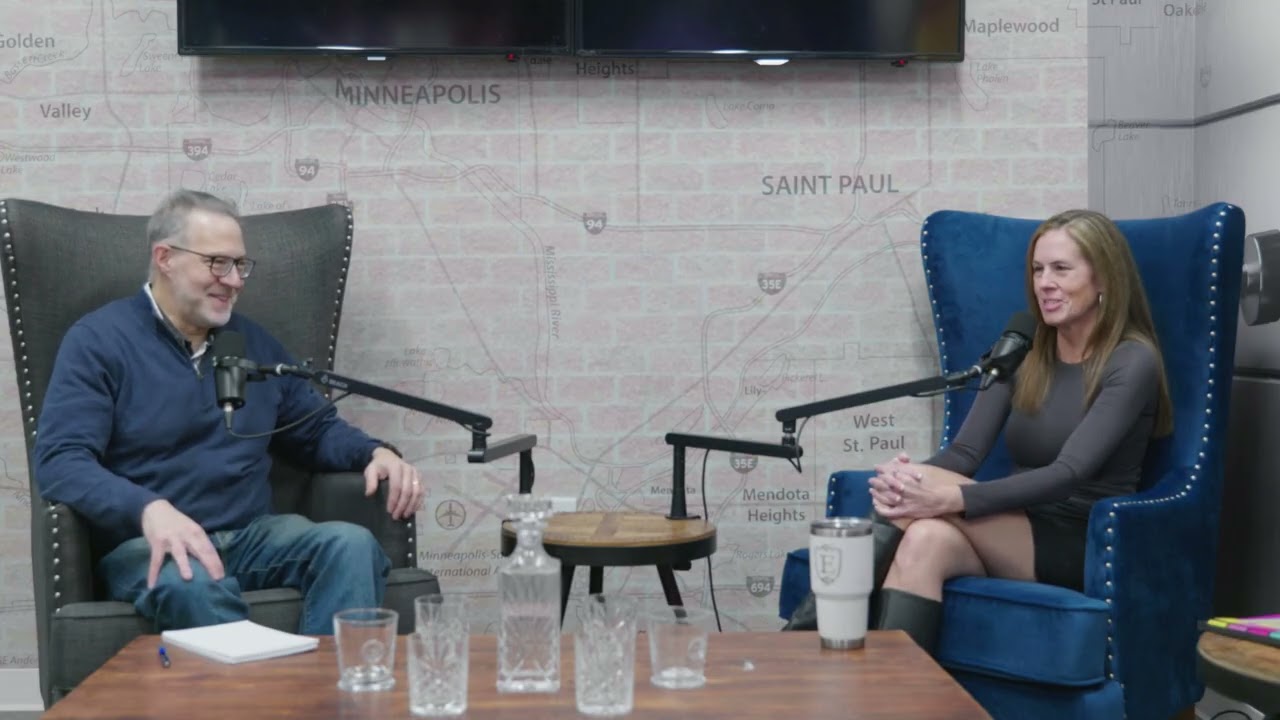
Karissa Dunham sits down with David Siegel of Minnesota Builders Exchange to talk about the insider scoop. The insider scoop on MBEX.
Or watch and listen on:


Karissa Dunham sits down with David Siegel of Minnesota Builders Exchange to talk about the insider scoop.
The insider scoop on MBEX.
Host Karissa Dunham sits down with David Siegel of the Minnesota Builders Exchange for the inside look at how MBEX helps contractors find and win work.
Hi everyone, it's Karissa from Shining Light on Minnesota. Super excited we have a very special guest with us today. David from MBEX. For those of you that don't know, we'll let David introduce himself and tell us a little bit about where where he's been. Uh thank you. Thanks for the opportunity to be here. It's just a privilege. Um try to impart some a little bit of information about the commercial construction industry and tell you a little bit about the builder exchange. Absolutely. Uh I'm the executive director of the exchange. I've been there just about 3 years. Prior to that, I spent uh just about a dozen years with the residential construction association. Yeah. Housing first, right? Housing first. So, those are the home builders. Very different than the commercial market. Correct. Extremely different. So, it's been a great learning experience for me. I've always loved construction. I loved being in the construction space, but now in the commercial space, it's just fascinating to me. And there's literally not a day that goes by that I I don't learn something new. So, I love it. And people have always kind of considered you a connector from where you first started off. Tell everybody about a little bit about your life growing up and how you got into the associations and how you really got involved. Yeah. Nobody goes to school to become an association executive director. There's no degrees for this. There's no programs at colleges or anything like that or technical schools. I was a journalism major and uh I was actually in broadcast but they were predicting the demise of broadcast even then and so I thought well I better you know I better sorry predicting the demise of writing even then. So I thought well I better do broadcast because writing is going to go you know the the newspapers are going to go the way of the dodo bird. Um, so I've been I've been telling stories and interested in stories right from the very beginning. So first couple jobs were in journalism and uh then one day I answered an ad for a job for some industry associations and it was the hospitality industry. So we're part of that network as well. Restaurant association, hotel, lodging, resorts and campgrounds. And I spent about a decade there and I traveled the country doing this a little bit and then ended up back at the residential construction association and then now at the builder exchange. But once I fell into this association world, I said this is the thing I really love to do because you do get to write, you do get to communicate, but you get to build a community and you get to know people in that community and you get to support and enhance and and help them develop their businesses. And that's that's really a joy. Absolutely. Why don't we tell our viewers a little bit about a day in the life of what you do as an executive director at MX. Well, it's so that which varies every day like everything. It varies every day. And sometimes people say, well, it's sort of the same, but it's different as well. It MX is a small industry trade association. We've got about 1,200 members. We might be one of the larger commercial construction associations, but uh we got a budget of about a million and a half, which makes us a relatively small industry trade association. And so I'm literally doing everything from at one point payroll y uh to uh responding to a request for information from the state or the workers comp people to figuring out why some technology in our plan room isn't working appropriately. uh to renewing memberships. So it it's really every day is is unique in is different. Yes. And then we do right at Embbeck um we like to say kind of there's three key areas of focus. The first one is our digital plan room and that's really why most people join. They want access to projects. They want we're their lead genen system. We talk more about that. The second one is connections and that's done through the industry events and that's still a really important part of the construction industry and you just have to build and strengthen those relationships. And then the third is really providing some information to the industry. We try through our weekly newsletter, magazines, blog, whatever, we try to give good content and quality information to the members so they can better uh really better transact business and grow their businesses. Absolutely. So, you've been in the industry for quite some time, but what do you see going forward looking for 2025? Do you see some growth and do you see some some more excitement coming back into the Twin Cities? I do. Um, it's interesting. 2024 for us, we track the number of projects that we process every year, and last year was a record year. We did 4,900 projects came through the builder exchange. Um, and that's all projects then that the members have access to to consider whether they want to bid on those projects or not. That's about the highest we've had in in in I don't know 20 since we've been tracking and easily in easy easily 20 years. Um, we also had a really strong year for membership. We had 140 new companies join and that's the most since the year of COVID. Why? We had we had 145 in CO. I think there was nothing else to do. Nothing else to do. might as well join your industry trade association. So, it was a really strong year in 24. Now, we're looking at 25. I think it slowed down at the end of 24. And I do think some of the private work slowed up a little bit, but the public, what we call public work, which is any city, county, township, you know, uh community hospitals, anything that's financed with public money has still stayed relatively strong. road construction has still stayed pretty strong and we're seeing some pretty enthusiastic members and some pretty good optimism for 2025. I think it's going to be a strong year for the industry. Awesome. Um and we're really excited about that. We we you know we we're always dependent on the economy. We're always dependent on whether the state has a bonding bill and whether there's you know public money, federal, state, county, local. But it feels like it's going to be a pretty strong year in 2025. And and I think, you know, labor continues to be a struggle, right? Sure does. A lot of people are retiring. A lot of the boomers are moving on. And and we've just, you know, for years and years, we told every kid that that they should go to a four-year college. And so MBX offers up some scholarships for young people that are looking to get into the industry. And in particular, we're focused on the trades. How do those kids go about and work and get into the scholarship system to try to be a nominee for it? Yeah, we we send out to every actually we send out to every high school in Minnesota and we send to the counselors and we send to any faculty that we're aware of that's in the construction space. They might not even offer a full construction program. Might just be an electric, you know, a class in electricity for sure or a welding class or the old what we would call shop class. and we go to those instructors and say, "If you've got any kids that are interested in pursuing this as a career, please consider us for scholarships." And of course, we're not the only ones. Many other industry associations are also offering scholarships. And that's fantastic. It's great. If you're a young person looking to get into the trades and the Twin Cities or even throughout Minnesota, there's a surprising amount of money available for you to give consideration to. So, a plug for kids out there, young people out there. I call them kids, but it's really young people. And it's interesting because a lot of these are folks who really have already done something. They've been out in the field doing whatever it is they started doing and they figured out it wasn't their deal, which is every not kid, but everybody growing up when they say, "What do you want to be when you get older?" I don't know. I'm going to just try some things and we'll see. So, they try it. So I think the average age at Dunwy and Henipin Tech and some of these others is upward of 26 27 years old. So these are these are pretty mature individuals who've now decided to make construction their career and we are just so happy to be able to give them some resources, some capital, some money to help them do that. And then we also ask them to come to an event. We want them to again that relationship. Yep. I've met quite a few of those at those events and it's it's great to see their their enthusiasm for wanting to get out there. They're pretty impressive young people. They are really sharp young people. Um so I think 25 is going to be a good really a strong year, Chris. I'm excited about it. It's amazing. I I think I've noticed too being out in the industry the last couple years, there's definitely been a shift this year and so much excitement when you go into places and people ready for the year and ready to get going and jobs are starting to drop a little bit more and everybody wants things done yesterday and yes, and there's an anticipation that interest rates are going to drop. Maybe they're not going to drop as much as people had hoped, but I think they've they've tempered Of course, nobody knows what's going to happen in the world of tariffs and we there's a lot of uncertainty. So, there's always these headwinds that you have to be cautious about. But, nonetheless, I think by and large, people are feeling, hey, the election's over. Some of that uncertainty has disappeared. And it just feels like we're ready to pop, right? Well, and employers having their employees back to work a little bit more than what they used to be is a big thing, too, because there's a lot of empty buildings. So the rebuilding of those buildings to make them accommodating and available for people to come and go too. Yeah, I think renovation and remodeling as you suggest is going to be really strong in 25. Y um we've also seen that industrial construction is really strong continues to be manufacturing investment in manufacturing capacity is is strong. I think office will still struggle, but it's picking up and you're starting to see those occupancy rates go up and people want, you know, class A space or class B space. So, so now that means I need to renovate, right? And open floor plans, too. That's the big thing with with workers coming and going and being more hybrid, right? They have to have easy open workspaces, right? So, you need you need a little conference room over here. You need a hoteling capacity over here. You need some offices over here and you're not parts with computers so you can run them all around and you're not constructed like that. And so you're doing a renovation or you're doing a remodel to make your office attractive so that your your employees want to be there and want to engage with each other. Sure, you can make them come back, but isn't it more efficient if you do it and and you know advisable if you do it in a way that you've also got a facility where they want to be there. So I do think renovation's going to be strong in 25. It's exciting. I think still that that industrial space, that warehouse space, we see a lot of that still. Retail's been surprisingly strong. Technology and investment in technology and large data centers. Yep. Very large data centers. Yes. Unbelievable. I was one of our members is Vite Construction and I was talking to one of our board members uh and she's working at a she's one of these data centers. I think she said there's a thousand electricians on site at this at this job site. It's amazing. It is. And the way the way the world's going, it's it's awesome to see so many different construction fields, residential fields, everybody turning towards that to work smarter and not harder, right? Which is always a good thing, right? Um the way you know a lot we get a lot of questions about where do we get our projects? Yes. Speaking of the types of projects in the industry, so almost any public project, it's we've been around since 1888. So it's 136 years. So people just know about the builder exchange and architects send us things and engineers send us things and general contractors, GCs will send us projects because they need they need bids from their trade contractors. So public work, meaning work that's going to require a bid process, we get almost all of it. Uh the bigger challenge is private work and that's always hard to come by, right? Um you know, you're building a veterinary clinic and maybe you went to University of St. Thomas and your buddy did too and he or she is a, you know, contractor. So that's who you're going to call to do this, whoever, right? To do this work. Um, so what we're doing is scanning every city council agenda and all their minutes and every planning and zoning committee uh agenda and minutes in Minnesota. And we're looking for clues about upcoming work and projects. And we produce a once a month newsletter. We call it the pre-bid pipeline. And it's maybe 80 to 120 projects that are in their early stages. There there may not even be phase one or whatever, right? There may be an architect, maybe not. They might just be going in with sort of a a napkin. Yep. And they're in council and they're seeking a zoning change or some kind of approval. So, we're gathering that and presenting that to our members, too, and starting to put that on the plan room because we are getting a lot of requests for that private work as well as the public work. So, where all are you guys located? You've got your Minnesota Builder Exchange. You have the Rochester Builder Exchange. Duth. Yeah. So, it's interesting the history of exchanges. Obviously, in the old days, you had to go to a physical location to unroll the plans. Correct. To take a look at these blueprints, you know, pull the pencil out from behind your ear. You probably had a cigarette hanging, right? Or or a couple. Yes. Yeah. From the stories that I've heard and some of this, that's the newspaper world, too. We know I've was in that before. Yes. You know, predates me, but uh we used to have all kinds of characters in our office every single day. Estimators from all the major general contractors and and third party estimating services. Well, all of that changed when the world went digital and so the need for those physical plan rooms and a presence, unique presences around the state diminished. So a lot of them merged to become the Minnesota Builders Exchange. So St. Cloud is part of Minnesota. Duth is part of the Minnesota Exchange. Now really Mano, the only one that's really left uniquely and independently is the Rochester Builders Exchange and they're tied in with their home builders association. Um and we're going to actually we're going to do a regional workshop in Rochester here in about a month and we're partnering with them. We don't we don't see that as competitive at all. If if you know if you want to do business in Rochester. Yeah. Yeah. It's we probably have a lot of the stuff they do. They have a lot of the stuff we do, but you want to meet contractors in your community. In in that case, Rochester Builders Exchange might be the right place for you. Yeah. So, it's really the only other local exchange left behind the Minnesota Builders Exchange. There is uh a Fargo Morehead exchange and a couple in Wisconsin and that and we're not really part of the same. We're we're a family in the sense that we all are builders exchanges, but we're not really connected. We we do get together once a year and talk. Well, yeah, you got to say this is what we have going on and kind of make sure those lines are all match and what's happening in the world of software and you know what's changing. It's really a lot about technology. So, how do you keep your members and or people that are out there that want to join trained and up on the plan room and how to use it and things like that? Do you have different courses? Such a great question and I have to say that it's frustrating when somebody joins and we really want them to be successful and they don't go in and set up their filters or or set up their backend so that they can feed themselves the pro. We want you to get projects that are going to help you be successful. And the only way that's going to work is if you go into the back end and put into the filtered system the things that you care about. If you do cement, you got to put a cement filter in there. If you do acoustical ceiling tile, that should be in your filter. And if you only want to work in a certain geography, that should be in your filter, too. So, we do a once a month plan room demo. Okay, that believe it or not, a lot of the existing members take because they just haven't really spent, you know, refresh. We're busy. We're all busy. We don't, you know, we don't we always sign up for something and then we I've got to look through the whole plan instead of just like 84. Yep. Right. So, you don't want to be looking at, you know, 200 projects when the reality is there's only 20 that are impactful for your business. Right. So, I would just encourage if if people do join the exchange and they want to participate, set those filters up so that it serves you. What's new this year in 25 for the exchange is you can have an unlimited number of users. And that didn't used to be the case. So if you have five people in your office that are looking for different kinds of work or maybe different geographies, each of those people can set up their own unique filter system and that'll kick back projects to them every night based on specific in their area. Specific to their area. Yeah. We have I was talking to one member the other day and he's got four or five people that are all doing geographical stuff. So they only want the north part of the state. Got it. Makes sense. They only want south. These guys do a little bit of Eastern Iowa and so they want to pick that up. Yeah. So that's one way we keep them informed. We do a weekly e newswsletter and we put some tips and tricks in there too. Okay. So if you read that you'll pick up an idea or you have your industry events and everything else as well. And then when you have the events a lot you hear a lot of times people get together and they're kind of how do you do this? How do you do that? Where do you get this from? Where do you get that from? And so we love we love hearing about that. It's so fun to be at an industry event and actually watch business take place. Yeah, it is. Wow, my worlds are coming together for once. Somebody will say to somebody else, we're doing this project. You guys should think about bidding on this project. And it's just it's that's really fun. It's invigorating to see when when everything kind of falls in place and it all starts rolling together, right? And then those projects get done and you're like, "Wow, that was really a cool project." Right. on the filters. By the way, one of the things we do that's unique in kind of in the plan room world, there are private sector companies that offer some of the services we do. They do a great job. We go one step further than most in that we take that specification document and those plans and we split them apart. Oh, nice. By sections or by pages so that when you search on that filter, you won't miss a thing. You're going to get just the exact type. You're going to get exactly what you want. Yeah. And you don't have to control F and search through 150 pages of PDF to find any reference to, you know, whatever it is you you do, electrical or plumbing, whatever it is. Yeah. Let's skip forward a little bit and talk about your board members and how that works and how people can get involved if they want to get involved once they are a part of Minnesota Builders Exchange. That's a it's a great question. So I would say first and foremost just come to some activities, get to know some people, build your connections, build your relationships. It will be worth it. You you will derive business out of doing that. Um it might take a while. You got to be consistent at it. Can't just go once and say nothing happened. People forget about you, right? You got to you got to be there. But it will work. It really does work if you leverage it and use it. And then we do have committees that help plan our fall social and our spring social and our clay shoot and our golf event and all those things. We do those up north in Duth and we do them in the cities too. Um so you can certainly volunteer on a committee or even just volunteer for the day if you say I don't have time to do a couple committee meetings but maybe that day you could sell a raffle ticket or two. Yep. And that money all goes to promote the schol to the scholarship scholarships. Yeah. So you could do that certainly that's a easy one or you know one hour or two hour commitment to the enterprise. If you want to get more into the leadership of the organization every year there's a nominating committee and they are looking for people who are interested in supporting the organization and providing their expertise and and really some strategic direction. Yeah. Um to the builder exchange as an industry trade association. We're we're a nonprofit. were run by a board of directors. I'm I'm very fortunate to to be the the chief staff person, but I take my direction from a board that says, "Dave, these are the things that we need. Yep. This is what we need. These are the things that are important and are going on in the industry right now. You need to know these things." And then we as an association need to respond to those things. So, just as an example, at our at our recent annual meeting, we had an attorney giving our members an update on, you know, just a few of the things that are changing in Minnesota statute that you want to be aware of. Yeah. As you get into 2025, and you don't want to get caught flatfooted. That's the kind of information or insight we try to provide to just to help our members stay up to date. For sure. And I think that's important, too, just not only on the end of what you need, but also what they're asking for as members. That's a big thing too, right? And we do some education, limited. There are other groups that do much more in-depth education, emerging leaders kinds of things. We're really focused on document reading, plan reading, little bit on kind of blue beam review, doing some preliminary stuff on how to do a takeoff and estimating, really introduction to estimating and takeoffs. That's pretty much the extent of the of the educational offerings that we have. Um, I'd say there's other associations to go to if you're looking to get deeper into certain areas, probably other places, AGC, MCA, MSA, and there's a lot of associations out there. Yes, in the construction space, there are many, many. One of the things we're really focused on, our incoming president is Heidi Heidi Sedlichek from KJ Engineering. She's tremendous and one of the things she's really focused on is building connections with and between the associations. So the regional meetings we're doing we're doing with the electrical association and the concrete council and um you know we're just and we're trying to we're doing a meet the estimator event. Yeah. That's the first time where they're all pulling together, too. Like MSAC, MSA, MCA, MSA, Subcontractors Association, Minnesota Construction Association, and MX are doing a meet the estimators event February 5th. Yes, it is February 5th at Greser. So, that's new for us, too. And and that's really fun, you know, working with the sister associations to try to serve the industry. Fantastic. love doing it because I think I notice in in my world with all the associations that we're a part of, everybody always comes to me and they're like, "What works?" Yeah. And you you just got to say it all does. You've got to be on me present. You've got to be but you have to be active at those events. Yes. And you have to be willing to go to them. I don't care if I'm doing eight or nine events in a day. It is what it is. But making those connections and making them last. Having that connection of I remember you. I remember your name. But when you see those associations all working together, that's that's really heartening. We always hold you guys up as the model. Oh, great. You know, here we go. Yeah. Well, you know, people ask and they're like, "Well, how do you do this?" And and I say, "I don't know how they do it, but they do it really well." So, I think you're an example of just getting engaged, getting active, being present and and sort of people just know they begin to know you and then they begin to refer you and that's how this thing works. I think the trick of your game and my game is remembering those people that know you. Yes. It's like, "Hey, Karissa or hey Dave, how you doing?" I'm like looking for the logo, the work truck, something. I'm like, "Ah, perfect." There are those moments when a member comes up to me and they know me and I don't know them. And that's an embarrassing situation. It's like I have kids, too. I'm like, "Are you a parent of one of the the friends or how do I know you?" You just ask those open-ended questions, but it does happen. And, you know, when you have 1,200 members, you can't remember them all, but you wish you you wish you could. Yeah. Um, and we're we think there's still an opportunity to to grow. We're trying some unique things with with email marketing and um it's amazing how many commercial construction companies exist in Minnesota and the five state region. We derive plans from from just the five states. Okay. So we're Minnesota, North Dakota, South Dakota, Wisconsin, Iowa. Yep. If you said, "I'm looking for project work in Montana or Kansas or something," we would not be a source for you. Yep. But in the five states, we're going to be a pretty good resource for you to secure projects and find things to consider bidding on. Um, but that means that the pool of potential members is pretty substantial. It's large and it's ever growing and and we focus mostly on Minnesota, but we do actually have some members from other states. And sometimes we have suppliers who join and manufacturers reps and distributors and they're doing it often so that they can look at these plans and specifications and say, "Aha, you've got this project specified on this particular uh construction project. This is the this is the product that you've specified, but would you consider this as an alternative?" Yep. And so then they want to get to the architect or they want to get to the engineer. they want to get to the construction manager and see if they can't be assigned as an equivalency for sure in those plans and specs. So a fair number of our of our members come from that uh you know distributor and manufacturers rep world and they they try to leverage the exchange for those reasons. What do you see for the future with technology and with growth and everything like that? Do you see staying just within the five state area or do you see locking it down more, going out more? I think for us the five states works really well. Um like everybody we're trying to understand AI better. Yep. And smart ways to do it. We just aren't sure yet how AI is going to influence the plan room, but I'm convinced in the next several years it will. Absolutely. So, we're doing a lot of deep dive into into kind of how could we leverage AI more effectively or how could it be useful? You could envision a world where our members would almost be having a conversation with a project. Yeah. While they're there and in 3D and all the renderings, right? Sort of asking the project questions and the project answers through through AI sounds a little weird, but that could be virtual reality. Yeah, it could be coming. So, so we're just doing a lot of thinking and trying to understand how we could deploy AI. And I think that's probably a big a big probably the single biggest technology change. We get a lot of compliments on our plan room right now. People tell us all the time. I hear this from members like, "We've tried them all. Yours is the easiest. Yours is the simplest. Don't change a thing. Technology changes. People change, right? We're like Mancinis. You can't charge 5 cents more for a cup of coffee. You know, if you tweak it one little way and those little followers will be everything else goes nuts. So, we're we're trying, but but technology changes and you have to change with it. Um, and then the other thing that we're we're kind of looking at is we we don't use a very sophisticated uh management tool for our database of our members. Got it. And we do think that there's an opportunity to maybe look look at more of an association management platform that we don't we're not using today that might tell us a little bit more about each member or help us maybe the personas at least too so you know where help us better right better assess who's deeply engaged who's not who should we reach out to to say we're not can help you reach out to them without you we're not seeing you or we want to see you. Yeah. So we we're looking at that too. Couple couple of big things technology. Yeah. Yeah. Which is which is exciting in a lot of people's world, but on the same end trying to bridge the gap from the people that are not technology driven to to get them on board and at least get them fluent with it or it's medium and we were just talking about this this morning. We had a member, one of my staff was on the phone with a member and just struggling, you know, trying to explain, well, which browser do you use? Well, what what's a browser? Oh lord. You know, we're I have my pen and paper and my napkin here. This is not going to be easy. So, it's just very difficult and there's no easy solutions to this. There's not. And especially when you see like the older generations trying to hand down their companies to the younger generation when all their paperwork is paperwork and it's not in the computer. We were sort of sitting there saying, gosh, do they not have a a a son or daughter or grandson or granddaughter or niece or ne isn't there is there someone they can I come to your house and help you? Yes. Yes. Can they come to your house and help you? Cuz they're they're frustrated. They're trying to get into the plan room. They want to access the you know the information and it you have to have some technological savvy to to be able to do it. You know, sometimes we're telling somebody to like I can't just print off all the all the plans for you on paper anymore. That's not a thing, right? We're you know, some we're like you might have to clear the cash in your browser. That's that one that's a we can do that for you. Yep. That's a tough one. So, we do I mean if people want to come in and they really need help, we'll we'll do that. And and then the online demos, at least if you can get in, it's Zoom, it's live, you can you can I usually lead them or Ashley in our office leads them. You can literally watch us set up filters. Ashley's amazing, too, by the way. She's terrific. Terrific. And so you can watch us set up a filter. You can you can watch us pull projects down. You can watch us look at them. And um yeah, we're doing a neat thing in partnership with the National Association of Minority Contractors, Upper Midwest, where they're bringing a number of their members in to see the plan room, access the plan room, and get some training so that we can support those minority contractors seeking to get into the industry. And we're kind of excited about that. Um Marvin Smith is their pres elected president. Marvin is a great and he's just great, just a great person. hugely supportive of the builder exchange. Um, and so we're we're trying again to to build those connections and those relationships. We do get asked not infrequently whether we have a record of minority contractors, womenowned contractors, veteranowned. Um, and one of the new features in the plan room is you can go in on the back end, put in your own, you can change your staff, change your record, and you can change whether you can assign whether you're a VBE, veteran business enterprise, minority business enterprise. So again, if any members are listening and they haven't done it and they are union and they want to designate that or or minority owned, you know, they they they should go in and and do that because we do get requests for information. Do you guys go out to the local universities and or like Dunwy Summit, anywhere like that and do courses or anything like that that will help them get involved in the trades or that are already in the trades? We don't we we kind of have supported an organization called Project Build Minnesota, which is a nonprofit that's whose sole purpose and focus is to try to recruit and bring young people into the industry. And there's a website, projectbuildmn.org, I think. And um and they go out to classrooms. Perfect. So they're in classrooms educating young people about opportunities. Uh, and one of the things that Project Build has done each year for the last three or four is a construction teachers conference. Got it. Which is really cool. It's a once a year event uh inviting all of the construction faculty from high schools and colleges in Minnesota into an annual conference so they can share with each other. Yep. Get together. We've actually hosted it out at uh the builder group TBG and Egan. Nice. And I think it'll be there again this year. It's in April. Okay. Um, and then the other thing Project Build is talking about doing is bringing all of those talent acquisition people who work for all of these different construction companies together to share to the extent that they're willing to share their best practices, which is good because everybody needs to be on the same wavelength. They all have to be teaching and recruiting is a huge issue. It is and getting into schools is a monster, you know, it takes a lot of time and a lot of energy. It's a big commitment. So the more that are doing it, the more that are actively engaged in it, the better. How do you guys go about recruiting more members and things like that or what what do you foresee for the future? You know, um I we track kind of how do people find out about the exchange? Number one is through referrals, which is amazing to me. I've been with associations for decades now and this is the first association I've ever been a part of where where the members actually kind of are the lead source for more members. Oh, absolutely. It's always you usually it's you have to have a saleserson and we don't have need to. Right. We don't we don't have an not right now anyway. Not now. We don't have and we don't have the resources and we just we we just get a lot of activity from people who recommend us. GC's will say you should belong one contractor somebody will go to you know a different business and say we used to be part of MBX and so well now that you're going together with MCA and MSA and different like meet the estimator estimators and things too that'll help so we get we we get a lot of referrals and then the second thing we're doing that we haven't done before is obtaining some lists of construction companies um and we're getting that through the Department of Labor and Industry and just a army corps of engine a variety of places where we're getting lists of contractors and we're working with a platform that does a sort of an email drip campaign. Got it. We don't want to bug them. We don't want to be a problem. We don't want to anger them. But we want to get in front of them and say, "Are you aware of what the exchange can do?" Um, do you think we're a good fit? We're a really soft sell. Like either it works or it Right. Well, it does. If like like a lot of other associations or unlike a lot of other associations, you have to get in there and do the footwork to make it work, though. Yeah, you do. And I tell people that. I say, if you're going to pay membership dues to us and join and never go in and set your filters and never log into the plan room and never come to an event, right, you really might as well save yourself a,000 bucks. Absolutely. And don't do it. Cuz what's going to happen is a year later, you're not going to renew. I'll be sending you invoices or statements. You'll be frustrated. You'll be like, "Why am I doing this? You're not doing all the work to make it happen." So, we really do say that we want to be of practical use to you and success in your business. If you're going to join, participate and and get active and get engaged at least at some level. Be sure to get in the plan room and at least look at some stuff. set a few filters up, maybe come to an event. Yeah. If not, you have a member association directory, too, that they can always look and see if they're trying if they met someone at one of those events. That's a nice way for them to connect, too. We do. And we're just at work, literally. I was talking to Ashley. We're just at work on the 25 edition starting February 1. We have to we do renewals of our dues in in December, January. We have to let people have an opportunity to pay, right? And then once that's done, then we put the directory together. So it'll probably be out in March, maybe at the very latest, which is exciting because a lot of members, I mean, a lot of times I'll be out there and I'll be like, "Okay, I don't remember John's last name and I just met him and how can I quick email him out?" I know we've gone digital in so many ways. I'm still surprised at how many people value the printed the printed membership directory. Yeah, we talk about it every year. We say, "Should we do it? Should we?" It's a lot of work. Well, you can keep it in the car, too. That's an easy thing, too. Like, just keep a copy in there. Digital is easy and it's nice to have there, too. But not a lot of people are always in front of their computer. And if you're trying to do the digital from the phone, That's correct. That's the hard part. It's hard. So, I am surprised actually at how many people literally tell us that they still use the good oldfashioned Yep. The old phone book, yellow pages of of contractors. and if they're looking for subcontractors or or you know other folks that they want to connect with. There's actually a section in the directory where you put the type of work that you do. Nice. And that's very helpful for people. So, you know, for now, we're going to keep doing it. As long as the members tell it, they want it, we're going to do it. It's kind of not really like the newspaper industry where that goes away and everything goes digital. Yeah. I mean, I do I think if we do move to an association management tool that's a little more sophisticated, it'll probably have an online directory too, which we don't have a very effective one, right? Um, but I still think people want that printed guideline. They get excited about them, at least today. I five years from now, we don't know. Might be a paper weight. Who knows? But yeah, right. for the for the people that are the older members that still like to look things up or just keep them in their car or whatever, it's nice to have. Yes, that is correct. And the other thing we're hearing that I find really interesting is that the younger people in the industry are really looking for ways to network. Absolutely. Um, and so we've we've had a request to start up. We had a young professionals group before co co sort of kibashed that and now we're bringing that back in 2025 because we're hearing from from young folks in the industry that they want an opportunity to connect network and to network and some of them don't even know how to do it. So, we're actually even looking at do we do we even offer up maybe a a a session on literally how to network. Uh but if if you went to school and you spent a couple years doing it virtually and you didn't you lose that or what's coming in the future without the computers, you have to have that personal connection and you have to be able to get out there and put yourself out there. So, interestingly enough, even though we've got a world of phenomenal social media opportunities and even though we've got ways to connect digitally that are just amazing, there is a desire for this, you know, back back face to face. Yeah. Yeah, there is. I've noticed that. I mean, a lot of the events, especially this year, they're just completely packed where last year slowly was kind of coming back in. They're they're full. Yeah. So we so we're doing this young professionals network and again if there are people in the industry that are in their 20s or 30s on up to I think 40 I don't know what their threshold is but you know you're interested um that would certainly be something to to to check out. How do they check that out or where do they find that? Um our our our staff person is Melanie Hendrickson. If they go to our website mbeck.org or they can just look up our staff and Melanie is the person who's running the young professionals network and I was meeting with the architects association maybe two weeks ago and they have an emerging professionals group same concept and they were so excited about the idea of getting their emerging professionals group together with the young professionals network from MBEX cuz they're they cross paths and and you know maybe the folks who've been in the game for 30 years kind of have those relationships built, but those newcomers don't. Well, I know in like the property management side of the world and the real estate side of world, they always go together with their young professionals and put them together and do events to get them all in one because they all connect. So, just getting more people out there and having the more there's work for everybody, right? It's not always just a competition. That's correct. Um, you know, and interestingly enough, on our plan room, for example, we list all the biders on a project or as many biders as we know. Yeah. We don't actually know if you bid. We know you've downloaded the plans. We know you've gone to a pre-bid meeting. They haven't selected bidding, not bidding. Yeah. We know you've, you know, expressed some strong interest. And it's again, it's amazing how many contractors will contact other contractors to think about packaging up or working together or bidding together in some capacity. It happens a lot. I think it gives the bidder like on our side too, like if we can see who else is bidding on the project or who else has opened it up to reach out and say, "Hey, I see you're doing this and this is another scope of our work. Can we put it together with you?" Or just touching base. That's correct. And we'll get we'll see that happen a lot. you can you can actually go to the plan room and you can click on those biders and you can send them an email and say we'd like to work together. And then the other thing that there's a fair amount of interest in, we've really just started doing this about a year and a half ago where we get the bid tabs where we actually get the bid results on a public project. Private you won't get this, but public you you fairly often do. We'll actually post those bid tabs. Nice. So you can go into a project, it's a school being, you know, built in Washington County, something like that. You can actually see the bids for painting and here's the five different companies that bid and here's the difference and the distinction between those that pricing and that helps you. It does. So you can compare apples to apples too and what if you're missing something if you're not correct. And if you're maybe you bid on that project and you didn't get it, how high were you? Instead of going back to that contractor and having that conversation, you can see it all there too, right? Or maybe you maybe you did get the project, but you realize you could have actually bid a little higher. You learn maybe you bid a little low on that project and you could you left a little money on the table and you just learn that by looking at those bid tabs over time. So that's another way that people leverage the plan room. How long do those stay up for after you've bid? Um, we put a project up. It goes into archive pretty quickly, but we can pull it back if you need it. Okay. And a we get a lot of that. We get a lot of requests from people who say, "I I I won the project. Might be six months. I won the project, but I forgot to download all the plans and specifications or I downloaded them and I can't find them anymore." Would you put the project back up online? And so literally we can have it back up in probably two three minutes. We can flip a switch essentially and put it back up. Then you can download the plans, download it all over again. All over again because you forgot what you did 6 months. It happens literally every day. Oh, I'm sure. Yes. Every day. And so again, if you say, "Wow, I wonder what I wonder if they had bid tabs on this project six months ago. It was a school. We'd like to see how we did or see how others did." Right? Um you can you can ask us to bring it back up and we'll and we'll do that. Nice. Yeah. The last piece I'll mention about the plan room that's kind of fun. I just like these features because it's something different that not a lot of plan rooms have. Have it. We we have a place where you can go search by company type. It is essentially a directory but it's both members and non-members because we when we list biders on a project we don't whether you're whether you're a member or not it doesn't matter. Okay. We'll list them all. And so if there are 10 companies, electrical companies or HVAC plumbing companies that bid, we'll put all 10 of those in as biders on the project and then they become part of our list of HVAC plumbing companies, which is good for you guys because then you can also we can go solicit them for for membership. So when we talked about securing more members, that's one other place we're we're we're taking this uh these biders that we've been entering into the system for for years. Mh. And we're finally starting to leverage that and say, "Well, gee, maybe maybe it's a fit for membership. Maybe I've seen you've been on six of our projects. There might be more out there for you. Maybe you want to join." I'd say one other thing that's changing broadly in the industry is just and it's a balancing act. We hear a lot about sort of that there's the design bid build world and I think that there's a push to move more to the sort of the design build world right and not do quite as much formal bidding but hire maybe a general contractor who gets bids from the subs the world of bidding is changing it does and it is for sure and so we see that I don't know what that means for the exchange or what it means for the industry. Uh I think the theory is if you can bring in the general contractor and maybe even some key trades, let them be the onestop shop earlier they Yeah. then they can solicit their own. Right. Right. So, we get a lot of plans and specs from general contractors who need additional sub want additional subcontractors to bid on those projects and and they're the construction manager at risk or the construction manager's agent and then they leverage us at the exchange as a way to get into the trade contractor world, which is nice too because if the GC only wants it wants you to bid on everything and you can't do everything, then you can help pull those trades in that do that all for them. That's correct. And you know, if you're you have to be bonded often times when you're bidding, if you've maxed out your bond capacity, maybe you can't bid because you're not able to be bonded for that project. So then should say yes. Yeah. So then the GC needs some, you know, needs somebody else. It's such a fascinating the whole world of commercial construction is just I love it. Well, going from residential, well, hospitality to residential to commercial is is a big step, too. And it's kind of interesting just to see how it all is starting to kind of go together because a lot of times you'll have the commercial in the residential areas now, right? Um all the apartment buildings and all the grocery stores and everything else too. We do a lot of retail. We get a lot of multifamily coming through the exchange because often times that involves some form of public financing in some capacity. And so there might be a low-income housing tax credit or city money or county money or federal money or state money involved in that from Minnesota housing finance. And so then there is a bid process for that multifamily. And even though it's it's sort of a private project ultimately be owned and managed by somebody, it's leveraging public it's leveraging public money. Yeah. Money. And so we get a lot of those projects in too which a lot of those are coming through. I mean, every day there's areas growing with more and more building up instead of out. Yes, there's a there's certainly from my days in the residential construction association, there's a push for greater density. Yep. Um, you know, smaller units, smaller lot sizes, more town homes, twin homes, multifamily, and and less single family. And I and it's just become so expensive. It has. I mean, with the younger generations, you start to wonder how they're going to be able to afford it when they get up there and how many jobs they're going to have to have. But we did it and we figured it out. So, guess what? They're going to They'll find They'll hawk newspapers in the corner. Yes. They'll find a way. They're all going to live together in one house for a while. Generational house. Yep. We'll have multiple people there and then they're going to figure this whole uh thing out. But yeah, so we get a lot of those multifam projects coming through as well. Good. It's fascinating. Um, I' I'd love to be able to sort of highlight some of the projects we get more more effectively and maybe someday we'll figure out a way to do that. We don't we don't have a system today, but boy, there's some interesting and beautiful things that get built in this state. Well, the the shopping center world as far as the restaurants coming in, things like that, those are still flowing. Like those are coming in, the the hair salons, everything like that. Yes, retail's been strong. Retail's actually been, I think, surprisingly strong. We hear about everybody buying everything online and yet and yet we still see, you know, strong retail presence and consumers still wanting to go out and actually look at things and actually do try things and have the experience of being right being at a restaurant. So it's surprisingly enough again retail retails remain pretty strong. So let's you know fingers crossed for 25. Yeah. I mean it it sounds exciting. It's it's fun when you start doing traveling 23 24 outside the state see all the excitement in all the other states and now when you come back to Minnesota and 25 that excitement is here and they're ready to go and ready to you have that experience more than I do cuz you you're you guys are so involved in I mean you're moving you're in a lot of states so you that's a wonderful perspective to be able to bring all that back. Yep. When you go to places, I mean, far away close, anywhere like Iowa, the Dakotas, Florida, wherever you're at, even Montana, Colorado, everybody's super excited to grow. Minnesota kind of had a I mean, they were growing a lot, but they weren't as excited as they were. And now you start getting to the events. Yeah. And you see the happiness and let's go, let's grow with everybody. That's fun to see. I felt that we did our annual meeting just I think on the 15th of January and and we had probably 20 to 30 more people than we did the previous year and the energy level was really high. It was and and that was fun. You could just you could feel it. You anticipate it. You just knew it was there. Yeah. Everybody was yapping and talking and just it was Yeah, it was a really a good feeling. Well, and it's nice to see competitors talking together and just seeing what they have out there trying because there is work for everybody and everybody has to come together to see that that like, hey, this is where we're at. It's great to see you. It's good to get back out and everything like that, too. Couple joys of working in the association space. One is that you see people take on leadership positions and maybe they're pretty shy at the beginning and they they don't speak in front of people much and by the end of a term they're really good at it. They've really grown a lot and that's just a neat thing to see. And the other thing that's fun to see is competitors. you might be battling, you know, out in the parking lot, right, pretty aggressively, but when you come in underneath the roof of the association, you're there for the good of the industry. Um, and that's really part of the that's one of the joys for me of working in a trade assoc because you never know when that person is going to need something from you or you're going to need something from them. And, you know, a lot of ribbing each other cuz so many people do know each other. Maybe they worked over here before from here to there in every every different aspect in the construction world. So you just there's a there's a lot of BS that flies back and forth. Oh, absolutely. Especially when jobs everybody's hungry these days. And it's just it's just fun to you know be part to be part of that to watch. You can feel a little bit of the animosity, but that's exciting too. It's like Yeah, it's it's a friendly it's a really genuinely friendly competition. Yeah. And I don't know that every industry enjoys that or has that privilege. And I really think that's unique to construction in my experience. And and is it is one of the great joys of being a part of the industry is yes, you're a competitor, but but you really care ultimately about the quality of the product that's being produced, building communities, and and you have fun with each other, the client, the customer. Yep. You can bring it and put it on the table and let's let's go. Yeah. It's really Yeah. So, I I always tell people I'm very fortunate. I I love the construction space and I love the world of association. So, I'm one of those lucky people that can't wait to get to work every day. And really, I bet when you go home, you're a little bit tired. I'm exhausted, but I love it. Yes. And then I get up and I'm ready to do it again. Right. And even on the days when you're not when you're like trying to fake it, you're like, I got to do this. All a sudden you get there and that that energy is there and you bring it and you're like, all right. Yeah. You can and you you get it from the members and you get it from the mission and the purpose of the organization. Absolutely. And that really does drive us. We talk a lot about that with our staff. We talk a lot about that with our board. Well, and it's like how can you change that in the years past like when CO was going on, everybody was a little bit more down and just working from home or they're coming in because they have to come in. Now they want to be there and they want to be happy. So, how do we keep this going and keep them motivated, right? And some of it comes from some of the things you and I were talking about, which is just innovation and sort of new technology that that does energize. It also scares people, but it also energizes them. And so because they think, hey, if I could have something do something for me just like that while I could delegate my time doing something else just a little quicker. Smarter, not harder. Right. You get that figure it out. You get that 1% better every day. You're Yes. You got to always learn though. That's the trick of the trade. you never stop learning. I don't care what you're doing yet. I think that's absolutely true. It's almost like the deeper you dive in, the more you know how much you don't know, right? And it's sort of like this on the other side of that narrow, it narrows to a little point and then it opens wide open because all of a sudden you're like, "Oh my goodness, look at what I don't understand and look at how much I still don't know and I still could learn." Um, so that keeps me going every day. Yeah. And you also have to think outside the box like what can we do new different to keep to keep going to keep this association going keeping our members happy everything like that. Yeah. My goal is uh we've been around 136 137 years. I'd love for let's make it another I'd like exact exactly that'd be my goal. I won't be there. Well, you never know with technology the way it's going. But but you know, can we set the organization up so that it it can survive and thrive and and grow and adapt and still be relevant? Absolutely. In five and 10 and 20 and in 50 and 100 more years. So that's that's the you know that that's the sort of the really the joy of doing what what I do. Absolutely. Well, we appreciate having you on today. How can people again, how can they find you? How can they be a part of the association, join, find out more about it? So I'd say the easiest thing, pardon me, the easiest thing would be to go to the website which is www.mbeck.org mbeex. You'll see a calendar of events so you can take a look at all the events. You can you can give us a call. You'll see a list of the staff is up there and a list of the board. You can always talk to a board member. You can always talk to a staff member. You can send us an email. There's an info email address. Um, and I'll just give my my email is dsmbbeex.org for Dave Seagull. It's really easy. So, if if there's any way I can help, you know, whether you're a member or not, LinkedIn, social media, they're all there. All there. Whether, you know, whether you're a member or not, the ultimate goal is the success of of being in the construction space and growing the construction industry. So, that's, you know, we want to do that regardless. So, whether you're a member or not, go ahead and reach out. if if we don't have an answer, which we maybe don't, we'll try to find somebody who does. Well, I think it's just a little bit of plug on your end, but it's always fun when you start going to the events and you know people, it makes it a little bit easier if you don't reach out to one of the members, reach out to a board member, reach out to somebody and get to know them. Then you can at least say you know somebody there instead of just being the the correct. And if you want to try the plan room out, there's a trial period. You can do a couple of weeks for free and just try it. We'll set up the filters with you and you can you can actually get a nightly email to see if this thing is going to work for you. Yep. Register for your email, too. Yeah. And then you can you can always come to an event and and we often have non-members come just to see what it's like. Can members bring non-members to help grow that? They can. Obviously, we can't have somebody who's a non-member come to every event all year because then you're taking what's then what's the point of membership and you're not being fair to those that are paying their membership dues. But if you want to come once or twice and come with a member just to see what it's like um and see if it's the right fit for you, we'd we'd we'd welcome you. Perfect. That's easier than doing like a newcomer's lunch or something like that. Just just come and you'll you know you kind of we are kind of what we are, right? What you see is what you get. And you'll see the same people sometimes as a lot of the events with me, but we'll be good. Yeah. Yeah. That's that's part of the fun of it. Yeah, it is. Well, we appreciate having you on today. Looking forward to the future and can't wait to let our viewers see this on Wednesday and then it'll go out on our Thursday newsletter and we wish you the best of luck. Well, thank you. Wishing everybody a terrific and strong 2025. Yeah. Here's to 2025. Thank you. You're welcome. Thank you.

Karissa leads business development at Sun Control of Minnesota and hosts Shining Light on Minnesota, sitting down every week with the business owners and leaders who are building something good across the state.





