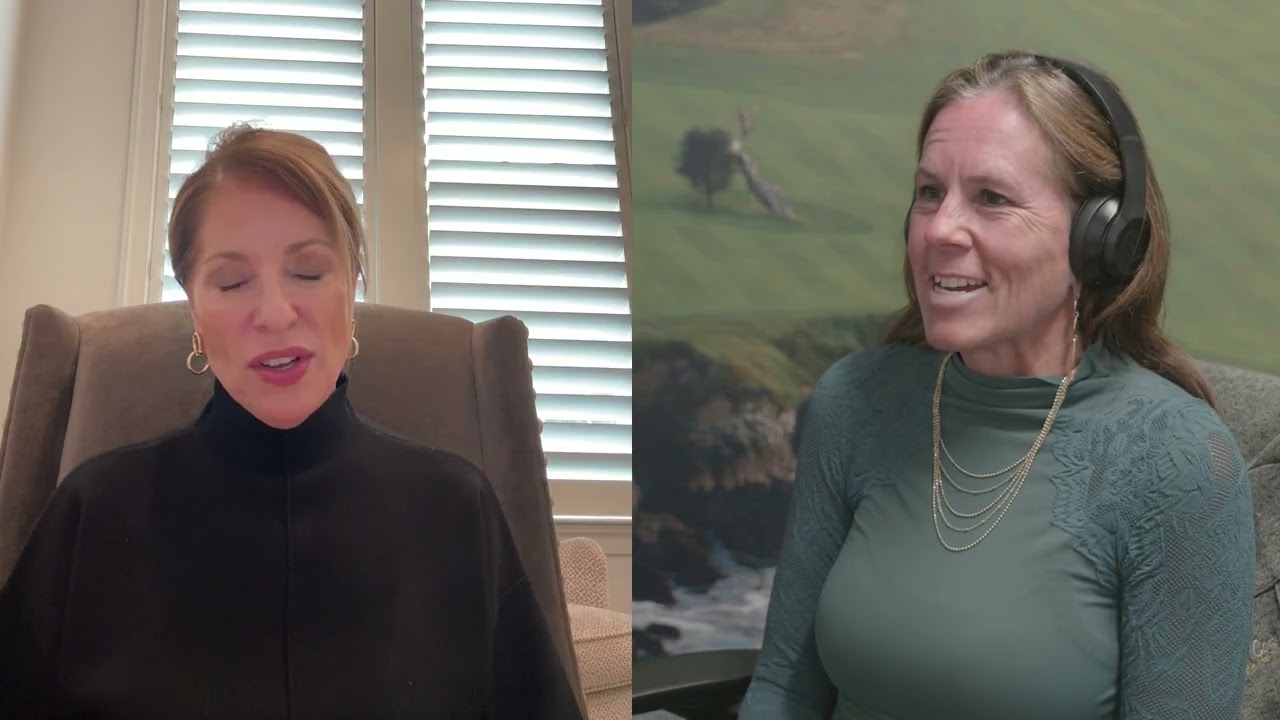
Hello everyone. I'm Karissa from Shining Light on Minnesota. We have a special guest here with us today, Tricia Barone from Rowland Mountain. Welcome, Tricia. Hi. Hi. So, let's start off by telling a lot of our viewers who are not familiar with a little bit about Rowland Mountain and how you got into the recruiting and all of that. Okay. So Rowland Mountain is an executive search firm with a focus on supporting the hiring needs of building product manufacturing and distribution organizations. Um we have been we're in our 37th year in business. I've spent 26 years of that 37 here at Rowland Mountain. And um what we find has been a common theme for us has been industrial manufacturing. So we've been led into building products by demand and by relationships that we have, but we do from time to time find ourselves filling roles in other related industries. So we're doing a project right now for a company in the packaging industry. So um we are um focused on North America. So our placements are all over domestic US, a little bit in Canada. Um and always sales and marketing focused. So um there's really you know three levels of people that we place um individual contributors. So in sales that's going to be you know your field-based salespeople usually with you know 3 to 10 years of experience kind of people. On the marketing side they would be brands people or product marketing product development that kind of thing. Um the next level is leadership. So anybody that's leading individual contributors and then um the uh executive category which is leader of leaders. So we placed two CEOs last year. First time we've been in the sea suite like that and that's we tend to gravitate are gravitating more towards the executive category. Um probably because I'm aging and so are my so is my [laughter] I couldn't tell and so is my network. Right. Seems like our kids get older and we just kind of stay the same, right? That's right. I don't I don't age a bit, right? So, how do people in the seauite and the executives and team members find you? How do they go about and search you out? So, um well, obviously we have a website rolling mountain.com or rmasales.com will get you there. Um, most of the people that we work with come from a relationship that we've had. Someone that we've worked with as a candidate that's become a client or someone that gets referred by another client. Um, so most people find us um through some sort of relationship usually. Now on the candidate side, we go find people. Um, people don't find us when our clients give us a search. We go out and specifically look for candidates that meet, you know, functionally have, you know, the kind of background they're in an industry that our client is looking to hire from in a specific location, that kind of thing. What areas do you cover? You cover nationwide, you said all over the United States and Canada, everything like that. So, how do you know or what's the easiest way for you to find candidates? How how can candidates be found? So, I have an amazing research team spearheaded by somebody who's worked for me, I think it'll be 16 years in April and she is an amazing um investigator. Okay. And she uses all the usual tools and she tracks down. So, when a client gives us a search, we immediately go to our existing network and say, "Okay, who do we know?" Right? But then who do we need to know? And that's where she comes into play. We'll partner with our client organization to develop a list of companies that we want to go after. And um in those companies, you know, who are the people is what our research team figures out. They find email addresses, mobile numbers, social media profiles and um they do, you know, pretty extensive research so that we can get in touch with them and then we we re start reaching out to them. Wonderful. [snorts] Um, and that's what our team of recruiters does is they go out and and specifically target um specific people and specific companies for our client opportunities. What about like the younger generation when they're growing up? How do you get them interested in wanting to be or do recruitment things like that? Do you have different processes or things that you guys do to keep them interested? So, you mean um recruit for our clients or to recruit for Rowland Mountain? Either way. Like recruit for Rowland Mountain for people that want to get into the recruiting fields. So um our job it's really interesting because recruiting is a sales job. Yeah. Especially in what we do. So we partner [clears throat] really well with talent acquisition people because what we do is very very different. Typically talent acquisition people [clears throat] are vetting through people that are coming to that company because of a posting or a employee referral and we um augment those efforts through an outbound effort. Right. So, um, it's very much a sales job. So, working for Rowland Mountain is a sales job and it's an inside sales job. So, Rowland Mountain had for many years, we had a physical office in Atlanta, 22 recruiters in that office, commuting to the office, wearing suits every day, things that you don't hear about anymore. But, um, in 2017, our company evolved and we became a remote company. And now um our employees are all over the country. Um you know being um an Atlanta based firm for many many years. We've got people in Atlanta. I happen to live outside of New Orleans. So we've got people here. Um um Alex who you spoke to is in Tampa. We've got people in Houston. So we're all spread out um throughout the country and it's really opened up um opportunity for us to attract people in other parts. And I think the fact that we're remote really is attractive to the the incoming generation. Although we're seeing a trend more towards wanting and needing that connection. So getting back to the office a little bit more too. Y getting back to the office. Our team is I mean we're we are communicating all day long. So you know no lack of opportunity to interact with each other, right? Um, and we find too, you know, our client organizations are very hybrid. You know, um, you know, most of the roles we work are remote or hybrid in some way. I I cannot think of a role we filled in five years that's fully in the office. I mean, and because we play sales people and marketing people, they're out in the field. They're meeting with clients. They're meeting with prospects. So, they're not in the office. Um, they're out in the field. How did you guys So that's when like 2017 you started to pivot and change like when you went through co how much did your job change and how much did you acquire or grow or vice versa slow down a little? So um we sped up during co and the beautiful thing about co for us was we were already prepared you know we had a soft phone system fully working we already knew the work remote um it was a business disruption probably you know when when was lockdown like March I think you know there was probably a 30-day period where everyone was like okay what's going to happen here and then once you know um again everybody Everybody had dialed in, okay, you know, our business could be impacted. Um, so sales and marketing people became more and more important. So we were very busy during that time. Wonderful. So when you guys have grown grown and changed and evolved a little bit more, what are some top qualities that you look for in candidates when you look for people? I know head hunters come in and say, "Hey, I want this, this, this, and this from this person." as people in the outside world are looking for jobs, what would be some great attributes that they could have? So, every client's requisition is different, right? So, every role is different and requires a different skill set. Um, every company culture is different and so what works in one may not work in another. And I think you know that's it's really hard to answer that question in general terms because not every search we do is unique. Correct. Um and every marketplace is unique sometimes and every city is different in itself too. Yes. So you know we're doing some searches right now on the west coast right so um always a big demand for talent on the west coast and you know it's a always been a challenging recruiting market. takes longer to fill searches there than it may in other parts of the country. But, you know, it's really hard to say. Now, our founder, Russ Mountain, wrote an article about rain makers. It's on our website. It's what is a rain maker? And um I think that's pretty consistent, even though that was probably written in the oh probably early 2000s, early to mid 2000s. I think it's very applicable today. Um, as a matter of fact, that article was featured in um, a seauite magazine. I'm trying to remember the name of it, the Atlanta Business Chronicle at the time. Wonderful. Um, but very very relevant relevant to today in what companies look for, you know? So, they look for a track record of success, right? So, someone who has a history of making good decisions and being successful. Um, they look for um, one of the changing dynamics has been um, career stability. So, right, it used to be that we would say somebody who's been in a job, you know, no more than three jobs in 10 years um to, you know, to demonstrate stability. We're seeing that bend a little bit, you know, um maybe four jobs in 10 years, you know, it depends. Um but just a track record of success, a track record of making good decisions, a track record of um and we go back when we interview, we go back all the way to college education. We want to know about the candidates's college experience even if they have 30 years into their career because you know um people who were college athletes for example are very attractive to companies. They're very disciplined. They people who work through college and help pay for their own education are very attractive to hiring authorities. Um so we go all the way back and we look for patterns and life decisions and you know how do they have a proven track record. So it's easy to look online and and use the various incendary tools. LinkedIn is a big tool in an industry, right? And see if someone has been in the right job in the right industry. That's just the that's just the starting point, you know, what does their track record look like and how have they done what they've done. So we employ a behavioral-based interview that is really about so you know, Karissa, what have you, how did you do this? What was your method? What was your thought process? you know, what was the outcome of that? Well, the personality traits, too. I think that that that's something that's huge in the industry. Yeah. Yes. Yes. We talk about traits and attributes every single day. And the client that I mentioned earlier that we're working with in packaging, that's a big part of of what we look for for them are the traits and attributes of the individual. So, but I think that article that Russ wrote um is so good because it's still true today and I still share it with clients and prospects alike. So, um we'll have to look that up for sure. Yeah, it's worth it for sure. So, I've noticed that you guys have and you do a scholarship for the younger generations. Tell our viewers a little bit about your scholarship and how how they can get involved. Yes, we are so proud of last year was the um inaugural year for a scholarship in Russ's in Russ's memory. He passed away in 2014 and a team of um former Rowland Mountain people who began their careers at Rowland Mountain are now in talent acquisition jobs all over the country. We're very proud of that. you know, we have um you know, if you go and look at people that have worked for Rowland Mountain now, but also in the past and where they are today, we're just so proud of the legacy that he left and and a team of those people um came together and created a scholarship for juniors and seniors in college who are pursuing talent acquisition or recruiting in some form or fashion. Um and last year we we had one single recipient. She got $10,000 scholarship. Um and then she interned for us. So she re received the scholarship in the spring and she interned at Rowland Mountain from um all the spring through she just finished in December. So, we actually just closed, although um there's a link to that scholarship on our LinkedIn postings on our web page where people could go to either donate towards the scholarship, which we're always looking for donors. We like giving generous scholarships. Um and then there's also a place where people can go to apply for the scholarship. Um, and um, I think that link is probably still up and running, although technically we closed um, that the application process on Friday, but to my knowledge, it's still up and running. So, if there's anyone in there that wants to to apply and they could apply for next year, too. Um, we've had some very generous donors and we're very excited about really making a difference for a student who wants to pursue um, a career in what we do. Yeah. Oh, wonderful. How much have you seen AI change in the industry? Do you guys use that at all to help find clients and everything like that or do you kind of shy away from it a little bit? So, um I don't shy away from it. I don't think it's developed enough to really change what we are doing. Um, you know, it's really neat though to see like I'm on Teams calls all the time with clients and then I'll get an email immediately following with the notes made by AI and I'm like, I love this, you know. Um, it's a really neat tool. So, it is changing our business and I think it will change the way we do things. Um, I don't know how yet and exactly how that will get integrated into the day-to-day of what we do, but I do think it will absolutely have an impact on what we do and and and hopefully improve it. You know, I'm going to be probably a late adapter because I believe very strongly in that persontoperson interaction, right? Absolutely. I do the same. You know, I don't want to interact with AI. I don't want to get AI calls. You know, I'm not making those calls. We don't even use voicemail drops. everything we do is authentic to and it's our voices it's us you know but I do [laughter] think that there'll be a home for it you know I mean dating myself but prior to coming to Rowland Mountain I spent nine years in the temp staffing industry and you know we faxed resumes I used to I used to courier packs of résumés to my client offices right it's a very different environment and I think just like the internet has really had an impact on our business and changed our business I think AI will too I'm just not exactly sure how that's going to come into play into our day-to-day. Yeah. I mean, you think about like the AI resume writing and things like that, too, and how clients can use it to help showcase some of their items, but at the same time, it might not be totally accurate either. It's hard to say. Yeah. And I'll tell you, I get more negative feedback about AI résumés than positive feedback about AI résumés. I can spot one a mile away. you know, the authentic, genuinely generated resume that speaks to what a candidate has done and what they have um accomplished in their career is very different than an AI generated one. That's why I say I'm going to be a late adapter probably just because I want to really understand, you know, how I can use it effectively and still do a great job for my clients. Yeah. I mean, I think having a conversation with someone, you really get to know them on a personal basis. Then you get like an email followup and it's 30 sentences that could all be be summarized into like one or two and it's like all right this is this is easy. [laughter] Let's shorten it a little. Yeah. Well, and in what we do, you know, I mean, one's career is primary. It's a big part of their life, right? Like, you know, what is it? God, family, job, right? These are the top three things that people really work or think about in their lives. And what we do changes the lives of the companies we represent, the candidates that we place, their families. So, and one great candidate placed in in a company can make can be a gamecher, can really move the needle for a company. We don't take that responsibility lightly. And I just think it's hard to imagine that AI will change that personal connection. I mean, by the time we place a candidate, we know everything about them, you know, [laughter] it's a very what they're eating for breakfast, lunch, and dinner, you know, and and our clients, I get to know them very intimately, and we understand their business processes. We understand how they operate, what they like, what they don't like. I can't see AI replacing that. I can see it enhancing that, but I don't know how exactly. And that's more of a growth thing, too. I mean, you can't lose the face to face, the communication, the team playing skills that a lot of times AI want AI wants you to. You have to be able to adapt. And that's the younger generation. I mean, you work smarter and harder, but at the same time, you have to have that communication skill for sure. That's right. That's right. So, what do you see what motivates you and what keeps you going and growing in the industry? Um, oh my gosh, I love what I do. I've done it for a very long time. Yeah, I've never had the same day twice. I get to meet so many great and interesting people. I love learning about my clients and their businesses and what makes them work. And, you know, I get intimately involved in what their processes are, how they sell, how they market, how they position, how they brand themselves. and and then really being able to become a part of their success by placing great people and that is my driver. Of course, you know, I have a family and you know, my family is a big driver for me because I can earn a great income and enjoy a wonderful life because of what I do. But I I um I'm really grateful to have found something. You know, my background is very unorthodox and I did not find recruiting. It found me. And I'm so grateful because I I love what I do. I've done it for a very long time and I still find joy every single day in what I do. And um you know, it's been a great fit for me. I can really hear it in your voice. It's exciting to have somebody be so into what they're doing, wanting to see the growth, but also reaping the benefits. Like this is showing my kids and my family and everybody else, you can do it, too, and you can get out there and make a difference. You know, one of my favorite things to do um is I call people that I placed on their work anniversary. So, um I was just looking um on my list today while I'm late. His anniversary was um February 1st, but I get to call someone who's celebrating their 17-year work anniversary in a company where I placed him. [snorts] And so, you know, I now when I when I placed him, he was newly married with a baby on the way, [laughter] you know, and so that baby's probably graduating from school. [laughter] But you do kind of really get, you know, that's it's so gratifying, you know, that is and being a part of their lives and then knowing what an impact he's made on that company. He came in as an individual contributor and today is driving a fairly large team. Um, and that's, you know, that's very rewarding for me. Absolutely. How do you deal or what happens when the job doesn't work out for the employer and or the employee coming in? It's a bummer, right? Like we never want that to happen and it does. Um, you know, we don't we don't want that to happen. Sometimes the candidate um isn't able to perform in the role or maybe it's not a cultural fit. So, you know, I I never like that because typically most of the candidates we place are currently employed, so they've left a job to join this job. And I'm very disappointed for my client who's paid us a fee. So, we do a lot to try to be participate in the onboarding process. So, another one of those calls I get to make um the 5th, tomorrow. Um [snorts] I'm going to call someone I place six months ago. How are things going? So, if there is anything that's not good, I call um after two weeks. I call after you know what is it 2 weeks, 30 days, 90 days, 6 months and a year and I'm you know keeping my finger on the pulse of okay for the candidate how are things going for you is this everything you anticipated um same with the client how are things going or this candidate is concerned so if there is something if I'm hearing something from the candidate that could help my client or maybe course correct I want to participate in that um and sometimes it's not a fit and and we learn that you know we give our clients a one-year guarantee. So, they love that because if for some reason someone doesn't work out, you know, there's an opportunity for us to make a shift. Um, so, you know, knock on wood. Um, that doesn't happen real often, but it does happen from time to time and we do our best to try to help navigate that for both the candidate and the client. Wonderful. I mean, you notice like even just within like a 2-hour drive of where we're located going south or north, the pace of the city in itself, putting someone in it's a little bit higher, faster paced in that environment, not knowing what to expect can be challenging, I'm sure, too. So, when you are placing obviously doing all your background work and everything like that, just to make sure they're a right fit is very important. Oh, yeah. I mean, yeah, that's a big part of the cultural, you know, the cultural shift. So, you know, in the space we play, industrial manufacturing, some of our clients, their corporate offices are in large cities. So, you know, New York, Atlanta, Dallas, LA, Chicago, you know, and but yet their facilities are usually in smaller markets, right? So um we get to see I mean there's definitely differences you know the pace at which they work the what's important to them their work styles can be different so well and I think it can be too on the other side like obviously people their social medias their everything that they have aren't a real extent of who they actually are too so having you build that relationship with them following up with them the way that you do everything like that to make sure that both the client and the customer are happy on both ends really makes a difference and following through too to see and hear and feel the difference. For sure. Yes. Yes. For sure. What do you see in the future for Rowland Mountain and everything? Do you see growth expanding out further or do you what do you want it to be like? You know, I gave up my glass ball a long time ago, [laughter] right? You know, I um my vision for Rowland Mountain is to have a meaningful place to work with people that love what they do and making an impact on the lives of the people that we work with, our candidates and our client organizations, right? And that that will is always has been and will continue to be consistent. That was Russ's vision and now my vision and um you know and whatever that looks like, right? So, if that looks like an empire and we have hundreds of recruiters, I'm all for it. If that looks like the boutique search firm we are today, that's great, too. Y um I I'm really kind of um that sounds as if I like vision. I don't because my vision is just different. It's not about size. Um it's about, you know, enjoying what we do and doing it with great people and helping others and growing businesses for our clients. So, um whether that's big or small, I don't know. Yeah. Who knows where the world will take us, right? That's right. How can people find you and where are you? Where can you be found? If people are looking for you and say, "Hey, you know, I've got this great company. We want to grow. We're looking for these clients. Where can they find you at?" So, they can find us on our website, uh, rollandmount.com or rmasales.com and all of our contact information is there. Um, my email address is teammount.com and, um, I you can reach me there. So I you know any of those ways our phone numbers on the website you can call any of our associates um who you know live and breathe for the funding. So right any of us and so when people are looking to if they see your number pop up answer the call find out what it's about get excited. That's right. Well we appreciate having you on today and we really look forward to seeing what happens in the future and the growth with Roland and also just the dayto days. We all know and we're familiar with the name. So, we continue to hope to see it. Pleasure meeting you, Chris. Thank you for inviting me to be here today. It was a pleasure. Yes, you as well. Thank you so much. Thank you.