
ReConnect and Being a Young Entrepreneur | Leah Schuerkamp, Social Ease #025
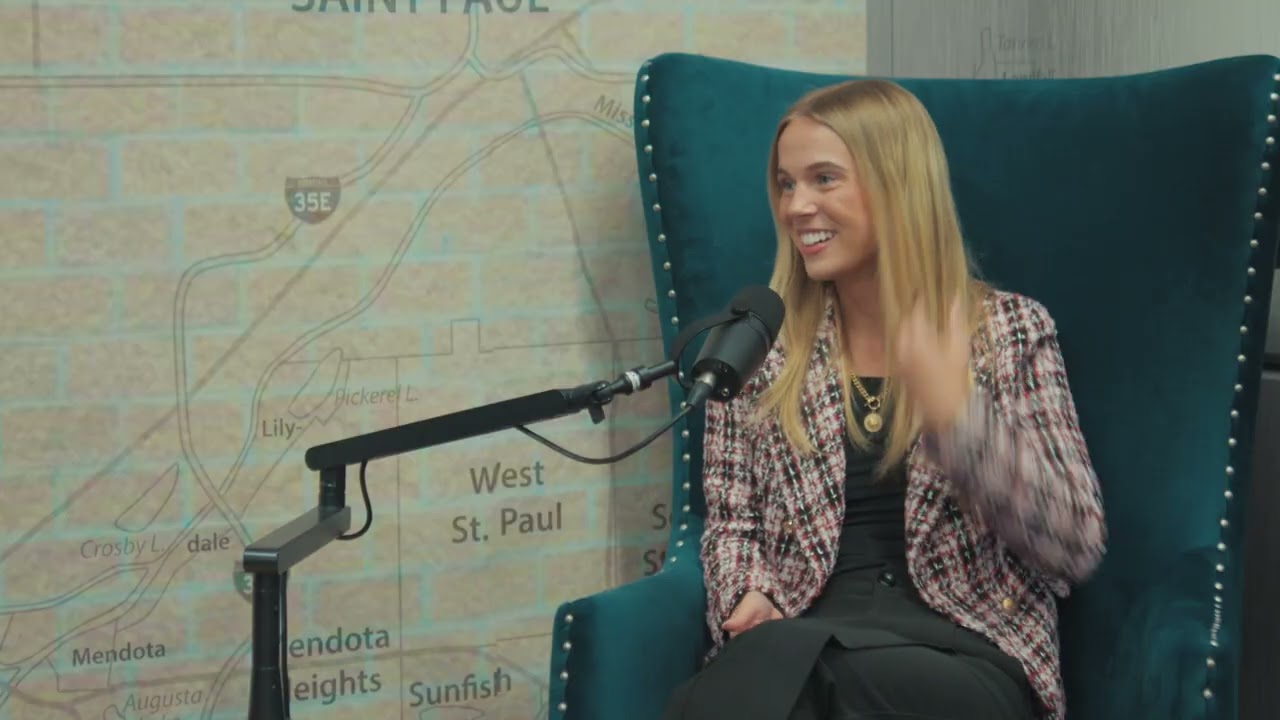
Karissa Dunham sits down with Leah Schuerkamp of Social Ease to talk about ReConnect and being a young entrepreneur. Meeting a young entrepreneur.
Or watch and listen on:


Karissa Dunham sits down with Leah Schuerkamp of Social Ease to talk about ReConnect and being a young entrepreneur.
Meeting a young entrepreneur.
Host Karissa Dunham sits down with Leah Schuerkamp of ReConnect and Social Ease on starting young, building two ventures, and what she's learned early.
Hi everyone. I'm Karissa Dunham from Shining Light on Minnesota. We are super excited to be here at our Roseville location. We have Leah with us from Social Ease. Welcome, Leah. Thanks for having me. I'm so excited. You bet. So, let's get started a little bit and tell our guests a little bit about your history. Like, where did you come from and where did you grow up? Yeah, absolutely. So, I grew up locally here in Minnesota from Prior Lake, Minnesota and then went to St. Thomas majoring in entrepreneurship as a part of the Schultz Innovation Scholarship program which was absolutely amazing. I loved my time there and now I'm still local to St. Paul and like you said I'm doing my marketing agency socially as well as another startup called Reconnect. Very cool. So you went to St. Thomas and you've done a little bit of traveling I see. Tell everybody about the fun traveling that you've done. Yeah. Yeah absolutely. I had the opportunity to study abroad in Rome during my time at St. Thomas, which was absolutely amazing. I studied at a university there called John Kitt and then had the opportunity to travel to 10 different countries during my time there, which was absolutely amazing. I think what people don't understand is those experiences when you do get to travel and when you get to see things, you also get to experience the culture and see where they're at technology wise, but also just as a whole. What was it like in where all the different places that you were at and how was the technology different? Yeah, absolutely. In Italy, it's a lot different. It's a much slower pace of life compared to what we have here. I mean, technology-wise, I feel like they have a lot of the same stuff, but they still use a lot of paper. That's something I noticed kind of throughout Europe is it's more paper focused. Like in class, we'll still do tests on paper and everything, whereas here it's all on the laptop. Wait, what's paper? Right. Exactly. So when you were in high school when let's let's go back a little bit because what most of the people that I interview we talk about like the co ages and things like that and their kids that have gone through it. How was your junior senior year in high school when all of that was going on and and all of that? That was a big change. Oh yeah, absolutely. That was crazy. So, it actually started my junior year of high school. And I was doing a mix of college credits and high school credits. And then high school ended up being fully online for a long period of time, which was super hard and lonely. We didn't have prom or anything like that. All the senior year stuff, too. Mhm. Senior year, we basically missed out on all the fun stuff, but it was nice to be able to take college classes. And then that's actually when I first started socially, so there was some opportunities in there, but definitely a hard time. Yeah. Well, when you ended up your senior year, my daughter's the same age as you. Like, it was interesting cuz she had all her college courses. She's trying to learn online, but there's labs and stuff you have to do back. So, when you go back to school, some of her teachers still were trying to zoom in from home while the kids are in the classroom. Oh, wow. That's hard. Yeah, it gets to be a lot. I mean, but you do learn the adaptability and like you said with with socially starting your senior year. How did all that flow with getting people in touch and trying to help more people? Mhm. Absolutely. I definitely saw co as an opportunity. I mean, like you've noticed as well, a lot of small businesses were struggling and I had more time on my hands at home to learn. It was like, okay, we have Tik Tok and all the different trends going on. Um, that was when it was more new. So, I kind of saw it as an opportunity to learn more about social media and really tune in my skills. And it was a good time to actually reach clients right away because everyone was struggling, but that also made it harder, you know, with smaller budgets, but it did work out um kind of in my learning phase to just build that platform. What do you see with the social media marketing as far as like Tik Tok going away, coming back, going away again, could go away forever within 90 days? How do you think that that's going to affect people's thought processes, especially the younger generation? Oh, yeah. Absolutely. Tik Tok will be a huge loss both for my generation and for businesses. It generates so much revenue, especially with Tik Tok shop now and everything, but I really don't think we'll see it go away. They kind of teased that and then it went away for I think it was like a day. Yeah. Um, and it's been pushed back. So, I think honestly someone in the US will end up buying it and it will work. in full and make it work. So, we reached out to me cuz I did a podcast with Drew Evenson who is the student basketball manager at the University of Minnesota, had his own um battles with leukemia, ended up beating cancer, things like that. But you strive to help kids that have gone through trauma as far as divorced parents, things like that. Tell tell our listeners a little bit about that. Yeah, absolutely. So, Reconnect was actually inspired by my experience going through my parents' divorce. They kind of started the divorce process when I was in middle school and then it was finalized when I was in high school. And at the time, I didn't really know anyone else that even had divorced parents. It was pretty uncommon. I didn't have any friends that had divorced parents or really didn't feel like I had anyone that understood the experiences I was going through. Um, so now I started Reconnect, which is a mental health platform to help teens of divorce. So, we're still in the early kind of prototype stages, but we have an MVP with a journal, custody calendar, peer connection, as well as an emotion survey. So, we really just want to build a community of people that are experiencing the same thing so they can heal together. How do people find you and what what would be the stages like if I had children that well and I do have children that have gone through the divorce process for them to just reach out and have that safe space? Yeah, absolutely. So, we have our platform live right now where they could go over to our website, um, sign up and then have access to all of our resources. And then we still are in the process of setting up peer connection, some kind of peer group, but yeah, we have a focus group coming up here at Benild St. Margaret's that we're really excited about. How important do you think is it for I mean, it's getting to be more and more of a norm. not not a norm, but a lot of kids have experienced or know people that are going through divorce and just being able to open openly talk about it and just say, "Hey, you know, I understand where you're coming from." And be there instead of just not having that on a topic. I think that's so important. I mean, humans all need connection and we need that relatability. So to be able to be vulnerable and be open and talk about your experiences, I think is honestly one of the most important things that can help kids going through divorce. Do you think that with AI and computers and technology the way that it is right now that kids are starting to not communicate as much and not having those conversations? Oh, absolutely. And I think a lot of people too in my generation and I can only imagine how hard it's going to be for the younger generations growing up cuz it is a great tool but I think that we've learned to rely on it already so much for communication where it can be nice but it can also be bad when you're like okay what how can I text this person how can I email and text they don't even text anymore. It just seems like here's a quick you know snap or here's here's another way to communicate that's less and less communication. And it's just a quick, hey, I'm here. I'm I'm alive. I'm good. But they might not be good because they hide behind that screen. Yep. Absolutely. I think that with children, young and old, and kids, they think that what happens on the computer goes away, but it doesn't. It sticks and those hurt. And that's the way a lot of bullying comes up, too. Absolutely. Do you see that in in with Reconnect and things like that, too? I mean, or growing up in the ages that you did that the vulnerability of kids not not knowing, okay, Snapchat's going to go away. It's a ghost. It's never going to come back. You can't pull it up. Mhm. Yeah. Absolutely. The power of digital footprint is so important. And I think that is something that not a lot of people understand. I remember in middle school, we had someone come into our class and talk to us about, okay, you need to be careful what you're putting online because it never really goes away. But I think that, like you said, there is a gap in that understanding. There's a lot of cyber bullying that goes on um which really just doesn't help anyone, but safety is really important for our platform. So, we're really going to make sure that safety and privacy are number one concerns, especially with pure connection. You know, we have to be careful. We can't really throw a bunch of teenagers on the room and tell them to talk to each other. Let's have that connection online and make it safe, right? I think that the way AI and technology goes too is that's what's brought on a lot more of the mental health issues. Obviously, like going back to co, you're not able to connect with kids, get outside, be face to face, things like that. So, trying to still like as a parent or as someone that's younger growing up, being able to get away from the computer and the technology and communicate. Absolutely. I think that's so important, especially connection face to face, I think, is so much more powerful than through a screen and texting. And even with like online therapy, I don't think that's as effective as connecting with someone in person. Well, the other side of it too with with the way AI is going, you don't exactly know who you're talking to online. I mean, as as a parent or anything else, hey, it could be a whole catfish deal where you're not talking to who you think you are andor not everything on the internet's correct. Absolutely. Yeah. So, let's go back to talk a little bit more about your your ties to Minnesota. You went through a divorce. You have a social media company pushing AI and all that generation, but yet you're also pushing the mental health. What can kids do to help get less screen time in your eyes? Mhm. I think it's all about creating boundaries. I mean, I know there's the parental controls, but also just empowering your kids to want to take control over their mental health in a way that fits them the best. I think, like you said, educating them about their digital footprint and the effects of social media. documentary that's really great is the social dilemma. I think they do a great job of showing the harm that social media can have. And I honestly I think probably in younger generations too, they're starting to see it themselves. I mean, I know growing up in like middle and high school, you're on social media all the time and then you kind of realize, okay, is this really helping me or is this harming my mental health when I'm constantly comparing myself to other people? I think I mean obviously there's pros and cons to everything but setting healthy boundaries and limits on screen time. Well the other side of it too is most of the things when you see all the filters that are out there. I mean nobody's perfect. The the computer the social media will make them look perfect. Everybody's life on social media is perfect. But if people get more real and are able to have those conversations and actually pull those out, I mean, you can see the reverse effect too where people hang their dirty laundry on there and kind of want the woe is me because they need people in their instead of going out and talking to people, they need people to just say, "Hey, I'm here. I've got you." Absolutely. And I think that there's a benefit to that too is obviously the relatability and even businesses can do that to share their story and you never know who you're going to inspire or help. Well, the other plus to it is being authentic, being you, being a person. Y um a lot of times in our industry, in the business world, it's like, "Okay, tell me about yourself." And it's a whole sales pitch about their business instead of, "Okay, tell me about you." Like, what drives you? What motivates you? So, what in your life has or who has been a great mentor? Who has challenged you and brought you to where you are today? Definitely. I think I've had a lot of different mentors over the year. I give a lot of credit to the Minaps program through Prior Lake High School. I'm not sure if you're familiar or not, but college business classes. That's what really inspired me to first start my business and all the staff there was really encouraging to start your business and just put yourself out there and try things. Um, in college too, I've been very fortunate with my scholarship program to have access to some great mentors. One of my favorite professors at St. Thomas, um, is Jack Dempsey. He's really been a great mentor over the years, both business and personally. And now I've also found some great people in my business to work with. But that's important to have people along the way that are like, "Yeah, no matter what, I'll have your back." Like I can be here to support you. I'll be your I'll be your person to you can lean on me. I'll help you, but let's grow together. Let's collaborate. Because a lot of times in in every world, it's more competing instead of collaborating. So, it's how can we help? How can we grow? What are some of your wise on obviously you went through the divorce, things like that, but what what really drives you? What motivates you? Honestly, I think my main motivator is helping other people and that's something I've really known from a young age. But I think that I've grown into that over the year. That's what really fulfills me is knowing the impact of what I'm doing on other people both through Reconnect and through socially is seeing how my services can help people. Yeah, for sure. So, we talk about the wise, we talk about the drives. What's a typical day in the life in your life like or how much does that vary? Yeah, honestly, pretty much every day is different. Kind of like your experience as well. Being a business owner, we obviously wear a lot of different hats. So, every day is different. Like today, we're going to go and film a client after this and make some content and then some meetings, but really every day is different and that's what I love about doing what I do. Do you have like a typical, hey, I'm going to stop by Starbucks every day. Or do you have anything that helps get you through those days? Because I know in your life, probably like mine, a lot of times you're not fully ready for the day, but it's like, let's go. Fake it till we make it. Let's get this going. Yeah, absolutely. Fake it till you make it. Something that's been helping me is I've been trying to get up early and work out every day, which is challenging. Today, I managed to do core power at 6:00 a.m., which is a great way to start the day. I love working out and then getting my coffee or my caffeine. I always need. Do you do like any hot yoga or any of the the core power stuff like that too? Yeah. Yeah. I love the hot yoga. I think a lot of that stuff too, I mean it it brings you back in. It helps you meditate, helps you get on the same level, everything like that. But it also helps you reset and a lot of times you need that in your day or even a couple times a day like, "All right, I'm going to be in my car. I'm not going to listen to any podcasts. I'm going to just bring it back down and get ready for the next the next one." Mhm. For sure. How intentional are you when you are out there? Or how what are ways for people to stand out when they are on social media or to try to make a name for themselves? Like you said, I think being authentic is really the most important and showing people who you really are. I think small businesses, like you said, really focus on, okay, this is my business, this is my services, this is what we do. And really just personalizing your brand and how can you provide value for your audience. I think that's really the key is giving more than you're just promoting yourself. The 8020 rule of you want 80% of your content to be valuable or educational and then 20% can be, you know, promoting your services and what you can do to help. What do you find right now in the marketing world helps businesses stand out? What what can they strive to reach or what are ways for them to be seen a little bit more? Mhm. Absolutely. I mean, I think the trend that we've seen in most recent years is that short form video on Instagram reels and Tik Tok. That's really a great way to stand out and also give your brand that personality through behind the scenes. You can do educational content. You can do a little bit of everything. Yeah. Yeah. Absolutely. Good. Good. So, when you talk about people being authentic, when you talk about people being real, but you still have to bring it back to the nitty-gritty. Here's here's my services. Here's what we do, but you can still make it fun and you can make it personal. And I think people don't realize it. They get a little bit scared or not sure. It's all the uncertainties that are out there with with that too. Like is it going to go well? Is it not? Are people going to view it? Are they not? What are some ways that people can get more views in your eyes or how they how can they be seen more? Yeah, absolutely. I think that's something too that I for sure struggle with. I mean, I think when you're first behind the camera, it's uncomfortable and you have to get comfortable being uncomfortable and putting yourself out there. Kind of the key, I think, to get more views is first of all to be consistent. You need to be posting at least a few times a week. If you can post every day, that's the best lab, but people do it. Yeah, it's hard. It's really hard to be consistent, and that's kind of the main issue I see with business owners is that it is timeconuming. It's hard to be consistent, but that's really how you're going to build your audience over time. But also just creating engaging and valuable content. You want to grab people's attention right away. Couple seconds just to pull them in. Yep. Yep. Absolutely. And people's attention spans are so short these days that you want to make sure it's quick and it's engaging. Yep. Good. Good. So when people do the reels, things like that, I notice I mean obviously from doing podcast, being on camera, doing my own things, so many people articulate and pull out or like I always say, "Yes, absolutely." Or, "Yeah, yep. You bet." Yep. And they are always the first ones to point that out. I'm like, "Okay, well, I'm the one on the camera doing it." Like, I haven't been fully trained on how to do it. I just try it and I I try to help. That's that's the number one reason, right? Is how can we work together and help you grow and how can we let other people hear your story and, you know, say, "Hey, she's doing something great in the community. Let's help out. Let's or vice versa. I know somebody that's going through the same situation that you did." Absolutely. So when people are looking to find you, how can they find you or where where can they go? They can find me across social media. I have all platforms of course being a marketing agency where on Instagram, Facebook, Tik Tok which is tiring because you have to do your own social stuff and then you have to do your work stuff. We have my personal brand and then we have socialies and reconnect on every platform as well as you know email is a really good way to reach me too. What's your email or how can I email you? It's infosocial-es.com. Eas. Yes. Yes. Okay. Perfect. All right. Well, we appreciate having you on today. We hope that if anything, all the people out there can really find something to drive to be authentic, but more importantly to help out. And that's that's one of the goals for today. So, I appreciate having you. Thank you for having me. Yeah, you bet. Thank you.

Karissa leads business development at Sun Control of Minnesota and hosts Shining Light on Minnesota, sitting down every week with the business owners and leaders who are building something good across the state.





