
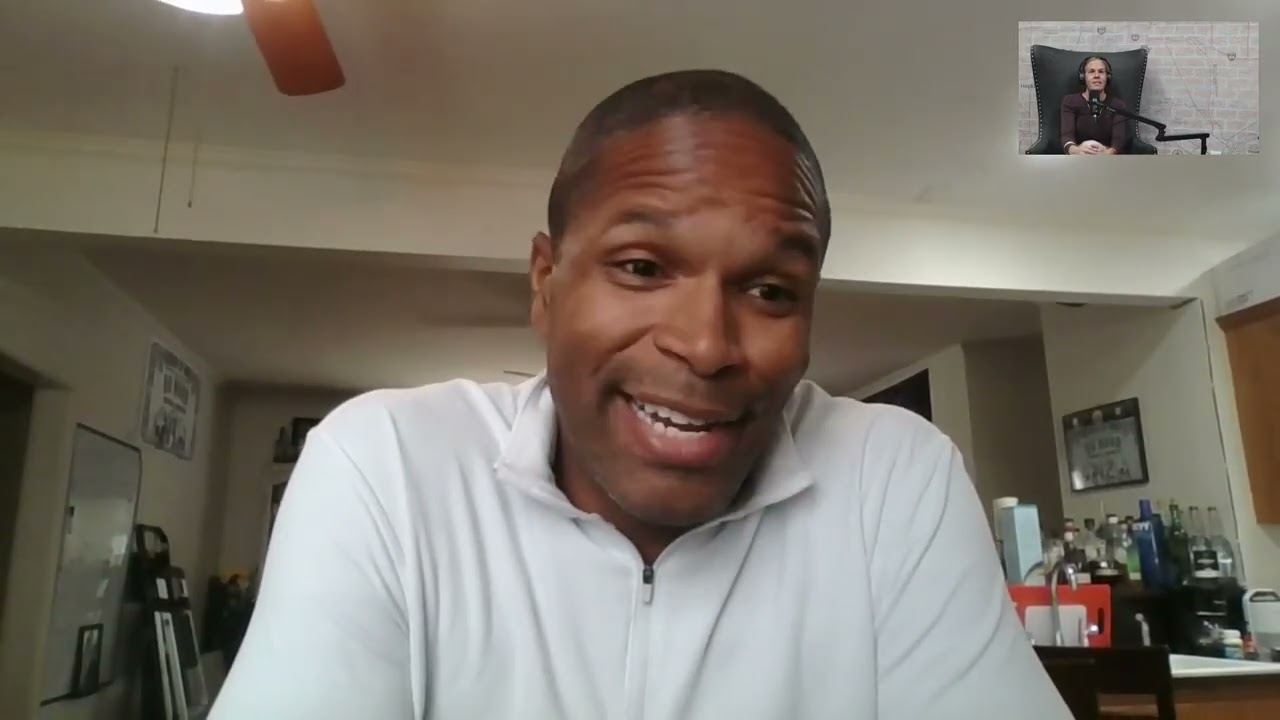
The Moment It Became Clear | Chris Montana, Du Nord Social Spirits #028
Karissa Dunham sits down with Chris Montana of Du Nord Social Spirits to talk about the moment it became clear. The moment it became clear.
Or watch and listen on:


Karissa Dunham sits down with Chris Montana of Du Nord Social Spirits to talk about the moment it became clear.
The moment it became clear.
Host Karissa Dunham sits down with Chris Montana of Du Nord Social Spirits and the Du Nord Foundation. Building a distillery, the foundation that grew out of it, and the moment everything became clear.
Hey everyone, it's Karissa Dunham. I'm here with on Shining Light on Minnesota. We have an awesome guest today with us, Chris Montana. Welcome, Chris. Thank you for having me. You bet. So, let's start digging in a little bit deeper. You're you've been in in and around Minnesota for most of your life, not born here, but you moved here when you were young. Let's start off and tell everybody a little bit about the journey on how you got to where you are today. Oh, wow. How much time do you have? I'll try to give you the I'll try to give you the readers. I mean, yeah. Yeah. So, I moved I was born in Indiana and I moved uh when I was young, when I was about 8 8 years old, I was introduced to Minnesota by way of the blizzard of 91. Um, and with with my jean jacket uh in snow above my head. Uh, so that was my introduction. I went to high school, went middle school, RC South, and when I left high school, I was at the U for a little while, but not not that focused, but I kind of fell into politics and uh started working on some campaigns. I ended up working for an organization since has changed its name, Wellstone Action. But that led to working in Congress for a brief stent for uh for Keith Ellison when he first won. I was on his campaign in his field. And then that led to law school and that led to a job as a lawyer. And when I was a lawyer, I thought, you know what, I don't see a future here that is going to be fun for the kind of dad that I want to be. Yeah. And so I wanted to do my own thing. And I kind of always did. Um I had a narrative in my head about business owners and I thought that it could be done a little differently. And so I I wanted to to do my own thing and I was kind of a nerd about, you know, fermentation and making booze. And for whatever reason, my wife said yes. It's not the first crazy year I had. The first one, by the way, was to open up a restaurant called Montana's Ghetto Fabulous Rib Crib. But I did not know. There you go. There's rib cribs around. Yes. Yeah. There actually in the south there are ribb cribs. I felt bad. I felt like they stole my idea. But yeah, so I got the idea and um actually from a buddy in law school cuz I wanted to do a brewery, but he was like, "No, you're on the on the wrong tree. Think of distilleries." And I was already doing that legally in my garage, so I thought, "Why not? Let's turn this into a Let's try it. Sure. Everybody drinks, right?" Yeah. Yeah. So why not, right? It It seems recession proof. Amazing. So you are and have been the country's very first blackowned distillery owner. like tell everybody a little bit about the trials and tribulations when you first started and how you got into the distillery in in Minneapolis making a name for yourself now. Yeah. Well, and so it's important to point out that the the whole first like I was not aware of that, right? There are other people who put together, you know, places to like mix spirits. But as far as a distillery that actually distilled, I didn't know that that was that was the first of anything. That really wasn't my point. Um, and as it happens, until the Super Bowl was in Minnesota, we really didn't tell the story about it being a blackowned business. And there's there's a there's a pretty specific reason for that. You know, I didn't, as a person of color growing up in Minnesota, you you you kind of have a spotlight shined on your race at all times. Yeah. And it's it's part of the reason why I live and raise my kids in New Orleans now because it's very different. And um I didn't want to be the black distiller. I just wanted to be Chris the distiller and and so we we really didn't tell anyone about that. You couldn't tell from our marketing, couldn't tell from the packaging, nothing like that. Um, but you know, the the path of of getting it open was not easy. Um, it's like many people who start businesses, uh, access to capital is tough. If you don't come from money, if you don't know, uh, if you don't have people with deep pockets around you or or math to them, it's very difficult to raise money. And we were able to raise none. And so we started a distillery with a $60,000 loan through a city program that um that you know and thank God we could get it and we spent it all an afternoon on buying equipment and I kept my day job. My wife kept her day job and you know I I slept at the distillery at night and um during the day I'd put my suit on and go be lawyer Chris and then at night I'd go and and distill and watch this depressingly slow trickle of alcohol come off of this you know kind of jerryrigg still that we had right so yeah I mean it was certainly difficult in the beginning um I'll never know really what the impact was of you know the whole first thing and and whether or not I do know that the banks we walked into and the people we talked to were not ready to give us any money and kind of back in that day distilleries weren't as much of a thing as they are nowadays. Like you have obviously the ups and flows of business and starting from the ground up. But when you go into somewhere and say, "Hey, let's do something different. Let's try, you know, doing a distillery or having open on-site, you know, places where you can go and drink and it's not a bar. Let's try it." Yeah. I mean, you're not wrong. So, we went through the licensing process. We were the first ones in Minneapolis to do that. So, they there was no and even on the permitting side. Uh, no one had ever permitted a distillery in Minneapolis. And so, they didn't and no one wanted to be the last guy to sign off on this thing that was going to blow up the block. I mean, no one knew what like you guys make this flammable stuff. Like, what is that? It It was hard. It was really hard. And And thankfully, we had a lot the city staff in Minneapolis. I have nothing but good things to say about. Uh they worked really hard to get us I think they there was a little bit of competition because they wanted us to open before the distillery in St. Paul but yep they worked they were so easy to work with and they pushed for us and they helped us out and and you know even the elected officials at the time were also very helpful uh and we got there but it was it was difficult. We're introducing something that people didn't know and and even as a as a category, Minnesota was so far behind other states when it came to craft because we had really bad laws. It it people didn't know what we were to really make had any idea what to make of us when we first started. Right. Tell a little bit about Okay, so you have a young family, you have a wife who and you have a brand new child on the way. You're spending what 7 to 7 at the law firm and then you go in from like 7 to 2, 7 to three trying to do the distillery, never home, and your ultimate heart and soul is saying, "Hey, let's do something where I can ultimately pick my own hours down the road once we grow it." How was that for Chanel and everything else? Yeah. How does that work? And it's not that Chanel was doing nothing here. She had a full-time job. She also when the distillery is about as old as my oldest son. U so there's a there's video of my wife doing a tasting and she's got baby in one hand and she's bouncing him while trying to steady pour vodka in the other hand. Yeah. Yeah. It was look I mean anyone start any business I don't care what it is you make your widget um there's a commitment that it takes and you can't you can't do it halfway and so we did what we I mean the whole working the day job thing that was just a necessity. We didn't have the money. there's no way we could have done it. But there came a point where it was we can't I can't have one foot in this and expect it to go well. I need to leave. The best job I've ever had as far as you know, I'm was making good money. Yeah. Most people die and want to be, you know, have a great job at a law firm, be a lawyer, you know, law firm. And so I made the decision to leave that. And what I told Chanel at the time, I said, "This is going to be much harder and I need five years. I need five hard years. And if you give me five hard years, then, you know, this this should get better." And part of that was just being naive and thinking, "Yeah, in 5 years I'll have this figured out." I met 11 12 years. I still don't think I've figured it out. But um but that was that was a deal that we made back then. How difficult was it to get into people's head? Hey, this is how it's going to work. This is what we want to do. Let's bring this to a new level. You know, you go to liquor stores and you don't have a lot of options to try things. And you go to a bar and it's just like, here's your beer. We don't have a lot of selections and trying different things. Yeah. Craft was and the idea of it really hadn't taken off in spirits. Craft beer had exploded and so people weren't really used to that. But it's it's it's different. You know, at that time, you could go into a liquor store and you could try a a new beer you'd never heard of, and the cost was probably less than two bucks, right? The kind of build your own six-pack type of a deal. Very different when someone shows up and says, "Here's this 30 $30 plus bottle of spirits." Um, there's no culture built up around that. And we still struggle to build that culture because it's it's just a higher entry point. And people don't browse spirits the way that they do uh beer or even wine for that matter because because of the um that and in culture people, you know, there's a lot of people who are like, well, I've always I always drank this and I'm going to keep drinking that. My father-in-law is very much like that. I've I've put all kinds of different whisies in front of him, but he's gonna go I think he I think he did make a change, but it was it was Windsor Canadian in an ice house. like that that was what it was going to be. It didn't really matter. It was just straight that. Yeah. So, yeah, it's a challenge and we have to, you know, you're introducing people to a different way of of thinking about a product that they've seen all of their life and we're fighting and not fighting is the wrong word, but we are in the same market with behemoths who, you know, will spill in a day what we could make in a year, right? And, you know, that that's a challenge. And the way that we went at it was very much it actually by whether it was a a choice or just, you know, necessity, we figured people had to know us. They had to know us personally. And um when we were able to get the law changed so we could have a cocktail room, that's what really saved us and allowed us to survive because people could come in to our space, meet us, I was always there. I was always in the back room making something, right? And I got to meet people and ask them. We actually developed one of our products basically by crowdsourcing the R&D um through a bunch of that I kept giving coffee lours to um and that I think uh you know people started to get to know who we were and understand who we were ethos and I think that that's what kept us alive in those early years. How important was it to you to go from, okay, you know, we're ownership, it's, you know, my wife and I against the world to now here's our team and seeing them win and seeing them express everything and be like, okay, you know, sometimes ownership is handed off. But when your team can succeed and, you know, become a staple in the community, that's that's an amazing step to see, too. It is. It really is. And I love how you word that. Um I like a lot of entrepreneurs I kind of started with this idea of whatever needs to be done I can do it and I can do it best and um it put me in the hospital and I you know was sitting there and thinking well I'm going to kill myself doing this this isn't going to work right and all of all of the talk there there's no good version of a dad who's not there period and so and that also happened to coincide with my son reaching an age where he was very aware of me when I wasn't there. When he was very young, he wanted nothing to do with me. Was all mom like dad, all right, bye. See you later. But when I got to that point where I could walk through the door and have this little munchkin scream daddy and come running at me, I was running at you. Exactly. Um, and so those two things kind of coincided and I and I decided like, yeah, I need to I need to make some space. And the only way that's going to work is if I open things up and I can't do everything. And there have to be other people that I let in. I can't just be the only one who's who's making things or, you know, making some of these decisions. And it's the best thing that ever happened. the more that I have backed off and found smart people that I get to work with and let them, you know, not micromanage them, not be over their shoulder, go, "Look, you're smart. You're going to figure this out." The more that I brought, you know, people like that into the orbit and as co-workers of mine, the better we've done. And I I today I who knows what my job is, right? I We really don't. You have the vision, but they they bring they bring everything to the table. Yeah. Um, but my team, I would put them up against anything. I mean, you're multi-billion dollar companies. I take them on. I think we've got some of the greatest people and none of them come from alcohol. Not one, right? They all came from other places. Uh, but we're just good people and good smart people can learn to do anything and, you know, bring a fresh set of eyes to things and, you know, it's it's that formula has worked for us. Let's talk a little bit about the name Dun Nord. Obviously, our state motto has some ties to that from what I see in here. And a lot of people don't know what our state motto is. Is that where you got the Du Nord from? It's exactly where we got it. Yeah. And so, again, go back to the very beginning. Um, we did all of our our marketing budget was $500. And with that, we had to design the bottles, uh, come up with a name, get logos, everything. Uh, and my wife had a had a pretty big hand in that. She was working on that while I was, you know, grinding corn. Uh, and so we thought the only way that we're going to survive is if people know that we're local and how what could be more local than a state motto and so we started with Minnesota state model Nord and you know that's where that's that's where the name for the distillery came from. Uh, as it turned out it also was the name of our first vodka. Our first product was vodka and it was cool. Um, and we learned two things really quickly. First of all, no one can pronounce slip wall. Um, and and people will probably listen to this saying like, "Yeah, Chris, neither can you." But, well, I was sitting there, I asked my co-workers before. I'm like, "Okay, what's the correct pronunciation of the Nord?" Yeah, exactly. Right. But now, see, I live in New Orleans and so all of the French words are pronounced in a different way here. And so, you know, I So, give me a pass. The other quick learning was no one knows the state motto. And not only does no one in Minnesota know the state model, one of the states where people are most proud, motans and Texans, I kind of put this same of pride about where they're from. Montana don't know their state motto and no one else does either. I they working in Congress. I would ask people people who worked in Congress, right, had no idea what the mottos were the states that they worked for. And so a hockey team kind of named after it. But let's let's go back to that too. Yeah. And but again like you know north stars right people could get that but they did but they had no idea that the Minnesota state model was a 12 to north. So this is kind of where if we had had uh some people who knew a thing or two about marketing they probably could have stepped in and been like that's probably going to be a miss but we really didn't. We didn't there were so many things we didn't know at that point. We we kind of took a shot in the dark. Now we've gone through a rebrand, right? The Du Nord craft spirits was changed to Du Nord Social Spirits. We felt that the social was important. Um and you know a number of things have changed with our business with the addition of the of the foundation. Um but the Dor state and you know people at I live in New Orleans say well are you going to move it? Are you going to do this that and the other it's a Minnesota business and it does have a sense of place. We are very much invested in our neighborhood and in our community and so we will be Denor forever. Right. It'll you can find it on Delta now too. I mean you can find it and see it everywhere. There you go. Yeah. So, you know, 10 million times a year, you know, people are looking at these little bottles and, you know, wondering what is this about? And so, maybe if nothing else, perhaps maybe this should be one of our missions that we can make Minnesota state motto be the most known state motto by virtue of these little blue bottles of vodka that people are consuming. Well, it makes people wonder where the name came from. So, you Google search it and then you start to find more out and about about not just the company, but you guys have a foundation. divid like go back a little bit and talk about some of the years like 2020 and how your foundation got started. Yeah, so the foundation was like many things uh you know you could call it a happy accident. It kind of was we started um we try to run the business off of a certain set of values and you know one of those values is that the the business has to be an asset to the community. It shouldn't be a drain. Um, and that's something that we take very seriously for a company that makes alcohol, which is, yes, it can be a, you know, something that brings people together, but it also can be destructive. Uh, and in 2020 when I I think we all know what what happened in 2020, we had, you know, fires and, you know, that that touched us too. Um, we had an opportunity to take that narrative and flip it a little bit. We had a, you know, after the fire at our place, we, you know, the community showed up, cleaned the space up and there was no grocery stores around and so we had and people were trying to donate and we thought, you want to know what we, we can professionalize this. You know, I have a a campaign background. I know a lot of people who are really good at organizing. I can reach out to those people and bring them in. Um, you know, my friend Jessica Ward Dennison, like she came by, she's another organizer and and helped us put together a volunteer operation. And from a fire on Thursday night into Friday, uh, we had a distribution center up there and running by Sunday and by that Monday, we were feeding 400 families a day. And that was, I think, a good example of what I think a business should do. that at that moment people didn't need spirits and actually we were making hand sanitizer at that point. Let's pivot and help out and see how we can give back then. Yeah. And it's not that Du Nord did it right. U Du Nord facilitated. We were we were a space and we helped to bring people together but really what happened is that the community did it. They're the ones who staffed it. We had hundreds of volunteers and they came and they spent their entire day from morning till night, right? And there would be people lined up down the street to get in because they couldn't get resources because they couldn't get out to the suburbs, right? And it was those volunteers. It was the people from the community and the both immediate and the greater community who came in and actually ran that thing. And we just said, "We've got a forklift. We've got a space and we'll do the best that we can to to facilitate the best of it." Yeah. You know, we'll buy food until our credit card dies. uh because at the time we also thought you know hey this this is what the community needs and that's that's our job. you do whatever's next. And that's what was next. And what what that eventually turned into was a GoFundMe campaign that we started because while we were doing this where people wanted to support us, but we had insurance and and we apparently we would later learn we were underinsured, but we had insurance back stops that there were other businesses that were critical along the Lake Street corridor that didn't have. And so we started GoFundMe and we tried to raise $30,000 and we raised that in like an hour and we had to keep upping the amount. And I remember my wife telling me like, "Oh, we got to go back." And I was I was legitimately annoyed because we were trying to run this operation. We had all these volunteers like, "I don't have time to keep changing this." I was like, "Just change it to like, you know, 500 a huge number then. Let's just be done with it." Yeah. We almost raised a million bucks. Wow. Well, it just again it's just the logistics of it from a GoFundMe. That's a personal that goes to you personally. Yes. And you pay taxes on it. So if you have a all these people gave money, a third of it was going to go to taxes. So we said, well, to keep that from happening, let's create a nonprofit and then put the money in the nonprofit so that way 100% of it can actually be used for what people donated it for. And then that that's the birth of the Dunard Foundation starting with we've got an immediate need. We need to do that. We've got an intermediate need, which is that there are these businesses that are and they need access to funds. And so we're going to give out this money that we got to these other businesses. And then the last leg of the of the foundation, which is what we are working on now, is how can we make other people's paths a little bit easier uh to entrepreneurship so that way they can be independent, make their own decisions. Well, and you notice like in the business world and every world right now, Minneapolis is a place that has seen ups and downs, but people are starting to spread out and go to some of the other communities when the heart and soul is still there in Minneapolis. But it's still there. You have the buildings, you have the land, you have the people that have been there all of their life, not wanting to outsource and go to, let's say, Maple Grove, Blaine, anywhere else that may be there. But let's just pull together as a community and make it whole again. Let's see what we can do. Yeah. And we want to be part of that. I mean, our so our foundation puts on a a festival. We did it last year. It's called Crude and Nord. It's free and anyone can come and and and but the purpose of that is we want people to see Minneapolis and see Lake Street as we see it, right? Which not a place that you know you're you're worried about your safety. It's not I grew up in the in the area. I was never worried about my safety, right? you know, but to see it as the vibrant community that it is and see it as a as a confluence of so many different peoples and cultures and that's strength. And but you know, the narrative shifted for political reasons in some cases um and also just because people watched the news and the last time they saw the area mentioned there was a a precinct on fire and everything else burning down. And so we want to shift that narrative and bring people back into whether or not you want to live there is is up to you. But it still is the cultural heart, but the culture is still there. You have all the different ethnicities and all the different types of food and all the different people and where else can you go where you can get that wholeness, that adversity and the the genuine care and the want to be there. It's amazing. Yeah. Abs. I I I couldn't say it any better. I mean it it but we just want to show show that to people again and remind them, right? Right. We're not adding that much to Minneapolis. We just want to put it back. Just a little bit. Let's let's grow Minneapolis instead of let's grow everywhere else and keep it going cuz that's that's the heart and soul. That's where the spirit really revolves around in the Twin Cities. Great. So, we get back into the distillery, the brewery age, and the states that we're in now where a lot of those breweries and distilleries are starting to kind of close up and or new ones were opening up. But now there's a little bit of a shift where they're kind of going back to the old days. Do you do you see that or feel that at all with the Nord? Um, well, this is a trend that's been going on for a while. I I spent a couple of years as president of our trade association, the American Craft Spirits Association, and we were wa we've been watching the numbers for a while. The amount of money that's spent on spirits has continually gone up, but the volume of spirits purchase has continually gone down. And what that is is people are it's premiumization, right? So people are moving towards they're drinking less but they're drinking better. But we've had more so the the license you get to open a distillery is called a DSP. We've had more DSPs open than close uh every year until now. Uh it plateaued last year and we're going to be going the other direction. And so there is and there's a number of reasons for that. Uh yeah I mean you've got supply chain, you've got everything else that's on top of it too. cost of rent in itself is everything. Um, make a luxury. Nobody needs what we make, right? So, it's a luxury. So, um, you know, what are the first things people cut, right? They cut the luxuries. And you can buy cheap alcohol. It's made by macro distillers. And you don't have to patronize these small guys. And so, it's difficult. It's getting more difficult. And you're watching places close. Now, we have we have some good partnerships that allow us to to survive and and thrive. Um, but we're not immune to that either. I mean, we we see the the costs going up and, you know, we we sell to those restaurants that are also closing and, you know, they're they're telling the same story. They're like, listen, this is really hard and Minneapolis is an a very expensive place to do business. And, you know, as people lose out that you know, if if inflation or whatever other reason is causing them to not have as much money in their pocket, they just don't go out as much. And as a brand that's all about people going out and being social together and collaborating instead of being like headtohead like you're going to be a competitor. Let's collaborate together. Let's sit down at the table. Everybody's welcome, but let's grow because you can always learn from other people. And I think people don't always know that or see that when they sit down at a table. Let's let's figure things out. Yeah. Well, that is that's actually one of the um one of the core tenants, one of those values um that is very important to me and has often been unsatisfying for um our fans uh and and people who follow us because they often want us to take a stronger stance on perhaps some social issue or this that or the other. And I have always wanted to I've I've been blessed in my life to have uh seen things from a number of different angles and uh conservative ones. Uh I' I've you know left-leaning guy myself, but I have people in my family who are not. And uh the more people different people that I've met, the more I see that they are the same. And so we are all about creating spaces where they can get together and realize that sameness. And that's in the age that we're in right now, which is very tribal and very, you know, put your flag up and say who you're with. Um, that's not what we do. And we won't do that. And we've had people come to us and say, well, why can't you exclude these people? Why won't you exclude uh the why won't you exclude these groups? It's not because, you know, I've I've stared down a number of gun barrels, and most of them have been the pointing them at me. Um, it's not. But the day that we are willing to exclude them because of their job, right, is a day that we become the problem, right? That they're not the problem, right? The lack of communication is the problem. So, we need to be and make spaces. And with LANAP and with the Dinard cocktail room, we want to make spaces where absolutely everyone is welcome. It's one of the first things that I tell people if they want to work at any of these companies or organizations. It's I don't know what your politics is, but if the person that you don't like walks through that door, if you can't treat them well, you can't be here. No. Right. Because we're about everybody's got to be welcome because you never know. Yeah. Yeah. We're about creating a table for everyone to sit down. And that dialogue, that rubbing of cultures, right, which is what we're not doing in society now. We're moving so fast away from that. And you can see the result of it. It's like but when it happens and when you see people actually find common ground that's beautiful and if a company that makes booze right can be a part of bringing people together I mean this is why we are Du Nord social spirits now not crafts if we can be a part of bringing people together to just get a little bit of that right that's amazing and it clearly isn't just dyed into the wool with what we make or are it's just or not what we make but it but it is who we are it's just the people so if we can do that anyone can do that and so that's that's the that's the thesis that I want to prove with whatever business we are in is that that's actually good for business that creating a space where you're not necessarily putting it you know it's not the confirmation bias you're not just telling people what they want to hear but if you can create a space where you can create community not just among the people who already talk to each other but the people with whom they don't talk that that is a sound business model we have people doing that across the country I think that's a path to get us out where we are you don't want to do something where you stand out, but you want to do something where you can all work together. Like when you win, we all win. So why not just put the heads together and make it happen? I have noticed and I have a couple things I've noticed like you have some strong mentors that you've had in your life that have always stuck by you. Why don't you tell our listeners a little bit about that and the path that they have helped bring you to where you are and having cocktails even named after them and everything else? Oh yeah. Well, um I I'd say first off, um you know, so I I have an odd path. Uh I was adopted at 14. And so, you know, my parents are ha are now and have been um kind of my northstar. They're who I've looked to and and try to emulate and who I want to be when I grow up. And um so that standard of compassion and sticking with even through very hard times because I was a very hard kid, a very difficult kid. Um you know I I start there but I I had other people um who stepped into my life when they didn't have to. And it's one of the reasons why in at the Du Nord [ __ ] the original Du Nord cocktail room um at the now uh Du Nord cocktail room at the Coliseum building on Lake Street and at Lyap on Lake Street. So I would only have one discount and that discount is for teachers because teachers along my path have have all you know it's not their job to do this but they yeah I can name several people who have taken the time to deal with this little kind of pain in the butt kid and see something in me and say I'm not going to give up on you and you know but for them I am absolutely not here. There's there's absolutely no way. And I'd know no one else, no other profession that I would call a hero just for doing your job because everyone who's doing it could be making more money somewhere else. Um, they get blamed for a lot of things that they couldn't possibly control and they go to work every single day and if they didn't then future generations are screwed and kids like me never make it. So I, you know, we have a a coffee leour named after um a woman, her name is actually Louise Borman. Uh wonderful. Louise is like another mountain to me. Y and but her students knew her as Freda because she thought it was a little too familiar when she first started teaching for people to call her by her actual name. So some students, why don't we just call you Freda? And it stuck. Makes it easy. Yeah. So yeah. So, we have a spirit called Cafe Freda that we named after her and and in honor of teachers everywhere for the work that they do and she is she's how I got through high school. Um, without her that I did I wouldn't have survived that. And she created a space for me, a kid who couldn't really act or sing, but she cast me in a lot of musicals. Uh, there you go. Uh, largely so that way I would have something that would keep me grounded and Well, I kept having you show up or want to show up anyway, too. Yeah. Yeah. And I didn't know it but uh but my parents will remind me of their because they were in cahoots. They were working together. Um boy and she told them she said just keep him coming to to practice. Keep him coming to theater. Like we'll get through this. Just keep him coming. And I I've learned so much from that and I have so much respect for it and I know exactly you know that I know full well that without that that kind of support and no one paid her to do that. Don't need any of these teachers to do any any of these extra things that they are doing. And I don't know anyone I literally have not met anyone in my life who doesn't have a teacher story of that teacher who's like, "Oh yeah, you know, for me it was it was Mrs. so and so or Mr. So and so like going above and beyond for the pay that they get too is the other side of it. It's like who else in their field goes above and beyond to just make sure they're holding somebody accountable, you know, making sure that they hold them to a different standard. Yeah. Exactly. I mean, it really it's, you know, we call people, you know, in in a lot of the other services uh heroes for doing their job. Um, right. They're also paid for it and there are perks that come along with it, but I don't know what the perks of being a teacher are. Um, and so we figured there ought to be some. And so we said, "All right, well, we can give them 20% off." And it can it can always be hour for them and and we can name a product after them and and wherever we can show up. One of my favorite events that we used to do is we would have a do a pig roast at the end of the school year and we'd invite teachers and they eat for free and we give them a free cocktail just as a thank you, right? Absolutely. I love that. I love that. And there's no community I would want to be more associated with because there's no bigger group of people that I know. Tell everybody a little bit about the story. I mean, you're now located at the Coliseum and the steps that you took to get there and a little bit about your restaurant, the Cajun restaurant coming kind of coming to back to heart and full fruition with the New Orleans and all of that stuff. So, yeah. So, we got involved. This is so the Coliseum building is at 2700 Lake. It was really the only large building left uh in that area uh post 2020 and the unrest. Uh it was set on fire multiple times and it was going to be demolished. the owner had already taken the insurance payout and so she wanted to tear it down and Seward Redesign uh with whom we've had a relationship uh I think now they're just called Redesign, but there was Seward Redesign uh a community development nonprofit. They bought it and wanted to do something different in the way that it was developed. something that that I had had conversations with their executive director, a guy named Brian Miller, who was big help to me, but they had had conversations about whether or not what they were doing by buying up properties and trying to get these businesses into them if whether or not that was was all that they should be doing. And what was missing from it was what about the people that you're trying to help, what about them owning, right? And that's a that's a pretty radical step. And in this development, that's exactly what they sought to do. And so they had they identified uh two women, two women of color, Janice and Alicia, uh who were interested in in coming in and and putting their businesses and being owner operators. And they approached me to see if I'd be willing to to join them. And I thought, you know, what a great opportunity. I'd always wanted to be on Lake Street. Um that is the heart of that neighborhood. Um and it was in but it was a very difficult. I mean, you look around, you say, "All right, well, it's a lot of abandoned buildings. This isn't where, you know, if you wanted to just be successful, put it in North Loop, right? Put it right next to people with all the money in the world, and then you can charge what you want, and you can be successful and print your money." Um, that's not the heart and soul. That's not that's not like that's not our mission, right? Our mission is and and it expanded. I mean, the the foundation mission expanded because it's what was next. It's what what needed to happen, and that is we've got to bring this area back. And so we went in and we the just because of the way the building it's historic uh we couldn't change everything. So we ended up with this odd situation where we had a a restaurant but it was split in two and you couldn't walk from one side to the other. And so we it looked like two restaurants. And so we thought, well, it's too big to all be the cocktail room, right? And so we wanted to have that spiritual successor for the Dunard cocktail room, but we needed to bring something else in there, a different concept. And living in New Orleans, I mean, the food, it's not a place you go to lose weight, right? Like this is the food is amazing and uh, you know, the culture is amazing and I wanted to bring some of that to the Twin Cities. We're not the first ones to bring a Louisiana concept to the Twin Cities, but wanted to bring it up. Um, we wanted to create again that space, that gathering space where people come together and it made sense to, you know, the name for it, LANYP, you know, here's say, "Oh, you know, that's LA. That's just a little something extra that you give to somebody, right? You know, you sit down at your table and you order your food and they say, hey, you know what? I got this other appetizer that got made on accident." Y'all take it, right? Yep. Plenty. And so that just made sense. It's that little that extra step, right, that someone be expecting. Um, and it's it's been great. Right now, I would I would one thing I would poke at a little bit. I wouldn't necessarily call it cinjun, although we are our our jumbo eye is a little more cinjun than it is Creole, but I would call it more Creole than Cinjun. Perfect. Um, but uh but it's been great and people have really enjoyed it. Uh, it's a it's a challenge. It's a struggle. Yeah. you know, we we've got to convince people to come in and and to see us. There's not we don't have a lot of complimentary businesses around us. But the whole but again, the thesis here is that if people come in and they come to this space, entrepreneurs are also going to see that and they're going to see that they're going to say, "Well, I could be there, too." And then that's we can be like a little catalyst that other people want to move into and say, "Well, I want some of their customers, so I'm going to move next to them." And then we we can rebuild from the inside out hopefully with a little bit more of a collaborative base of businesses. Absolutely. I mean, I know there's a lot of empty buildings. People are starting to finally come back to work. Even if it's hybrid, but the hybrid still brings people back to the community. It still gets people in there. Or if they can see, hey, you know, I'm going to go into town to try to get, you know, some Creole or I'm going to go into town to go to Du Nord or I'm going to just go hit a game or do whatever they do. the more they go there and the more they see the culture, the more they want to be back there and get back to Minneapolis, which is hopefully, you know, what's gonna start turning around here in the near future. Yeah, that's the hope. And and the thing is, I don't think Minneapolis has to do much different, right? We just have to remind people like and whether it's Minneapolis, whether it's St. Paul, uh I went to high school in Minneapolis, so I always have a grudge against St. Paul, but I did live in right for a little while. It's a dirty little secret, but uh but yeah, I mean it's there's a lot that's good and there's a lot that's good in the people and and in the culture that's there and we just need to remind people of that. And so any opportunity that we can get to, you know, I actually before this got off of a call, we're talking about this year's uh crude festival and I'm like yes, anytime we get an opportunity to bring people in and even if it's under the guise, even if we bait them in with music, right? But so they can see like, hey, not only okay, you know, you've got L Yap, you've got Du Nord here, but you know, a block away, you've got Himalayan, you've got amazing tacos on this street that are better than anything you're going to get anywhere outside of Mexico City. I mean, there's no question all this amazing stuff going on right here in the city. You don't have to you don't have to, you know, travel internationally to get it. It's already here, right? We'll bring some of the international to to the streets. maybe do a bigger festival than what's already been there and bring people out and about and just get them back get them back to the city. I think that's important especially where we're at. Dirty little. So, what do you see what do you see in the future for growth and where you're at and what's expanding and coming to the area? What do you What do you want to see? Well, um I wear a couple different hats on that foundation side. I I want to see is we one I want crude to be a whole Lake Street thing. I want I want I want a parade. And one of these days I'm gonna get it. It may take a couple years. Bring the trumpets in. Bring the music and bands in. Let's go. Let's do it. Let's do it. I want the U of M marching band. I want South High marching band. Let's do this. But uh but more importantly on the not that that's not important. We obviously but I also am excited to see the foundation get up and running again. It has a new executive director. Um amazing. And I we're going to be doing some programming around um you know, one encouraging kids to think of themselves as future business owners and two for people who are kicking the tires and just thinking about it to do some pitch competitions and and give them the opportunity to to build that first business plan and and kind of get into the flow of how they might start their own business and and follow their own northstar. for the distillery. Um, you know, that team has grown, too, and we we're really excited about this year. Uh, yes, it's been tough. I mean, sales are down for for most distilleries. Uh, but we look at it in the opposite. We say this is going to be our biggest year. Time to grow. Let's go. There's less competition. It's, you know, for whatever reason, it's a we want to continue growing. We have a great partnership with Delta Airlines. Um, we continue to grow that partnership. Um and with the restaurant, you know, it's survival is a win, right? Because it's extremely hard business and um but we're happy. We have some amazing people working there. Uh we have an amazing chef who is, you know, young but u learning so much and pushing out amazing food. And so really we just want to we want to continue to grow. But the most important thing, and this has become particularly important or not important to us, but you know, I spend a lot of my time on this, is that as we grow, we stay us. We're not looking to just We've had ways to make a quick buck, right? And we we don't chase them, right? We want to grow as Du Nord. And so, retaining our ethos, retaining our mission. Um, if we can't do that, then it's not really worth us being around. And we say that it's not authentic. It's It's just a brand and not the people that stand behind it, too. Yeah. And so people got to know us. I mean, we're we're we're I think nice people, right? And so we that's that's the job is and really for me working with the team that I work with. Um it's not so much about people meeting me. Um as I turn out to actually be kind of a boring dad. Um, but uh, but for people to meet our team and to put them out and find more opportunities for people to interact with them and find out a little bit about what we do and and why we do it, right? I don't think that a straightup spirits company that does nothing but produce alcohol to try to make somebody's party a little more fun. I don't think that model has longevity. I think that you there's no why behind it. There's no drive behind it. It's just it's just that ran then and that's not that's not the story. It's not. And I think people want to see themselves in the brands that they that they enjoy. And I think that there's there's, you know, some value in saying, "All right, well, I, you know, I could drink any vodka, but if I pick this one up, then it's also supporting a foundation that's doing work that I like in the community." And, you know, it's it's supporting indirectly it's supporting these festivals and whatnot that are free to the public that anyone can come to and other low barrier um, you know, events that we'll do. Um, that's who we are. And I still believe now I could be proven wrong, right? Let's let's talk in 10 years. But I believe that that's a sound business practice. They're all long Well, it's nine times out of 10 when I do a podcast or when I meet people out and about, it's like, "Okay, tell me tell me about you." And they start giving me their sales pitch on their business. I'm like, "Okay, that's great. That's your business, but who are you and what makes you stand out?" It's not just here's our product, but you're also getting me as a person and us as a company and this is what we do differently to stand out. We want to help. We want to give back. You know, we are authentic in us. And that's one thing that people have to learn. You're not just a robot. You're not just a company, but you're a person and you're a company as a team. Yeah. Absolutely. Um I couldn't have said it better. You know, we we talk about for me I I use this this um uh this story of the elephant, right? And it's why I Yeah, I've never met any special people in my life. I've met people who are elected and people who are famous, but I've never met any special ones. I've met, you know, people who have done extraordinary things. But we all are amazing people. But we're all limited by our perspective. And five blind men all touching an elephant can all tell the truth and give a completely different story of what an elephant is. But if they talk to each other and share their experiences and share their perspectives where they all intersect, they might actually succeed in describing that elephant. And so that's how we look at, you know, that's how I look at particularly our company and the people that I get to work with is that I don't think that I have all the right answers. I did. I had to learn, right? I've paid the iron price, but um but I know I don't have all the answers. Uh but between us, I think we have a pretty good shot of coming to the right move if we take advantage of all those different points of perspective. If we see where those lines of vision intersect, that's usually the right the right idea. And I've benefited from that, you know, and continue to benefit. That's why Du Nord still exists. And I think while watching places close, it's not always because they they have a bad business practice. A lot of it is is just luck at the draw or, you know, any other number of things. There's a lot of pent up uh debt coming out of a pandemic that is now taking people down. Uh but I I think that we have managed to survive because we have this amazing team of people who are all individually empowered to give their best selves to the collective. And we don't always get it right. You know, we still dumb things, but you're not growing and you're not learning things if you're not making mistakes. And people have to learn that it's okay to make mistakes because that's where you that's where you grow. That's where you step outside the box and you take it to the next level, too. Exactly. I always say like anyone make decisions, make mistakes, right? And I'll be the first one. If if you were to catalog all the dumb things I've done uh at Du Nord, we'll just limit it to Du Nord because the life much, but all the dumb things I've done at Dard, I've done it all wrong and I've done every job at the business and so I know how hard they are and so yeah, it's like you're you're smart people. You'll figure it out, right? And sometimes you're gonna be wrong, but that's okay, right? I'll just try it. We'll see how it goes. If I win, win. If I don't, more losses you learn from anyway. As long as they don't kill you, right? Anything doesn't kill you, right? And they've been close, but yeah, they haven't killed me yet, so we'll just keep trying. We've come remarkably close. And each time that we've come remarkably close, the move that has saved us has been the thing that had the least support. Like an NBA wouldn't have done it, right? The thing that the hand sanitizer thing was fortuitous, but we didn't do it to make money. We actually gave we we made it and we gave it to first responders. And then tell tell our listeners a little bit about that story and how that kind of came came to head with the hand sanitizer and the alcohol and everything. Well, we had a cocktail room and that's where all our revenue was coming from. And the staff came to me and they said, you know, we we don't really feel safe. Um, and with the pandemic and at that point, we really didn't know what CO was going to be. And we said, fine, we shut it down. And a couple days after that, the governor shut everything down anyway. Um, and we thought that was the end for us. uh without that income. I mean that was that was the overwhelming majority of our income and so without that income we were dead and so we had some alcohol and you know alcohol goes in the hand sanitizer and we thought well our our last gasp here if is let's just take what we have and let's turn it into something useful that people can't get and you know taking people back you know I'm not to bring people back to trauma but you know hand sanitizer became a pretty hot commodity people were able to sell bottles of hand sanitizer for 50 60 bucks. There were gallons of toilet paper both. But hey. Yeah. And so there was an opportunity there to make a bunch of money. But again, it doesn't it didn't line up with our ethos. And it's not just me. It's also the people that I work with. Um we said, "Let's make this and let's give it to the people who need it, the people who can't stay home." And theing Plymouth Police Department was actually the first people that we gave it to. We gave it to homeless shelters. We gave it we again any any place where congregate care was happening. Um people found out that we were doing it and and we were at the time we were doing it uh in partnership with Tatter Salt Distilling and people found out about this and we actually approached the state and said look we'll make it at cost right like we don't need to have a market we'll make it at cost. Um they didn't end up taking us up on that and I think they spent a lot more money because of it. But but people found out that we could do it and I had you know the US Postal Service calling me up saying we need truckloads. Y and so we ended up I 2020 ended up being our highest sales year ever. Wow. And it was because of up to that point we've exceeded it then by now but up to that point it was our highest sales year. We almost doubled our revenue and it was because we did the thing that made sense that that people needed and then people found out about it and they said, "Well, hey, could you do it for us and can you do it for a for-profit company and we'll pay you for it?" And it's it's moves like that where, you know, and again, I'm not taking all the credit for this. Like, we sit down, we talk, we talk about how we're going to some of these things. And when we when we make a step towards our community to help out, we find that the community usually takes two steps towards us. It may take a little while for that second step to fall, right? It's long long-term investment, but it comes eventually, right? And I think just being able to give back. I mean, that's one of the reasons why we do like the podcast that we do anyway that we can help out. Let me let me help you grow. Let's hear your story. Let's be have that connection, but really get to know each other on a different level. You know, it'll go out in a newsletter. It'll do everything else, but I want to know you and how I can help out. Like, that's that's our why. Like, let's let's give back. Let's see what we can do that's a little different to help. Yeah. And if you can have a little bit of fun while you're doing it. Yeah. All the better, right? Yep. Absolutely. You got to laugh through things. And just like you laugh through your mistakes and through life, you got to you got to keep going and and learn and grow. For sure. Yeah. Absolutely. So, with being a dad, being a husband, what are some major things or some things that you try to instill in your kids to keep them growing, getting out there into the community, but also having an entrepreneurial background and wanting them to do things on their own? Well, I think that they have a built-in advantage that I didn't. Um, yeah, they're going to grow up a lot in a in a much more stable situation than I did. And first thing that I can give them, and probably the most important, um, I have three boys. It's very important to me that they grow up to be gentlemen and they grow up to understand they they don't have to take all of my values or the way that I do things. And what's most important to me is that they grow up to be good men um who are independent who can who can stand on their own two feet. And that's you know it it sometimes it it seems counterintuitive but um this is also what our foundation is about right it's about we believe that the strongest community are made up by strong individuals right power to follow their own northstar so it's you get to be you so you do you and if but do you not at the expense of everyone else around you right add to the experience and and uh and to your community of you know the people around you. So it's important to me again right now my oldest is 11. Okay. Yep. To be the busy ages then so much. Right. I have three boys 11, nine and seven. And um and they're all individuals and beautiful, you know, little boys. Uniquely different, too. Yep. Very much trouble, very much different. They are paying me back for everything. I had a little thing I did as a kid. Um, they're giving back to me, which is like honing back to the teacher. Okay, I'm not giving up. We're going to just keep rolling with it and see what happens. Model I work off of that. And my parents was like, you're not going to chase me away. Nope. But but they really do. I mean, they they give you that perspective of, you know, you don't know how long I don't know when my last day is going to be, right? But it's it's more I look your dayto-day. I think every parent is doing everything that they possibly can, right? And more. Yeah. And the way I look at it is if I'm living a decent life as as good a person as I can be, right? And following the values that I have, then if I get hit by a bus tomorrow, that's what they're going to remember. And if that's the the version of of man that they think, hey, you know, I want to grow up to be like that, then I will have done something good. Absolutely. You know, and you you as a parent can only say I've done as much as I can for as long as I can, and whatever happens after that, you live and learn from it and try to make the best of it. Yeah. I mean, I love standup comedy, and every stand-up comedian that I listen to has some story about something terrible that their parents did. I'm really convinced that there's no way you get out of somebody's stand-up routine. I think you could be the best parent ever and there's something that you're going to do that that is going to be traumatic to that child and is going to define them in some way and they're going to have something negative to say. Like you can't get away from that. So you just do the best that you can, right? Um have them be respectful. You know, if they yell at their mom, they they they get a consequence, right? They you you do the best thing that you can and know that you're going to end up in the routine anyway. Well, the good thing about it is we didn't have cell phones way back then either. So a lot of the stuff that we did wasn't fully recorded. So when the kids nowadays say, "Hey, I did something." They have the video proof to say, "It's actually right here. Let's let's figure this out." Yeah. And there's also going to be video evidence of all the negative things that they do that go wrong with them for the rest of their life. And it doesn't go away at all. We didn't have to deal with, right? I remember when Facebook was created, you know, I was in college and we were like, oh, it was just for college kids and whatnot, but we had no idea the world that they're growing up in now with the social media and being so connected and so disconnected, right? You know, that we're all learning that. So, nobody has the right answers here. We're just, you know, doing the best that we can. But, um, I will say that I've I will fight them being on any kind of social media until the very last moment. I can't stop it. But everything else, whatever. We'll we'll take you just got to be unique and find something that they enjoy and stay with it. It doesn't matter if it's sports, if it's a baseball little league team, if it's art, if it's music, if it's crafting, if it's graphic design, whatever it may be, follow it, do it, you know, don't be scared to try new things and live and learn. I think that's the big thing for kids, too. Yeah. And they have the luxury to do that and not always do. And that's I think one of the hardest things that you know you I grew up poor and you know eating government cheese and there are I I at the time I don't think I loved it but I'm the guy I am because of it but I can't recreate that for them and I really don't want to. I mean I I don't want them to to know what it's like to go to bed hungry. Um but at the same time we we have to have them appreciate what they do have and that that ability even to talk about hey you can be whatever you want to be and you can go to school wherever you want to go go and all that those are all luxuries not everybody gets and but from their perspective again they only can touch one part of the elephant right and so you can't fault them for what the experiences that that they haven't had or that they can't everybody has their own story too yeah exactly so you you do your best to try to add it in and make and create these experiences for them so that way they can put themselves in other people's shoes and understand their place and like the greater society and in their community. But at the end of the day, they're just kids. And one of the things I think I've done my my best job if I let them be kids as long as possible. I don't feel like I got that long of a childhood. Um, and I want them to be kids for as long as possible. I want him to be goofy and weird and loud and whatever for as long as possible. All the adulting once it starts, it never really stops. So, it's it's scary. It keeps going. I mean, my brain doesn't shut off at night. I could be going to bed at 1 or 2:00 in the morning every night. And any sound that the kids make, any smell that's out there, like I'm I'm on it. I'm like, "Okay, not only is my work brain going, but my my mom mode is like on. I'm like, "All right, what's going on?" Yeah, you're making a pizza. It's 3:00 in the morning. Great. But you have school tomorrow or you have we all have things to do. Let's let's try to figure this out. Yeah. Yeah. I'm a very sound sleeper. I I often find out my wife will be like, "Yeah, last night, you know, August was up at 2:00 in the morning." I'm like, "I have no idea what you're talking about." Yeah. August, too. What? Wait, what? No. Having a good uh you know, a strong partner um definitely helps. Yes. So, what's in store for her? Where's she working? And what's she doing? And how can people find her and find you guys and get out in the community? Well, she is she's kind of a big deal. She's, you know, seuite uh head of development for a renewable energies company. Uming so she has a real job. Um so that's what lets me go around and do what I do. Um so she's she could be anywhere in the country at any given moment, right? And so she keeps very busy. So, as to where you can find her, probably where the there's a utility scale solar farm being put up. She probably is somewhere in the orbit or she certainly knows about it. Yeah. So, and and that's she's always been really the the one who kept I mean, starting a small business is a great way to lose money and so, you know, having having a partner and it's a stressor on a relationship. People don't see that, but it it is because it adds adds more to the plate. Well, yeah. and she was doing we both were doing double duty with the job and then having dinord and eventually we made the move where she stepped out of dinord and uh I stepped out of my my other job and did it full time because working together with your spouse is absolutely awful right it's because you you take your fights from the home right into work and it's like no it's it's I don't recommend it for anyone right uh stay away terrible but um but someone had to have the real job and she loves her career and she loves the work that she does and she's a, you know, a farm girl who now gets to go help farmers uh get a new kind of income and keep their land. Awesome. And at the same time producing renewable energy, which we need. So, absolutely. She loves what she does and and she's unreasonably good at it. Yep. And that's perfect. That's important to have that that connection, but at the same time, at the end of the day, you can go home and have a normal family life and hang out with the kids and do what you do and then back at it the next day. Yep. Normal, right? Yes. Show me normal, right? Or new normal, whatever that may be. Yeah. Y is crazy, right? We all stories, just different versions of them. It's just like when people talk about work life balance, everybody's work life balance is different. I don't know if there's a balance, but every day there's something new. Yes. Yes. Absolutely. Perfect. Well, we appreciate having you on today. Where can people get a hold of you? How can they find you? What's your website, your socials, things like that? Yeah. Well, if you Google us, which is a great way to find anything, um, um, Du Nord social spirits, um, you can find us. We're on, you know, the Instagrams and the the Facebooks and, um, just the regular interwebs. Um, we also, you know, you might find us sitting down at the Du Nord Cocktail Room on Lake Street Lake, and there's also some other pretty cool businesses in there and some more coming that you should come check out. Um, and the Du Nord Foundation, if you want to meet us in person, uh, you can come out. You just uh you could find the Du Nord Foundation online. We've got a website. You can sign up for updates and come out and check us out at crew Nord and listen to some some authentic New Orleans music and maybe some ribb crib later on down the road with the boys. The Montana rib crib. Well, maybe we'll see. We'll see. Yeah, for now it's banan balls and and crawfish at maybe we'll get one day. Awesome. Thank you so much for your time today, Chris. It was great having you on. Hey, thanks having me. Thanks for having me.

Karissa leads business development at Sun Control of Minnesota and hosts Shining Light on Minnesota, sitting down every week with the business owners and leaders who are building something good across the state.





