
Creative Problem Solving for Big Brands | Heather Willems, Two Lines Studio #034
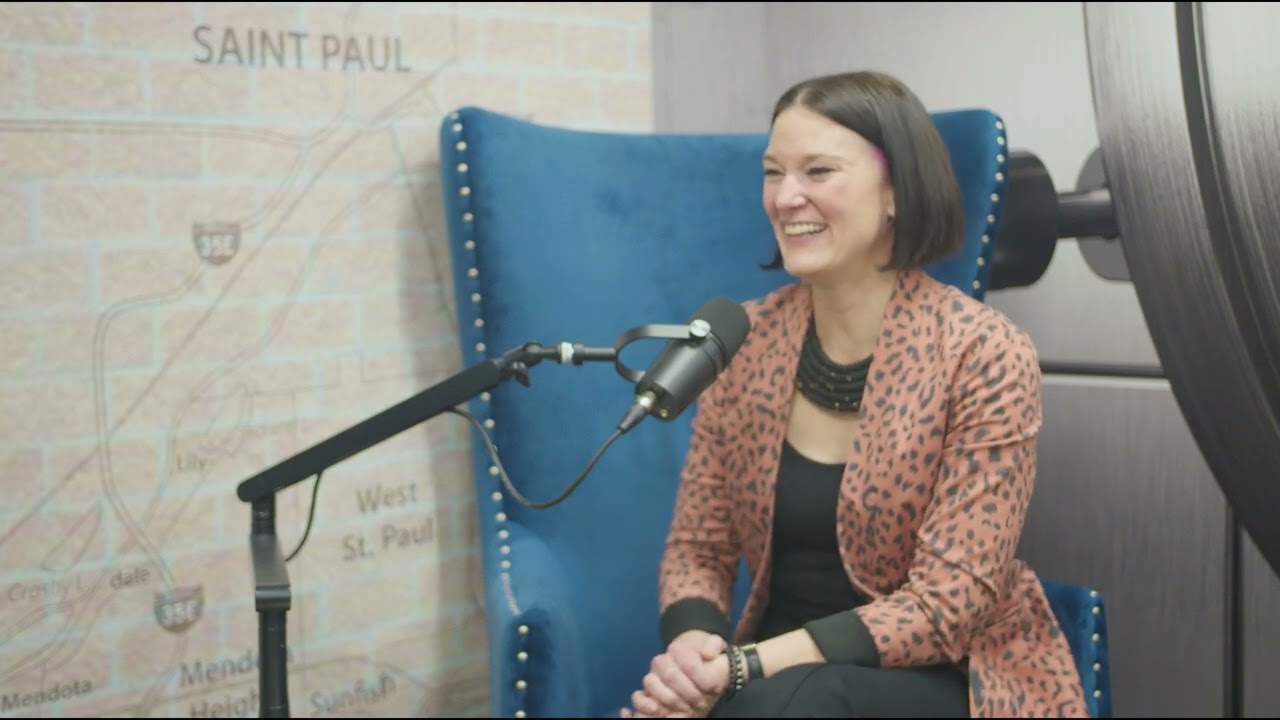
Karissa Dunham sits down with Heather Willems of Two Lines Studio to talk about creative problem solving for big brands.
Or watch and listen on:


Karissa Dunham sits down with Heather Willems of Two Lines Studio to talk about creative problem solving for big brands.
Visual art as a business solution for some of the biggest companies in the country.
Host Karissa Dunham sits down with Heather Willems of Two Lines Studio about using visual art as creative solutions for some of the biggest companies in the country.
Hello everyone. I'm Karissa Dunham. I am your host on Shining Light on Minnesota. Today we have a wonderful guest with us here today, Heather Willems. Welcome, Heather. Hi. Thank you for having me. You bet. So, let's get started and tell our viewers and tell tell me a little bit more about Two Lines Studio and how that all came to full fruition. Oh, sure. Um, so, well, thank you for having me. You bet. Um, Two Lines Studio, we're a creative problem solving firm. Okay. So we work with organizations to help them to clarify complex ideas to bring um we really bring clarity through creativity. So everything we do has a basis of visual storytelling okay to it. So whether you are doing excuse me a visual strategy session, you're trying to come up with a big idea around you know new innovation ideas or you're making a transformation in your business, that's where we can come in to either help facilitate those conversations and that you know progression through workshops. Um and then we also do something called graphic recording which is uh very much in support of clarifying those big ideas. For sure. For the people that don't know, maybe explain a little bit about what graphic recording is and then we'll kind of show them some examples, too. Oh, cool. Yes. Yeah. Very good. Well, um, graphic recording is kind of the basis of where I started my career back in like 2005, I think. Long time. Right out of art school, um, I started facilitating and there was u this opportunity to listen to conversations in a business setting and draw what people were saying. Wonderful. So, as I have an art background, so I have a master's of fine art and photography. Um, but I started listening to those conversations and just mapping out what was being said in the room. And I saw this like incredible transformation in people when they saw that their voices were heard, that their thoughts were understood, and where they thought there was conflict, when it was drawn up visually. They recognized that maybe they were more the same than different, right? So, to answer your question, Yeah. What is graphic recording? I think I'm a little excited and just warming up here. Oh, yeah. Um, so graphic recording is uh you might see it in a conference or in a meeting, but it's when we're up at the front of the room with a giant whiteboard and markers and we are listening to the conversation and drawing what's being said in real time. So essentially, we're taking visual notes of a meeting to create a real time session summary. So like when the conversation stops, we're pretty much done and it's a snapshot of everything that was said during that meeting. How do you find that people obviously when when you're supposed to be listening, it's great to draw, take notes, do things like that. When people are in a session or they're dealing with conflict, how important or what do you find it's in very important for them to see what's going on too, just to kind of get that visual aspect of it? Um, yes. So, is the question more around like either one? Yeah. Like, do they do you find that they see once they see what's going on and they understand it, they can see the big picture, their brain works a little bit more different than just listening to it or trying to hear it? Yeah. Well, I'll I'll talk about it from the um listening as a learning modality first. So, we're we're all the same, but we're all so different. you know, you've got your introverts, you've got your extroverts, you have people who are, you know, have a wide spectrum of neurode divergent learning. And so we learn in different ways and we have different um uh we can kind of favorite different types of learning sometimes. You know, some people are I'm an auditory listener um or I'm an auditory learner. Okay. I learn like I will take in all of the podcasts and all the audio books and that's I can that's how I love to learn what you love to do. Yeah. Um, other people need to read everything. They have a photographic memory. Other folks, you know, there's always there's always the person in the back of the room that's like pacing back and forth with the coffee or the diet coke, multiple things at once, right? They might be the kinetic learner. And when we combine all these these things, these different modalities of learning, we're listening, drawing, we're moving, or we're seeing something come to life visually, it uh it multiplies the ability to take in information and to increases that way of understanding, right? And when you bring in emotion through storytelling or you know some of the capturing some of the jokes that are being said in the easier stuff or even like the water cooler conversations like those side conversations you're like hm noted interesting how am I going to work in those visuals right um people it emphasizes the way that people remember information right so when you revisit some of the visuals that we create after the meeting. Um that people are not only seeing themselves and seeing their ideas and the work, but they're also remembering there's a I think it was like 65% greater memory retention was one of the studies shown. Um but they're not only remembering just the content, they're remembering the experience of learning, the feeling of it, too. Yeah. Yeah. Yeah. Right. And being in communion with other people like bring, you know, learning and being together. Yeah. In that process, it's amazing to think about like, okay, this is, you know, you get on a conversation and you get very what's my next question? What's my next thought? Like, you're listening to answer and not really to fully engage and understand. Then when you see that image or the takeback, the full recording, the visual aspect of it, you're like, I didn't even know that was happening on the sidelines or I didn't know that this this process comes up. So, I've seen that happen as well. Like, you get so narrow-minded that you don't see the big picture, right? Yes. Yeah, that's really interesting, too. Like we get so focused on what we want to say next. Yep. That we forget to ask the questions or we forget to actually listen. Right. And that's the big part like you want to be intentional. You want to fully understand both sides or what all is going on. Let's take a minute and just take a step back and think about it too. Right. And that's one of the things. So right now we we also we work digitally but we also work analog. And right now I think because everything's moving so digital, so technical with the AI and all with the AI and everything that um there's kind of a resurgence of having uh us physically in the room. And I think the value the great value and benefit that we that that comes from a you know somebody being present in the room visually taking the notes is that we're demonstrating deep listening, right? we're demonstrating what it looks like to be completely immersed in the conversation and let everything else go. Um, so with that one, I think psychologically it gives people permission to listen themselves because we are capturing everything so they don't have to be worried about jotting everything down. Um, but I think it also invites people to step back, literally step back and see the big picture of like what's happening in that in that space and what other people are saying, which makes a good point to like talking about the AI. Um, with the way everything's going like it would be easy to in the future take a conversation that was recorded and or speaking or whomever whatever it was and plug it into AI and say, "Hey, okay, recap this the best you can visually for me." But when you're actually there and honing in and being a person and let letting them see the whole process, that's a totally different ball game. Yeah. I I continually test all of the platforms to do what I do, right? You But you're a person and that's the one thing that they don't have, you know? It's it's being there. Yes. And it's not quite it's I mean I think one day my job will be replaced by AI. I think it will. Um, I'm okay with that cuz there's a lot of other human things human things that we can do. Um, it's not quite there yet though. You know, it might create one visual like overarching visual like the beautiful visuals that you create in your space that kind of visually tell the picture, but what we're bringing into it as humans being in the space, we're capturing the moments that have the most emotional energy. Yeah. Like an aha moment or whatever it may be. And we're also capturing um words and pictures. I don't know if I mentioned that, but we're, you know, we'll like a reporter, we're listening for those like big ideas. We're capturing that in text. We reinforce it with the image and then we'll add details where, you know, you can take action items around it. So, um the big ideas I think that I love my Fathom. I love Fathom. Like when I'm on calls, I use it all the time. Um but it's it's not necessarily capturing the emotion like where that emotion is or like something you know we I just came back from South by Southwest and um human connection and listening was a theme that I kept hearing throughout and I heard about the pause. So, it's like the an AI right now where we're at, it will capture a transcript of what we're saying and you can summarize that transcript, but it might not necessarily recognize that important pause, right? And the interpretation that we as humans read into that and fill into the blank during those moments. Well, the other side of it too with with the AI and with the pause with everything is you can't see how they're feeling. So what's read AI wise might be taken a totally different way than the way it was meant to go instead of just a nice communication chat about what's going on in the world could be taken totally political or whatever way AI wants to take it that day. Oh, absolutely. It's like text messaging, right? Absolutely. There's no emotions. Just like, "Pick up some groceries." And you're like, "Why are you screaming at me?" I'm like, "I'm just excited." Right. Here's my emojis afterwards, so you know I'm happy. Right. Exactly. When it reads it, right? Yes. So, how did you get into all of this? And where did you get started wanting to wanting to get in and dig deeper in that world? Um, I apparently I had been doing this since high school, although I hadn't remembered until someone pointed it out to me. Um, but after graduate school, um, I was so I have a master's degree in photography. So, I was going along the um, path of academia. Got it. I'm going to do this. Taught you have to be a professor in order to be an artist and um, a lot of opinions on that. Um but to as I was an uh professoring as I was teaching I was also working at a bar to make ends meet and having exhibition down the street. And so um I found myself in the bar that I worked at listening to conversations and sketching them out on napkins and then I would take them back to my studio and make these big murals out of it. Fun. Um yeah. Yeah. big murals like like you're doing too, but they were made out of like words and text if you remember like those like um images from the 60s where they would use the fonts to take the shape of or when you have a book cover back in the day like just drawing on it like as someone's talking like this is my chemistry book. I'm going to do the the bubble letters and the words and do things that fully incorporate what it is. Yeah. Yeah. So, I was making these murals. I was making these paintings and bringing them to the art art gallery. I tried to sell it to somebody who was sitting in my section at the restaurant. And they said, "Wait, you listen to conversations and make them into giant murals." And I was like, "Yeah, you should buy one. They're $500." And they're like, "Do you want a job?" And I was like, "Uh, yes, I am serving you martinis with a master's degree. I would very much like a job." So the next I don't know when I called him the next morning and set up an interview and it was at Capgeemini which is an IT consulting firm. Um and within that consulting firm there's something called the accelerated solutions environment and they have a whole methodology called the MG Taylor methodology that they use for um creative collaborative and innovative learning together. And so the graphic recording um which they called scribing was just one tiny element of it. And since I was the quote unquote artist, they had me do that. And that's where when I started out the conversation, I saw this magic happen that these folks who I just, you know, the light was turned on, right? It's like boom, here's my moment. Yeah. I just saw them come to life. It was like, oh my gosh, someone understands what I'm saying. and someone hears what I'm saying. I'm in conversation with a a colleague who I thought I was in conflict with, but we're actually aligned around a common idea. We're just trying to look at it differently. So, that was outrageously powerful to me. I took this, you know, saw this thing that I took for granted, this thing of like listening, like deeply listening and, you know, just making doodles of like conversations that people had. But I saw that in a different context it had such a powerful um impact. So fast forward I was you know learned all of my facilitation and different methodologies when I was in that space and carried that forward throughout my whole career. Um but in 2008 when the economy tanked um I thought hm I wonder if I just did this drawing thing. maybe I could just do this drawing thing, just try it, right? Let's just build a website and you know, I just tried it. And actually, um, and so my first company was called Image Think. And so I did that with my best friend at the time. And so we didn't know how to talk about this cuz we were artists. We I can show you, but I don't want to I don't know how to explain it. I didn't go to business school. Like I didn't I learned business. This is just my drive. This is my why. This is what I do. Exactly. And so we're just like, okay, we need to show people just like the Cinnabons, like you walk into the mall and you smell the Cinnabons, like we need to show people what we're doing in order for them to understand it. So I heard of this conference called South by Southwest. I thought it was just for music. No, no, no. They also have an interactive track. So I actually um very gorilla style brought, you know, flew down to Austin. I'm going brought aboard, you know, to the front of Ballroom D, which I just was in all, you know, last week. Very cool. and um and just started drawing for a a talk and from there made uh you know made friends I guess with the people at Southby and then did that for about six years. So anyway my first business was about 10 years um in New York City. We had locations in San Francisco, New York, and then um during the pandemic decided to move to Minneapolis um focus on family, start two studios, and so now I get to be a lot more selective instead of having a big team where we were serving all over the world. Um, now I get to focus on Minnesota. You know, it's important kind of back to what you need to I get to focus on like the areas and and choose more of a lifestyle business and focus on family and and doing good work for good people. Yeah. For good reason. And what do you find that you've kind of been driven towards here in Minnesota? Kind of what projects and what products have you looked at and been a part of and what do you see in the future? Yeah. Well, we talked a little bit about the different organizations that we're part of here. Absolutely. Um so really like supporting those organizations here and um excuse me trying to bring that compassion into leadership through these different associations is one way that I'm really excited about serving here and then also doing a lot of work with Mcnite and CS. So really around this like clean energy has been an area that I've really been excited about working here. There's so much growth and opportunities in Minnesota that people don't see and don't understand that are actually here. When you're out in some of the bigger cities, the New Yorks, the Chicago, Miami, wherever it is, it's all just a grind. But then you come back and you're like, that's actually happening here in Minnesota, too. Like absolutely, just on a different scale. Have you found that when you do go to different places when you're doing doing your drawings, doing your recording, everything like that, obviously people are on all different paces and levels that they're at. How do you adapt to what they want to see and what what they're expecting and what how do you get your inspiration when you go into those different places? I think it all comes back to listening. Yep. We're really um we're really there to reflect what's being said in the room. Yeah. So before you know before we do any sort of engagement whether it's you know capturing the keynotes at a giant conference or you know working at a um a company retreat you know like mapping out a strategy we are always talking about you know we're always connected with the the folks who are you know have the stake in the game the key stakeholders like bring out what their goals and objectives are for the session like what you know what they really want to bring. So sometimes folks have a very, you know, if we're going into a pitch, you know, and we're working with an agency that's pitching a new idea, they really have a clear idea of the value that they want to get across. So I'm going to be integrating both the conversation that's being had in the room um with that team and then also like what they what they need to communicate for sure. Um and then in other situations there is absolutely no script. It is just we are just going to, you know, discuss the elephant in the room and we're turning off all the cameras. We're turning off all, you know, the microphones and everything. And sometimes I'm the only person like taking a record of what's being said. Y in those sessions, right? How does it once you're done with once they're done with the conversation and you're there, do you do a presentation? Do you leave it for them? What what's the next steps and what's the process that you take? Um, well, I love when I have the opportunity to explain what my brain did, you know, and that's exciting. And sometimes I'm facilitating and we have, you know, one of the other graphic recorders from our team there. So, it's really a really great reflection cuz sometimes people are so immersed in the conversation. We were talking about this before we started that we like forget what we said like what happened today. Um, so it's one, it's nice to revisit it in the moment to be like, oh yeah, I do believe that. Yes, I do agree with that. Yes, I do sign up for that. Um then we all, you know, we will display them um you know throughout the entire session so people can you know at the end of the meeting there's just like we're in this room right now surrounded by this be beautiful artwork. They're surrounded by all of their big ideas at the end of the session and very similar to this for sure. And then um we digitize everything. Nice. And so sometimes we bring it back to the studio and we will create a journey map. I'm so inspired like being in your space like we'll create a journey map of like what are the next steps like what are the hills that we need to climb? What's this mountain that we need to you know reach the the summit of or where's the plateau? Yeah. Right. and and sometimes we will print it out on vinyl and have it up in their conference rooms and have it up in their space so they're reminded on a daily basis. Here's the road map, right? Here's the road map. This is what how we're getting there. These are the conversations we have. So, sometimes we'll take it there. Other times we'll just we'll digitize it. People can print it out on placards so they're displayed on their desk or maybe they'll make a um I saw upstairs you have these beautiful glass um printouts. So sometimes I've seen clients use that before. So just so they can display it and keep it up um and and have this memory of not only the learning and the alignment that they had, but also like you said like this road map of where they're going in the future. How when you're out there, this is an interesting question because I know a lot of our designers kind of get in a slump too. How do you refresh yourself and get creative again and restart and get out there to refocus? Ah, great question. Great question. I mean, inspiration's everywhere, right? Yeah. For me personally, I'm so inspired by my daughter. She's eight. Like, where's her mind's going? Oh, constantly constantly like repurposing the plant into, you know, a jungle or what, whatever. You know, a stick is everything. Yep. Well, and wrapping paper or box, they could they could be creative with that for years and years. It's like, why did I buy something when you have all the needs you need right here? Exact. Exactly. Exactly. So, I'm constantly inspired by her. Um, and my husband, I mentioned he's a muralist and a sign painter. So, constantly inspired just in our daily lives, but also in from nature. Mhm. Um but then I think you know outside of um that I'm you know I just got back from I mentioned you know Yeah. I I was just I I am so inspired being in spaces where people are thinking big and sharing trends and sharing new ideas and um you know sharing their research studies having really big conversations and difficult conversations um storytelling. So, um I absolutely love going to, you know, Southby to Summit to Aspen Ideasfest. Um you know, there's just on and on all these incredible conferences where I just like so soak up the information and start to like make connections um within the industries that I serve as well, right? Um and then also, you know, speaking of the the different industries, like I work across industries, right? And I'm always um you know talking about those trends like seeing how everybody always feels like they're kind of alone in their problem that they have. Um but we have the opportunity to look across industries. You can recognize that everybody really has very similar problems. And you can learn from so many, you know, we can learn from different different clients and bring those kind of learn not the secrets, right? Not the confidential stuff, stuff you don't need, but you know, like, oh, this is, you know, a story that um this is something that might be good to share. Like, yep, let's get it out there. Something might be good to share. So, yeah, that's I'm constantly inspired by other, you know, people's studies, trends, nature. Yeah. Well, I think I think that um artists jobs are being replaced. Um I think a lot of the repetitive um job, you know, art, it's just our repetitive jobs are being replaced. We're kind of like in a new industrial revolution, but it's called a you know, yeah, AI, right? Um so I do personally see it as a tool um that we can use for our creativity. I also think that the choices that we make today are really, really, really, really important cuz they're going to shape what happens in the next 1 to 5 to 10 years. Like the ethics around it are really important and um can be problematic. Mhm. Um, with that aside, um, knowing that I think there's there's ethics we need to take into consideration, um, there are, you know, things to be concerned about, but it also just like Photoshop was to photography. Oh, yeah, absolutely. It can be a tool for creativity. It can also be a tool as a thought partner. Um I said earlier like I feel like there's a pretty heavy swing coming back to having um visually you know visualization in person um is coming back and I think you know if we even look you we're looking to the future and we swing way back to the past and we think about our ancestors like we may be here today because we learned visually right we may be here today because we were able to take charcoal on the side on the wall of a cave and create warnings of, you know, what symbols. Yeah. What to avoid when we're out, you know, in the fields or like what kind of analopee or deer or whatever was other that we're able to um bring back to feed our families. So, I think it's in our DNA. It is in our DNA. Visual, you know, visual storytelling is in our DNA. And I would like to believe that that's not going to go away, right? But we might have different ways of sharing it and telling it, right? But you still need to have the emotional tie behind it. And I think that's one thing that there's a lot of the way things are going, you lose that emotional touch. It's just let's just get it out there quick and be done with it. But that doesn't tell the big story. Right. Right. And I think also that there there is a a lot of science behind um just putting pen to paper and doodling yourself. Yeah. You know, or writing something out like a handwritten note. Um, and like the you're talking about meditation and often times like I will get so immersed in um the work that I'm doing like drawing something out visually. Um that I kind of forget time and space and it just becomes this meditation like after an hour you're like oh wow I made that. Um and then also go yeah and like with the meditation I've actually done you know we've all got these device not all of us but you know I have a device that kind of measures my heart rate and bio rhythms and such and I've on my own personal studies like it's not personally I've looked at like what are the the rhythms and the measurements that I have when I'm deep in meditation right and then when I'm actually drawing and putting pen to paper and making these marks and they were not dissimilar really. So there's other there's other studies that have um come out of MIT. They're actually researching multitasking. Yes. Um and of course we know that is not very possible. Not you're not you can't do it well anyway. But while they were looking at multitasking, um they found that if you were doing something active like drawing, it dramatically reduced your ability to be afraid of something in the future. So it basically brought you into the present moment and it, you know, started to adjust uh you started to bring this calm and this peace and reducing anxiety. Nice. So I think you know when we're talking about emotion it's you know not only um seeing it seeing it being created but it's also lighting up the parts of our brain that are creating that calming in ourselves as well which is interesting. But you think back to when kids are young and what they like let's journal but draw the pictures you know instead of you can't get the words out. Let's let's show how you feel you know. Absolutely. like there it is. Like let's let's bring out the colors, bring out the stuff that makes you happy or show it or you know different ways to communicate visually as well, which I think is is great for for everybody. Doesn't matter what age you are to really just hone in on that and show what's important. Yes, there is a book that's called Presidential Doodles and it shows a history of doodling of our presidents and how um it was you you know they would use it to not only like maybe bring themselves into the present moment through their doodling on their briefs and such but also as a way to like express an idea. Yep. that might be harder to understand if it's just written text or verbally communicated or to think what the mind is thinking while they're saying what they're reading or well there's a very stressful moment what are you doodling like what what does that all mean and how does that like once you see that once your time has passed and you're past that speech or past wherever you're at if you go back and take a look at that picture it might be like wow like that really meant something that's going to bring me back to that moment yeah and it doesn't even for the memory retention and for the focus. It doesn't need to be something that's literal, right? It can be it can literally it can literally it can just be um squiggles on a page. Y it can be circles, triangles, squares, whichever, you know, it doesn't have to be something. It can just be mark making and that helps to increase the memory retention and the focus and the, you know, calming effects. So, we have a book here. Let's talk a little bit about this. Draw your big idea. Yes. Yes. Um it's uh co-cre or co-created co co-written um with uh Norah Hering and so Draw Your Big Idea is a book of 100 plus exercises that um visual exercises that we have brought to our clients. Nice. So, um, over the course of my 20 years, I've worked with 30% of the Fortune or Fortune50 companies. um oftentimes with their leadership teams. Yeah. And they you know like um folks at IDO or Google or um you know uh Adidas here locally at Target, people would say like hey can you come in and help make our meetings a little bit more creative? We're like sure how much latitude do we have? Well, what what do I have to play with? What can I what can I bring to it? Yeah, I know. So that's basically the foundation of what's in this book is like all of these, you know, looking back at what are the different creative exercises that we've brought into leadership teams like during their strategy meetings, during their innovation sessions, during their brainstorming meetings when they are mapping out um you know their road to success and milestones and action items, all that good stuff. Um looking back and saying like, huh, what did we bring to that? And then rep you know h this is one of my favorite ones. It's like what what keeps you up at night? Oh yeah, I could have used this last night when I was like write down like is there something I can do? Is this something I can mind going and it's just not shutting off. Y So with this book we you know really looked at um it's targeted towards intra and entra and wantreneurs. Yes. Right. and every every other that's out there. Anybody who wants to launch an idea, whether it's like, you know, throwing a a a community a Oh, no, I'm losing the words. Losing the words right now. Um, you know, a gathering in your neighborhood, neighborhood gathering or, you know, launching a conference, right? There are 10 steps that you can move through in this book and um it helps you approach it visually. So it doesn't feel overwhelming that you have to sit in front of a computer and type everything out. You can start to draw and doodle and write it out first and then that's acts as a first iteration. Nice. So very cool. Yeah. And it starts out with some of that, you know, you mentioned meditating and it's like there is like a personal like where is your personal why and that's where we start with I think you know just being part of coalition 9 and Hatch is like so much about like what is your why? What is your purpose? Where do you find a lot of the people out there these days are just driving towards that like you've got to have you've got to have a purpose in life and something that you can fall back on too. Yep. Absolutely. So there's all sorts of exercises. I actually have a course that I teach that's called um uh I just forgot what I got so excited. Yes. Yeah. Um well I have one that's the art of listening and so there's exercises in here around you know how do you listen differently and then also visual strategies to beat burnout. Right? So it's like how do we beat burnout? And there's a lot of different um exercises in here that can help you uh one find that meaning and purpose in your work, mapping out values either as an individual or as a team. And then you know also a lot around prioritization like how do we prioritize what's really going to have a big impact and communicate that to our teams in a meaningful way that we can all like support one another. Absolutely. Which is really important. So when you are doing all your doodling and do you ever do anything that has to do with your life and do your own storyline and kind of your own picture to kind of record what's going on in your room and your own daily life? Oh, you know, I don't I don't do that. You got to separate. I don't do that. I don't uh I I Well, I don't know if that's necessarily true. I haven't done it for a long time, but I do have a journaling practice. So I usually wake up most days and journal for 10 to 20 minutes just to like clean my brain out. Absolutely. Um I guess at different phases of my life that has been drawing as well. Um I also have a it literally is a doodling practice. It is I make lots and lots of circles. Um so I have like a fine art practice as well that I use as like a you know decompressing and calming down at the end of the day. Um, but so I guess like for me personally, I don't map that out, but I have some really beautiful examples of mapping it out for other folks. Nice. Yeah. So, when you've been doing some of the mapping adventures and mapping quests that you've been on, have there been any that just really hit home and you're like, this is really just an amazing one? Like, this is really just something that strikes you as one that you won't ever forget. Um I think there are many that I have but I will um I have three that are in mind right now but I'll share the first one that I thought of first. Perfect. So um we were talking about personal storytelling. Yep. And I've done a little bit of that but they have been really really uh powerful impactful. So, one that I'm thinking of right now, which I can share a link with you afterwards. Great. Um, is for Jared Reid, and he is um an executive at or a leader over at Target. And so, he really we met at a networking event um in St. Paul, Minnesota. Um, hey, we're here. I know. I was chatting with him like, "Oh, this guy's really awesome and cool." And he's like, "Oh, well, please excuse me. I have to go." And I'm like, "Okay, no problem." And then he goes up and he's like the keynote speaker. I was like, "Oh, okay. Guess I should have uh yep guessed in front of the right person. Looked at the biopics before I I got here. But anyway, um he is an incredible leader. He's so passionate about his work and he has a really um rich history that makes him who he is. Absolutely. And one of the things that I love about Jarrett and getting to know him is that he really I I if he was sitting here maybe he'd disagree, but I I see in him this um one of the things that he values so much as a leader is that he helps to empower other people and help them shine and helps them find their meaning and purpose and bring that into the work that you do every single day. Like not leave it at home, but just incorporate it. So he really wanted a way to tell his story um and empower people through storytelling. Yeah. So, we set up a 90-minute session, coaching session, and we I learned all about like his um uh early childhood and the values that his grandmother taught him and some of the um first early entrepreneurial experiences that he had and the motivation and the drive that he had and always um uh and then on through his uh college, you know, where he went to college and his first jobs and his like career the whole picture, his entire career being at Target Corporation and then where he wanted to go in the future. And when we first met, he really just wanted to do that first, you know, we we did a three panel series and he just wanted to do that first series like I just really want to tell people where my values are coming from and like what's the source and the source of who I am, right? And how all of these tiny little interactions, these tiny moments in his childhood influence who he is today and who he is as a leader, right? So we did that and then was like, "Oh, you know, it might be really nice to have like a visual resume so I can inspire folks like with my story." And so we did the visual resume and then just through our chatting, I recognized that he had a much bigger plan and a much bigger idea of where he wanted to go. Yes. So we created a third panel which was of his future like where the future state and like um the road map to take it having a road map to get there like through mentorship and milestones. And so it was something that um was such a gift that for me to recognize this like throughine of everything that he'd experienced in his lifetime. What makes him truly the great leader that he is. Um and then also giving him the gift of just like reflecting back what we heard, what I heard um in his story of where he wants to go. So that's a three panel um uh illustration that we did for his life that he uses in keynote presentations. He shared it on LinkedIn. He shares it with his team as I understand regular basis. Yeah. And actually he used it to apply for a new leadership position in Target. And I was happy to say that he got it. Um, so that was a really cool project and just integrating all these, you know, we were talking about listening to people's stories and like some of those side conversations like there's a, if you look at when you look at it, there's um, a crane that flies that's in every single panel and that I hope he's okay with me sharing this. It's um, it's represents like the spirit of his grandmother and what his grandmother taught him. So you'll see it in the first panel as a pin and then the second panel it's just like you know it looks like decoration and the third panel it's soaring to the summit of his goal and um he can choose to tell that story or he can choose to leave it out and he just knows it's there. Yep. Right. So, when we're capturing these really important moments as a visual, it's an anchor for a story that can you can choose to tell it or you can choose to just have it um be part of the environment, you know, the visual environment that you're creating just because it's present and it's in the present moment. Yeah. Yeah. So, I just love that project and I love that it, you know, had a happy ending of him like getting the new leadership position that he wanted and that he's able to use it in so many ways. Do you find that once or have you had any obstacles when you've presented and done your work that people are like, "Hey, this isn't what we expected or this isn't what we want or do they do background work and know coming into it your art piece and what you're going to bring to it and how it's going to help them grow in the long run?" Yeah, it's a very collaborative. Thanks for asking that question. It's a very collaborative process. M so for example with this um for the three panel illustration that I just referred to we went in and you know we pretty much have a similar process every time is that we have um an intake moment probably it's probably not dissimilar to what you do with your clients as well like we really want to learn like again like what are the goals and objectives that they have um what do we want to achieve and like whatever information we can gather sometimes that's pictures sometimes it's a you coaching session. Sometimes it's like, you know, just give me the 10 pages of the PowerPoint and we will just communicate over email. It really depends on the, you know, what the client needs, right? And then it's a very iterative process throughout like the backbone of like everything I do is in collaboration, right? So we'll do a sketch or two from what we heard, get that approval, then we do a black and white sketch the and you know, it's an iterative process all the way through. So two or three iterations until the final. How much do you see that has grown like after you've gone and done one presentation to get that call back that word of mouth of like let's let's do the next phase like you were explaining with him like let's let's do you know the next board let's make this a three panel let's make this a four panel. Do you see that a lot of times or do you kind of have more of just a we've incorporated the keynote and then onto the next? Yeah. Um, well, oftentimes folks will see us doing the graphic recording at a conference or, you know, we're talking about the associations. So, I call that my um, Trojan unicorn. Yep. Because I'm like, it's really sparkly and fun and I mean, not literally sparkly, but people are so excited to see the conversation come to life and like these like when is this happening? Yeah. Right. Um, and then we we get to have the conversation about, oh, where do you need more innovation and creativity in your work life? Where do you need to, you know, simplify some complex ideas? Where do you need to bring more um, you know, really start to tell the story? So, that's when it starts to open up of like, oh, maybe we can use you in an innovation session or, you know, visual strategy session. Um then often times we'll do the session summary, right? And which is where your I can't wait to work with you guys to start to bring these to life onto people's walls. Absolutely. So we'll take a that digital image that might be created in that session summary or I mean in the innovation session or the visual strategy workshop. We'll create that illustration which then be can come the vinyl or the you know the wallpaper. Let's make this go full pictureive. Yeah. See yourself in the picture. Here's all the different proofs and Yep. Wow. So, we can do that and then um and you know once it's a digital image, you can use it anywhere and everywhere the place. Um and then sometimes they'll take that like how do we turn this into something interactive and um even more engaging. So, we'll also do animated videos. So sometimes that comes in and we've got like really great examples from uh HPE Packard and how we started out exactly all that you know. Here's the recording and here's the picture and here's where I got to do each part. Those are my dream clients. I will let you know. So if you have any of those folks who want to go on the full journey with me, let's do it. Yeah. I love that. I love when when people are able to to really like go deeper and deeper and deeper with the work and find more value. It's fun to see not just the value, but like honing in on the little parts, the background conversations, the water cooler conversations that you don't know are happening. And it's like that really is is a moment in itself that you don't always know that it's happening. Yeah. And how people take it. What do you see for the future? What do you think's next or what do you where do you want to go or what do you want to do? Um, thanks for asking. This year, um, with this year, there's a lot happening like in our world, in our businesses. And, um, I've decided that I really want to focus in on the graphic recording and the graphic facilitation, which is at the core root of um, how I serve. Mhm. Um so I really want to bring that into the communities here in Minnesota. Yeah. And um let people know that we're here to help, you know, clarify those complex ideas in this complex time that we're living in. You know, like mapping out like how do we reconfigure our strategy with all the changes that are happening? um how do we bring you know help people know that they're valued and that they're understood and heard. So that is my primary focus this year. Um, I also have been doing a lot of speaking engagements around like the art of listening and then I mentioned earlier the visual strategies to beat burnout and I think that will always be there but for now I'm really focusing on the graphic recording and you know getting into some of these strategy sessions, these innovation sessions and helping people to think differently and connect around some of these commonalities when there's so many differences that we're experiencing. They can all from the outside in or the inside out all connect and they all do come from what's in what's within. And you know I I just I really just want to make that the important focus right now is is connecting people through the visuals and then if the other stuff continues to go that's great. Um but that's where my focus is this year. With all your focuses happening here in Minnesota and having a daughter that's eight and being creative. What do you see? Does she is she picking up any of the creativeness or what is what is her little niche right now that you can kind of see that's fun? Um uh she's outrageously creative in her own personal storytelling. Like she will just be completely immersed in her own imaginary world for hours. Amazing. Yeah. Which is fascinating. I think that she's allergic to markers and crayons and paint. Okay, get out the colored pencils then. We're good. I asked her last And I'm like, P, what are you, you know, when you're um at school, what is the subject that you get, you finish before anybody else does, you know? Yeah. So, we have parent teacher conferences. So, I want to know like what's your gift and where what are you speeding through? And she's like art. Definitely art cuz she just does not she is the opposite of Liam and I like she she just wants to tell stories and be in the story. Storyteller. Yep. She she could have the the recording part of it, like I'm going to be the speaker while you guys do your artwork. Yeah. And she also loves uh science and she was memorizing uh pie last night. So, she's she's working on memorizing the 100 digits of pi. Yep. You never know. Oh, and it's it's one of those little things like she's going to be out cramming in numbers and doing the engineering, the back engineering of why everybody's doing what they're doing and explaining it as you guys are just doing your artwork and trying to figure it all out. Yeah. Right. Yes. And it's fun to see like growth as a child and where where their mind goes. For sure. Because every day is something new. For sure. Yeah. I love it. How does she does she ever go along or does she get to see you guys when you're in action doing your work? Um, she she does not as of not so often for me. Um, she thinks that I just sit at the computer and look stressed all the time. That That's true. Yep. And Liam has the fun job where he gets to paint. He gets to actually paint and get it all out there. Right. We both have our our studios in the home and um mine is mostly sitting at the computer and then I go out and Yep. I work with the actual work. So she doesn't see the work that we do outside. Well, it' be interesting to see like as a child's like having her explain what her parents do and be like, "My mom sits at a computer. My dad's an artist." Like it's Yeah, she Yeah, that is Dad gets to paint things and mom just she like types away. Yep. Mimes me typing, right? And then one day she'll be like, "Wait, mom wasn't just typing. Let's see all the cool things she's doing, you know?" Yeah. What do you think for the way children are expressing themselves and getting out there in the art world that it's going to go in the future? Oh, well, um I am excited to So, the Sorry, I haven't put a lot of thought specifically around this. We try really hard to get her off screens as much as possible. Like I'm trying I know that technology is the future. We're not going to avoid it. But I'm like right now I just want her to be in nature and connected and conversation and making food and doing all the all the tactile things as much as possible. Um but I am very excited like the first talk that I you know way back uh when I launched this as a business the conversation was about the importance of gaming in children's lives and that was in 2009. Yeah. Um and hearing now like even just stories of of people talking or their origin stories of where they are in like technology. Um it's because they were, you know, they're they're playing these games and they're picking up these different um modalities of thinking and and working and building in that virtual space and bringing that into the workplace. So I think that that you know I think when I was a child it was like oh you're just wasting your time what are you doing yeah playing video games but it's really um important for problem solving y and so I think that I don't know that that's just going to become it's neat to see it be being important in you know having that the the gaming mindset and how that's advancing technology like in business super creative I mean you think even back in the day like this was going to age me, but Tetris and putting the pieces together to to make the line. And then you get into like the Fortnite now where they're building things and they're doing and there's also I mean I think there's problems with like it being online and and having comm you know open communities online it's problematic but I think it's also something that's very very interesting and beautiful as well like um a message that I keep hearing over and over again is that like loneliness is an epidemic you know it's like we at an all-time high of reporting loneliness But it doesn't necessarily have to be that way. Like we're connecting in person, but we can also connect online. And I think having the kids like meet up with their friends and go out and do something with people. Well, we'll go out and physically do it, but also like there is there's something really beautiful about the communities that they're building virtually as well. And like they're building together and they're working together. and my daughter and her best friend who is like eight. Pi is eight and her best friend is I think 10. Um her best friend's in Brooklyn. Pi's here in Minnesota. And so they have they've created their own game of like emojis that they play fun like all the time through FaceTime like almost every night. and they are still like best friends and have these really complex um relationships with these different characters that they've built all through just using emojis on the FaceTime, right? Well, and you don't know like it's teaching you how to communicate with everybody too. I mean, just having that that I'm able to communicate with people from not around the world, but all different age groups and everything to come together to have one solid story like let's and then to maybe sometime down the road have that opportunity to go meet that person like okay, I'm going to go to China or I'm going to go to Egypt or wherever it may be because I've known this person all my life on this game and we've created so much right emotion even though you don't physically see it. You know, yeah, it's this the world is getting smaller and smaller. It is. And our knowledge is expanding and expanding. Yep. There's so much There's so much opportunity. There is. And just just the opportunities you have to be creative and do what you love and have a why and just keep finding what's important in your own life and keep moving forward I think is is a big thing for a lot of people to really just be able to emphasize it too. And I think also like one of the things we touched on too is just like making the choices that we make today are really going to influence where we are tomorrow. So being really grounded in your why, like being really grounded in your values and taking action from that place, I think is more important than ever. Well, I think to add to that as well is to be be who you are. That's the biggest thing because you don't want to lose yourself in going after something that's not you or your values or who you are to always just make sure that that comes across as as one of the purposes that you have in life, too. Yes. Well, how can people find you and what would be some great ways for them to get a hold of you if they wanted to? Yes. Um, well, you can always visit me over in our website which is twolinestudios.com. Um, we have in case they didn't see it um, visually. Yep. So, also right now, um I think for the next couple weeks, I don't know when this will go out, but I have all of the visual notes that we took at South by Southwest a couple weeks ago are available. So, if you sign up for a newsletter, um you can it should be pretty easy to find the way to do it once you get to the website. We will you can immediately download the 16 talks of like the latest trends from South by Southwest captures visuals and then we also have links to the actual talk the recording as well. So you can watch, you know, watch the recording as well. So those are two great places. I'm also on LinkedIn all the time. Um just joined Blue Sky. So yeah, Two Lines Studio um at Two Lines Studio on LinkedIn, Heatherwills on LinkedIn and your book. Where can they find that? Um you can come on over to our website and there's a link right right to that under resources. There you go. So well, we appreciate having you on today. We look forward to the future and can't wait to have you on again to see where all you're going in Minnesota. Yeah, I would love that. I can't wait to bring more of this into the community. Thank you. Yes. Thank you so much for being here.

Karissa leads business development at Sun Control of Minnesota and hosts Shining Light on Minnesota, sitting down every week with the business owners and leaders who are building something good across the state.





