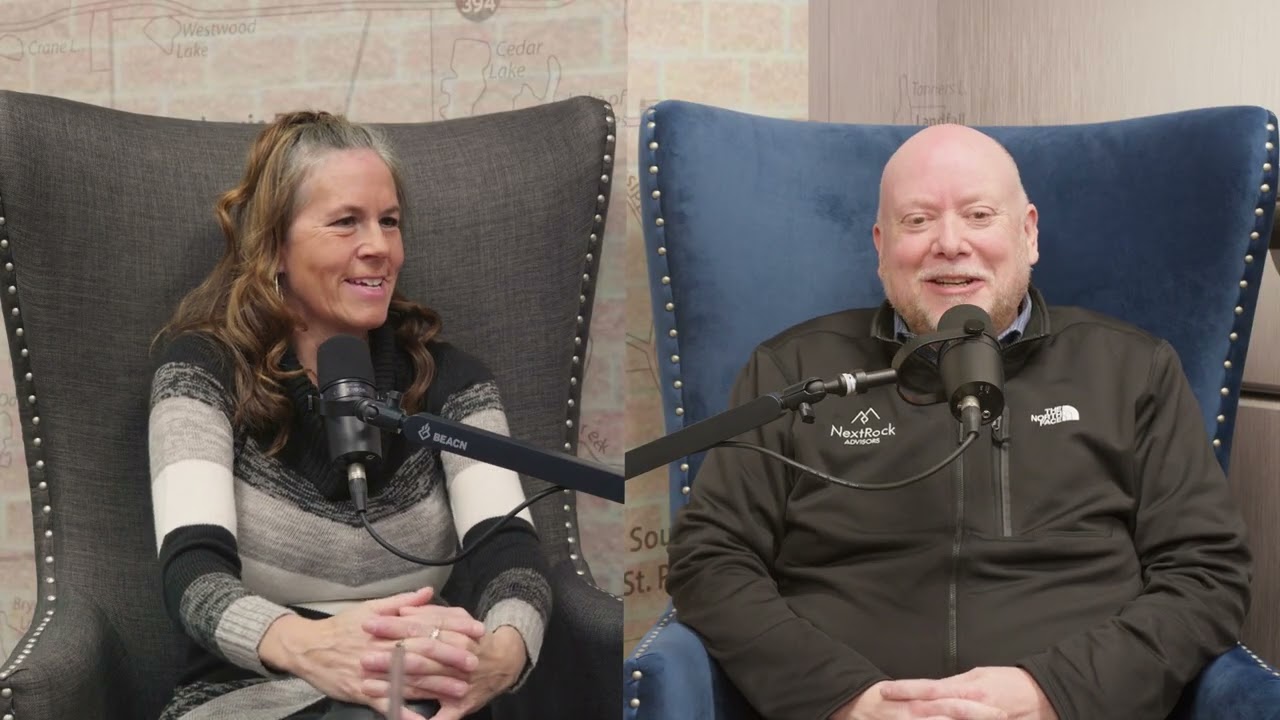
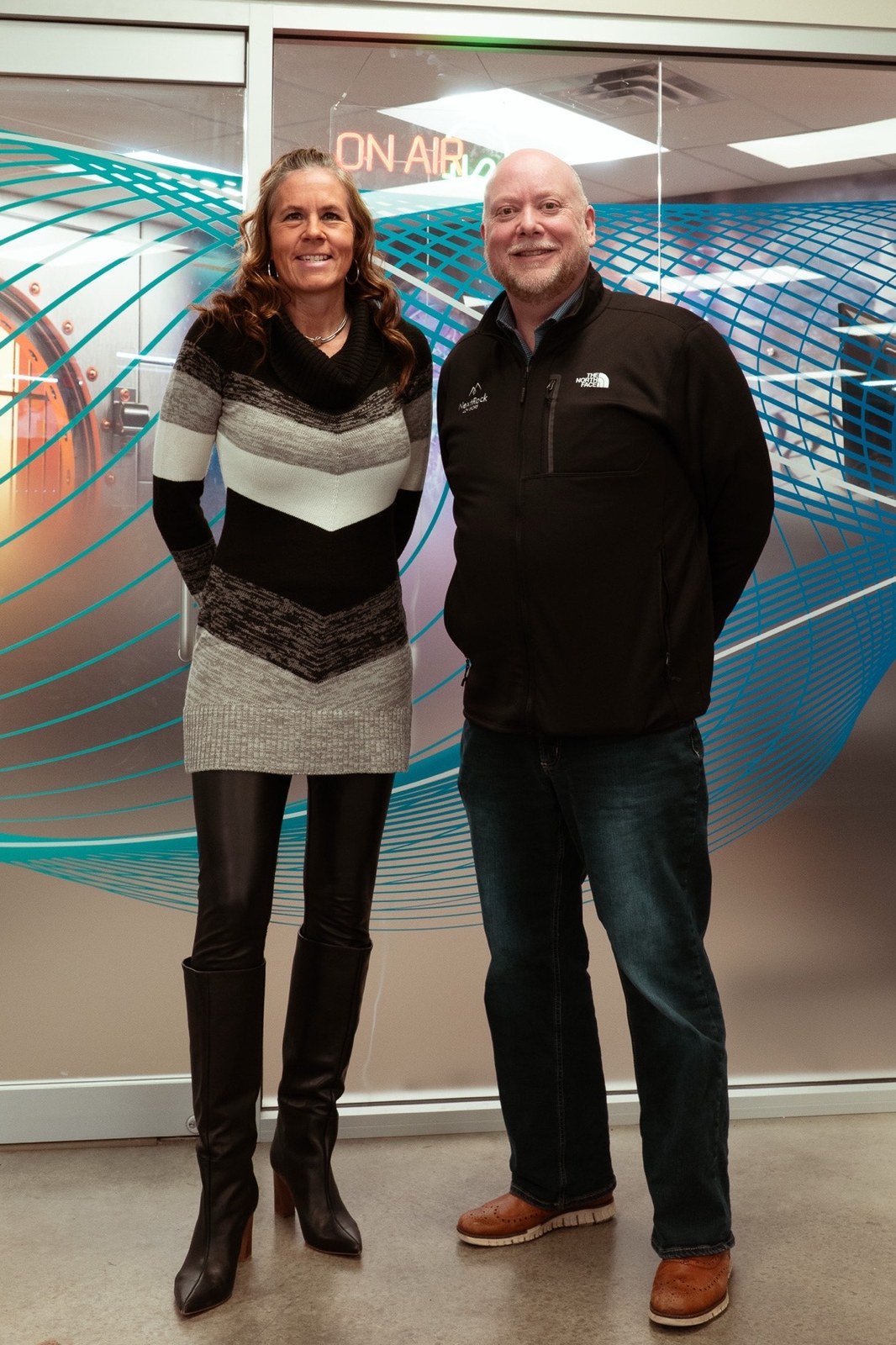
Hello everyone. I'm Karissa Dunham from Shining Light on Minnesota. We have an amazing guest with us here today, Jamie Jansen. Welcome, Jamie. Thank you. You bet. So, let's start off by telling our listeners a little bit about where you came from and how you got into your role at NextRock Advisors and how everything is going today. Sounds good. Um, well, I honestly it it uh I've had an interesting career. Yeah. I started out in IT with an electrical engineering background actually. um bachelor's degree and from there I spent 15 years working in primarily smaller businesses but I actually started out in a very large bank so I really got to know the systems and processes of a big company there um and I took that with me to smaller businesses put in ERP systems integrated systems did a ton of analytics for med device aerospace companies manufacturing and electronics primarily um from there I was moved into an operations role because of all my experience, right? Um, and you know, I shut down buildings, stood up things over in Mexico, um, consolidated inventories and I just loved the the measuring and the analytics and all those things that are involved in the operations side. Uh, eventually I was, uh, the same place. They asked me to take over sales and get new new business for them. And I thought, well, you know, it operations and you're asking me to do sales. I mean, how does this all come together? But let's do it. Um, but I said, well, you know, if I got the training, um, and I could build a team, then yeah, I'll give it a shot. And, uh, was very successful. I had a team of six and, um, we brought in more than they expected. And, uh, I actually, uh, went to a big firm here in town and I joined their sales leader alliance. Um, and from there I learned a lot of systems and processes for managing a sales team. Um, and eventually I ended up working for them. Nice. as one of their senior consultants. And I ended up teaching sales leaders and owners the same systems and tools. Sometimes I'd go in and be their sales leader and put in those systems and tools and manage their teams. And I really really enjoyed that work. Um, but eventually I left for a client uh out in Wisconsin and we were able to turn that business around uh very very quickly. um long drive uh definitely uh was taking a toll on my my health and my family life and things. So decided to start my own business called NextRock Advisors. Nice. And uh basically doing a lot of the same things, but I'm focusing on really the smaller businesses. Okay. And I really want to help them put in those bigger company best practices for more predictable revenue and really elevate the sales manager as a real leader on the team. coaching the team and elevating their team and that's what really brings me joy in my business. What do you see from the small businesses when you go into them? Are they misses missing a lot of the processes or is it just kind of seeing where they are as a whole and taking them to the next level? Uh more often than not, they're missing just about everything. Yeah. Right. So, they don't have a documented sales process that tells them what tools and resources they need at each stage and who owns the stages and right um the information they should be collecting and sharing along the way, right? Yep. Um or they're not even doing sales planning, right? It's really just here's a revenue goal, everybody go get it. Exactly. Uh so really showing them how to do those things can really elevate not just the sales manager but the entire team, right? So they're more intentional and they get more predictable and that's what the owners really like to see. What are some of the important steps as a sales manager comes in to play with a company that's already there? Do you see a lot of kind of headto-head or do you think they're pretty open to new processes and new sales goals and things like that when they bring you on? Um it really depends on the personality. Right. Usually what happens is it's the CEO or president or owner that engages with me. Absolutely. And then it's an introduction to the sales leader that they currently have in staff. And sometimes they're a little hesitant, right? Like I got this and maybe they're just not ready right now. Um cuz more often than not, if I try to push myself onto that situation, it's not going to work out anyway. Yep. So it's it's really about a conversation at that point is do you have the right sales leader? Is there a different way we can approach this where I'm just training them one-on-one versus more of the coaching? Y um and that's part of the flexibility of a lot of my services is I can literally say, "Do you need to learn sales planning? Let's just work on that." Mhm. Or do you need some coaching on how to handle difficult conversations? Let's make this a different type of engagement. Or in some cases, it's they've lost their sales manager or sales leader and they literally need somebody to come in, but they don't want to bring the $300,000 executive, right, in for their little business to put in all this stuff. And they just need somebody transitionally to let's get the foundation set, help me hire the right person, help me onboard them and transition them and show them how to use these tools and set everybody up for success. What are some important tools in the sales role that you find that most companies need that they don't have? Number one, the sales process. Because if you don't have a sales process, you're not measuring your leading indicators. And if you don't have your leading indicators, how do you know to pivot until it's already in your results, right? So everything starts with the sales process first. Perfect. Do you find that when people are looking for the sales process when you start digging deeper it could be more core values or trying to find the personas not even knowing who the customers are things like that too so a lot of times we have to get into strategy also and when I when I work on strategy I'm really focused on okay what is your goals overall and then how do we get there and how do we focus that further so what are the ideal projects that we're looking for and let's define those or what are your ideal clients and let's really get like you're talking about the persona dialed in on what those are, right? So we're not wasting a lot of effort on things we're not going to win, right? And then of course you got to get crisp on your differentiators because that again is hey why are you going to buy from me versus somebody else and if you can explain to them why um you're very you're much more likely to win. Absolutely. I've noticed too that sometimes when you talk to other companies and they say, "Hey, my sales goal is going to be X," it's too big of a number. It's kind of one of those that's unreachable for the first for the next year until you get those processes in place. So sometimes scaling back those goals and working or biting off less to get to what the ultimate goal is is important, too. Do you see that a lot with companies as far as like, hey, I want to I want a 10x or I want a 20x this year and let's double it up. I haven't seen goals that stretched out yet. Um, and honestly, um, once you have everything in place, there's a formula, right? Right. And because you have all this information now in front of you, you can literally say, well, even capacity-wise, if I want to grow 20% for sales, I need to add a person. Yep. Um, and more often than not, you know, when times are good, I would say make sure you have a salesperson on the bench even that you're already developing, right? Someone as a backup. Yep. Yep. cuz yeah just like you're saying you know attrition of the sales team even can happen right and that is so detrimental to reaching your goals. Yeah. So I think important wise like in the sales process or in anything in life to stay in your lane too like you you know what you're good at. Let's let's go towards that. You know what what works for you even though you've tried everything else even as management owners things like that. Like let's really fine-tune where you're good where you excel. If that works great today, it might not work great tomorrow, but let's let's adapt and see see what works. Yes, absolutely. Um and that that kind of talks a little bit to making sure you have the right people in the right seats, right? Um and what happens more often than not in small businesses and those small sales teams, whoever the best salesperson was is now the sales manager, right? But they have no management training. There's nobody there to coach them. Um if you Google it online, sales management courses at universities, I think there's 13 in the country, right? Um so yeah, there's just not the opportunity there for the training and coaching on sales management. Uh selling tons of it, right? You can you can get videos, you can LinkedIn, you can there's trainers all over the place, but management training is a different thing. and and I would say hiring a salesperson is also one of the hardest things you can do, right? Um there's the hunter farmer and I've recently posted about the trapper which is more of a marketing social selling person. Y um so that's just your first level and then there's complex or transactional. There's I literally have it written down 40 different criteria on how do you find the right salesperson or sales leader, right? Um and then I've also partnered with another uh another place another partner called sales genomics which literally does the brain assessment. Got it. To understand what is their sense of urgency around things and how do they think is it more of a critical thinker or are they somebody that's just like take and execute, right? Um so you can really get it dialed in. But honest honestly if you look at the statistics the average salesperson only makes it in their role. even a sales leader 14 months or less. Yep. Because it is so hard to find the right one. Correct. And the small businesses tend to say I need the industry experience first and more often than not I say that should be lower on your list. How often do you find like when people go into companies obviously they have the personality test they have to do versus like the sales genomics that you're talking about. What differentiates the two and what makes them different? One is specific to sales traits versus like a colobby a assessment. Yes. Which is trying to figure out your what what makes your strength strong or not or strength finder, right, is another one. Um very very different. Y so really the the sales genomics is really about what are those traits of a good salesperson. Y and they really start with give us a profile of what you're looking for and we're going to score the good traits against this person and show you where the differences are. Nice. How long have you been doing that for or how long has that been around? Sales genomics been around a lot longer than I have. Right. I know I'm familiar with it. I just didn't know if you've used that tool for a long time or if it's something that's kind of been newer with Next. Uh very much newer. Um the last two months actually. Nice. um haven't actually got to use the tool yet, but I did spend some time with them and understand and training with them. Let's explain to our viewers a little bit about the trapper and some of the different personas that you were talking about so they can kind of understand what if they don't know what a hunter is, what a gatherer is, what a trapper is, etc. Sure. So, a hunter is the person that is really out there finding the new business, and that's what drives them, right? And they're not afraid of hearing the no a 100 times because they know at 101 they're going to get their yes. Yep. Um, and it's it's an interesting persona because they literally it's all about driving for money. That's that's really what's driving them. Um, whereas your farmer is really an account manager that's trying to grow with the existing customers and they're more project manager and they're more focused on how do I how do I deliver to my customer and provide them the best service. So, they're really working in the company to make sure their projects are moving smoothly, giving their customers good updates. And now you get to your trapper persona. It's very much like a hunter, but instead of cold calling, knocking on doors, um, direct emails, um, they're really using social. Mhm. So, they're doing providing something of value to their audience on social media to build interest and curiosity. And then they'll use like a direct message in LinkedIn to try to connect with them just to learn more about the the person that they're trying to connect with or set up a meeting so that they can present to them what solutions they offer and that's the way they try to reel in the business. Yep. Um, so it's very very different approaches and I love the trapper approach a lot with obviously internet and how and everything's going to and the new generation and how they want to be communicated with. Um, uh, I think the old hunter style will be become less and less over time and probably only used more as a closer in the end. Do you find that with the way the world's going right now with a hunter going away, people still strive towards that and they want to see that? They want the door to door. They want people to come in and actually be face to face because they don't get enough of it as it is. It depends on the business. Yeah. So, a lot of your smaller businesses that are B2B or B TOC, Yep. that Hunter approach is 100% the right approach. Um, your professional services that are that can deliver more across the United States. Yes. Uh, Trapper is going to be more effective, right? Because they got the outreach, right? So, it really depends on your business and your geography and who your audience is, right? with AI and with everything the way it's going right now with a sales process, how much do you see change coming in the future? That's interesting. AI, I think, is going to be transformative. Y how it's going to work in a sales environment. I'm not 100% sure yet. We're already seeing how it's working extremely well in marketing as a a tool. Um, it's also working extremely well on the analytic side, bringing you information and gathering it and presenting it faster and faster to you. Y um, but how that's going to work in an automated sales environment, I'm still not sure. There's still a lot of people turned off even on the marketing side, right? Um, even double-checking the emails to see if they were written in AI. Yep. Even your original ones like, is this going to scope it or find it as AI? Yes. Yes. So, I think there's just a lot of change happening yet and it's, you know, 5 years from now, I can't tell you what technology is going to be. Nobody can. Um, but honestly, um, yeah, I think it's going to be everywhere. I think a lot I don't think it's going to eliminate jobs like they think it is. I think it's just how people work is going to change kind of like it did at the start of the last century. Yeah. Yep. So, you do a lot of connecting as well and it's it's important and vital in your roles and everybody else's roles to connect people. What are some ways that you have found that it's successful for people too when they're looking for jobs and or just connecting to get out there and meet new people and absolutely there's um lots of groups um in every community, right? Um in the Twin Cities, there's tremendous number of groups. Um, one thing that I've I actually attend as often as I possibly can is a group called Manufacturing Executives in Transition. And I go to that group. I try to be there every month. Uh, today I couldn't cuz I'm here. Yeah. Sorry. No problem at all. Uh, but I I actually go as a resource. So, I pay my dues. I raise my hand and I introduce myself and I say connect with me and I'm going to try to make valuable connections for you. Yes. Um, I have two different LinkedIn groups. once called the Twin Cities Leadership Fan Club. And fan stands for free agent network cuz I I see them all as free agents and they're just waiting to get to their next team. Right. Yeah. Um and um so from time to time I'll post different things that I'm finding there to share with them. Um and the other place is the Twin Cities sales roles group that I've started. Um, there's really nobody in the Twin Cities. I shouldn't say nobody. There's one that I have found in the Twin Cities that specializes in sales for recruiting. All the others are really advertising themselves as executive recruiters these days for the most part. Um, and I've talked to several and they're like, you know, sales is hard to hire for and it's not good for business because the turnover's so bad, right? Yeah. Absolutely it is. Yes. I mean, as of you just continuously train and continuously go because of the burnout rate. For sure. Yes. Right. So for smaller business instead of them burning their 30% recruitment fees um whenever they post something and you know a lot of them are aware of this I'll post it on my group. Yeah and it does get a lot of good responses there. How do you find when people are looking for a new sales role and or looking for to see what's out there? What's the best venue to them for them to go to? Do you think LinkedIn is great or do you think going to the typical online job searches is working like Indeed and so on or just getting out there and meeting people? No, actually back to your point on AI, I think AI has kind of soured a lot of that process. um the automated HR systems that are scanning the resumes looking for keywords. It's it seems everything has changed to from the look at all the stuff that's good on this resume to how do we disqualify this candidate. Right. Right. Y so that seems to have flipped and the people that are just pumping out resumes Yep. are just burned out pumping out resumes. Absolutely. So, I think it's important for them to really reach out and network with people, get a build a relationship with a lot of people, right? It's not just a 15-minute call. It's let's go have a cup of coffee for an hour. Right. Right. And learn about each other. Let's be intentional. Yes. Absolutely. And and let's figure out how we can work with each other to connect you to the right people because there absolutely is a hidden job market. Mhm. Um probably every other week I get one sent to me. like I don't have this posted yet. Uh I'll let you know when this is polished up, but please post it on your Yeah. Uh social pages. So, yes, I'll absolutely do that. What do you see for It's kind of a catch 22, but you have the younger generation that's out there working smarter. You have the older generation that's still stuck in their not really stuck in their ways, but they know their ways. Getting to the point where they might retire, might not retire, but they're in the sales role and they get burnt out. they get tired, but they still want to work looking for something new. What What benefits do does the older generation versus the newer generation have? That's really interesting because I'm going to I'm going to not really answer that full question, but one thing that I've noticed is the gig economy. Yes. Right. The the fractional network, the independents, the consultants. Y that community in the Twin Cities is growing quickly. It is. And um I love it. It's it's a lot of people that have a lot of really great experience. They want to continue to share that, but they're kind of burnt out on the 60-hour corporate grind. Yes. Absolutely. And they're looking at this is, you know what, retirement for me isn't going to be, well, I got 10 million in the bank and today I'm retiring, right? It's it's I want to continue to bring value, my value to places and share that and continue to work until I can't provide that value any longer. Right. And that's kind of what I'm doing. And you know what I've also started to do um I've I've launched this business development for solopreneurs and I've I've done two of these now where these new solopreneurs from around the United States join and I show them how to do sales. Great. Um five different channels of how you can generate new business. I share strategies and tips with LinkedIn. Y um and yeah that's going very very well and I'm glad to help. What are those channels if if you don't mind me asking that the sales people or do you want people to tune in to find out what those are? I'd love them to tune in to find out what they Absolutely. Let's keep them let's keep them guessing. So, with the fractional world for the people that don't understand what fractional means. Explain that a little bit to people. You get to that age and you kind of just want to do things on your own a little bit. Yeah. So, fractional just means part-time and contract. So, um, often times in a fractional contract, you're contracted for one or two days a week. Y, um, and in a sales contract, more often than not, you're not talking to the customers. So, that's fine. You're not selling. You're literally just leading a team. Right. Right. And helping them get that next person in place and making sure the foot doesn't come off the gas pedal for the company. Right. I think it's important too like when you get to my age, older, whatever it may be, you don't want to stop. You don't want to stop using it cuz you may lose it. Like it's just one of those that you want to keep on the grind. You want to keep doing what you know because that's what you love for one, but for two, that's just what you've done all your life. It's one of those that you kind of just you don't want to start slipping. You don't want to do any of that as well. So you do it. Absolutely. And if you can do it and still feel like you're giving back. Absolutely. There's nothing more rewarding. Right. Right. Y I talked to you a little bit about a book called The Go-Giver. Yes. Um this book kind of cemented everything that it I want to be about me. Right. It's not just of a sales book, although it's positioned as a sales book. Um but I felt like it was very life-changing for me in a way because of it's just being a good person. Right. Right. Yep. and understanding the value you have and for other people, right? So, to me, that's as a soloreneur, everybody should read that book for sure. Um, and honestly, I've bought 10 of them and I plan on giving my niece one just before her wedding because she's a nurse. She has no interest in sales. But like I said, this is way more about sales. Yeah. It's it's a lifestyle. It's it's who you are as a person, what drives you, what motivates you. Who along your way into your role have been some of your mentors and who have been some of the people you've looked up to and that have helped you out? Oh man, there's a lot of them. Um, unfortunately, a lot of them aren't alive anymore, right? Yeah. Uh, definitely had one of my first, um, companies I worked with, the president there. Um, I was young in it. Uh, we had a big project. We were literally taking out 27 typewriters and putting in an ERP system. So, it was a $50 million distributor. Uh, yeah, a lot of change. And he taught me a lot about leadership and being a good person and understanding that, you know, whoever you're talking to today, you're going to bump into tomorrow. Yes. So, um, and when you when I was young like that, I didn't really see it that way. No. Right. Like, see you later. I'm good. coming from small town Minnesota moving to the Twin Cities. It's like there's two million people here I drive by every day and don't even wave to. Yep. Absolutely. Or you see the same people, you start seeing the same people and you don't you're not intentional about it. You don't remember the names. Yes. Yes. Yes. So, uh he was he was a big impact on me. Um there's another I' I've generally ported to CFOs in my IT career. Um and there's been a lot of good CFO leaders that I've had. Nice. Um one at electronics manufacturing company, Sandy Bell, I'm going to say his name. He's fantastic. Um, more than anything, he treated me like almost like a peer like and he told me like he respected my opinion. He thought highly of me and gave me a lot of confidence. Yep. Um, in what I did and he's one of them that moved me from IT to operations and then talked to the president and they moved me into that sales role for the first time. Right. So, he's had a major impact on my career and really my selfworth. Right. Absolutely. To know that someone at a higher level respects you and thinks the world of you and is willing to put you on the same level as them and see where your strengths are and help motivate you, push you forward is always important. Absolutely. Yeah. What do you find is your your driving force? What's your why? Oh, it's all about helping people 100% of the time. Yep. Um that is that is what drives me every morning. Uh even when I was working as you know a VP of sales at a company um I was literally walking out on the floor. I was talking to people. Um I found this incredibly bright um young lady out at the laser cutting steel and found talking to her. She had a two-year graphic design degree. Um and I had an estimator position open. I'm like, "Hey, would you be interested in this?" And she's like, "Aales? No, not gross." And I'm like, well, you know, it's a estimator, so you're not talking to customers. Um, so literally it's just sitting down. It's a bunch of math. Do you know math? She's like, yeah, I'm good at math. I'm like, that's all it is, right? And she did apply, and she applied against actually four other outside candidates. And um my uh one of my other salespeople that did the interview said, "She's a hands down the winner." Yeah. And I'm like, "All right, let's bring her in. Let's do it." Um when I left there a year and a half later, she was our senior account manager and had two estimators on her team working for her. Amazing. Um so yeah, she was a complete rock star and I that's what drives me is showing people that they can be better than they think they can be. It's so much more than they think they can be. It is. And uh of course getting those text messages later on saying, "You've changed my life." Successes. Yep. Yeah. That's that's what makes it all so it's also interesting to help some people get through the tough times that shouldn't be a tough time. It's just an obstacle. There's a reason it's there to help you get on the right path. People don't see that a lot of times. What kind of obstacles have you seen or faced in the past couple years that have been some that have stuck with you? Man, I don't know. Um I've had everything. Well, that that last place I just spoke spoke about, that was I left the the firm here in town. That was an hour and 40-minute drive. That's a long drive. Yeah. And uh that took a toll on me. And I gave them close to 3 years, which is what I had committed to. And uh but I could tell you my family suffered, my health suffered, right? Um in the end of the day, do I regret it? Absolutely not. The work we did was amazing. The people there were amazing. We got a lot of great things done. We helped a lot of great people. That particular owner, his whole mission was to provide more to the stakeholders of the business than the business received itself. So, absolutely no regrets. Um, but I think the biggest thing that I've done for me was taking a step back and saying, I'm going to start this business and number one, I'm putting myself first. Y right. Absolutely. And it's going to be I'm taking my daughter to school every morning. I'm picking her up from school. Priorities have changed significantly for me. You start to learn the driving force. Yes, it's it's amazing to help other people, but you also have to be able to help yourself, right? And in any roles that are out there. A lot of times people put that aside for the good of the company or for moving ahead or trying to figure out that next step when in a sense you still need to bring it home and find something that drives you for. Absolutely. for 25 years I would have said and many people have asked me what's my hobby. Yeah. And I said it's my job work. Yep. And honestly that's that was everything to me. I 60 hours a week that was regular. Absolutely. Get up early, be the first one there, last one to leave. And and it was always about I got to move the ball forward. I got to be the rock star. And and yeah, longterm that's not the way to do it. Nope. It isn't. I mean, when when your family, your health, you start seeing the big picture in the background, like, am I going to remember this one sale? You might remember it, but it's the memories that you made along the way, too. And if you start to lose those memories, it's like, h, not sure. Not sure about this one. You remember a few big wins, but um what I remember the most is the team and the people. Absolutely. What are some growth steps that you see for the future, and what what do you think's going to be next for you, man? I uh I just want to keep helping people. That's all I really care about. Um obviously I have my business and that's there to help people but also hopefully get myself some kind of retirement in the future, right? Retirement, what's that? You know, um but honestly, all I think about is how can I help more people more often than not? And I'm looking at like this podcast even and I'm like, man, I think I could do something similar and help more people. Yep. It's a driving force. I mean, for for me, for us, for everybody, it's it's it's a why. It's how can I help? How can I give back? How can I get to know you as a person? And then on the other side, how can we help other people that are out there that are listening? Like, what what little tidbit will they walk away from today with it? You know, what what growth can help them? Mhm. Do you find that with the way technology is going, with the way sales are going, things like that, that it's going to continue as far as yes, you meet face to face, yes, you meet on the computer, but there's always going to be a mix of both of that. Or do you think that that'll start to go away? It's hard to see in the future, right? Part of me says, you know, the whole VR AR thing is going to make it seem like you're in Florida, but I can see you sitting right here, right? So, is that face to face? Close enough. Yeah, might be close enough, right? Yep. Um, so in my head, it's that's what I see coming is uh that kind of a revolution where you're just going to hit a button and there's grandma. Yep. You don't need to leave the house even though you want to. Yes. The temperature changes might be good in the winter time, but Right. Right. So, you have obviously your family is there. Your wife was in marketing. You have your business that's going on. When or how do you guys make time for yourselves? What do you do? Oh, we have Okay. I have a 15-year-old daughter. Um, love her to death. Um, probably my driving force for a lot of everything I do. Um, we have a cabin um down near Alleian, Minnesota. we like to spend time at primarily in the summer. Um make a couple trips up in the winter just to it's it's kind of nice in the winter because there isn't anything to do there, right? It's it's the shut off time. It's like, okay, I'm going to go reset. We're going to go unplug now, right? Um so we like to spend a lot of time there. And uh my my wife and daughter do a lot of concerts. Um my daughter was actually at like eight or nine concerts while my wife was pregnant with her even. Yep. So she's she's born into that one. Yes. Yeah. She's very musical. She's part of Angelica Cananti Youth Choirs. Um and she just sings and plays piano and it's very good. I heard something today that obviously singing and music is great for your soul, but it's good for your health. It's good for your posture. There's so much more behind music that's a driving force that people don't understand. Obviously, it's healing. It's it's good. But there's a lot of new studies now saying your health and your well-being, all your organs run differently when you sing or play music of some kind for I think it was like 2 hours a day, but who knows? I 100% believe it. Um there is never a moment where music isn't playing in our house other than when we go to bed. Mhm. Um we have all those little Alexa devices all over the home and you just say play something on main floor and all of them are playing, right? Yep. Hopefully they don't all play different things all at once, but not yet. They do pretty good so far. We'll see how technology goes. But, uh, if that that's not going on, my daughter's playing piano. Um, you know, a lot of people say, "Do you listen to audiobooks while you drive?" I'm like, "No, I got to have music. That's what that's what gives me my energy." So, Yep. There are times, I mean, I'm not going to lie, yes, I'll listen to a podcast or an audio book or music, but sometimes when you get in the car after enough events, it's just silence time cuz you know when you get home, it's going to be going again. But yes. Yeah. What's your favorite type of music? Oh, I'm all over the board. Y um I can l literally listen to anything. It's funny. Um my daughter's been bugging me lately because I just turned 50 and she's been, you know, cracking all the old jokes. Y and she's I'm good at that at that Well, at any age. Yeah. Yeah. Yeah. So, she's just started driving and we got the keys set up in her car so it plays all of her music and everything. And uh it's funny because I actually have it set up. I don't even have this channel in my truck set up. Uh but Jack FM. Oh yes. Yep. That's from Montana. I know that really well. Yep. So for the last three weeks, that's all I've listened to since I've turned 50. Fun. Which is all a bunch of, you know, 80s and 90s music, which he calls oldies, which oldies, right? You know, I guess as as we get older, that becomes oldies. But those are all the things I listen to. Absolutely. So yeah, it's I'm all over the board. It's better Jack FM than hey here's dad music, you know, like you start to like, okay, mom music, you you know my music, too. Like I could be listening to Beatles some days. You just don't know what I'm listening to. That's us, too. Yes. Perfect. So, we have you here. How can people find you when they're looking to reach out? What's What are some good ways for them to get a hold of you? Absolutely. Um Jamie Jansen on LinkedIn obviously is a great way to do it. Um, I have my website, uh, nextrockadvisors y.com. That's a great way to do it. Uh, you can reach me at jamie jamie jansen nextrockadvisors.com. Those are three really easy ways to to find me and get a hold of me. And as large, medium, small businesses are looking to branch out and want to grow in the future, what are some ways or tools or tips or tricks that they can use to start the process with you? To start the process, well, I got a couple different ways. So, if you could go to my website, I actually just finished up a video library of presentations of each of my tools. So, that way people kind of get an idea of, well, what does a sales plan template look like that he's using? Right. Yeah. Well, there's one for you. Is this a good fit for me? Is it not? Yes. Right. Right. And um or what does a sales process document look like? Right. So, I've got small presentations for that and all you got to do is go to my website, click on see video library, fill in a quick form so that it gives you access to it and it takes you straight in. You don't have to wait for an email or anything like that. Um, another way is there's a contact me on the website. You can reach out through LinkedIn in any way you want. I'll send you a link. We'll get something on the calendar. Mhm. If you're local, let's go have coffee. Um otherwise, let's get something scheduled for a team's meeting. Absolutely. And the networking events that you're a part of, if they are fractional or if they're looking for work, having them go to those events always important. How often are frequent are they out there? Um most of them run every month and they they know of each other so they try to avoid the same times, right? Um, but there's dozens, but the popular ones right now for fractionals would be like your networking with purpose in the Twin Cities. Purpose- driven coffee is getting very large. Um, there's there's all sorts, which is Saturday networking with uh Lenny and Lisa, right? Uh there's just a lot of really great groups and they're getting bigger and bigger and expanding, so it gives more people more opportunity to meet people. And last question, what areas do you guys cover? Co cover if there's a company that's a little further away, how far out will you go to help with the coaching and the managing and all of the processes? Um, even when I worked at the firm, uh, I worked at the firm during COVID and it was all virtual. Yep. Right. Wonderful. So, I can literally do it all virtual. And, um, I think that's something unique about me because a lot of fractional COOs, fractional CEOs, you kind of got to be there. Yep. Absolutely. Or they want someone to be there. They want they want to see that face with the name. Yes. Yes. So, when you're running operations, you your operators are there 40 hours a week. You kind of got to be there, too. So, yes. Well, we appreciate having you on today. We look forward to seeing what's what's coming up in the future and having you on again couple years down the road to see where you're at. Sounds great. Thank Thank you so much.