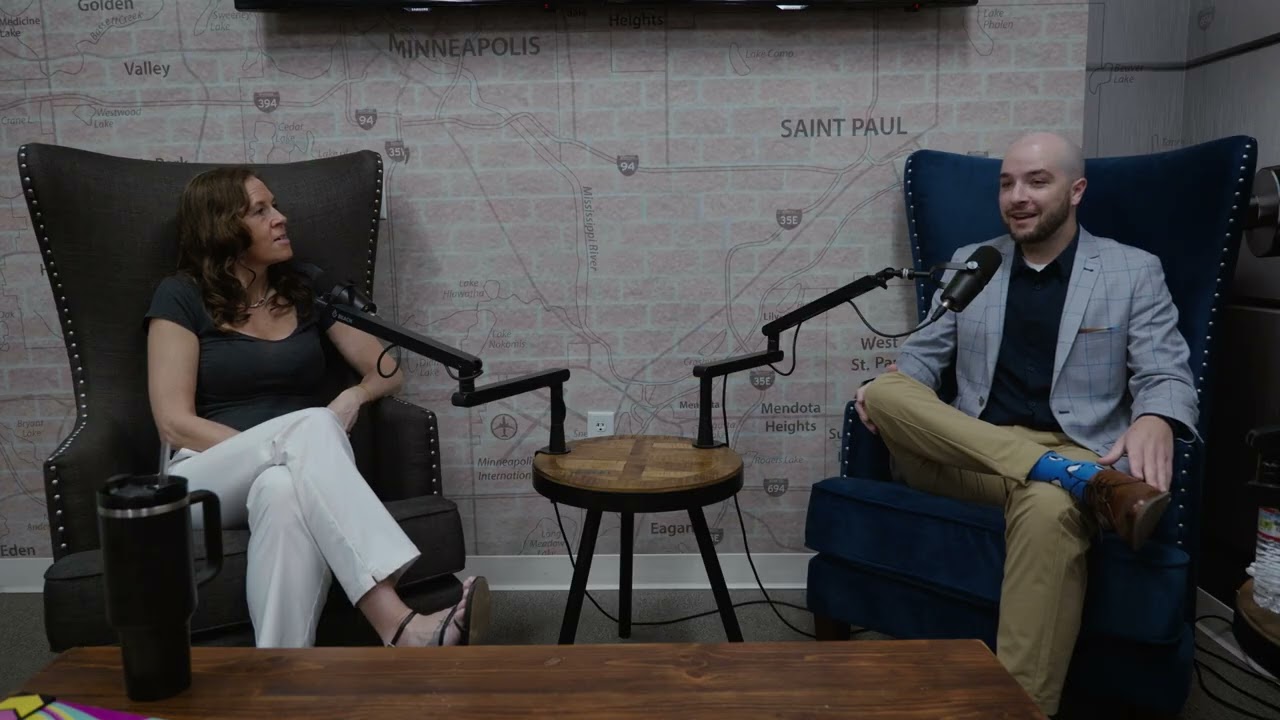
Hey everyone, I'm Karissa Dunham from Shining Light on Minnesota. We have a special guest here with us today, AJ Knollmaier. Welcome AJ. Hello. Thank you very much. You bet. So, let's let our guests know a little bit about Insperity and kind of what it's all about in the HR world. Absolutely. So, the HR space. So, uh we are a certified PEO. So, we work with organizations that, you know, maybe need a little bit more of an infrastructure. Maybe they have some things in place or they have, you know, one HR person or a finance person um who's just kind of putting out those fires. And so we are essentially um taking a more proactive approach being an outsourced HR function. So taking a lot of the the day-to-day the monotony of some of those HR administrative tasks and uh taking it over for them so they can focus on what I like to say is just actual revenue generating activity. Uh so taking on a lot of the administrative burden and you know just looking at long-term cost containment making easier for small mid-size businesses just continue to be successful. Perfect. How did you get into or how did you kind of get into that role and where did you start off? Yeah absolutely. So uh so I actually started out with a company called Catapult Network. So they were a recent college graduate recruiting company. Um I was there for for about three years and it was amazing to see um I guess I wouldn't say amazing is the right word but you know seeing the challenges for for recent grads coming out of school to be successful right away um and then using kind of their transferable skills and things to be successful. And I spent a lot of time there and I actually just happened to be um a good networking partner with some people at at Insperity. Obviously recruiting in the HR space go pretty close hand inand so uh if I talk to a company and they're like hey we're recruiting over here but we need help on more of like an in-depth and a strategic level of HR I could send them that way and just throughout the years just really started to admire what they were doing and uh the companies that were helping and eventually the the transition just kind of made sense and uh love the recruiting space but you know HR and and kind of helping from that strategic level was was really exciting and something I was I was looking forward to. What do you see like when you were doing the college recruiting for the younger generation that are just getting out of college and wanting to get their feet wet, but they have no experience? Was life like that? Um, it's it's really looking inward. So, a lot of people right now are just applying to everything that they can and hoping that that something sticks. Um, and so I talked to a lot of candidates because I was a full- cycle recruiter at one point and so talking with them of of what are you looking for? Why are you looking for that? And really trying to understand the why for them I think is is sometimes the the disconnect. Yeah. So I talked to a lot of candidates who'd say, you know, I want to be in sales because my my parents are in sales or you know, I like money, things like that. Okay, but let's look inwards and being like, what is the sales position? You're going to be making cold calls, going to networking events. Are you good in front of people? Uh do you have those those strengths and skills or are you a very analytical person and understanding kind of where that leans into the sales cycle? So it's looking inwards and and really trying to identify where they fit within that culture or that space. And uh sometimes it was talking people out of positions they were applying to and trying to make sure they understood that why. But at the same time, you have to get your feet wet. You have to try things. You have to get out of your comfort zone. Um and for me, you know, I started my sales career selling Kirby vacuums door to door. Yep. Um I finished with a radio, broadcast, and journalism degree. And I thought that was my future. And unfortunately, I loved selling Kirby vacuums so much. It just led me down a you know, a path of sales. And so without taking that little leap, without looking back at my my interest in things, you know, I would have never really tried that. Right. Well, and you see a lot of college graduates. I mean, I'm I'm a parent. I have kids that have gone some are going the college route, some are not going the college route, but so many kids don't know what they want to be when they get older. People your age, my age don't know what we want to be when we get older, you know? So, it's kind of one of those cultural shifts that you don't always have to jump right into going to school to figure that out. like take some time, get into the trades or get out there and just network and get a feel for what you're good at, what your lane is. And I think that's the important piece is is that networking component where I get going into a, you know, a crowded room of people that you don't know. It's scary. But the more people you talk to about, hey, what do you do for work? What's your job? You know, who do you talk to? What's your your day-to-day functions? You start to find little things that makes your kind of brain start doing that. Oh, well, that sounds fun or that sounds interesting. How can I probe more into that? Right. So, I've been meeting a lot more people from a networking perspective that are in a job transition and saying, "Well, this is what I've done historically. These are the parts of that job that I really liked. Maybe where does that lean?" So, it's well, let's explore that. Like, what other things? Um, kind of delve into that space and and even though I'm in HR, I still talk to to recent grads all the time that I've connected with in the past saying, "Well, like what are you looking into? What are you how can I help in in this transition?" And kind of breaking that down. And I think that's the the fun of it is is everybody's scared and everybody, you know, wants to be in this perfect job where we hear the the age-old saying, find a job you love, you never work a day in your life. And I think everyone clings on to that too much. But you have to try certain things to find out pieces that you like or aspects of a job that you enjoy. It's just trying to figure that out. For sure. Well, you even have the younger generation that's younger than that that just wants to invent something or be YouTube famous or or Tik Tok famous, whatever that may be. And they just want to not work. They just want to, hey, let's have a camera follow me around and live my life. Well, you have to have money. You have to have time. And you have to have a story behind it to do that. Yeah. So, there has to be something else that you're drawn to that can pull people in and have a why, right? And I think I think if that's the dream, then you really have to focus on, you know, how are you marketing yourself? And it still leans into a career and I'll say even with sales that like we both know a lot of it's branding, you know, how are you putting yourself out there? How are you positioning yourself into a space where people are going to recognize you or come to you? Um and so that's where like when it comes to these things like podcasting or networking groups, you know, how how do you market yourself as that go-to person when someone thinks at least for me it's oh I have an HR question. Yeah. I can go to AJ and ask that. I even like safety questions. I work with with companies on a a small level. I got one the other day. Hey, we don't know what our fire extinguisher safety rules are supposed to be. They're not a client of mine, but they still called and they were like, "Hey, can you at least, you know, maybe ask a question of what this would look like?" And it was um I reached out to our safety consultant and just shot an email back and it was, "Hey, every 75 ft someone has to be able to touch a fire extinguisher." And um you know, that's the space that I want to be in is I have an HR question. I have a people question. Who can I ask about that? It's the same way. If you want to go into YouTube or or Tik Tok and kind of be that person, you have to put yourself out there and you have to kind of develop your space and your brand to be that go-to person. And that doesn't happen with with just posting on TikTok every single day. It has to be really intentional effort. Yep. There is algorithms to it. There is time put into it. The editing of the videos in itself can take a lot more time than what people think. It's not, hey, let's just do a quick fun little live video and be done with it and not edit it and cut it out and do things like that, too. But then you kind of start rolling into the older generation who want to retire, the fractionals who want to still work because they don't want to lose what they have, but then they still want to not work as many hours or try to figure out what that world is like now for them too. Yeah. And that's I mean that's what I'm seeing a lot within within the HR spaces especially with the EOS when you have kind of that leader that that visionary person they do want to be able to take a step back and then it's making sure they have the the things in place for their company to be still successful. Um and the same thing with with fractional people. They want a little bit of time back in their day but unfortunately to get up and be successful fractional person it's a lot of front-loaded work to make sure you have those connections um and and you know the right people. So that's really where it comes into place when people do want to start taking a step back a little bit. That's really where I guess to pull it back to Insperity, that's really where we come in. It's taking a lot of the administrative burden, a lot of the back-end work, a lot of that strategic um standpoint and making sure they just have those things in place so they don't have to be putting out fires 24/7, right? A lot of the HR people and owners I'm talking to, they're just I mean, I have to ask, how big is your hat rack? Right? Because a lot of times they're doing finance, they're doing they're doing strategy, they're doing HR, they have something that comes up, they're just going to go Google it really quick. And I I say most people have an HR strategy of of HOPE. It's just hope and pray that nothing happens that gets them into into trouble. Absolutely. And so the same thing with your with your fractionals of wanting to take a step back is you have to put in all the work to make sure you're set up in the long run. Well, with the fractionals too, the other side of it you don't think about is when they do take a step back, how technology in the world evolving. Yeah. And you're going to lose that because you're not on the front line. You're not dealing with that every day. all those hats that you wear and all those lanes that you were in, trying to get jump back into those isn't always the same, especially with the CRM and the HR systems and everything like that, too. So, then it's Yeah, it's then it's how much how much information do you know when it comes to cuz you can use HubSpot versus Salesforce for example and I don't know how much you've delve into both, but I mean they're both similar in features. Um, but those are like the big players and you get all the way down to like your sales loft and there's a million other ones. So, it's just being familiar with all those things. I mean you have to be kind of an expert in everything otherwise I mean where's your your strategy level with with CFOs you might know numbers really well in bookkeeping and accounting but from like a if a strategic level if you don't know the bottom line and and you know even like a desk cost how much is it to have somebody in that seat you really have to look at it from every facet of the position and what they need to know to be successful and I think it's not just going to networking events and just having been a CFO in the past is you have to you know be an expert in a lot of different areas to have that expertise pieces as a fractional component. Well, you also have to know what you're good at because a lot of times when you wear those hats and you're not good at something, you don't want to do it, you dread keep pulling up things. It's like, okay, I really don't want to do the HR, but I have to do it cuz that's all I can do cuz I can't afford the other lanes. So, why not look outside the box and see who's good at what they do, knows what they do, and let them help you out, too. Yeah. And that's that's just sometimes the challenge, too, is a lot of companies still are are afraid of the, you know, the outsourcing component. They want that fractional bleed is they're like, "Hey, you need to understand I'm a fractional person. I'm not here to be a full-time per. I have three other companies I'm working with as well." So, it's also understanding that component of like I'm still here to to be that person, but you have to understand this is an outsource function and and it's hard to find companies that really value that outsource piece and then understand what that entails. Yeah. So, let's go back again, talk a little bit more about the college life because you see a lot of college students that are out there that want to get into what they go for for their degree, whatever it may be, marketing. Everybody's kind of a marketer these days, no matter what they have, everybody can be a marketer. But actually the component of the networking getting out there and meeting people face to face because a lot of their generation is now on the phone and let's let's do the snaps, let's do the stories, let's do the live videos, but actually having those conversations and communication skills which they lack and what do you think is best for them? Just getting their feet wet and jumping out there or being more diligent about it. Yeah. So, this is a conversation I I just had the other day with um with a recent grad. I say she actually has a very very unique background, but it doesn't speak to any specific position. She was like a data analyst actually in uh in Japan for a little bit and has now moved back here and now looking maybe sales, maybe data analyst still, maybe business admin. Yeah, those are three very big things and and they're not all that similar which is kind of confusing but then it's it's just hey and I importer I was like you need to start going to networking events cuz when you start having these conversations I think if you're so vague in your search this is how you're going to start identifying companies and fits and and people that people that really speak highly about their company and their culture that's another thing that you want to start figuring out and with just looking online or using your Indeeds and um Zip Recruiter and just these little online sources, they're not telling you the full picture, right? And so when you can actually get out in person and yes, it's challenging. Yes, it's not always the most fun. Yes, you might not be able to go to to Taco Tuesday because you have a networking event, that is going to be much more valuable than you just going online on LinkedIn and other things and just, you know, hoping for the best, clicking easily apply and hoping you're going to have these really meaningful conversations. Um, and either, you know, it doesn't have to be perfect in that exact moment. It can be something down the line, but it's making meaningful meaningful connections that are actually going to help you in the long run. Um, versus anything else. And I know most people are just are too afraid to do it. And I don't know if it's a generational thing. Um, cuz I think we can both be honest. Sometimes you don't want to go do that all the time. No. And you fake it till you make it. You just push through. And it's like, okay, I did it. I'm done for the day. I'm exhausted, but I did it. You know, I think it's just getting over that hurdle. And I think more and more people I always really really make this serious. It's just like you just have to do it. Just try it one time. And It's a little you never know what you're going to get. It's a little less scary each each and every time that you do it as well. So, it's just I I really cannot stress it enough. You just have to get out in person. You have to do these things and and people will care. Well, the thing that people don't realize too when you are doing the networking, everybody at those events are connecting. They want to help you connect. They'll put you in touch with the right people. They'll introduce you to people. You could have two different events at the same place. Let's go intertwine them. Let's put a pull everybody together. let's try to make it work and see how I can help because everybody wants to help and that's kind of one of their driving forces. And I think that's what what people don't consider is the fact that everyone else feels the exact same way you do. Everyone is there with the same purpose in mind of like, hey, I'm going to make connections, but also you need to understand people are also uncomfortable as well. Like they're making that, you know, they feel the same. So I made it there, but now what? Yeah. And so it's a lot of people feel isolated doing that. But understand there's there's probably a lot of people there that this is their first time networking. This is their first time meeting this person. Um, it's not easy to walk up to a random stranger and say, "Hey, this is me. I don't have a job, but I'm I'm looking." Um, I think just that like honesty and that that visibility is a lot easier to talk to them about. It's like, "Okay, then how can I help?" Everyone there is here to help and make connections and do things. So, it's understanding just from that core level, this is what everyone is here for. So, you don't have to feel bad about saying, "I don't have a job." That's okay cuz that's fine. That's what they're that's what you're there for. Exactly. It's just it's getting over that hurdle of understanding that that is okay. And you can be nervous and you can be scared, but you just have to do it right. Well, I think the other side of it too is with obviously, let's go back to technology. You went to broadcasting. We're doing podcast now. That's the way the generation's kind of going. People can learn and take things away from that. But also not being afraid to get in front of the camera, to reach out to people, try to help people and make a connection any way you can because it's not always in person. Yeah. Try those different things where you think outside the box. Absolutely. And that's even where it like starts lending to to transferable skills. This is a lot of times with recent grads and with people like looking for positions. Yes, you might not have, let's say, exact, but you know, you can speak to something else about how you took, you know, public speaking classes um going through college or um you had a certain job where you just had to go out into the public and just kind of make connections with people. So, it's really also looking at the transferable skills that you know. Um I always make the joke that I have a radio broadcast and journalism degree and I leave a very very good voicemail, right? It is kind of my joke, but at the same time, when it comes to doing stuff like this, you're like, "Hey, I've already had some exposure to it. It's a little less scary for me." And then I get to use it in my personal life where we do a small like fantasy football podcast just to our league. And it's it's something where I can continue to use my skills and and just, you know, learn how to do things better. And I've learned, you know, everything from the technology side to editing to uh just working on the way that I speak. I've been known to talk a little bit fast. Mhm. So even something like this I can use to practice my own craft when I'm talking to to prospects and clients is just hey I get to work each and every day on something that is just speaking and because I know I get excited and I know I start to talk quickly. So I use this as a way to to just work on my own craft. And I do the same thing. People will point it out. They'll be like oh you said yes exactly a lot or you got to slow down. I'm like I know but I get excited. There's so many things that I think of when you do podcasts. It's you do want to listen effectively, but at the same time, you've got to be thinking of the next question and how to make it flow through and everything like that. I think too with technology and with kids and the younger generation, doing the things that stand out differently, like, hey, let's leave a a video message instead of just a voice message. Let them see who you are. Let them see you as a person and your personality because sometimes your personality might shine through different than it can in a resume. And that is uh it's definitely something that's become a lot more prevalent with people. Um, and a lot of it's just like a LinkedIn message. Like you'll just be walking from one part of the office to the next. Hey, just wanted to drop you, you know, a quick link. And the fact that most people are going to either scan your email, they're going to scan a text, or even when you leave a voicemail, they're just going to read that transcription there. Being able to kind of show, hey, I'm a real person, like I actually exist. I'm I'm in my office. I'm actually calling to you. It's it's doing so with with actual intent, right? Um, it just speaks to a lot more people. Um, and obviously sometimes the spam filter will catch it because it's a video. Um, but it just it's just a different way of doing things. So, it's it's kind of a I wouldn't say a pattern disruptor because it is becoming a lot more prevalent, right? Um, but it's definitely something to stand out and again, it shows you're a real person and it's a lot harder to to be rude or mean to somebody they they actually know is a real person now. Yeah. Well, I think with with the way people are changing and wanting to interact, you've always got to be able to be on the next step with with AI being able to incorporate that into the HR role, into the sales role, whatever that may be, and accepting of what's coming in the future instead of being scared of it. It is scary. There's a lot of change. You don't know if your job's going to be around, things like that. But you have to work with it and be able to be adaptable to, okay, let's let's bring it in and how can I make my life easier so I work smarter, not harder. Yeah. And especially with the the AI component, like yes, that is that is helpful. It definitely makes our our lives and our our day-to-days a little bit easier, but there still has to be a real human component to it. So like, yes, it'll be good at, you know, helping you write an email or coming up with a subject or or something. They catch those now with all the softwares, too. They they absolutely do. So it's it's not, you know, that easy. So I think even that and then going back to having that personal touch of you just leaving a video message. It's using all of the skills and all the the you know technology that we have and then blending it into one with still the the human component of it. So you can't just completely rely on AI or or technology because you still have to be a person and for the networking for even just stopping by a business and just saying hey I wanted to drop off some cookies. Let's have a conversation. Let's go golf. Let's pull something that you enjoy. Let's be a part of our fantasy football league. Let's cheer for the Eagles. Let's cheer for the Packers, whatever it may be. Let's get that little bit of rivalry going so we can have that human connection so we have something to talk about with work, but outside of work, too. Yeah, it's kind of the third space. You know, you talk about our our home life, our personal lives, you talk about your work life, but I mean, what's what's kind of your hobby? What's your your core? Like, how do we get out to do things that, you know, we can actually just talk about on a on a friendto friend basis? So, I think even doing things like, you know, ex- golf or like you said, going out golfing or, hey, do you want to come watch football? our our company right now is really imploring us to do uh the masters having like a a show or a masters watching party but it's hey I mean do you just like watching we'll come in we'll we'll host a little event we'll bring some pizzas and stuff and let let's just sit here and watch golf we both know it's something we're going to do by ourselves anyway so how do we find something we already have in common that we can then do in the again the third space that we're both going to enjoy doing but maybe we talk about business a little bit yeah or the March Madness the final four getting those leagues or doing not sports betting but like let's let's have drawings or let's see who you're going to say is going to be in the top three of the masters or you know where you're going to be who's going to make the cut who's not going to make the cut things like that too. So it's like a small rivalry piece. It just kind of gets the office. is that camaraderie piece as well if you're just if you're doing it in that space and I think that speaks to to company cultures as well for sure which is obviously a very hot topic right now is like yes for a networking perspective but also like how do you feel in your own office like how do those things build um like employee satisfaction and engagement and it's little tiny things but when it adds that little bit of fun into the office that just creates a better culture in the same way it does for networking it creates more closeness and then you know when it does come to referrals you're not referring somebody to a stranger it's right no this is you know this is Robbie and you know we're in a fantasy football league together. He's a great person and something to talk about like I know this person personally like on a different level than just work. Yeah, you're both great people. You should know each other. It adds like an extra level and everyone feels more than comfortable being like, "Hey, I want to, you know, make this introduction because I know AJ. I know how he's going to treat you, but I also know he's not just going to, you know, try to give you the full sales. Let's throw the smack and let's talk football. Let's talk something else while you're at it just to kind of have that fun tie in there." Absolutely. So I see that there's a lot of shifts. Obviously people starting to come back to work in the HR world. Doing things like that make it fun but they also make it enjoyable. You have to get back to meeting people face to face instead of all the Zoom calls. You there are things that are mandatory in your working world where people got so used to working away from home. Let when they come back in they have to have those fun ties something to look forward to instead of just the hubs of hey I'm going to go in for just a half hour and work remotely from the office just to say I'm at the office. Let's do something fun. Let's pull it all together. Yeah, and I can speak uh and a lot of people if they if they work from home will probably be like, "No, that's not true." And I worked from home for, you know, three years when I was doing recruiting and and I will just tell you, I'll say I'm I'm much more successful. I'm much more productive when I'm in the office. And it's not just from like a fun perspective either. Like it's a lot more fun. You know, the water cooler conversations, hey, let's go to lunch. Uh you just get to know your team a lot better. So, you really get more ingrained into the company, into the culture. Um but then you also you learn so much more being in sales. If if I hear the guy next to me or the gal next to me making a call and I go, "Wow, I really liked what he just said right there." Yeah. And all of a sudden that transformed your own sales process and then everyone else is kind of doing the same thing and bouncing things off each other. Yep. And I' I'd be lying if I didn't like, you know, pop up over the cubicle and go, "That was an amazing that was so good." Like I'm I'm really jealous of what you said or how did you come up with that or where did you get like that stat or that number? um you don't get that when you're just sitting at home and then you can fall into bad habits and you can do things um that are just not as productive. So being in the office, having the space, having the people around you, it's not just good from a culture perspective, but for your own personal development. Yes. It's it's leaps and bounds above what you would get of just working by yourself and figuring it out. People can lone wolf, but it's a lot easier to do it in a collaborative space. Well, the other side of that too, you when we do fake it till we make it. You still have to get up. You have to get dressed. You have to be presentable. You have to go in front of people where when you're working from home, it's like, hey, let's just keep the comfy clothes on and just, you know, be ready for what we have to do our Zoom calls and then go back to the daily grind. Well, it gives you something to look forward to, too. Like, hey, this is my goal. I want to meet somebody or I want to try something new or I've got to think outside the box. Let's let's pull a different process into place at the work environment to take it to the next level. and you have a team there behind you that are working with you to do the same thing. And I think that's that's the fun part of it because even going back to what you what you said there was like yeah I used to just keep a polo next to my desk and I take off t-shirt put on a polo and and then you just kind of run it you know as is. But you know obviously I don't get to do that quite anymore but I mean that's the piece of it is is you know part of it just your own branding and when you fall back into that I'm just comfy and this is what I do versus like I need to put my best foot forward each and every single day. I think just you as a person, you really start to feel that over time and it it kind of gets out of that comfort piece and into I'm driving like I'm doing stuff and I want to be purposeful about it. And I'll be honest, it comes as simple as putting on, you know, a blazer every day. You dress up, you feel better about yourself where if you're wearing like the joggers you're wearing, whatever. It's like that's great. I could go to the gym. I could do the golf. Do whatever you want to do. But when you're dressed up, you're playing the part. You feel better, too. Yeah. Yeah. And at the drop of a dime, like if I all of a sudden I talk to somebody and I have a great conversation goes, "Hey, I can actually be to your office in 5 minutes. You're right around the corner." If I'm just in a polo or if I'm not, you know, wearing what I think my brand of what I want to be. Um I don't want to have to change. So it's it's doing everything and I'm just kind of that practice like you play. Like if I'm going to be willing to go there in, you know, drop of a hat, I want to make sure I'm already dressed for that occasion. I want to make sure I'm already ready to go and do that. So if I just show up and I'm in jeans and a t-shirt and I go, "Hey, I got to run home first so I can change." Yeah. It kind of defeats the purpose. And again, when it just goes back to the amount of time you have in a day, just just if you start play the part. Yeah. Just play the part. Exactly. Thank you. Yep. Well, I mean that's that's true in anything that you do, whether it's sports, whether it's life, whether it's anything. Like if you're going through the grind and let's say you're going to be out on the golf course or you're going to be at a at a gym working out, you want to be comfortable in what you do. you want to be able to be successful and to be successful sometimes you've got to step that game up or try something new to to reach that next level. So you have some other podcasts you've done in the past. Tell our listeners a little bit about the ones that you've done, the fun fantasy football ones and then the B2B ones. Yeah, absolutely. So um yeah, with fantasy football, yeah, we especially during COVID, you know, needed something and and especially I kind of felt like I was using or just kind of losing some of the skills I learned throughout college and it was something I still absolutely, you know, still love. So was, hey, let's get together. We'll just do it for our fantasy football league. So we broadcast it out to 10 people, right? Um and eventually some more of our friends were like, hey, well, I want to get involved in this. Like, I want to hear about it. So we've we've been doing it now for for 5 years. We're actually just talking about bringing it back today. Yeah. Um and then on top of that, I joined a networking group called Synergy B2B where we just brought in, you know, kind of every industry and like, hey, we want to have one of everybody. So in case you have a generic conversation like, hey, I really want to talk about um you know, what you have going on, but I'm having HR fires. I have to put out. Hey, I know somebody for that. So, we kind of built that into what we call like the business insight series where we'd have on small mid mid-size businesses. Let's say it's cyber security because that's really big right now. Just what's going on in your industry? What's going on in that space? And and you I still have people I don't know if you've seen it, but the influx in text messages of just Yeah. I recently had a buddy who got got by that and all of his money was gone. Yep. An hour. the older generation too, not knowing if it's a a voicemail, a text message, an email, what it is, but somebody whether it's post office or toll charges or Oh, the easy pass. Yep. Um, but it's going into those things and obviously we're all seeing it and just like from that one sentence I said, we're both like, oh my gosh, yes, I've noticed that. Um, but it's talking like, hey, if we're seeing that, what are companies seeing? How are how are business owners trying to be proactive about those things? The emails, everything else that come through, is it real? Is it not real? Exactly. And so for companies to be able to come on and say, "Hey, these are things that I'm talking to a lot of different companies about because they're all scared or they're trying to be proactive. Well, let's talk about it because if you're seeing that, I'd love to be able to broadcast this to other companies who might be a little bit fearful of these things happening." So that's why I really appreciate kind of what you're doing here. It's kind of that that same space and uh again, it's using my transferable skills and in the same way that that you're using yours and it just, you know, helps get this out to other people. And I think that's where it's it's really valuable. It is. And it's it's interesting because every time I someone says, "Hey, I want to be on your podcast." Or we have that conversation about being on, they're like, "What are we going to talk about?" I'm like, "I don't really know." Like, "Let's let's start with where you are, what you're doing, how you got there, but then let's dive deeper. Let's dig into something, you know, that maybe we can have a second or third or fourth episode and build from to build that rapport with all the listeners to really get them inclined and in tune to, hey, there's something going on in the world that we might not know about or I want to hear about this." And a lot of times that's why I love like the the clips that come out on like LinkedIn and stuff because usually like you have to have that little attention you know attention grab. Exactly. So when you talk about a big problem or at least with mine like I said just talking to recent grads and kind of the the scariness and the hesitation and then when it comes to networking as well it's you know a lot of people or a lot of recent grads that I've talked to and again I just had this conversation last week. They're like well I haven't even thought about networking like I don't I don't want to go into sales. Maybe I want to go into sales. That's okay. But there's other people there that are not just in sales. There's all different aspects at every single event. You're gonna meet people from implementation to operations to marketing to graphic designers to to everything in between. It's it's those conversations that you need to have. And most people are like, well, that's just what sales people do. It's it's not. It's there's there's so much more openness to that. So, uh, for recent grads, it's a it's a networking perspective and it's just putting yourself out there. coming to radio. I think it's it's being able to speak to you. You still have a chance. Like it's not the end of the world. I can still use it every day, but maybe not in the same aspect, too. You have an accounting degree. Maybe you don't want to be an accountant anymore, but like what other positions could that lean to? Because even operational people have to have that financial literacy to be like this is how the company is operating. This is how it continues to move forward. So, it's still using all the stuff that you've learned in college and saying, "Okay, maybe that's not my career path, but I'm open to these things as well." Yep. Or I'm in broadcasting. How how does the construction world tie to me? Well, there's lots of roles in every single aspect that you look at. Just going to one event. You could be like, "Okay, you think construction, you think hammers or going into a film business thinking it's only film." Well, you could be a marketer, you could be, you know, a window cleaner. There could be so many different aspects to everything that you do that people don't understand until they see the big people or picture until they get out there and actually meet those people being like, "Hey, you're great at marketing. You're in broadcasting. Let's start doing podcasts. Let's put you into this world to see how you how you fit in and where you jive." Yeah. And you never know what I always I always love this, but companies are in people don't know what they don't know, right? So, a lot of times it's it's just being open to the fact that maybe you don't know everything that you think that you know. So, it's it's having those conversations and it's it's digging deeper into again, maybe it's construction, but it's well, how do you get clients? And then it's talking to to that marketing perspective. Well, how do you how do you judge your people? How do you do your bids? Y, you know, how do you, you know, project success? How do you sit here and do all these things? And so, it's it really takes a a much deeper conversation. It's like, oh, you built the house. Great. How did that go? Yep. How did you get there? What happened? Yeah. So, it's it's a much deeper conversation. And yeah, it's it's interesting. Yeah. I think with people in general in the HR world and everything like that, having that growth aspect of wanting to get bigger to see what's out there instead of just closing that mind saying, "This is how I've always done it. This is how I'm always going to be able to do it." World's changing. People are changing. So, you have to try to think, okay, what next? What what's going to make this easier in the next phase? Because there are obstacles along the way that help you grow. You just have to learn, I can't do this obstacle over and over and over again. So, let's let's figure out an easier way to do it, too. Yeah. And and from an HR perspective, Yeah. Uh I mean, like the Minnesota sick and safe laws, I mean, that is that has been a really big one. And Minnesota is very um everchanging with our laws and regulations. And so, I' I talked to a lot of companies who I like to use the analogy, they've been pushing a wagon with square wheels, and sometimes it takes walking up with a round one to say, "Hey, this is going to make things easier." Half the companies are still going to say, "This works. I'm going to keep doing it." And the other half are taking that approach of like, "Yeah, let me try that. let me see how it works. And when companies are looking to grow, yes, I understand, you know, you have an internal process and things are probably working fine, but we have things changing every single day. And if you want to have somebody who's in charge of just, you know, making sure those things are okay, that's a twoerson job, right? Cuz they still have to manage their day-to-day function, the administrative piece, but then you're also tasking them to like, hey, make sure you read this, you know, 2,000page article of the the sick and safe laws to make sure we're in compliance. Y I mean, I'm in HR. I'm not telling you I'm an HR expert, but it's you know I have people I know what's out there and I know I have the connections to put you in touch and that and I mean that's like the biggest the biggest hurdle I'm hearing from companies right now when it comes to their HR and their leadership is just the gift of time right it's you know you have or they maybe they don't have an HR person so they have a controller they have a bookkeeper and then the owner is kind of handling HR and then again they just hope and pray that nothing happens they get in trouble with right and there's a lot lot a lot of liability and risk that comes associated with that and um that's one of those where it's just like if it's not broke, don't fix it. But it's maybe if you took a proactive approach. Same thing with like your car maintenance. If you just came and got a quote every once in a while, brought it in for a tuneup, you'll start seeing some cracks that are like, "Hey, maybe we should take care of this sooner rather than later." And when it comes to the growth strategy, I think that needs to be more of the approach other than we need to get to 50 people versus, you know, let's get to 100 as fast. Let's set the processes in place first before we can duplicate it and move it on to the next level. Exactly. But everyone gets so excited about recruiting without thinking of the onboarding process. and and the the people development and all those other things that need to be put in place because otherwise you can hire a bunch of people and just hope they stick around. But if you don't have the culture, if you don't have the people, if you don't have leadership is there. Yes. And attracting and retaining top talent right now is one of the top three things I'm hearing about right now. Well, you see a lot of job hopping to people not sure what they want to do, not sure what's a good fit fit for them. I mean, you look at the resumes, you see the laps in time, too. But what people don't realize is there's a lot going on behind the doors that people don't see. All the conversations that are had, all the feelings that are there, all the this is not really what I want to do, but I'm going to keep doing it just because I have to pay the bills. Yeah. And so, finding something that works for you, but also the company culture is huge to make sure that all the, like we were just talking, all the processes are in place to make sure that they are happy and successful in what they're doing. Yeah. And it's really easy just for a company to say, "Hey, we have to rehire a customer service person." Okay, great. But let's let's take a look at why you're hiring again, right? Uh you've had to fill this role six times in the past year and a half. Do you think it's the people at this point or is is there a possibility that maybe your structure or the way that they feel in this position is ultimately leading for you to have this open door and and just that opening and that recruiting and that time spent onboarding, it's a huge money suck and it's just it's just wasting money that's going out the door. So, it's also looking at it from a strategic level and being like, well, why is this keep opening up, right? Like, why why can we fix this? And yes, maybe it's just people who do they need a little bit of experience, administrative, clerical work, whatever it might be. But then if that's the case, start looking at this job as a as a you know, like a diving board basically like how can you help like give them all the skills they they want. Then they'll start referring people back to the company. So, it's yes, people are job hopping. I think it's happening a little less now just because of how critical the job market is right now. It's not easy for people in transition or looking for work. Um, but it is those things like if you understand this this job that you have as a stepping stone, then treat it as a stepping stone and really put in a lot of effort into their development so that if they do move on to something different, they're always still going to be look back at you and and say, "No, they did that for me." Or have a company that gives you the lanes if if something you're doing isn't quite working for you in that lane. Let's try something else within the company. Let's try going from HR to OSHA to safety to whatever it may be until you figure out what that fit is because you could get injured or you could be just tired or wore out or tired of the grind, tired of being a road warrior or whatever it may be. Let's let's keep them energized and keep them excited about the company and the processes that are there. Yeah. And I think that's just that has to be kind of a company component. And you know, not to to tout my HR my my sperity wheels, but I mean that's what we really try to do. And I think that's what a lot of companies don't understand still is if you put those things in place, if you make people feel valued, uh they and they're like, "I'm just really burnt out." They'll at least come talk to you about it. It's not just, "Hey, I'm going to go I'm going to go check out and apply for 10 10 different jobs. Let's have that conversation while I'm still here and I'm getting paid to to job search." It's putting in a lot of the work. So like they they do feel that and then y I think it's just a it's a frustration right now for a lot of companies of just holding on and hoping things are okay or you know they're like yeah we really want to let go Tommy but we just need somebody in that chair right now even though he's creating a lot of problems within the company. They're just kind of holding on by the seat of their of their pants and just hoping everything that is okay. And you never know what anybody's story is. Everybody has a story to tell and until you're you're comfortable in your own space doing what you're doing and being able to say, "Hey, you know, I'm tired of this or I'm I'm I'm not comfortable going to these networking events. It's just not my lane. I'm an introvert versus an extrovert." Then great. Let's put you at the front desk or let's try something else for you. Trying to find that right fit to see where you'll actually grow and shine and try something new. Yeah. And I think that's a lot of times the the disconnect is is companies don't ask that question and candidates aren't very forthright in saying, "Well, I don't want to do this. It might be kind of a part of my job, but I don't want to." So, a lot of times it's having that difficult conversation. It doesn't have to be a conversation. Let's do an employee survey. Yeah. How do you feel in your job? What aspects of it do you like? What maybe don't you like? And and how can we make sure we're getting the both out of each other? Right. At the end of the day, it's still a working relationship. Yep. I love when companies are like, "We're a family culture." I I hope that's always the case, but at the end of the day, like they're still here to make money in the same way that you are. So, it's it's just making sure that the relationship is still the the best thing that it can be. If I'm not selling and I'm just doing a horrible job, but all like the one or two clients I do have are like, "But no, he's an amazing person. I love calling and talking to him, then maybe I shouldn't be in a sales. Maybe I'm not going to be closing. Maybe I'll just have that conversation with you." Yeah. Maybe I move back into like an account management role or something like more customer success oriented. But it's it's having those conversations. If you own those with your employees and if you as an employ comes from that's just eventually why people will leave or or you'll unfortunately get let go. It's you have to have that conversation or at least have to be looking at ways to make sure those those dots are connected. Well 90% if not more of your time is spent in the workplace. So you want to be able to have that team. You want to build that rapport. You want to be excited about everybody else's successes too. I think that's one of a lot of people's driving force when you win, we all win. Like, let's grow together. Let's try to collaborate. Let's see what's out there so we can reach that next level and having the team behind you. Cuz a lot of times when you talk to people, they're like, I'm doing great. This is my job. This is me me. But what about we as a whole? Like what about us as a company? Let's let's try something new. Let's, you know, let's throw something for a mixing. Let's do podcasts. Let's do live videos. Let's have somebody on that is in the same field as us. just so we can learn and grow from them, too. Yeah, absolutely. Like I said, I don't know how much you know about the the HR space and the HR world, but I like I said, it comes from recruiting. Like, I've always been in sales my whole life coming from selling a vacuum door to door. Um, but I still learned all these skills throughout my entire career. And it's it's because I'm willing to try different things. And again, like you you're doing here with with the podcast, it's how do we consistently try to change and and just professionally develop? Um, even if it is stepping into something maybe we're not an expert on. Like, do you come from the broadcast world? Right. Nope, I don't. And it's but but obviously now you have this and it's it's something where you know if you don't try anything different then it's kind of the you and everybody's a critiquer. Everybody will say hey you do this you do that but it's like I'm the one doing it. Guess what? I'm the one trying it. So sink or swim. We're trying something new and let's do it. Uh the broadcast world, the sales world, it all kind of goes together. You have the HR but also not being afraid to sit in the room with other HR people, other companies, other window film companies. Let's have that conversation. Let's see where where you're growing, what your obstacles are, so maybe if I'm dealing with the same thing, we can work together and try to figure out resolutions, too. Exactly. And that's that's a big piece is a lot of companies don't understand that their competitors or other companies are are probably going through all the same challenges. So, um just understand it's okay to ask questions and and but people are really closed off to the just the sales cycle now, right? Where especially being in HR, they're like, I don't need to be talked to about HR. I have an HR team, right? Okay. Everybody's an expert in HR too because Google's there, you know, like let's Google search the answer. Exactly. And so I like to ask it's like, well, you closed off to the opportunity that maybe things could be done better or maybe there's a different process or, you know, you have short conversations with people and they, you know, they share little tiny insights and you go, is that in compliance? Are you afraid you might get in trouble there? Is this a sink or swim? You're going to just try it until you can't try anymore and then there's the law. Exactly. And so it's a lot of times it's just, you know, being open with stuff and uncovering. But um yeah, when it comes to HR, there's there's a lot to it and I'm never going to say I'm the the one true expert, but it's being able to have a you know, you know, a team or a resource. Like if I don't know the answer, I have a full HR service team I can go to and say, "Hey, this is like a small issue people are seeing." Um and even I went to mine today and I was like, "Hey, just what are like four things?" A lot of companies are telling you right now just about like what they want more out of HR and it's time. Um, future planning is a really, really big one cuz they're just like, "Yeah, we're kind of hoping everything's okay right now." Um, like I said, the sick and safe laws and then companies going multi-state. Yes. So, because of the the virtual and like the remote experience, they're just like, "Yeah, we have we've all used, you know, let's say Blue Cross Blue Shield or they have uh of UHC for for benefits, like it's really really good here." But our plans that are in Iowa versus California versus Delaware, totally different. They're totally different. So like they're kind of getting the short end of the stick, but like they're we still hired them. It's like, well, how can we try to realign those things, right? So even just from that perspective, it's like, well, I don't know exactly what everyone is saying right now, but I can easily say, well, what are most companies having an issue with? And then how can we try to be proactive of sharing that with companies? So even if they don't go within sparity, they're not out of compliance, right? They're still abiding by the laws and they're still just, you know, employing best practices. Um, a lot of companies, you know, whether I talk to them or or, you know, they're a client of mine or not, it's just still I know HR is just a really big space and a lot of times it's scary. So, just how can I be a resource in any capacity? And it doesn't have to be you're an Insperity client. It's like, like I said earlier with the fire extinguisher. I was just like, how can I help? You're a new manufacturing company. Just send me the questions and right maybe sometime you will be. But well, what they don't know, they don't know, too. here in Minnesota versus Florida or Arizona. Rules are different, people are different, laws are different. So thinking that, hey, my processes are great here in Minnesota. I'm going to open up 12 different shops all over the nation. They're going to be different everywhere because of the people, the culture, the laws, the rules, the regulations. So if you don't know that and going into those areas and saying, "Hey, I'm going to keep my HR the same exact same as it is here and there." It's not going to fly. No. And it might if you're in Minnesota going to other states cuz ours are a lot more rigorous than a lot of other places. But um but it's also in that that same piece where like companies won't hire somebody from California because they're like I don't I don't know all those right now. You're not local either. I mean that's that's the other tie is if you're in Minnesota they want to deal with motans. If you're in California they want to deal with people from California or Montana or whatever that may be too, right? And so that's where it looks at it and that's when it comes down to like the just that piece of time where it's if you wanted somebody, let's say you hired on an HR person, their only job was to go through policies and procedures and regulations for every state. Y I don't know if they would even have enough time in a year to familiar familiarize themselves with that. And so when a company goes, hey, well now we can hire like we're we've all 50 employees in Minnesota. We're going to hire somebody in Wisconsin. Well, there's there's different taxes, there different regulations. there's a lot to learn and most companies are not going to hire a completely different HR person out of Wisconsin. So, it's like how do you how do you get that information? So, that's where a lot of times we'll come in is that multi-state piece is like well no you can just hire them on everything is significantly simpler and then we have all the resources and of you going in to try to figure out the laws and rules and regulations wasting all that time. Why not hire a company that can do that? Exactly. And so whether that's Insperity or you know other PEOs it's just like how do you actually have a resource that you feel comfortable with the processes that you're doing um in laws regulations policies procedures right now it's it's a very big scary thing for a lot of companies so it's um yes you continue to do it on your own great just understand that's that's here you need me then yep that terrifies me but you know best of luck with it but at the end of the day like at least have a resource or somebody you can go to with that because it's it's ever changing it's always getting more complicated hire somebody talent, you need to be able to hire where you want to. If you have, you know, like a graphic designer, everyone here, but you want someone in, I don't know, Virginia. Yep. That should be really easy. Yep. No problem. Yeah. So, when it comes to the talent pool, that's also just kind of cutting yourself off at the knees. And that kind of goes back to the networking, planting your feet, getting to know people. You never know where when they're going to need you. Yeah. So just being like, okay, you're the HR guy, awesome. You're the film person, great. You're the contractor. You know, just seeing that name and getting to know you as a person everywhere you go. So for the people that are fractional, that are looking for jobs, that are just getting out of college, the more people you know, the more you can put connections in. So when you do need it, they're there for you. They're they're your support system. They're your tribe. And it I mean, that's the biggest piece is it's kind of b building credibility for ourselves. Again, partially with our brand, but also you want to be a person that people go to when they have questions, concerns, thoughts, or they just want help. Yeah. So if it's you know somebody in job transition, hey I know you used to work for the recruiter, you work in the HR anymore, but how can you help me? Yes. And I know you know a lot of other people. So like how can you help me just like in that setting? So it's you know everything boils back down to networking because you make those connections and then you build credibility because you're kind of an expert in a certain space or you're just an expert connector. You can be a people connector and that's also an amazing expertise to have. It is and not a lot of people realize that when you do go to the networking events or when you are just networking in general at the store, at the mall, talking to people, not being afraid to say, "Hey, you know, that's really cool. Where'd you get that?" or "I like the way you did that." Or, "Show me how." Asking those questions, digging deeper into what you want, what you don't want, so you know in life where you're going. Exactly. And like I said, it's just it's just getting out there, not being afraid to ask the questions. And uh no one's an expert all the time at everything. So, And don't feel dumb asking those questions. Don't feel it at some time. Exactly. And that's the earlier you can do it in your career, the more often you can do it, just the better off you're going to be as a as a person and then as a professional. What do you think's next? Or what do you have on on your mark next for what you're going to do personally or professionally? Oh, that's a great question. So, at least personally just got married, so still getting into the Yeah. just the the life cycle the life cycle of being a of a married person and a husband. So, I mean that's been that's been an exciting journey and and right now it's just honing my own skills. Um it's it's really with sales, you're never an expert all the time. So it's um just starting to read more articles, more sales books, and just really the business acument of things. It's just really trying to understand all the facets of of what people are going through on a day-to-day basis and then trying to be an expert in those things and understanding I don't know everything and that's okay. I'm never going to not know anything. Yeah. But it's also just really coming from a place of of genuine curiosity has been like my one real um professional piece I' I've really been leaning into is just like always be genuinely curious. And that could be a normal conversation. It could be this. It could be um you know a discovery call. The more genuinely, you know, interested you are in something, the more genuine connections you're going to get out of that. So um that's been something I just work on on a day-to-day basis and I'm really excited about. It's also within within my company. It's just I want to be a bigger people connector, right? Whether that's something that helps me with Insperity or not. I want to be able to connect others um in a better sense because that'll build my own credibility. It build me professionally and and down the road, you know, I'll be yes, I'll be the Insperity. I'll be the HR guy, but it also be But I'm a person and this is who I am and this is what I want for you, too. Exactly. Not being afraid to learn. I think that a lot of people think, okay, I'm done with school. I'm done with this process. I'm done learning. But you you're never done learning. You always want to learn. You always want to grow. You always want to get to know people and have those conversations because you never know where it's going to come up. I don't care if it's a friend's parent, if it's your wife's family, whoever it is. Let's just have that conversation, ask those questions, and try to learn a little bit more about them because that could tie into something in the future, too. Absolutely. I think that was a huge deficit I had for for a long time. It's not even asking just like I said, I it turns out like, you know, my uncle and I was like, well, how do you know him? And you start all these connections where it's even like looking back at your own self and just like all the connections you already have. It's just well I know what they do but I don't know exactly what they do. Exactly. So it's just even even the connections you already have. Diving deeper into those connections that you already have to go okay well I know a lot about you but I don't know this or I don't know why you picked that job. It's just being more genuinely curious and wanting to learn about you know people you already know and then using that on people that you don't know as well. Yep. And that's exactly to the point like when I met you through Courtney when we were at the one event we were at a con construction event and then you have the network working with purpose on the other side I'm like why aren't these all these people co-mingling cuz you have the fractionals you have the construction people you have the emerging leaders with the people that are almost done let's put those worlds together and see how they can grow. So let's try to bring more people in the middle and get them to mix. Same goes with anybody that you meet. like you never know where it's going to lead or like I tell my kids, I don't care what you're doing for a job. Just try to work, try to do what you're doing, but keep finding that why, finding the purpose. Do what you love, whether it's golf, whether it's music, having something that's going to always excite you in life and bring you back to that level is important, too. No, absolutely. And it's you're 100% right. So that's why when that that kind of uh minglings did start to happen, it's you know, everybody was just having a conversation of I didn't even know there was a second group over here. I just thought it was Well, I was registered at one, I was registered the other. I'm like, how are these both at the exact same time at the exact same place? This is not right. My calendars are screwed up. And then I'm like, "No, they're right. This is going to work." Yep. Uh what side of the room A, side of the room B is just bridging the gap. And uh but I mean that right there is just like your ability to say, "Hey, this this already scary for the younger generation. scary because it's you have like the millennials and you have the genzers and then you have the people that are almost done in life like how are these kids going to ever help me or how are these younger people same goes why do I want to talk to people that are looking for work but you never know where that connection's going to be I think just it's just that openness that people are are kind of shut off people expect to to get a certain result and so they just move forward according to they get comfortable yes and they move forward according to like what they think is going to happen versus just being openly curious curious about that and you'll never know what's going to happen I guess from that space. Yes. Which is really exciting. So coverage areas obviously you guys cover multi-states. What's what's how can people get in touch with you and how can they find you and if they have HR questions what would be the go-to or would it just be strictly you or Yeah. No. So it can't be me. I'll say Insperity is a is a very large company. I'll say we've been in business for about 39 years. Um started with two founders who just realized it was way too hard to start a business and be successful with it right away. Um so started a business that can take over a lot of the administrative pieces just make that kind of go to market and growth and scaling significantly easier. Um so yeah it's just going to Insperity so you can reach me there. Um obviously I can provide my my email and stuff. Um uh but it's just it's understanding the fact if you want to take your business to the next level if you need to or if you want to take a step back and just have the business run itself a little bit more and kind of take that visionary perspective. It's it's looking at your team and and where you can find time in the day. It's also looking at long-term cost containment strategies of of trying to understand what you want ultimately out of your business and that future planning component. Um, so if you're looking at HR as as just a cost center right now and you want to give some time back to revenue generating activities, which is like a really core part of being a business, um, that would be the time to reach out to myself for Insperity. It's, you know, you want to take it to the next level. You're scaling, you're growing too quickly, or you just need to give your HR person a little bit of a breather. If she's wearing 17 hats right now or give them a whereabouts of somewhere to go to, a company to go to to help out. Exactly. Exactly. And so it's always a conversation. We're not going to be the perfect fit for everybody. Um, and a lot of times I'll have a conversation. Maybe it's a fit for three years from now and you go try something else or I can just give you some advice. Um, it is kind of cheesy, but my title is not sales executive. It's a business performance adviser. Um, and it's because of of that exact same thing is I want to help businesses succeed. If the businesses are successful in that area, the communities are are more successful, the families are more successful, and it's just overall within the community. It just it helps them prosper. So, it's well, I think in the in the sales world, the business world, when you see sales, when you hear sales, people are starting to get a negative connotation about that, too. Like, oh, you're just there to close the door. You're going to be forceful. There was never enough. You have to be open to asking those questions, to figuring out the obstacles, to seeing what the big picture is, and getting to know the clients, too. Yeah. And and I would be honest like the Kirby vacuum sales that door to door. Yeah. That probably that does give off that negative connotation. You know, you're in somebody's house or solar sales or just anything is sales in general. Yeah. Yeah. But but there are a lot of sales positions out there that it's it's consultative. I want to make sure like, hey, how can I actually help? Um and I think that's kind of a big barrier for a lot of us now is it's not I'm not coming in to sell you. I want to see if there's a way that I can help you. And it's kind of getting over that hurdle of them understanding I'm not going to come and throw the book at you. I just want to see if you're open for a conversation. How can I help? Where can I get a resource? Exactly. Just how can I be a resource? And I think if we can take that step away back from being sales people and just being like helpers, and that's a terrible term for it, but connectors, helpers, and all the connectors. Yes. Just how can I help you guys succeed? Like how can I offer advice and tips or or just make connections that are going to help your business. That's ultimately, you know, in in my best interest. And, you know, it does come from the networking with purpose, the go-giver mentality. You know, you don't have to go into everything accepting to get something back. Just the more you put out, it's just karma. The more you put out, eventually things will come back to you. And it's just it's really believing in that aspect of the more you help, the more eventually somebody will help you. Who have been some of the mentors or the helpers that have been in your life that have kind of gotten you to where you've been today? Um, yeah. So, definitely uh Brian Johnson. He's the the founder of of Catapult Network. Um I was there for three years and I I always made the joke he's just like if I was just magically one day 20 years older, like that that is me. Y um so really learning how how to sell within myself, but also learning from him of like how he handles, you know, sometimes the goofiness, but also like that consultative piece is not just like the hard logical sale. I'm more of like an emotional seller. Like I can speak down to the numbers and things, but it's also like I want to understand where you're coming from, what's your exactly so I can help. Um so really understanding how he did kind of that aspect. Um the other piece is is Mark Olsson, who I actually work with now at Insperity. Yep. really really sharp guy but um he's also one of those guys who kind of taught me you know before I I had met Tim in the go-giver mentality of just you know you have to go into things and it's just coming to it from a a helper p helpful perspective and just being a you know consultative coach if you will of just hey how can I help right and kind of always ending those meetings with like yes I'm I'm obviously trying to earn your b business but at the end of the day what can I do to just be helpful to you if if this doesn't go anywhere what else can I do to be helpful um so it's taking all the people around you and trying to understand even even Mike Bro, even even my uncle I've always seen him in in sales and uh so it's learning those things and you know Mike's like the nicest guy in the world he's not he's not a hard salesman but he's just he's a person he's a person and it's so it's understanding that and I think that's where I've really learned from a lot of people is you know I've always thought yeah you know especially growing up you're like yeah I'm I'm a great sales person it's like no just be a good person and the sales will come I'm a human yep so if you could sit down with anybody and get some advice or just have a in-depth conversation, who would it be? Oh, just in a general sense. That's good. Yeah. Um, honestly, I would probably either go with our VP of sales, um, Keith because I I had to miss our like big company meeting this year because I I got married, unfortunately. Y or fortunately. Yeah. Or fortunately, excuse me. We're going to reword that one for her. Yep. Um, or our CEO Paul Shvati. Um, so I'm actually reading his book right now and it's it's just like the way they developed the company and and obviously this is going to be leaning towards disparity, but just like the way he actually approached why they wanted to start the business and kind of everything they did up until now. I would love to just sit down and pick pick his brain, pick the experience and and just really understand his why. imp. Um I think from my my own perspective of just getting better and really understanding businesses. I would love to just really understand um just through his eyes the vision that he had and kind of how he accomplished it because that's that's what we all want. Well, and you want to hear the obstacles too so you can learn from people's mistakes. So if if you you're going through the same thing, you can understand it fullheartedly and be like, "Okay, this is what what they did. This is what happened. It is what it is." Yeah. How can I learn so I don't do it again? Exactly. Exactly. So yeah, those those two would I mean, just from from that perspective, yeah, those two would be the ones I'd I'd really want to pick their brains. Yeah. Um, otherwise honestly still going back maybe like my my very first like Kirby salesman instructor. I would like to go pick his brain as well just from like a real tenacity perspective like how did you like open up your own like Kirby shop, right? So maybe like those two and very different and far between, I'm sure, but but they all have the same like what's their why? Like what got them out there and how did they get those original processes set in place and kind of dig deeper too. Yeah. Yeah. Exactly. So, what's also I' I'd want to see the range if I could have dinner with both of those people and just like have that both in a room at the same time and just be like, "Okay, here's the hard cell. Here's the soft emotional cell. Let's let's put the world together and make it huge." Yeah. And I'd want to either do an interview or just be like a fly on the wall and just kind of like hear the conversation they would have from like a really natural perspective. Yep. And I think that's that's huge too from being able to walk into a room and just read it and see and get people's feel and their their interactions, but also where they're at. Like if you're going in somewhere and you can see someone's by themselves and just sitting there and going up and talking to that person that's by themselves or hearing the CEO's conversation next to you and just picking up a couple tint hints from it and being like, "Hey, this is awesome advice. I'm going to take this with me, but I also want this person to understand and yeah, take something from the event, too." I think that would be like a really exciting perspective, but also again just it's just being curious and so kind of hearing all the different aspects of of everybody's why and understanding why they do the things they do. I think just as a person like you can always move forward and say well no what I'm doing is is the right way to do it but if you don't try to look at it from other people's perspective or the way they lean the way they lean um then you're just going to be stuck in your same rut if if you are in one are you going to be stuck doing the same thing your entire life so being open to different experiences I think is just is just crucial so when you were younger what was your why or what made you want to get into broadcasting all of that um so I actually wanted to be a weatherman for a long time um until I got into like theoretical calculus and I also realized Since a kid, I was terrified of thunderstorms. So, um, you're not going to be up on the roof being like, "Hey, look at the bolt of lightning and the tornado coming in." Or did you? Exactly. And at least for a long time, I thought like my my fear of it was kind of driving my like interest in it. So, I was like, "Yeah, I really want to do that until I It was kind of like a I I really enjoy kind of seeing this, but I'm also terrified." And I think I just like the allure of kind of the the weatherman aspect. Um, and so I kind of wanted to move that and move it into radio a little bit and just kind of use that into, hey, like I just want to, you know, I hate to say it's kind of like the TikTok thing where I was like, yeah, you know, I kind of want to be a personality. Like I I think that would be something that's really fun. But it was um just I don't know. I think it was like an exciting position. Like it was something that I kind of like this is me like this triggers something here. Yeah. I think it was like being able to use like a lot of the the creativity and stuff, but it was just it was also something where I don't know. It just wasn't once I like got to that kind of world. It was like I don't think this is enough for like to really drive me where it is with sales. So, I mean, I could go on the radio every day and come up with, let's say, you know, top 10 sandwiches of all time or something like that versus like, hey, I want to wake up and especially selling Kirby's door to door. If you didn't sell something, you didn't eat, right? Kind of a thing. Well, and you can pull everything together. So, you're doing the sales, you're doing the broadcasting, you're doing a little bit of everything. Speaking of top 10 sandwiches, what are your top 10 sandwiches? Now, that's a really good question. Uh, growing up, mine was really, really weird as a kid, and I still I still eat these, but it's mayonnaise and cheese. Just a mayonnaise and cheese sandwich. Um, a BLT without the the bacon. Not a bacon person, if I'm being honest. Um, probably go like a salami hogi, roast beef, tuna. I don't know. I know it's been a long time. 10 is a lot of sandwiches. 10 is a lot of sandwiches. Well, and to get just people's like I mean you learn from those kind of questions too. Like hey, you know that that's a really interesting aspect. You go from the cheese and the mayonnaise to roast beef to salami. Like there's there's every different world there. There really is. And so I mean that was kind of the the fun aspects of it is just kind of like trying to come up with different lists and things. But it's you know also using the creativity piece I think which is still very much prevalent in sales. you never just like leave that behind when it's whether it's coming up with an email or coming up with topics for for things to talk about like a discovery call like hey I saw you're a big um like Cyclones fan like like what kind of drew you to that you're from Texas like how does that kind of bridge the gap there right well and I think a lot of what we do in sales and in everything is research and like my kids say like what are you what are you looking at now I'm like I'm doing research I've got to find out who I'm going to ask like if I have a podcast a little bit about them personally just so I know what to ask how to get there. But also, when people come in, they're like, "What what are our topics going to be? Let's go XYZ, but we're going to branch off from there." So, you know, it's it's in sales, too. You've got to know your clients. You've got to know your people. So, yeah. So, it's I mean, it's creativity. It's it's looking at all those things. And like you said, the research piece, like the more you can connect with others in the same way that even at networking events, if you look up a couple people that you want to connect with and then you're like, "Hey, this is why I want to connect with them. I also know we're both Philadelphia Eagles fans, so I can walk up and say, "Hey, go Birds." And you get like that immediate excitement. it builds that connection like way I guess much more quickly and then it also again is coming from something that you both already enjoy. So being able to do the research and then kind of have that creative aspect to it is just you know it takes a couple minutes beforehand but it makes you know the relationship after that so much longer because they like you can tell when somebody has that genuine interest or actually did something about it right well and everybody is a person everybody has a story to tell. So, if you start asking those questions or you're like, "Hey, what did you think of the game last night?" Or, you know, I really like that color on you. They'll give you more about them. They'll say, "Hey, this is the reason I'm wearing it." Or, "This is my why, or this is my driving course," which could get into their family life, could get into their work life. You start learning, you start growing. You know what they need then in life too to help them reach that goal. Absolutely. Um, and I think you've already done a good job. I don't know where you saw an Eagle Philadelphia Eagles fan or I mentioned it last time. I don't think I mention with Courtney. You said something about the Eagles when we were there. I think you're I think you're right. We were talking football, fantasy football, cuz we were talking about strictly football and everything. That's right. That's right. Um but yeah, it's just doing that little bit of research and like I said, I mean, even from what I just said there, I was like that obviously got me excited that you even just mentioned it. Remember that piece of the conversation. So, it's those little things that through a networking perspective, through sales, through relationship management, anything it is, it's just, you know, building connections. It's it's how do you remember this person and how do they remember you? And sometimes it's the little things. It's like, okay, I I remember who you are or I remember something about you. I might not remember the full conversation, but like the Eagle stuck. I'm a Packers fan. Like, there's competition there. You know, there's going to be a little bit of driving force. So, finding those little things and then when you see that person again bringing that up, they're like, "Wow, you really did listen. You are here. You are, you know, fully into that conversation." I'm like, "Well, I can try. I've met a lot of people, but just trying to remember some of the little things once in a while, too." That has got to be nice. Now you have audio recordings you can always go back to and be like, "Yeah, how do I remember this person?" You have like little extra pieces. So I think it's it's genius on on your part as well. But um I think this does it gives people, you know, a platform of of just like this is what I'm about and this is my why. This is who I am as a person, not just this is my company and this is my my sales pitch. This is who I am. Exactly. And like I said, I don't think I've talked even that much about Insperity, but I mean but that's okay. I that's kind of what I I came here for. Like I said, well, and people know about Insperity where they started off now. they know where they're going. Any other tidbits about their core values or anything that you want to share? Um, yeah. I mean, the the biggest thing is just making businesses easier to be successful. Um, giving them time back in their day. There there wasn't a huge um extra spiel I had to go off on it, but it's it's just being okay with understanding that, you know, you don't know everything and there's there's always room for improvement. And if you're in a space where you want to, you know, look at your your human capital strategy, I hate to put people as as human capital, right? Um, but at the same time, business is a business. So, if you want to maximize the the effort and the the output you're getting out of your people, they need to feel valued from that perspective. So, the more tools and encouragement you can give to your people, the more they're going to put into your company and the better the company's going to be. And if you need a company to come and help you do that and Sparity is uh is one of the best, I would say the best. Anything new coming for Insperity as a whole in the HR world or any other world that you can see is coming up in the future or anything that any shift changes? Yeah, I think I think companies are starting to take HR a little bit more seriously. Um, which again I think we've all joked about HR like, "Oh, I can't make that joke." Or, you know, other things like that. Uh, but I think with just all the new regulations and things that are companies are really wanting to take a step back and look at HR not from a just a necessary evil perspective, but how can we take this this cost center and turn it into an ROI, right? And I think that's where a lot of companies are starting to turn their heads and say, "Well, yeah, it's just we we spend so much money on HR, right? Okay. Well, what are you getting out of HR? Is it just to make sure you you check the box and make sure you have an employee hand to say you have it there? Y exactly. Or are you trying to actually put things in place so that you're attracting and retaining the top talent? Yeah. Your your I like to say HR or business problems have HR solutions. Well, one of our trainers loves that line. Y but I think it's really meaningful because that is the exact same point. If you want your your people to work harder and let's say somebody's going through, you know, you know, something with substance abuse, maybe putting things in place. Mental health is another big one. Yeah. Yeah. putting things in in place for them where they can just, you know, at least with Insperity, like if they sign up with us, they get like a 30 minutes per per event. So, um, let's say like me and my wife are fighting and we need some sort of conflict resolution. I can call into them because if if I'm worried about that throughout my entire day, I'm obviously not working as hard because I'm focused on something different where if you take that proactive approach and say, "Hey, we have resources for that. If you need to take a half an hour to go to go make a phone call, just talk that out with somebody, you can go do that." So then it comes back to the productivity piece is like if I'm focused and if I'm happy with what's going on, I'm going to be more productive and my business is going to they're going to feel that. Yes. So that's that's the approach. And I think with people in their work life too, the more you can focus even if it's like an hour or two here constant calling or whatever it may be to be fully engaged in that conversation and in your work life instead of all the outside stuff that's going on because there is a lot of outside stuff to be able to have a resource if you do have the outside stuff going on. here's a resource, here's something you can do, somewhere you can reach out to to have that HR stream, too. Even even one of my favorites, and I always hit on this when I talk about uh one of our programs is we have like an adoption assistance program. Our our founder was a really big proponent. He actually adopted a few children. So, it's even like from this perspective, hey, if this is part of your dream, like how like how can we help you do that? Like just having that encouragement from a business to a to a person Yeah. type of level, it's okay. Well, I feel extremely more valued that like they're willing to help me kind of take strides in this. And obviously it's a very niche example, but it's it just goes to show if my company's doing this, if they're, you know, giving me the support and they're providing me with resources that will help me in my own personal life, you're obviously going to work way harder and you're going to have much much more drive to like want to run through a brick wall for that company and your founder and whoever is doing that for you. Well, and people don't realize the world has changed so much even from when I was younger. I mean, obviously you have the mental health, you have the mother's nurturing rooms, you have the safe space to go if you want to now all the different hubs that are repurposing buildings. Let's make it so you can live a month in Minneapolis, a month in Seattle, and be able to incorporate all that into your work life and still be able to work and carry on a full-time job is huge. And to have that company behind you with all the HR roles and everything set in place is really important to have, too. Yeah, it's it's flexibility and it's it's flexibility, it's purpose. Um it's just really feeling cared about. It's the same thing where um you you'll do anything for your parents. Like they raised me, they put so much effort, they did this and that. Well, like I mean obviously your boss isn't going to be the same thing, but if you at least kind of feel that same value. Spend more time with your boss though. That's what people don't realize. But yeah, people who feel valued will will do more for for people that they value as well. So it's just the people that put in time into you, you'll put time back into them. And it's just understanding that that gap has to go both ways. Y but when it does come down and you feel that you feel that and like that makes you feel happy like it makes you productive it makes you excited to go to work every single day and when that happens again then it looks at the company culture and if you're you know shining light around the office and in your cubicles like other people are going to feel that as well and if they're getting that same support then everyone's going to be in a pretty good mood and even on the days when you're not feeling that shining support just being able to go in there and being like okay some little thing happened that might not be a big thing today but that was a little thing that got me through the day or got me to the next part or that made a difference in my working relationship. You just never know. So, exactly. How can people get a hold of you and where can they find you and where is Insperity if they want to come and reach you? Yeah. So, I mean, at least for me, shoot me an email, AJ. I'll say my last name is pretty goofy, but AJ.Kn Liinssparity.com or just give me a call myself. I'm much more of a talker than an emailer. Um, so 612-747-3202. Um, otherwise AJ Knollmaierre on on LinkedIn. U pretty simple. I'm always open to a conversation. Just happy to help. It's, um, I think hopefully I've given off that, you know, presentation now. It's, you know, it's not just a sale. Like I'd love to help and just kind of see where you are today and and what I can do to help you in the future. Um, and as far as Insperity, we're just in Bloomington. The Normandale Buildings, third floor, uh, I think the 8500 building. Uh, we have some really great restaurants in there as well. So, if you want to come in, grab some food, I'll say more than happy to to show you around. Definitely. Well, thank you so much for being on today. We appreciate getting to know a little bit more about you, about your recruiting and sparity, but also your helping aspect. That's great being a connecting person and we hope people learn from it. I I appreciate I appreciate the time in in the platform here and uh yeah, I I really appreciate everything. Thank you. Thanks.