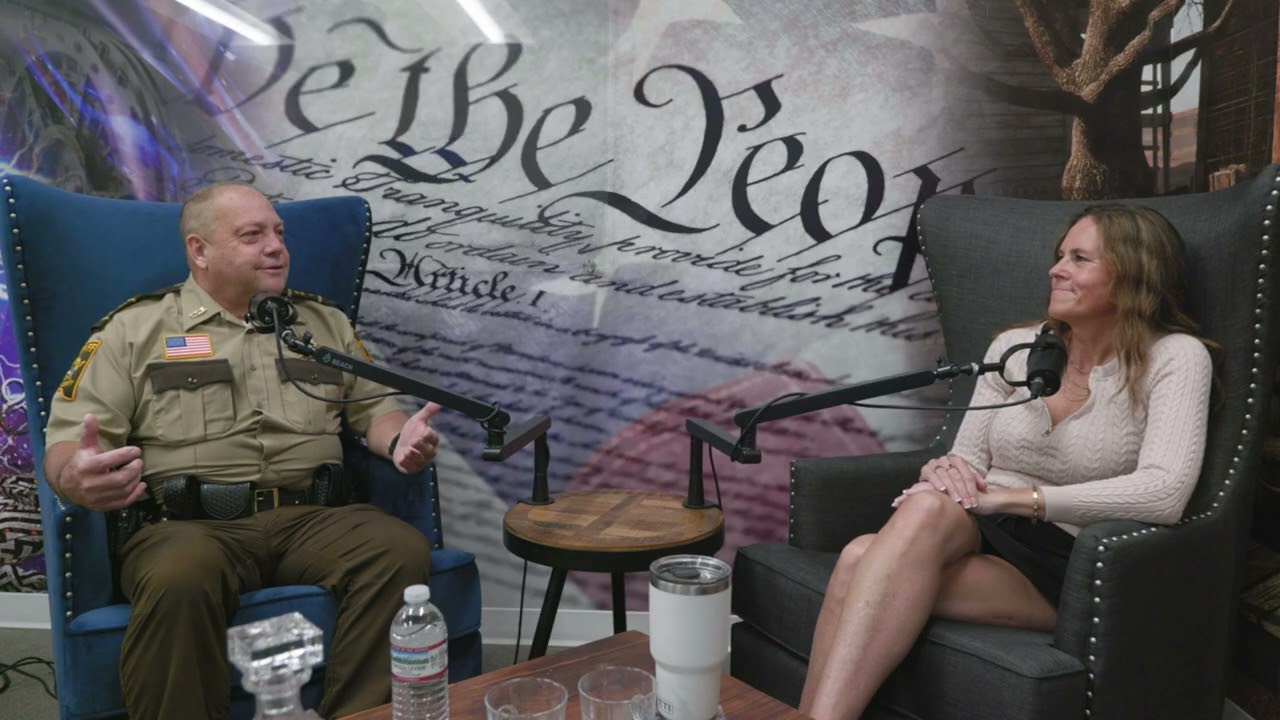
Hello everyone. I'm Karissa Dunham from Shining Light on Minnesota. Today we have a special guest with us, Mike Martin. Welcome, Mike. Welcome. Thanks. I I appreciate it. You bet. So, let's dig right in. Let's tell everybody how you got started in Ramsey County being a sheriff and kind of what got you into that role. So, I was I've been uh in law enforcement for 35 years. Mhm. Uh I started at the airport police department for 2 years. Yeah. Uh and then I went to the Minneapolis Police Department and I actually was there for 25 years. Retired from there. Thought I was done in law enforcement although I kept doing a lot of training um and consulting for police agencies. I went to work for the University of Minnesota for four years doing uh emergency planning and preparedness and then a friend of mine, Bob Fletcher, was elected as the sheriff in Ramsey County and asked me to come and run his specialized units and now I've been there for six years. Awesome. How has let's kind of take a step back. How has like when your first day when you started your role to your role now? How do they compare at the first day? First day on the job on the job compared to now. Like let's tell everybody a little bit about the differences and where you're at. You know, I started out as a I was a community service officer at the airport. So that's a little different. Then I when I went to Minneapolis, um I was a patrol officer, right? um just going call to call and uh it was very busy. It was during the early 90s and there was crack cocaine had come to Minnesota and so we were dealing with a lot of drug dealers and gang members and uh it was just crazy running around. Um, and now it's interesting because now I run a lot of investigative units, but I still do a lot of the gang work. Yep. And um, but I've worked my way up to a position where now I can kind of influence how that's done. Absolutely. And which makes a a huge difference. Um, a lot of people wanted to get want to get promoted to make more money. Yep. or to um you know have more authority, but for me it was being able to influence how we did our work, right? Who have been some of your mentors growing up and getting you to where you are today? You know, my dad was a great example for me. He worked really hard. Obviously, my mom took care of us. Yeah. Uh at home and had to deal with four little rug rats who and but my well my dad traveled the world and um he worked for Control Data which is how I grew up in San Diego. Okay. But then we we moved here. We moved to Salt Lake City for a couple years and then here. Um, and uh, but I really looked up to my dad because he worked so hard and when he was off, all he wanted to do was help other people, right? And um, you know, whether he could fix their washing machine or their air conditioning. I mean, he just had a heart for service to other people. Um, when I became a police officer, I worked for a sergeant who, if you looked at him, you'd think, "Oh, he's an old, tough, grizzled cop, right?" Y, but yet he went out of his way to take care of us as young kids to to kind of guide us. His name was Art Hart. He's still around. Um, he's not a cop anymore, but um, Art was a great guy. And then, you know, I've had the opportunity to just meet a ton of excellent people. I've been able to travel all over the country doing training and meeting people who kept me motivated. Yeah. How important is it for you now with the younger generations to kind of fill in that role that Art has filled in for you, mentoring the younger generations to keep them motivated to want to be a sheriff, be a police officer, get in enforcement. I It's very important um to me. I have, you know, part of my mission now is to help the younger officers and deputies. Yeah. And um give them the opportunities that I had, but make it fun, make it rewarding for them. Um because a lot of them uh they're they need that. They they need somebody to you know not hold their hand but to guide them and you know policing has changed tremendously and the tolerance for any errors now y is very low. You know we have cameras everywhere. Even losing your temper and and using profanity right is enough to get someone in trouble. So, you really have to work hard, instill um values. Um it's really important that the deputies know, hey, this is what I expect. This is what um we as a an agency value. And but I'm lucky because I supervise specialized units, so people have to want to be there, right? And um that's really rewarding to me is to see them um get motivated for sure. How hard is it when you're out on a job and you come across people that you know it probably makes you want to step up your game and do the right thing even more when you're dealing with people that aren't following the rules that you you know. Obviously it it is um harder and um but the bottom line is I have to set that example. Absolutely. I mean as a an under sheriff um you know I work for the sheriff but I um my job is to kind of set the tone for the troops and say hey this is what we value. They know that I value proactive work. I I want you to be out there getting ahead of crime. Yes. I want you to know who all the bad guys and gals are. I want you to know who they're dating, what they drive, where they live, everything about it, you know. And just yesterday there was a a murder in the city of St. Paul and we jumped in and we're providing intelligence um related to some of the individuals involved and that's um you know really what makes a difference for sure. How do you stay ahead of the game um as far as what's out there, what's on the streets like where the fentanyl is or where where the people are, who who they're associated with, everything like that. you it's uh I also run our violent crime enforcement team which is highlevel drug trafficking y and um I'm constantly studying the national trends and what's happening because what happens at the border or what happens on the coast ends up coming here right and um I was just actually fortunate enough a few weeks ago to go down to the border in San Diego and tour um the Sanedro uh entry point and see how they um vet people coming into the country and um the trends in concealment of drugs and vehicles and on people's purse and uh I bring that stuff back and get those processes set in place. We have some great our our violent crime enforcement team just received a um an award for being the most um effective team in the state of Minnesota. So, we're pretty excited about that. Outstanding. How how has it changed in the last couple years with all the defund the police when your guys are out there knowing that people don't necessarily want them out there, but there are good people that you know want them in. knowing that there are people that welcome in them into the community and having them have friends outside of the force. Yeah, that's a great question because um especially since the George Floyd incident, things have changed dramatically and we really had to look inside and and do some introspection and say, "Hey, what could we do differently?" And and part of that is just developing those relationships with the community. It's amazing how the difference between what you see on TV, right, on the defund the police and when we interact with people actually on the street. Um our deputies get a ton of positive y feedback and hey, we support you and thanks for doing what you do. Thanks for your service. You know, I always laugh because people if I'm in uniform, they'll say, "Thanks for your service." Or you walk in somewhere, hey, let me buy you a meal quick. Let's do this. Yeah. Yeah. And um and I I love it, but I kind of laugh inside because, you know, I I love doing what I'm doing. So, for me, it's it's rewarding. Um, and but part of that is we have to keep developing relationships with the community so that we have good people and then our deputies take ownership and serving those people, right? Do you find that it's easier for the the younger generation and the guys coming in or do you allow people to live in the communities that they work in or do you have them live and work outside the communities they work in? You know, it it's interesting. When I was at Minneapolis, we went through a period where uh officers had to live in the city. Yep. And my wife Ann was also a Minneapolis um cop and she had to live in the city. I didn't. But we lived in Northeast and um there were positives to that, but there were negatives. We had people come to our door, right, because they were in a fight with their spouse and that makes it tough. and when you have to send your kids to school um with kids of people that you're arresting. But our deputies um a lot of them live in Ramsey County. It's a little different because it's spread out and um they love living in the county. I live in the county. Um, and uh, so there's some positives to it and um, I don't think people should be told where they have to live, right? But I, um, but there are some benefits. We do have deputies that live in inner city St. Paul. Yeah. Uh, or in Minneapolis, actually, and it's good because they bring a perspective that some of our others don't. How has the mental health changed as far as the calls that you guys get? Do you have social workers that have to go out with you? Do you guys go out on those calls or is it strictly specific officers that go out? We still go out on those calls. Um, we're in the process, the county is, of developing an alternative response initiative that would send mental health workers, social workers out to uh some calls. But that's tough because a lot of times the reason there's a call is there's some type of crisis. Y and the person's acting out. And you know, if you're a social worker, mental health worker, do you want to go to a call where someone's threatening suicide or to harm people? Um, so it it's tough, but a lot of agencies now are partnering. Y um, and I think eventually that'll be the model. Yep. What do you see as the biggest crime right now or what are the most calls in Ramsey County or what kind of hit or miss? It it's kind of hit or miss right now, but I think we're seeing a lot of people that are very stressed out. Um we're we've seen an increase in suicides. Y um people that are in a mental health crisis and part of that is driven by people's reliance on social media and the legacy media for their all their information and they're told the sky is falling and they don't see any of the positive right stuff which it is the hard part. I mean, I can tell you every day we we have two or three incidents where our deputies go way above and beyond to help people, to get them food, to house them, and you're never going to see that in the news. No, not at all. It's always the negative, right? It's always the negative. And unfortunately, you know, that wears on people, especially people who already have, you know, mental illness. H what do you guys do for the deputies for their mental health training for themselves? We have inservice training that everyone has to attend. Um talking about how to treat yourself, keep yourself healthy. We we offer yoga classes. We have um CrossFit. I'm trying to think of what they call different things, right? Different things that the deputies can do. We also have an app y actually that where they can go on there and research different things if they're struggling. Um and then we have um retained counselors, therapists who can work with the officers, all of whom are prior Yeah. law enforcement. So they the officers feel a lot more comfortable with them. For sure. How like when you go home, what have been some of the easiest distressors and what are some of the things you want people to know outside of the badge that help you? You know, going to Lifetime Fitness and working out, walking, um relaxing. Yep. Um I just I like to relax sometimes. Traveling. Yep. um helps because it's really one of the few times when I can shut off work and and enjoy myself. But you just have to have things that you do that are not related to the job, right? Um the too many officers don't their whole life is wrapped up in being a police officer, sheriff's deputy, and then they retire and they don't know what to do, right? And you know, unfortunately that ends up with a lot of drinking. Yes. Yep. And the addiction kind of kicks in then. Yep. As far as all your fun and traveling, do you guys have any traveling coming up? Um, we don't have anything scheduled coming up. Part of that is because we've been tra we've traveled a lot this spring. We were in Austin. Fun um for a few days. We were in um Fort Myers Beach. So, so you have some kids. They've been keeping you busy, too. They've been doing some sports and doing a bunch of things, which is another side effect that keeps that's your why and keeps you driven, things like that, too. A lot of times I feel like when people have kids that keeps them motivated, keeps them going, and kind of keeps them keeps them in their own world. It does. Um, you know, Tyler's working at Golf Galaxy. Yep. He's he loves to golf and um he's uh really enjoying himself that way. And Nick just graduated from St. Thomas this last weekend. And he's a worker bee. He loves to work. And Kelly is a freshman at St. Thomas. Amazing. Playing club lacrosse. And that's why we were in Austin because they were in the national championship down there which was fun and I it does it it makes a huge difference. So if you put down your badge and you say okay what is something I want the generations coming up to know me for? What do you think that would be? I want to be known as a guy that was a good cop and but that treated people well, right? And and really helped. I mean, I I look back at how many people I've talked into becoming cops and how many young cops I've mentored over the years. and to see some of them rise to positions now where they're lieutenants and deputy chiefs and and uh on the FBI safe streets task force and they're and so they're leaders now. Y um that's huge. But someday I want to write a book. Yep. I want to write a book of just all the experiences that I've had because it's mind-blowing. Been a blast. Yeah. What has been one of the funniest stories that you've had on the on the job? Oh boy. We had um I think you'll appreciate this story. So after Tom Layman won the British Open. Mhm. He came back and he was staying at the Hilton. Yep. In downtown Minneapolis and there was a big event there. Yep. And I And a call comes out that someone stole the clarit cup. Oh boy. And what had happened was his sister uhoh took the cup and thought it would be fun to go to some bars as a prank. And and she went into Brit's pub and the owner of Brit's Pub knew what it was. Yep. And didn't know who she was. Oh lord. and called. Well, then by the time we went there, they had moved to another bar and we ended up tracking him down and oh jeez, finding out it was his sister and we had to verify that it was his sister. So, we had to wake him up and I'm sure he'd had a long night of um celebrating. Yep. And uh so we ended up getting a picture. Unfortunately, it's a Polaroid because of the days. Here's the little picture. But um but that was that was probably one of the funniest y um things I've been involved in. But I've I've gotten to do some unbelievable things. Yeah. What has been one of the most difficult obstacles that you've had that you it just sticks with you everywhere you go? you know, just um the fact it it sucks that people will hurt other people. Yeah. Like the the cruelty of people gets to me. It does. Um and the fact that they really don't care some people and understanding that there's certain people that just you can't treat or you can't reform, right? Uh that's a hard part because you want to believe that people all have a good side. There's a good part. And and you know, it's funny. I've talked I've interviewed and arrested, you know, dozens of murderers and I've talked to them and some of them seem like some of the nicest people that you've ever met. But, you know, when one time I was at federal court to testify in a big gang um RICO case and I'm out in the hallway playing with the little daughter of the defendant who I've known since he was 12 and now he's in his 20s and talking to his mom because the first time I interacted with him, I developed a relationship with his mom trying to tell her, "Hey, look, he's hanging with these guys. And I'm out there playing with this kid, waiting to testify to send him to prison for probably 20 years. Yep. And then I walk into court and it's a federal court, so it's a formal, very formal closed door. Yep. Yep. Big courtroom. And I walk in and he turns around and says, "Hey, Martin." Oh, boy. And and it's as attorneys like don't do it, you know, don't associate. And it's just sad. Yeah. It it really is. It's sad to watch the path that some of these kids take. Well, I'm sure because you have tried to help them so many times in the past and you think they're going in the right direction and they keep falling down the crack. Right. And some of them, you know, I I always give them my cell phone number. Yep. and they call they'll they'll call better struggles. Yeah. But they're stuck in a cycle that they don't know how to get out of. And now you have kids that didn't go to school all during co didn't engage in. And that was one of the worst things for kids with the mental health and just everything that they lost. And then and a lot of them spend all their time on social media. They're smoking pot. They're not going to school. I remember stopping a kid one day. He was 14, and I asked him where he went to school, and he said, "I don't go to school." And I said, "Well, what school are you supposed to go to?" I don't know. He didn't even know what school he was supposed to be in. And you know, it's really hard. It is. It's it's those people that you almost want to just take in yourself and just you want to take everybody in and help them and be like, "Okay, what's one more kid? We have seven. Why not why not one more?" Right. Right. Yeah. It's it's frustrating, but it's it's one of those that you you can only help so much and there's only so much that you can do. And it's Yeah, it's it's amazing to see every day there's something new, but you also get to see some good, I'm sure, and some life stories that you have helped and have revived and changed around. Tell our viewers a little bit about some good that you've made happen. I uh I was um well I about two years ago I went into Chipotle Y in St. Anthony. Yep. And there was a guy in a postal workers outfit who came out and he goes, "Hey Martin, how you doing?" Y and I'm like, "I'm sorry. I How do I know you? I don't recognize you." and and he told me his name and I immediately knew who he was then and he said, "Hey, I'm doing really well." Um, I have kids now. I'm working for the post office. And that's the kind of stuff where I'm like, "Okay, it's worth it. It's going to give you the chills." Yeah. It's why I do what I do. Absolutely. And the times when you get to help people are tremendous. They make it rewarding. Yep. Absolutely. So, what's next on the agenda? What do you see coming up in the future? You know, uh it's interesting. I think um AI Mhm. for law enforcement is a huge topic right now. Y how do you incorporate the use of AI into law enforcement especially in intelligence? Y um it you know for me that's the more interesting. Now there are people who want to use it for report writing. Y I'm not a big advocate of that because your report should be your reflection on what you saw. Um but the for intelligence it's huge. So how do we use that in a way that's going to make us more effective and keep the community safe? What do you feel? What do you or what are your thoughts on cameras use with AI technology, robotics, everything like that? You know, we um we use license plate readers. We have cameras um they're called flot cameras that uh allow us to read a license plate. runs the license plate automatically tells us, you know, so we get if a if a stolen car goes into Rosedale's parking lot. Yep. We know it. Absolutely. And then they'll you'll get a picture of the car. I'll get an alert on my phone. Now, Roseville obviously runs those, but but I still will get a picture on my phone. This car, which is stolen, just came into this parking lot. Um, and we use that a lot for finding stolen cars and car jack cars. And you know, I think it's huge. We just have to balance the privacy issues, right? Which, you know, a lot of people don't realize how many times a day, your car hits on LPR with a squad. Our squad cars have it in the cars. Absolutely. Um, they're it's everywhere. It's at places you'd never think of. Um, and that's a tremendous tool as long as it's used appropriately. Yep. What do you think with the way technology is going in people's cars? Obviously, maps, technology, texting, everything like that with the hands-free blue cruise, everything like that. People being able to go more hands-free in their cars. Do you think that that's going to be more of a safety issue? I I think so. I mean, I don't like the self-driving cars. I mean, that I don't trust that it's been perfected enough yet. But here's the other thing is now if we have a car that's involved in a murder, for example, or a chase, y we can download the computer in that car. Yep. I could tell you second by second how fast they were driving, whether they were turning or not, whether their lights were on. Yep. Whose phone was hooked up to the Bluetooth in the car. Um so, you know, that technology now is so unbelievable y that um you know, it it makes you wonder what's next, right? Well, I mean, with with everything with the TVs in the house and everybody being connected everywhere they go, it's great to have that availability for if something does happen, whether you fall down, whether somebody's chasing you, whether anything happens, to be able to get a hold of somebody when you need something. Yes. Yeah. It's it's nice, but it's semi scary. It is. You know, for us it's we love it obviously, but um you know, the uh it helps us find carjack cars and track suspects. Um and I think people don't realize how much your car communicates with the manufacturer and whatever. They're constantly upgrading software and whatever which is being done. You don't ever see it. You don't know it, but you know, we can write a search warrant and get the information. Yep. So, technology wise for kids growing up in the future, obviously when grandkids and everything like that are getting older, it's going to be crazy. I mean, what they're going to be able to do, obviously, having to be able to communicate is going to I mean, we were talking about that earlier, is going to be key. And it'll be interesting to see how many kids are able to still communicate face to face. there. A lot of our young deputies that we hire um they just have a difficulty carrying on that face to face conversation um or writing a report because they're used to texting and the short text, not even a long version. And um so you have to remind them that no, you can't do that. And you can't interview a suspect, right, or even a victim that way, right? You know, you can't see the emotion behind it and you can't you can't really probably get the feel of it. Well, and you you can't develop a rapport with that person. Y um and so you know we've seen I one particular deputy that we have um when she started she had a real difficult time but now she's gotten tremendous at doing that and interviewing people and talking to them and communicating and so you know it's it's still there. It's a work in progress. Yep. It's probably been a big step for some of the deputies that have been there for a long time that are used to just picking up the phone and having those conversations versus the ones that are always on their phone and trying to get back to, okay, I've got to put the phone down and actually talk to people and interview people and everything like that, too. Well, and they love to set up text strings. Yep. It's which drives me nuts. Yes. Y cuz they go off all day and all night. You know, we have a car theft. Um so any car that's stolen. Yep. That's reported in the county or a carjacking from even from the metro area, I'll get a text. We get have a text string for intelligence. We have one for just our carjacking and autotheft team. So there's they set up these tech strings and it it drives me nuts. What about all the people that are out there that are trying to solve crimes on their own? How much does that help or hurt? You know, in in some ways it hurts. I mean, and sometimes they can help bring attention to a cold case, which is nice. Y um but sometimes it hurts because they assume things that any officer, someone who has the experience knows not to assume, right? And um so it it can it's always helpful to get to ask the community for, hey, did you see anything? Did you hear anything? That kind of stuff. But people who consider themselves detectives, right? I mean, I listen to some true crime podcasts and they drive me nuts because they'll say stuff and I'm like, that's not how it works. No, right. That's not, you know, Well, they don't always see two sides to every story either. I mean, there's there's a lot that happens behind the scenes and there's a lot that happens behind closed doors that people don't know, right? But I think the um you know when they bring attention to a cold case that maybe's been forgotten. For sure. Yep. Yeah. That's great. Yep. It's interesting to see. I mean the way the world's changing. Obviously it's happened through co through the George Floyd through all the officers growing and changing and wanting everybody out there again. But I feel like more and more people are wanting to get back out on the force now where for a while it was slowing down and nobody wanted to be a police officer and now we're rebuilding and kind of getting the precincts back out there and getting everything out there. What do you see with the growth? Definitely we're getting more applicants now. Um for a while we were it was we were just stealing from each other. Yeah. Hey, you know, Roseville officer, we'll pay you more. we'll give you a better position where you know everybody was stealing from each other and we were losing them as fast as we were getting them right and which mainly hurts the small departments that don't pay as well and don't have as many officers but now we're getting more applicants. I think people are um you know realizing that it's a great profession um and it pays really well. It does. I mean, I I people, it's funny cuz I remember when I was a cop, people like, "Well, you just make, you know, minimum wage or you this or that." And I'm like, "Dude, if you only knew the retirement plan, I mean, everything that you have." Yeah. The pension, um, the medical, you know, all that stuff. And now it's we're paying our deputies really well and all the agencies are. So, it's it's a great career for someone for sure. What is the the retirement like? I mean, obviously, I know our viewers might not know. I know what it's like, but tell people what it's like and what the work plan is to get to be where you are today and what schooling is like and everything, too. So, you uh schooling, you have to have a four or a two-year degree. Yep. you have to go through a state skills program which is generally three months um where you learn how to drive and shoot and you learn the state laws and that kind of stuff and then you get hired by an agency and generally they'll put you through uh their own academy y which just depends the bigger agencies will run their own academy otherwise um they may send you to another academy or do on the job type training and um but then um you go through a probationary period. Y and but the retirement is basically based on 3% per year that you worked of your high five earning years, right? So, I should have waited to retire, but when I retired from Minneapolis, you know, I had 25 years on, so it was 75% of my high- five Yep. earning years. Um, and that's you get that. That's your pension. Yep. And then their cost of living adjustments. Um, every once in a while they'll throw in a the legislature will throw in a bone like they did this year, but um the it's a great retirement. Well, and I feel like a lot of times when people well when the sheriffs or whomever retire in the agency, they come back and work part-time. They do they do the admin work. They do the the little stuff just because they want to keep busy. It's one of those things you you lose it, you you don't use it, you lose it kind of thing, too. And you you miss it. You miss the crew. You miss everybody. We hire back um officers and deputies to work in our courts to do to the be the baiffs in the court. Um we have some that do other things. Yep. So it's uh and for me, you know, now I'm making my salary from Ramsey County and my pension goes into an escrow account um which I can have access to. Yes. Yep. So, it it's it's working. Nice. Yep. Well, we really appreciate having you on today. We look forward to seeing you in the future, seeing Ann and the kids, and hopefully we'll be able to have you on again in the future when you're retired and doing some more traveling and hear what's new and the latest and greatest technology. Well, thanks for having me. Yep. You bet. Thank you, Mike.