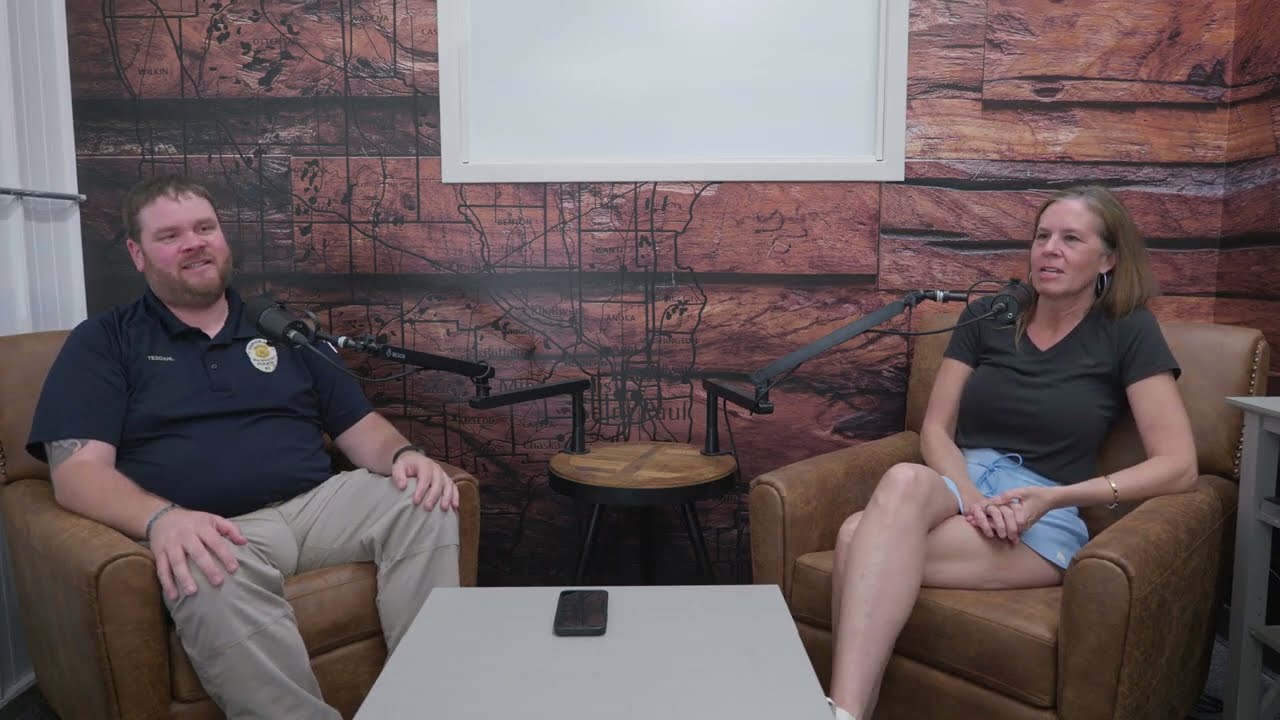
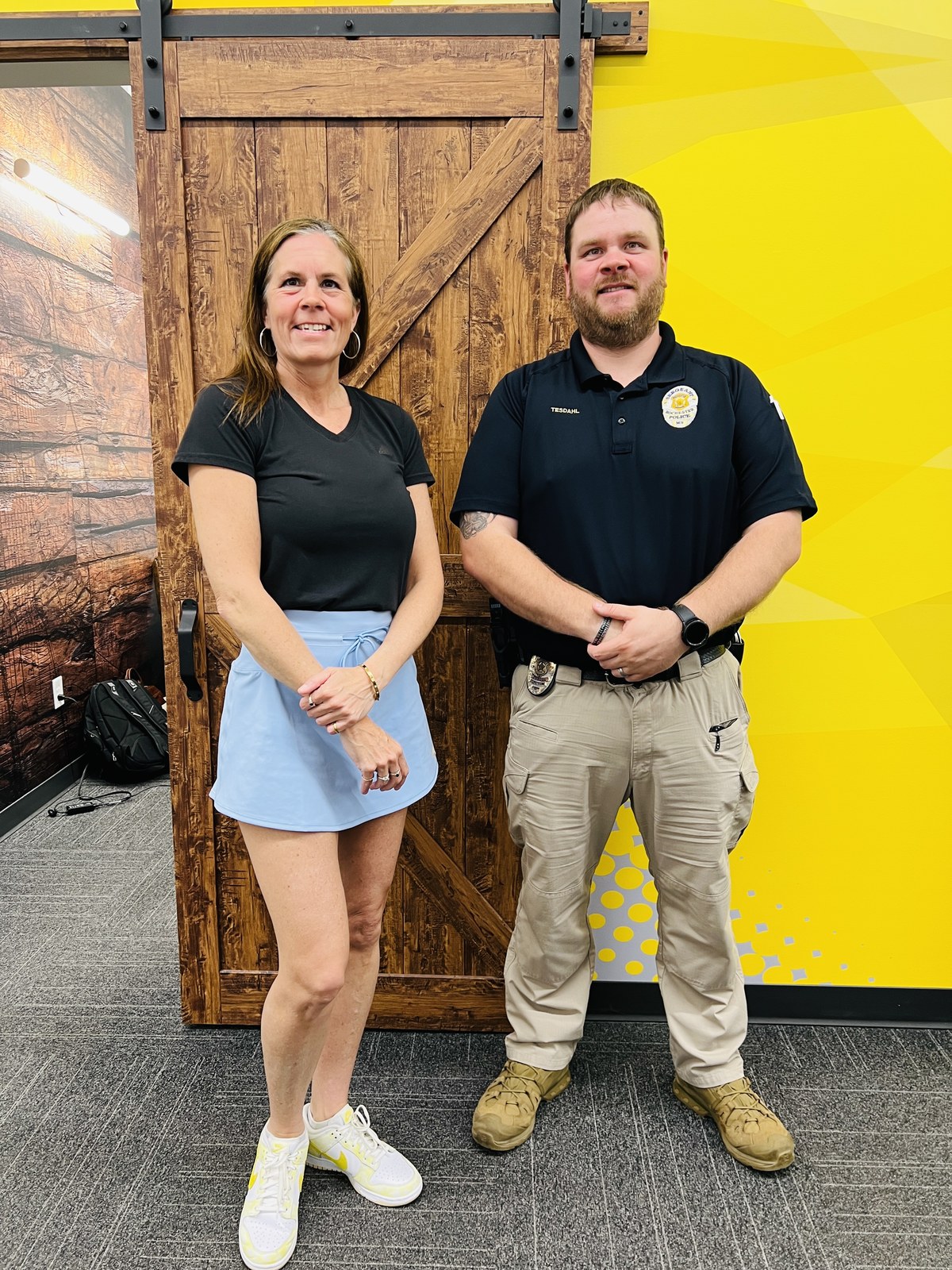
Hello everyone. I'm Karissa Dunham. I'm your host of Shining Light on Minnesota. Today we have with us Caleb Tesdahl. Welcome Caleb. Hi dear. Yes. So you are a part of House of Shields. Let some of our viewers know what House of Shields is and how that got started. So we're a nonprofit here in the city of Rochester. We began in 2008. Uh retired officer Don Bray began the organization. Uh and we house law enforcement officers from around the country that uh come to Mayo Clinic for care and we house it or we house them for free of charge. Okay. And so when you originally started you had different locations. Where are some of the housing units located now? So right now our housing units are located in a new apartment complex uh two blocks from the Mayo campus. Very good. So, we find that like and I've noticed myself being from Rochester, when people come in, it's always difficult to find a place to live. But when you get some of Rochester's finest, you get people from the force from all over that are injured or have family members that are there trying to find a safe and happy and accommodating place to live or to stay is very important. What are some of the features? Obviously, it's close to May Clinic. It used to be considered kind of low on now you're out of that and you're really in in the heart of Rochester. Yep. So we re we moved in July of last year to this new building. Yeah. Uh the building that we were in since 2008 uh was sold to the county. Okay. And so we we were forced to move. We we appreciated what we had. Absolutely. And our relationship with the old owner. Uh we had up to six units at that place and and towards the end we were down to two or three. Okay. U defending. Um but the new location is is obviously closer to Mayo Clinic. It's also we partnered with the hotel that's across the street from us, Centerstone Plaza. So, we have access to their um uh shuttle service. We have parking spots at at their um in their parking lots. And then we also have reduced room rates at their location as well for the people that we can't help because at this point we have two one-bedroom apartments, right? And we we turn away more than we help. Yeah. So, we're able to at least give them a lower cost option when we can't help them. Absolutely. What is the time frame typically when people want to come and stay? How short how long can they stay there? What do you see? Um they can stay short or as long as they need you know our typical stay is about 10 days. Our longest stay was 8 months. Uh we we typically have a lot of people who will stay for a month, two months, right? Uh the biggest issue we have is the unknown. So people that come to us, they'll say, "Well, I'm going to be here for a day." And they end up staying for a month. Yeah. Or they think they're going to be here for a month and they end up staying for a day. How does the booking process work for when that happens or things like that when other people are scheduled? That's probably it's challenging challenging. So, uh we always tell everybody make your hotel reservations. We have an online calendar that we use in house to have a waiting list and then people who are in uh with contact information and then we tell them to call us 48 hours prior to arrival. So, they have their hotel reservation set, they call us 48 hours prior to arrival. If we have vacancy, we put them on the list. Yes. And then we guarantee them the room in 2 days when they arrive. Thanks. Once they get a room, that's theirs. It's theirs. We don't kick people out. And I say that with a caveat because for the first time we had to kick somebody out. But since 2008, not that was one person. So one person since 2008, and that was an exceptional case. But uh besides that, we we have never kicked anybody out. You're there until you leave. Yeah. you know, um it's it's extremely important for people to understand that, but it's challenging in the same way because it's the unknown and they want they want a guarantee. Yeah. Well, we can't give them a guarantee because of everybody's schedule. Very very often people will come in and they'll well, we're going to leave on Friday and then on Wednesday you get told they're signing another week and then the following week get told they're sending medical. Yeah. So, we just can't get guarantee people rooms. We don't want them to go unused. Right. Cam, you know, right now we have that 85% occupancy rate in our two apartments. So to try to eliminate any downtime, we have waiting lists and our waiting list typically speaking, we turn room same day. Okay? So, uh we have we have a a lady who comes and cleans our rooms for us and she's typically the same day. If she can't get to it that day, uh we have volunteers that will come in and eighth grade. So, how do officers find out about the list and the rooms that are available? do they know from their porch? Do they just have heard of House of Shields? A lot of it's word of mouth. Uh we are on social media. We have started going to some events and handing out pamphlets, but most of it's word of mouth. And the Mayo Clinic themselves, their social workers that meet with these families know about us and that's where we get a lot of our referrals through as we especially from the out of state. Yeah. Police officers. That's that's where we get a lot of referrals. Well, good. I mean, it's important for everybody to know that it's out there. How if people want to donate or what are some things that you can do to raise money to help? Yeah, we always tell people, you know, if you're staying with us, you're going through enough. We don't we don't want or need your money, right? What we ask them is we say, "Hey, go back to your benevolence. Go back to your associations. You don't need businesses. You know, have them donate on your behalf." Absolutely. Because if you're staying with us, it's because you're going through a medical reason. You're probably low on money because of that. You're not working as much as you should be or you can you usually work. Um, you know, and that's where the benevolence and the associations and the foundations and the federations all step up and they send us money. And that's, you know, a big part of our organization is we're 100% volunteer. Every penny that gets donated to us goes towards our cause. Obviously, the biggest cost, the biggest cost for us is rent. Yes. Our goal, right, my goal as the president of the company is uh the nonprofit is to build a house so that we can, you know, permanently have a place where we're not paying rent, where the money that we get is going towards us. Yes. And and our longevity. So, uh you know, we we do have a a very good marketing system when it comes to raising money. We have been in the black for the last probably well six years that I've been amazing been the vice president and the president we've been in the black and uh for fundraising compared to cost is what I'm referring to. So uh you know we continue to grow and we continue to get our word out. We just got our first title sponsorship of the golf tournament this year and um you know we're excited about that. benevolent. The Rochester Police Benevolent Association has obviously been a huge advocate and work for, you know, they they they give us a lot of money, which has kept us afloat for many years. They've donated uh $15,000 to us for many years. Um, but luckily, we've been able to to fund raise elsewhere besides them, and they've been able to help the community more with some of that money. So, well, it's important. I mean, when you see veterans, you see people on the force, you see first responders that are out there every day risking their lives for the good of people and they get injured or they have family members that are injured. How the care, the after care, nursing home care, anything like that can be where it is today is disheartening to me. I mean, I've seen been through it personally myself. My father was a veteran. the VA care and some of the nursing homes and things that are out there in the housing situations for police officers and everything else when they're out there for the good of the community and we can't treat them better. I don't know. It's interesting. Yeah. So, you've been on the Rochester forest for how long? Uh, it be 14 years. 14 years. Yep. That's exciting. How have you seen the force in Rochester grow and change? obviously with medical destination medical center and mail clinic and everything. Well, uh, since I've been here, I think we've gained about 30 sworn, don't quote me on that. I'm not sure, but we've gained about 30 sworn officers through various different programs. Uh, I think we're growing again here shortly with BRT or bus rapid transit, which they're going to have cops on buses because of everything else. Yeah. Yep. Um, so in that way, but also, you know, we got a new chief in 2017 or 18 and and he's done a lot of really good work with our department and community outreach and you know, there's a lot of really good programs. Yep. Well, I think it's important for the communities around too to know that you guys are out there for the good of communities. You're volunteering just like everybody else. You're paying your time. You're paying your respect. You're trying to help and make it a safe place. And for people that don't understand how much the growth is here in Rochester and around surrounding communities from you have the Byron, you have the Doota, all the outstanding communities that are coming into Rochester for Mayo Clinic or even people from out of state that's stated. Oh yeah. And even my wife that works the mail clinic, she works from home. Yeah. So, I mean, there's plenty of the workers that work from home, too, that are from, you know, all around the United States that that work for the Rochester mail clinic cuz, you know, they have campuses in what, Florida and Arizona as well. Yep. And you have the local Canon Falls and the Red Wings and everything like that, too. It's interesting with the way the world's going to all the hub locations and how people have the accommodations to work for a month here, a month there because you're working working virtually. So that probably brings a lot more people to Rochester, too, just because you have Mayo Clinic there, unlike other communities. Yeah. You know, the House of Shields is it's a weird thing for for me. And what I mean by that is, you know, law enforcement in general, you typically deal with a lot of negatives. Yeah. Right. Uh most of what we deal with is people in their worst day or people going through an event that's the worst event they're ever going to have in their life. And it's something that we deal with day in and day out. Right. And when I was first uh a cop and Don Bray was doing this by himself, he had asked me to check in his families. And I remember that day, still to this day, I remember this day because it was um I was having a bad day. I was in a fight with my wife or, you know, uh the kids didn't get up on time or whatever. I was having a rough day and Don called me and said, "Hey, I need you to check in this family." And so I go there and I check in the family and it was a it was a guy and his daughter. She was 7 years old and she had cancer. and I said, you know, I got it pretty good. Yeah. I don't have a lot to complain about. Right. And that that stuck with me since the beginning. And I have been an advocate for this program and an advocate for young cops because we get our chief, like I said, our chief and the sheriff are very good uh supporters of the House of Shields. They allow on duty personnel to check in people. So, when you get checked into the House of Shields, it's an onduty police officer that's checking you in. For sure. So, it's a friendly face. Yeah. You know, it takes five minutes that understands. Yep. that knows the community, that can answer the questions that cops are going to ask. And it's an on duty. It's a it's a familiar face or at least a familiar uniform that's going to be there. And uh you know, you get these young cops who uh who don't really understand maybe everything about the world yet. They're just not sure. Yeah. And they they go through an experience like that and I I just hope that they get put, you know, the same type of scenario, you know, just perspective. It gives you perspective that life's life's pretty good sometimes when you don't think it is. Yeah. I mean, you don't know anybody's story and that's the other side of it, too. I mean, we deal with a lot of military, a lot of first responders, a lot of police officers, and when you see them in your community and they're out there, whether it's traffic stops or doing what they need to do on a daily in and out, and they live just outside those communities, you still have to bring your kids by those situations that you've been through, the trauma that's there, the PTSD, all the scenarios that you have to see on a daily basis, which in a normal person's life, we might only experience once or if at all see the ups and downs of the cancer or the the accident that happen or dealing with the situation that people get in. When you see that every day, it's it's befuddling to the normal human being that doesn't get to see it every day. So, we appreciate that and everything you guys do. Yeah, it's uh you know, obviously we could have a whole segment talking about PTSD and what cops go through and how they deal with it. Mental health. Yeah, for sure. But luckily, you know, like Arson said, our chief does such a a wonderful job and the um what's it called? Uh, I should know this off the top of my head cuz we deal with it. We have like mandatory health check-ins. We have um I'm trying to think of what the term is though they use for it. Like what they call it. It'll come to you. It will. But now you'll be driving in your car when you're done. You'd be like, "There it is. I do that." No, it's it's just like a lot of things have changed in our department and it it's geared more towards making sure officers are okay. And it's and it's okay to ask for help. And it hasn't always been that way. Especially like law enforcement, military, it's not always okay to ask for help or people think they're going to be looked at negatively. And these mandatory check-ins are just one step along the way where it's like, okay, you have to go. There's no choice. You don't have to say anything if you don't want to, right? But it gives you an opportunity to at least saying, "Hey, you know, I'm really having a rough time." Y and we can get the help we need. But, uh, you know, we have, uh, we have workouts. They built a gym. You know, we we have personal trainers, different healthy ways to get things out. We have we have coaches that come in. We have nutrition. We have, you know, per you can purchase meals at our at our department that are made by dietitians and, you know, like instead of just, hey, I'm going to run the typical quick, grab some food, get the caffeine, get the junk food, we're on our way. Yes. You know, even in a town this size, is it night time? There's Quick Chip. Absolutely. That's what there is. Yep. And I did three years on nights when I was promoted again and it was different. Yeah. Yep. Well, it's what you can do to just get through the night, get through the shift, right? And get to the next one. Whether it's there's a quick trip every 10 minutes or whatever it may be. Let's just get in there, get what we need, and get on the get on the road again. Yeah. Yeah. Lord forbid you take one of your days off and meal prep, right? I know. Well, I mean, that's that's exactly how it is. Like even with me, I'm in my vehicle 95% of the time. I put 100,000 miles on in a year. And it's like the ease of just having something, bringing something from home and having in the car and having it be healthy versus Quick Trip. Oh. Or anything else that's around. It's just Yeah. And then even when you go to Quick Trip, the not good for you stuff is generally cheaper than the good for you stuff. It is. Which in real life groceries when you buy the good stuff is really expensive when you have kids and everything like that. But it's interesting. I mean, we kind of get back on the whole mental health thing. to me growing up with military and my family um and knowing that it's not okay to share your feelings just to say you're okay or nonetheless ask for help that's a big thing and even to this day with people growing up knowing that there are people out there that want to help have the authority to help and have the whereabouts and the means to do it correctly instead of just being here and taking everything in or calling it in. Yeah. Not only is it okay to ask for help, it's mandatory. Absolutely. You'd have to do a checkling. Yep. It's no doesn't matter if you're the chief or if you're a brand new officer or csos civilian staff mandatory health check-ins. It's pretty awesome to see, you know, cuz we lost one of ours to suicide since I've been a police officer and it's not something I'd ever want to deal with again. No, because I mean all the trauma that you see every day, all the things that you deal with, just keeping those in, it just eats away at you. I can't tell you how many suicides I've been to on the job, but I can tell you how many of my friends killed themselves. You know what I mean? Yep. Absolutely. It's one of those things where yeah, we see the worst of the worst for sure. There's no question. Um but you can compartmentalize some of that. Oh, absolutely. But when it's someone, you know, it's different. It's totally different. It's a different ballgame. And then even with your military background, tell our listeners a little bit about your military experience that you've had. Uh I was uh in the army. I was a combat engineer. I was in from 2004 to 2009. I was assigned to the 101st Airborne Division 506 Infantry Regiment. Uh I deployed to Iraq in 2005 and Afghanistan in 2008. So I mean from that background into the force obviously there's been a lot that you've experienced. You've learned how to deal with it. You've learned how to express and have your mandatory check-ins that are definitely there. But for the everyday human that doesn't have those options, you need to get it out. You can't just compartmentalize and keep everything in or think that you can cuz sooner or what later. It's going to eat away at you too. Yeah. The other big thing that they stress and I I truly believe in it is you can't just surround yourself with cops. You have to have you you have to have friends outside of our profession, right? Because you got to have perspective because this job will make you very like cold. Oh, very much so. Because of what we deal with and you have to have people that bring you back to reality, not everybody, you not everybody hates you. Not everybody doesn't want you out there threat or is trying to take something from me or is lying to you because we get lied to every day all day long. Y so immediately like even when my kid says something to me, it's like you telling me the truth. I could tell I can see the redness in your face. You're not looking at me. Exactly. You're avoiding me. You looked up to the left, you know, you looked up to the right. Like all the things we're taught as cops to look for I use on my kids and I'm like that's not fair. You know how I know I got away with I'm dealing with it all day long and I you know the ins and outs. Yeah. I mean, it's interesting to see both sides of it, too, because like especially within the last couple years and all the defund of police and we don't want police around and they're not good for us. On the backside, people don't understand that cops are just sitting there at a gas station not knowing when people are going to be gutting for them and not knowing when the negativity and the people are out there that don't want them there. You know, it's it's kind of a catch 22. Yeah. I think again we're pretty blessed being in Rochester, you know, even even during the height of some of the the the recent not recent, I guess they're a couple years away protests like we we did just fine. Our community supports us here and they understand the work that we do is valid and and needed and you know I feel protected here and I think the the community supports us. Yeah. I mean I no matter where you go Rochester is its own little destination center. I mean it's got so it's it own little metro. No matter where you go, like you're always going to have the stability. You're going to always have the economy here. You're going to have something here that not a lot of smaller communities or bigger cities have. I mean, you look at Minneapolis St. Paul, how their entire streets right now pushing everybody out to the outer communities where Rochester has Rochester is its own little nutshell. Yeah. Do you see a lot of people on the force or is it mandatory for people that are in this on the force to live in the outside communities instead of We have we have no requirement. So you can live anywhere. We actually have cops that live in the cities. We have cops you know all over the world if not world all over the southeast Minnesota you know uh because we on patrol we work a 4 days on 4 days off schedule. Y so so it's not bad but you still don't want to have to drive by like side if you Yeah. A long drive is, you know, a I I still think to this day a 20 30 minute drive home is healthy. Yeah. Just because it clears your head of whatever went on that day. Yep. And uh you know, you don't bring it home to your family. Yeah. I mean, even John and I were having that discussion. We're out in public all day long speaking and talking to people, presenting, doing podcasts, doing everything that we do. We're naturally inclined to be around people. So even our drive home is okay. I'm going to figure out set reset everything, get ready for the home life, be able to shut things off, kind of reset. It's it's nice to have, but also with the way the world's going, everybody wants to live in the city when you're younger. And now when you're getting older, it's like, okay, that country life having that acreage is is what everybody's wanting. Do you see that with the way you're going? You said you have some kids, a 13 and a 19year-old. 19-year-old works at the jail that someday you're going to get out back and have more acreage and get back out more into the country than it'll go one of two ways. I finding out what way my wife tells me. Yep. Uh it'll go one of two ways. So now it's only one way, right? Yeah. We'll either live in a townhouse in a city. Yeah. You know, so we don't have any maintenance HOAs. Yep. Or we'll have a lakehouse, you know, probably in Wisconsin. Yeah, absolutely. And then somewhere warm in the in the in the winter. But that's that's the goal, you know, we all you have to have a goal in life, right? So that's the goal is, you know, have a lakehouse in the summer and a vacation winter house somewhere warm. Yeah. Well, and the kids can always come to visit you and stay and if we could find a place that was temperature moderate all year round, I think everybody would be there. But until then, Yeah. somewhere without state tax. Like we all lived there for 6 months in one day. Yep. Have some mountains and have some scenery and no taxes. I tell you what, when I was in Afghanistan, we were in Logar Province and they had mountains there. And for a for a kid from Minnesota that's seen hills, it was absolutely beautiful. It is. I mean, it's unbelievable how how cool that is. And I've been out to Arizona a couple times and seen the mountains out there. And it's just like I could see myself living here when I, you know, couple six months out of the year or something. Yep. I lived in Montana in basically the glacier mountain range uh swarm mountain range um in Big Fork and that drive back with those three kids and the dog once I got past North Dakota and I'm in the flatlands I'm like why am I doing this is like what is my world coming to where are my mountains where's my clear blue water and just the people I mean everything obviously it's not Afghanistan but it the mountains are are a peace in itself and it brings people like mental health and just getting out in nature and wanting need to be out there and everything too. For sure. What do you see for growth and what's coming up in the force and how I know you guys have a golf tournament you mentioned for House of Shields. Tell people a little bit about the golf tournament. Yeah, so we're having a golf tournament July 12th at the um Stewartville Golf Course. Uh it's our annual fundraiser. We usually do one one fundraiser a year. Uh last year we were able to raise $46,000. We netted that which is more than what it takes to run us for a year. Absolutely. So, that was awesome. Uh, we're looking forward to another great event this year. Uh, we have plenty of sponsorships still open. We have plenty of teams open. So, if people want to sign up, you just go to houseofshields.org. You'll see the link on there. Uh, it's through golf status is what we use. So, it's all techy, you know, however you want to say, whatever. Little bit little bit above my pay grade. But, uh, I've been designing a web page our web page now for the last two years and done okay thanks to that GoDaddy. Yep. Going in thing that we do. Yeah. Uh but uh you know the golf tournament is the one event a year that we use to to run to run our organization. And again, every penny that we get goes towards helping cops and their immediate family at their time of need. So, you know, if you uh if you don't have money for the sponsorship, sign up for the golf tournament. I'd love to meet you. You know, the board will be there. I'll be there. Uh we run the event. Um it's a great time. We've had great reviews from it. So, we hope to see everybody there. What about the federation? How can people donate or how can they help give back to the the officers in Rochester? Benevolent. Yeah. Um I actually don't know that. No. Uh give to us. Yes. Give the House of Shields. Absolutely. Yeah. Give Give the House of Shields cuz we'll use the money to hopefully buy a house, right? Well, yeah. Build a house future. Make that the the goal in the future. You have one and you're going to want to start doing more and more. Art Benevolent's one of the nonprofits in the state of Minnesota that has charitable gambling. Okay. So, uh, we have pull tabs or they have pull tabs. You know, obviously I'm on the board of one nonprofit, so I can't be on the board of another nonprofit. You guys need to figure out how to get the the charitable gambling into the House of Shields to help give back that way, too. Maybe. That's That's what they do. That's how we get our money. Okay, got it. From them from them. They donate to us um when we have a need and that's like our sponsorships and you know they kept us afloat for many years when we had troubles um trying to to get money but you know but it's not just the benevolent Minnesota State Patrol gives us money. Quicktrip actually gives us money every year. Uh we have a lot of sponsors that um that understand the work we do and they believe in it and they you know I I do believe that the 100% volunteer is important. Yes. Because people know that you know the money goes towards it's not going in your pocket. It's not going on anybody's pocket into the good of helping and giving back to the people that need it. Yeah. And that's something that I'll I'll stand behind until they kick me out. Yes. And if people want to find you on socials, what social medias are you on? And uh so we are on Facebook, LinkedIn, Twitter. I think that's maybe Instagram, but that wouldn't be me. I run Y I run the LinkedIn, Facebook, and uh Twitter. And I would say out of all those, Facebook would probably be the best one. Usually the best one yet. That's the one I try to update the most. That's the easiest one cuz I can just do it from my phone. Y I probably could do the other ones from my phone too or not. It gets to be a little too much. Yeah, full-time job. This is just a volunteer thing. This is a volunteer thing, but the volunteer thing that's very necessary. I mean, it's it's amazing to see the strides and bounds of the leaks that you guys have come from when you started off to where you are today and what's going to happen in the future when you do build that first house. Are you hoping to build the first house here in Rochester or in one of the smaller communities out there? Has to be in Rochester. It has to be downtown. has to be close. That's the number one question that we get asked. Um is how close are you to the male? It's got to be close to male, right? Yeah. So, you know, it's one of those double-edged swords. Uh do we move? You know, do we build a house or do we continue to rent it? Let let everything Let's see how the money comes in and see what happens. Yeah. You know, it's it's a it's a unique question and I'm obviously very passionate about a house just because I believe it cements our future. Yes, absolutely. Um, but there's a lot of people who think, well, renting is not a bad game either because it's a set cost. We know what it is. You know, the building's not our problem. We don't have to come up with money if the air conditioner goes out or if the heater goes out. And it's like, okay, you know, I can appreciate that, too. Plus, we're likely never going to be two blocks away if we buy a house, right? Yeah. Unless unless they rip up a parking lot for Mayo Clinic or Yeah. something happens there. But that that little twob block radius or right where you're at now in the heart of Don Thomas, Yeah. We're likely never going to be able to have a shuttle if we move to our own house. You know, there's a lot of things that that would change, but uh unless funding is out there and someone listening maybe wants to help out some magical way. Yeah. Yeah. More Yeah. Anybody out there take it? Um money goes towards the great cows, I promise you it all helps helps cops. Yes. You know, they're very thankful. That's the one thing when you when you get them in, especially the long longer state ones, they're all thankful. There's no question, right? But the ones that stay for 30, 60, 90 days, it's the unknowns. Like you go in there and think you're having a regular checkup or you have a child that has something that's you think might wrong and then your world's knocked upside down and and medical world kind of takes over. And even on that same note, we have cops that come here that are retired cuz we help retired and active, right? Yep. And we the last one that we had I think it was from Florida and he said that if he couldn't have got a room he simply could not have come because he couldn't afford it right and he's still alive last sense like how does how does someone that's been on the force that's retired you know it's it's just depends on where you live pay rates for police officers are substantially different depending on where you live. Yep. But you're still giving back and you're still saving and rescuing and out there for all of us every day. Just in a in a normal person's world, that's just not right. But yeah, I mean, just like everybody else, we're human beings. Just like anybody else, this is this at the end of the day, this is a job. Yep. You know, if they stop paying me today, right, I'm not coming to the bar. I'm not going to be there. I'll be out of my lake. Yeah. Yeah. Nope. I get it. It makes sense. Well, we appreciate having you on today. What's the website so people can take a look at that you guys have out there? Uh houseofshields.org or if you go to uh Facebook always look up Rochester House of Shields um that will be there. Sounds good. Well, when they want to give back and when they want to reach out, they can either reach out to me. We could put a link in our blog. We'll also go out in our newsletter. So, be really easy and accessible for them to get a hold of, donate, and or take part in the golf tournament if nothing else. Absolutely. We hope to see you at the golf tournament. I promise you it's a lot of fun. Uh thank you for your time at Great. Thank you for being here.