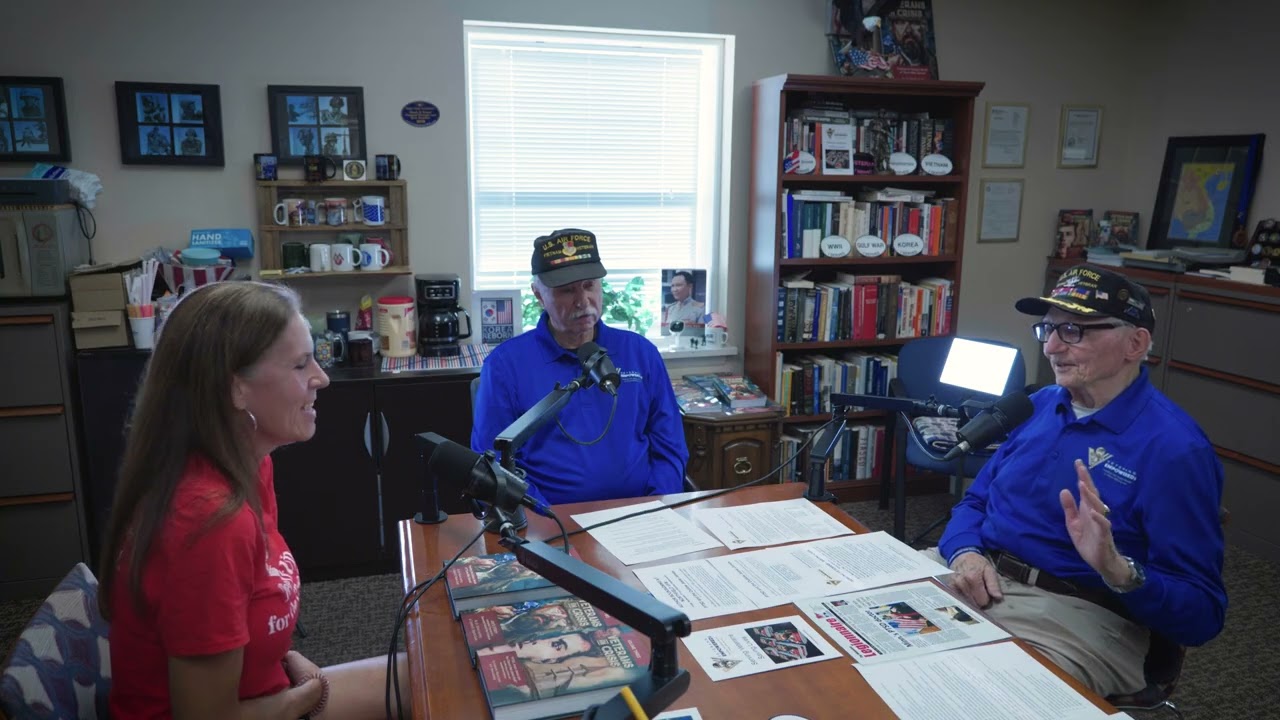
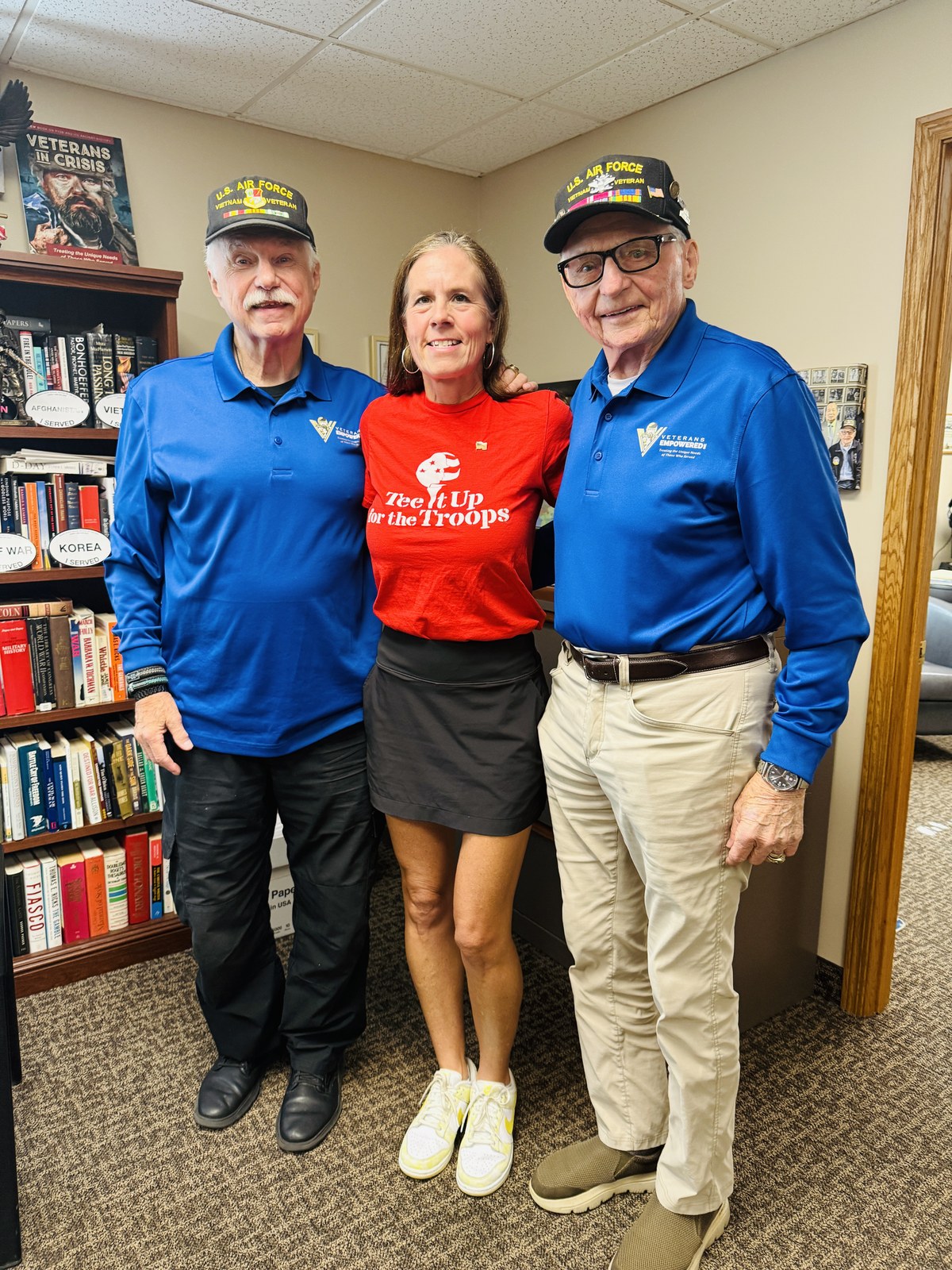
Hello everyone. I'm Karissa Dunham from Shining Light on Minnesota. We are actually in Rochester, Minnesota today with some very special guests. I'm very humbled to be here today. I have Colonel Wayne and Dr. Steve with me today. Let's get started, gentlemen, young men, and tell me your story on why we're here and how you got into your roles and what everything is about today. Well, I guess I can start because it's probably important to let people know how I met Steve because it was that genesis that produced three books in our Veterans in Crisis series. I was introduced to Steve four years ago following a car accident. Okay. And the result of that were bringing back all of what happened in Vietnam. Mhm. I had stuffed it for over 50 years. I had told no one. I told did not tell my commander or the flight surgeon. I was a flyer in the Air Force. Yeah. Didn't even tell my wife. And it all came out and Steve began seeing me every Tuesday at two and we still continue to do that even yet today. Absolutely. And as we got into it, oh, probably after about six months, I had amassed the library of PTSD books that you see on the wall. Mhm. And I kept telling Steve, you know, I'd like to find one volume that gives a history of PTSD going back to the Bible and the Greeks and the Romans and tell the stories of soldiers through contemporaries. Right. And so together we wrote volume one and released it on Memorial Day last year. Yes. And then because history is storytelling, volume two was a natural to uh follow. And that's a true story of a World War II veteran who was in Patton's Third Army during the Battle of the Bulge. He was my uncle. Wow. And he was a product of the Owatana orphanage. And we'll be going over to Oatana on the 18th of October for a full day of activity for the entire community. Amazing. The Legion, the VFW, the historical society, the VSO, the mental health workers, the churches are all pulling us uh together and we'll be at the old orphanage to tell Joe's story. And then volume three just was released, which because of my background coming out of Northfield in St. Olaf, I had written quite a bit about the Northfield bank robbery in 1876 by the outlaw Jesse James. Y and I said to Steve, no one has ever done a PTSD assessment of Jesse James. Let's just do it. Right. And so that book was will be released on Amazon this weekend. Wow. Just in time for Northfield's defeat of Jesse James Days. And we'll be there on the 6th and 7th of September. Amazing. So what do you see? I mean obviously you deal a lot with PTSD and talk about the history that you see. Well and that was one of the amazing things um as a therapist u cognitive therapist. I give people homework assignments and it's interesting to those adults listening to this uh you hate homework worse than your kids do. And so with Wayne, I threw him a bone to bring back a whole animal. And so we started with these homework assignments, some of which I knew, not as much as I do now, but some of which I knew that um you know, throughout history and even though PTSD wasn't officially in the diagnostic manual till 1980, when I came back in 1970, I had it. nothing changes because some books said it was real. Uh, and all those things I'd have been experiencing, the nightmares, the flashbacks, the uh, triggers that went off and things like that. I knew a little bit about with World War II with Audi Murphy and Jimmy Stewart and some of the things within there. I knew about Shell Shock in World War I, but we went back even farther. And when we give talks sometimes, I talk, you know, who's Socrates? Well, he's this philosophy guy. Well, before he was a philosophy guy, he was a combat infantryman for 30 years in the Athenian army. But that's the kind of the journey that that that we started. And we we saw the need when Wayne first came here. He said, uh, he didn't believe PTSD was real. And you know, the old oldtime people, if you ever seen the movie Patton or Patton's in the Medent, this guy says, "Well, I've got a nervous breakdown." He says, "You're nothing but a coward." and hits his head, knocks his helmet off and all this other stuff. And um you know that kind of thing progressing forward. So little by little and even though Wayne started out as as a patient of mine, we collaborated together to to put this book out that again touched out to thousands and thousands of people. And it's amazing. We I think we're in all 50 states now. Yes. Uh with very little marketing, very little of what's out there. And um for example, the other day um a couple days ago, I got a call and this lady said, "I found my son's backpack and your card was in it and she's in San Diego." And so I talked with her about an hour and gave her some resources she could work with. Where's your son? He's in Oklahoma. I have no idea how my card got in his backpack in Oklahoma from here. But but it was meant to be and and it happened. And you know, every day we we run into some of these kind of miracles um that is is out there and one person at a time and that's that's really the key. There's tens of thousands of people right now. They're out there suffering. Well, we're here doing what's the most important thing, which is reaching a message of help and hope is available. And that and that's that's that's what we do. And that's been my entire career. I've been in the mental health field for 52 years now. Uh there are people out there that every night go to bed praying for somebody right to be there and if we can be part of that somebody and you know we're honored to be on on this broadcast because every person that hears this yes understands that I'm not alone right and uh there's this bond that vets have but there's also you know I say vets are my brothers and sisters first responders are are cousins from the same crazy family. Yes. And um you know, we've talked first responders. I've had firefighters in in therapy that talked about, you know, some of the horrors that that I got to see in Vietnam, right? Um and every other war that takes place. Uh police officers the same way. And every day, you know, our battlefield was 15,000 miles away. Every day, first responders go out of their house into their battlefield that's in their backyard. Yep. And that's an amazing kind of thing, but that's the nature of of the folks that are out there. Karissa, let me add a footnote to Steve's story that he hasn't told. Yep. I didn't realize it when I first met him four years ago that he was about to sell his uh his clinical practice. Okay. And when I learned it, I said, 'What are you going to do? He, well, I don't know. Said, 'I've got an idea. Let's form a company. Yes. A nonprofit. And Steve thought about Yeah. We'll call it Veterans Empowered. Amazing. We'll use it as a platform to raise money to publish our books. Yes. And he and his wife, Anne, who's a certified mental health registered nurse professional. Yep. Work together as a team providing free therapy, couples therapy on Mondays and then individual hourly therapy sessions throughout the week. And he's done 1,200 sessions in the last year. Well, my sidekick Cliff and I travel around the countryside giving talks and delivering our books and pulling what we call a willie. Yes. And I can tell you what a willie is sometimes. Yes. Tell tell everybody, Steve, a little bit about your history. Obviously, you're you're a veteran, right? And you're a doctor. You studied psychology. How many people have come from the veteran side that actually study psychology and get into the mental health world? Well, you know, sadly enough, and the official number is one out of six therapists are veterans. And I think there's two or three just in Ro, and we get a lot of therapists in Rochester. two or three that are veterans. There's one probation officer that's a veteran and you know in social services and I know your brother's a social worker. Y u I don't know what what it is there but it's got to be the same number. A friend of mine who's a professor at Mano State says it's actually probably like more one out of 20 and then 85% of the mental health professionals in Minnesota are in the metro area. So we're down here in rural Minnesota. there's not a lot of us that are taking place. But I started out going back. I grew up in uh upstate New York. Uh small town, 11,000 people. Uh when I was 10, my dad developed cancer. And so I had to learn self- resilience at that age and have jobs and things, but did sports, went through and um sports and recreation were my main focus. So I just barely graduated from high school. Went to college. um if you don't show up for class, you don't study, you don't open books, don't write papers, there's a very high chance of you not staying there. And so after two semesters, they said, "You look tired, take a break." And since I look good in blue and as you can tell, since I look good since I got looked good in blue and liked airplanes, um you know, going back to when I was in eth grade and seeing the Blue Angels, I joined the Air Force and I was going to be an air traffic controller and they had otherwise plans. They said, um, you know, I scored high on the on some of the tests and they said, we we're looking for intelligence analysts. And so I went through training in, uh, St. Angelo, Texas for almost a year as an intelligence analyst. And then went to the Philippines and spent over a year there. And then because I didn't want to go back to headquarters company, there was a lot of things that were not too much fun like inspections and parades and and all of that, I went to Vietnam and spent two years there. While I was in Vietnam and I was going to go back and I had a job offer with the NSA, uh, my unit worked with an orphanage that was in Saigon. And these were kids who had seen their moms and sisters raped and murdered, their dads beheaded, their villages burned. Tremendous. You talk about, you know, early onset trauma with with children. And we would go down there and these kids would sing for us and they'd bring us cookies and we'd have stuff sent from home. It was a orphanage run by a group of uh Franciscan nuns and that lit a spark in me and I said well this is much better than going back and you know keeping work as an intelligence analyst. So made the decision to go to college, wound up going to, of all places, Debuke, Iowa, uh something called Loris College, uh majoring in sociology, psychology. I thought I was going to be a teacher at first. In 1973, there weren't a lot of teaching jobs and so I wound up uh working with a residential treatment center for severely severely disturbed, damaged adolescence that was there. Uh six months in my wife and I took over. So they opened a second house. took over as livein house parent directors which is probably a lot more stressful than Vietnam was right and uh and I went to graduate school at the University of Iowa and it kind of evolved from there when I got done with graduate school um that I became a school social worker working with the kids that none other teachers wanted and they would bring them down and these were kids again that were damaged from alcoholic households and and incest and just a whole plethora of things that were were within there and that's what I did for a number of years. In ' 86, I moved to Rochester to work with a suicide crisis line as clinical director. And one out of six calls that I got were from veterans. Well, I mean, excuse me, one out of three. And these were guys that had I don't know how they got some of these guns home, but they did. I couldn't get my survival knife home, but you know, and and and the same kinds of stories. And I had I had no realization because I went underground in 1970. Uh this hat I'm wearing would have literally probably got me killed, right? Um, it was a real dark time to be a veteran. Yeah. And I started hearing this. This was in ' 86. Well, a little bit earlier in ' 84, I'd gone to a conference in Washington and got to see the Vietnam War Memorial. And in the middle of the night, something woke me up and I walked through Washington, which I hear it wasn't too safe where I was was, but uh, sat for two hours in a thunderstorm in front of that wall. And that's when the healing started for me and coming back. And then 87 I was asked to do a talk at a conference at RCTC and they said can you do something on and I was going to talk on suicide and veterans and you know every day the the official number is 22 a day it's probably more like 40 or 50 and every day um I'd get a call and so I said yeah I can talk about suicide and they said oh by the way we need somebody that's got some experience speaking that can talk do the keynote on post-traumatic stress disorder and I'd heard about it but I didn't know a whole lot about it right so they gave me a brochure from the DAV and it took me probably two weeks to put together a 15minute talk because every page I opened was like looking in a mirror, right? And that kind of set the light. So that conference I told the story that I just shared with you about the wall and uh it just kind of took off from there. Um, and then again when I left this was I've been working at a practice for 25 years uh called Empower and we we worked with veterans. We worked with addictions. We worked with a lot of different individuals. And then when Wayne and I connected, it was a matter of hey this this did turn on another light almost like the one that was turned on in that orphanage in Saigon. And um we decided to take on this mission. Um, you know, I put a lot of time and energy and money and all this getting to where I am with my clinical skills. Not going to let a calendar tell me when I'm supposed to stop, right? So, we we did this and uh we got this beautiful office and uh people started coming in and like I say, we get calls from from all over like the one from the lady in S, you know, San Diego and I may wind up talking to that person because we have, you know, a HIPPA compliant version of Zoom. So I can do tele medicine if I need to. But the point is is is is finding these people. And so where do we're now? Uh I see about 20 to 25 people a week in therapy. Uh we've talked to maybe 10,000 people in, you know, in the last year. U Cliff and Wayne have gone driven the miles delivering books and stuff, but reaching out. And how long are we going to do this? As long as the good Lord lets us do it. And that's that's what it comes down to. Steve and Anne have got a fourth volume coming out. Yes. Probably next year. Okay. And Steve can tell you a little more about it, but it's called The Blank Check. And it's focusing on the family, right? On the spouse. Amazing. And and what the spouse endures living with someone with PTSD, right? We have a PTSD support group that meets in Rochester. Uh we met last night at the VFW and these are all veterans with PTSD in various stages and it's remarkable how the group works and how the group has sort of forms a personality of its own and people are comfortable there and they'll open up and tell their story and our books have been very very helpful to all of the members and We're trying to form PTSD support groups in the various communities that we visit telling our story and distributing the books because you also have a book called PTSD, the history of PTSD for people that you distribute. And I know that since I've gotten that book myself, I have multiple people that have reached out to me that have now come out and started talking about their own version and what they have that they haven't even talked about themselves. then hey this is something that I feel like I might have or I want to know more about it from the history to see if I have some symptoms myself. You know it kind of pulls a little bit by little bit out themselves. The first book Steve gave me to read and study was a book called The Body Keeps the Score by Dr. Bethl A. Vander Coke and I recommend that to everyone as a primer, but it too is even in some ways too clinical and and too difficult for some people. It gl their eyes glaze over reading a lot of the clinical stuff. But in my case, it opened up such windows that I had never dreamt right existed. The Air Force had a leadership program that I qualified for. Uh this was before I went into the Pentagon in the 70s. I was in Vietnam from 64 to 68 and then started a Middle East career that lasted for about 10 years. uh coming out of Vietnam in 1968. And when I got just before I went into the Pentagon, I uh was sent off to the University of Southern California to get an advanced degree in leadership. I knew something was wrong and my coping mechanism was alcohol, right? I was very careful how I managed it. A slippery slope and a real slippery slope and all of my my mentors were World War II veterans, right? And the attitude was, "Oh, hell, we've all got problems. Just have another drink and it'll be buried in. You're told that you can't talk about things. Just Yeah. Dig it deep." Yep. And sometimes at the bar late at night, things would come out. Mhm. But then, oh, that's just drunk talk, right? So, what did I do? I went to USC and they gave me several alternatives and I got a master's degree in psychology. Amazing. Trying to understand what was going on in my mind. Y I finished my masters in 1970, way before PTSD, right? and none of my professors, you know, opened up any doors, right, like Steve did many years later. So, because I think with with the military and PTSD, you're kind of told you can't talk about it, right? It's one of those things you keep quiet and and it's the same way even even with first responders. And uh you know I'm part of an EAP that serves called San Creek that serves municipalities and we've gone there and I gave a talk to all three shifts the fire departments a couple years ago and you know that was one of the questions. If you go for help does that mean you're weak and the opposite is true. The people that have PTSD are the ones that could endure what others most others can't. Right. And and that's that's that's the re real secret there. and that it's a medical condition and one of the things that we talk about in our book and the book was written you know professionals could get a benefit from it but it's it's something that uh is is written so that people that say I'm crazy I'm broke I'm something wrong with me and this no you have a medical condition and this is what it is that literally changes the structure of your brain it's it's deliberately written at the 10th grade level right and we we use some of the form format that soldiers are comfortable with in so that they can understand in military manuals. Yes. And and so it's it's bulleted with simple points. We tell people it's a different sort of book. You don't have to open it and read it from page one. You can pick up where you're at. Pick it up to any page and you'll find something helpful. Yeah. one one of our other uh people on our board who's a 22-year retired green brace is it's like a PowerPoint presentation that we we got along there and and that's the idea of okay how can this something you see hits you that makes sense and even you know spouses that are reading it now and Wayne talked about the the blank check comes from there's a a poster that said when you join the military you write a blank check payable to the United States of America up to including the cost of your life that never goes void. And what they don't talk about is that check as a co-signer. Y and my wife and I have worked with a few hundred vet couples and I've had a lot of wife say, "I knew what I was sending away. I wasn't prepared for what was coming back." And there's what's called transfer trauma. And transfer trauma relates to how my PTSD then spills over and makes impacts on you. Changes your behavior because you have to make excuses for me when I can't go to parties. you know, I don't want to go to parties because there crowds and it trigger something or this is what's going on and my behavior and I have to make sure the kids don't upset trigger daddy because daddy's got well the civilian life when you get back is not what you're ready for and it's it's a parallel dimension and you know like we do talks we talk about that I'm going from militant you know like the metaverse that they talk about on one of the superhero shows the metaverse you go in the military from the second you step off the plane onto that tarmac you learn a whole new thing, you know, 16 different verses. Use uses for the f- word, you know, right? Absolutely. But then you get this whole different way of thinking. And you can tell military people in in settings by the way they carry themselves, by the way, the respect they show and everything. And in the eight 10 and a half weeks that I went through basic, that was constantly drilled in. And then when you got out in the field, it was the same thing. Yep. And that's what you bring home. Unfortunately, home isn't ready for that. No. And they think, "What's wrong with you?" And that's what we deal a lot with people. As I mentioned earlier, our number one mission is suicide prevention. Correct. And we do that through therapy and through our publications. Steve was talking about how people are afraid to open up. Yeah. Will they lose their job? Right. What we've observed in several communities around Rochester is that when a suicide occurs, when someone takes their own life, y and a fire department or someone is killed, a police officer is killed, or in the case where we've had two of our veterans commit suicide since last fall. Yep. Just this week, one of Steve's former clients, and when that happens, it has a tremendous sobering impact. Steve was called into Mano just a couple of weeks ago. Yep. As a result of a veteran suicide, right? So it and when that happens, then the community opens up even more, right? for ideas. How can we stop this from happening next time? You know, like why don't we why don't we pull together? I've been able to make contact with several school psychologists, for example, and leave volume one with the psychologists, particularly the elementary schools. Yep. In the event they see problems with children because Steve talked about transfer. Yes. And is there a veteran in the family? Right. Absolutely. And yeah, and back back in the day when when I was a school social worker and I mentioned earlier, I you know, teachers would literally bring kids down my office to say, "Here, fix him. He doesn't care. I don't want him back until you fixed him and, you know, really smashing this kid's self-esteem." But I used to do an exercise when I do talk about suicide in schools and that was a big thing back in the in the 80s was I think Mano was what they had a cluster suicide where you had five kids within that same school system. And I'd asked a question. He says, "Okay, we've got a grant to train five people in your school system in suicide prevention. Who would those five people be?" And they'd say, "The principal, the counselor, and all these other things." I said, "Wrong answer. the art teacher, the creative writing teacher, the people in the lunchroom, the bus the the bus drivers because they're invisible and and that's the ones that picked this up. And I I went into a school one time we had been a suicide and I said, "We had no signs." And I looked I says, "Can I see this kid's artwork?" Mhm. And it was there like a like a neon light with the type of things that were being screamed, not just shot, but screamed out. And and that's the part of what we do. And it's it's amazing. You know, we've learned um you know, there's something called your your your dominant thought, and if your dominant thought is there on whatever it is, you see more of it. Um I've miniature schnowzers when I got my first one, they started popping up all over the countryside. Yeah. Like mushrooms. And they were always there, but all of a sudden you notice it. So with what we've done and we happened to go down to um to Austin to VFW that had contributed to us earlier and given our third edition and the head of the VFW had said, "Oh, by the way, our executive officer last week committed suicide while we were there. We just you just accept those things." And that's when my wife Ann and I a month later they had a family day out in Mano and we went out and talked about the impact of suicide on intimate relationships and had some real real good receptivity there. We never would have been there if we didn't gone down to Austin and found out what was going on. So you just keep the radar on. Yes. And opportunities are there. They emerge and you just got to get the word out. Got to get the word out and know it. And u you know there's a quote I read somewhere if you're not ready when opportunity knocks you're going to look like a fool, right? And so we try to be ready. We have books in the car. I have cards on me and I run into people and grocery stores and Cliff and Wayne when they're out there and stuff like this. So a lot of my cards are out there. So So who knows how that one made its way to Oklahoma, but it did. How important is it for when people are in their transition from getting out to normal civilian life, if they're going and don't have anybody else, they go and live alone. Like they don't have those stories to tell or anybody to talk to. I mean, that's where the difficulty you see a lot of times too, right? They go from there to I've got to live alone and now try to transition. Well, it's essential and it's it's better than it was when I got out. Yeah. I went from being in a war zone to drinking a beer in a bar in downtown San Francisco in about 66 hours. My transition was there's the door. Catch the bus. Goodbye. And nobody's welcoming you back. You don't want to be here. It's it's Vietnam time. Like get out of here. I wasn't ready. I had a flight attendant pour a drink in my lap and called me a blank and baby killer. Friend of mine spit on you and everything else. Yeah. Friend of mine fell asleep. Um well, you know him. He's the one that does the bell. Mhm. And he was getting out of the Navy and he fell asleep in the airport in O'Hare and he woke up and two guys were pissing on him. Yep. And you know, he had to deal with it. And so that happened to a lot of it. Well, now there's transition things and you know, and that was it's better, right? It's getting better. And you know, but it's still got a long way to go. And the public, you know, I wear this hat out and I same way with Wayne, people come up and they say, "Well, thank you for your service and and all of that." And I say, "Sometimes some vets like that, some don't." Right. Uh, I appreciate your service. You know, no matter what you did, you put your life on hold for 2 to four to 6 to 10 to 25 years. Y to serve this country. Yep. When only 5% will ever serve. That's what the numbers are right now. And it's it's been a little higher, sometimes lower, but that's it. Y 90% nine out of 10 people will never raise their hand, sign that blank check, and serve. And right, that's their choice, right? But it's it's much much better than the Vietnam era. I mean, the Vietnam era was was really really difficult. Tell your story a little bit about your Vietnam. It it changed um uh with the Gulf War. Mhm. And the dramatic uh events that surrounded both Desert Stormman and Desert Shield and um today uh it's very opening and there are so many veteran groups. The VSOs, the veteran service officers in each of the counties y throughout the United States are the key focal point. But we continue to meet people that aren't in the VA system. Right. They were given a quick briefing uh when they were discharged but uh did not follow up. Or how is the VA now like with medical records and finding the medical records? I mean, it's just one of those that you you just don't know. There's it's still really convoluted and when you get to the clinicians, it's usually pretty good, but there's still I call community care. I have to go through seven layers with the same initial message and and you know, my VSO friend and Wayne talked about VSOs. Uh, one of the first things when when I learn about a vet, do you know about VSOs? Vet service officers are veterans. VA the VA most of the people the VA and and and God bless them they do some amazing work but VSOs have to be veterans right and they know the deal and they know the benefits and they're the tip of the spear to get benefits it took me 50 years to get I'm at 80% right now Wayne's at 100 it took me 50 years to get my first rating right and because in 1977 I was told well just stop drinking and you'll be okay and there was more to it than that you know the PTSD again in 77 it was still three years away from being official But hooking up with VSOs is finding that happening and it's amazing. Uh one of the big surprises is how many people don't know VSOs exist, right? And or what they are even what they are that they're there that they're the ones and they got they got the you know I could with my mental health experience and in counseling training I could do 80% of what they do tomorrow. The other 20% would take me five to 10 years to learn. Right. And uh you know the one that both Wayne and I work with, Jennifer Schumacher, who now works for the state of Minnesota, I know who she is. Uh she's amazing. And uh you I wrote a last book when I signed her last book. I says, "After my daughter and my wife, you're the woman I love the most." And she laughed at that, you know, cuz a lot of vets would say the same thing. She's done a lot. Yes. And she's the one that got me my initial rating. Now she works with Department of Veterans Affairs, but she still works with with benefits and helps helps people like like Wayne and I that go through there. But that's that's the first step and then turning the light on and finding resources. And you know, we had a guy Wayne talked about earlier that that called us and uh he had just gone out of prison in Texas. He'd been spent six years down there. Um had what they call an other honorable discharge because of some, you know, shenanigans when he was in the Marines. Yep. And but he he knew nothing about was there. He had no ID. He had no benefits. He had no connections within there. So he called us. We have a friend by the name of Lance Garwick who's head of Yellow Ribbon Beyond Yellow Ribbon in Redwing. Found this guy a place to live for then. And we got in here. We got him VA hooked in a system there to at least get him cuz with an OTH you can at least get some medical services. And we're working on upgrading his his discharge because the OTH he had four years of really good service and then it went off the rails. Why? Because of certain trauma that he experienced when he was in both Korea and Thailand. and he's now living, you know, MACV, which is another resource. They got they got a house here in Rochester and he's living he's living there and he goes out and he does outreach work for us with the books and he finds people wandering around the streets and and gives them a book and talks and gives them our cards and things like that. And that's that's been and that's just just one. We ran into a guy um DAV does a benefit or recognition thing out in Kassen every year with a barbecue and um you know I I see people with with this you know Vietnam vet hat and you know when were you there and if they say I was there before I says well you're the ones that riled them up before I got there right and if it was afterwards they says well I was you know at this and oh you were there the same time we got drunk together in the same bar in Saigon you know and and and we talk and this guy was like I'm 78 and this guy's about a year and a older than me and he had the Vietnam hat on and he didn't know about any of that stuff. He was there because he heard there was this thing at the fairgrounds and barbecue together stuff. And so he comes over and I talk to him. We give him a book. We sign a book. He sees runs into Jennifer. Jennifer goes, she says, "You need to talk to Doc." So brings him back over to me and you know little by little he comes in and you know we set up an appointment. He called me. We set up an appointment. He comes in and I did an evaluation. He says, "Well, I don't have anything wrong. I was a cook, right?" I said, 'Well, tell me about that. And he said, 'Well, uh, you know, he's in a place called B Matua, which is right on near near the Cambodian border, and rocket attacks almost every night, mortars and things. And, you know, one night he's in the bunker and he gets up to call nature and he goes in and these rockets, three, walked in, one, two, three, each a little bit closer. The third one went off, blew him through the air, back into the bunker, knocked him out, concussion, um, burned his back, a number of things. week later, he gets out and he's in the store room for the for the kitchen and he finds this bag of flour, this piece of uh of shrapnel about this big. And it could have hit him if he was in there. So, so I do my usual, you know, I have several different tests that I do that when I evaluate PTSD, it takes two, three hours. And he was up there and, you know, I did a full diagnostic and Jennifer submitted and through. And long story short, this guy now is at 100% disability level. After 55 years of thinking, well, I suppose this is the way to cook. This is the way it is. The way you're right. Exactly. This is the way it is. This life's supposed to be. And then, you know, we had a few sessions with him and his wife to help educate her on what PTSD was and what goes on. And, you know, things have taken a big 180. And he's I don't know how many, you know, he's 79, I think, going to be 80. uh how many years left, I don't know. But whatever they are, they're a little bit lighter because not only does he, you know, get these payments now, but he's got a support system, right, that he didn't know existed and that it's out there. And again, these are people my age and the cool thing with the PTSD group that Wayne talked about, you know, you go to most of the service clubs, and it's very rare to find people um in their 30s and 40s and things. And the guy that's the commander down in um Austin is such an individual, but most of them are people that are older. And our PTSD group, we've got three, four, and you know, thinking about who was there last night, we've got three, four that are Vietnam era. We've got uh you know Kosovo, we've got Iraq and Afghanistan, right? We've got that whole gamut of people, but all that common bound is we were signed that blank check. We raised our hand and and this is this is where we're at now. And Jennifer's done this group for 15 years. So, it's a longstanding group and I've been involved with it since, you know, probably about 12. And um it's just incredible and it's a it's a special time. I I go there as a participant once in a while I have to put the doctor hat on but you know I go there and it's it's one of the things in my healing and I know Wayne's experience that and the people that we have there. A lot of the vets um aren't joiners, the young ones. Yep. Coming out of Iraq and Afghanistan, a lot of them are just toughing it out. Uh many of them know about the VA system and are in it. And what we've found is that uh when we see a hat, when we see a vet or we're at an event, y reaching out. The other thing is our website has been very effective. It's www.vetsowered.org oorgg and there's a lot of information on it and there's ways through the website to contact us also buy the book if you want us right give a book to a vet and that's what we encourage people to do the books are also on Amazon amazing and um all three volumes when we're at uh Northfield on the 6th and 7th of September Friday and Saturday all three volumes will be available three volumes. Three volumes for people to buy and Yep. Absolutely. And or they're $20 a piece. We've raised um a little over $100,000. Amazing. And we've invested about $150,000 and we've published close to 20,000 books and we've given half of them away and a lot more to go. So we need another funding, right? another $50,000 to reprint our volume one. So, you can keep giving more away, which we consider our Bible. And yeah, that's that's the the cornerstone. And the other books will come out of that and like you can keep helping people if if you can get the funding to keep printing more, right? Yep. Yep. So, either that or we just go out with our Kindle and hold it up and say, "Here, read this. Here's a projector. Let's let's have a movie night." Right. Yeah. No, cuz it doesn't cost anything to go out and approach people. And again, everywhere we go, you know, I'm my wife and I are packing up the car from grocery shopping. Uh my current addiction is called Fuel Saver that has go. So it's a coupon night, you know, for for 48 hours you get 20 cents or whatever. So we went and stocked up and as we're leaving this car backs up and the guy's got a Vietnam vet plate on. Mhm. So I, you know, bring him through and it's just he's backing up and going this I'm doing you know kind of this like this and then this when he's when he's close close enough and he gets out we get talking. He goes, "Well, I thought you knew that." And he was an Air Force vet. We've been on a rapid response force um you know um after during the the Pueblo crisis which is the Navy version of what I did in the Air Force and we got talking and you know my wife God bless her she's very she's learned that if if Steve runs into a little bit you talk a little bit. Yep. and and you know and she was um you know when I when I got out I was triggered by thunderstorms and she was the only one that really understood and I've been really blessed by having her for 53 years as my wife. Amazing. So this guy and I get talking. We go, "Oh, yeah. I was here and I was there and I remember doing this and you know and and I gave him a book and you know we because I carry some in the car and and it was that kind of contact that I didn't know this guy existed and you know I'm in Panera last a week ago and this guy's got a Vietnam thing and the guy's wife comes over to my wife and she says, "Yeah, well we're used to it." You know, and he I again he was in Vietnam about the same time I was. He was in the army and uh you know we had really good conversation. It was the same kind of thing and he was here from Phoenix, Arizona to go to the Mayo Clinic. Yep. And so he was you know just the chance we meet and you know sometimes you wear this hat because we find each other. Yep. And not because like oh I'm cool. I was in the war and I was things like this. You just want that support. We want the support. We want the recognition so I can find though a lot of times vets know vets. Yep. You got this radar and you want to be welcomed. Like you want the welcoming. I know one thing with my dad, like he's taught all of his grandchildren, no matter what you do, when you see someone wearing a hat, you say thank you. You put your hand on your heart, you say thank you. I don't care what what ranch they're in where they served. and and that's happening, you know, and um you know, you look at the shift and uh you know, anywhere you go, you run into somebody and they're young people, older, middle-aged, and and and and they say, "Thank you." And that's the one message. And how you say thank you. Again, some people like, "Well, thank you for war service. I you know, I was had a job, dude, and I did it." And it says, "I appreciate you. I appreciate the sacrifice you made and and and what that means to me now. Yep. Living in America. Absolutely. I appreciate you. One of the messages I'd like to leave with veterans and others that are listening today is to tell them a little bit about what some of the ancient writings Yes. say about soldiers suffering from PTSD. The ancient Greek playwrights were all generals in the Greek army. Okay. And going back to Homer in the Iliad and the Odyssey and and individuals saying that the wise men learn from things many things from their enemies. Ajax was written 2500 years ago in the 10th year of the Trojan War during a century of plague and war in ancient Greece. Homer writes, "Nine years had passed in constant fighting. He could no longer remember the man he was before the war. His best friend, Achilles, was dead. Ajax had carried his dead friend off the battlefield. horrifying flashbacks, unreality, no one to share his sorrow. Why am I here and he is not? He could not distinguish the enemy from his wife and child. All he knew was to suck it up and sold Giron. He reported to his commanding general, Agamemnon and Menaaus. They betrayed his trust by honoring Odysius at Achilles funeral. And in desperation, Ajax falls upon his sword. Amazing. Yeah. Through history, right? Writers, contemporary writers recorded what happened to soldiers. And we want to let all of our fellow veterans and their families and others know that what they are suffering how they feel is nothing new. Right. Yeah. And culturally, um, one of the honors that we've had, uh, there's a group of M in the cities and they're part of what the SGU, the secret guorilla unit that fought in Laos and Cambodia and Vietnam during Vietnam, Vietnam war. And then when we left, we just left them. We just pulled the plug kind of reminiscent of what happened in Afghanistan. And so there's about 230 of them up in the cities that that are still left and they're like our age and so they're not a whole lot of time. So we went up there and did training with them with an interpreter and uh there's a second generation uh lady who's M who's a Ph licensed psychologist and she translated some of the clinical terms that you could translate. Y and um you know and when we're done and they had an interpreter and I had a a slide up there with the the simp the characteristics of PTSD and the things you look for and this guy mumbles you know he communicates something to his translator in in m and the translator says yeah he said that's me and so here's a man of a different culture a different time different a whole lot of things absolutely and the culture the the timeline everything all those change but the impact to the brain, it also line up is the same. And if we could bring Socrates here and I could do a PTSD evaluation on him, it still would all line up. It would line up with what I have is with PTSD and Wayne has and how many other people have it and they just don't tens of thousands about it, right? And you know, and that's the part and this guy who's, you know, like I say, two years older than me had no clue. He just thought his life was supposed to be like this even though it wasn't the like this that he really hoped for. In the case of Jesse James, I've showed Steve a number of observations by contemporaries, right? And with that information, Steve was able to do an analysis. And even this day and age, like people my age, like they still are coming forward and I don't know if I have it, if I don't. Yeah. Is it is it PTSD? Is it just a normal walk of life? Am I even able to talk about it? Is it is it what it is? You know, just dealing with everyday life and there's specific criteria. And one of the bad things about more visibility is it's become, you know, what clinicians some call flavor of the month, right? Uh I had a tough teacher in college. I have PTSD. U my my girlfriend cheated on me. I have PTSD. No, you don't. You have something else. It doesn't say there isn't a condition that's impacting you, but PTSD has to, you know, there's five criteria and criteria A says experiencing or witnessing death or close there, hearing about it and there has to be that or sexual assault, right? And if those characteristics on criteria A which is a stressor, the other other ones don't come in line, right? But going back and PTSD when think you know now people think of it in terms of veterans, right? at first responders, assault victims. I mean, you can go on down the line as long as that criteria is met. Y and you know, that's the other part of and it's it's a medical condition. I wouldn't hesitate to talk about diabetes or high blood pressure and yet because this involves and it's not just with PTSD, it's with mental health in general. there's a stigma. And one of the things when we talk to people, and I've got some pretty rough edged, hardcore going into battle, you know, tough tough tough guys and tough women and and and they say, "Yeah, and the best thing, you know, I've got one guy who's a Marine artillery man." And and he he preaches the gospel of therapy is important. Mental health is important. It's the real deal. And uh and this is a guy if you look at him, he could, you know, break a telephone pole in half with his bare hands. Well, you're on the front lines. You're seeing things. You're not. Y and you know, one of the things, you know, last night our topic was was something uh called survivor guilt. And you know, even the Greeks, you know, Ajax suffered survivor guilt. And you know, that's something where why am I here and they're not? And that's a real thing. And you couple that with another thing called moral injury. Mhm. And the two put together is an accelerant for PTSD, right? And you know, makes that fire even hotter and brighter and stronger. And so when you go back and you look at it, and there's a very good example when I do talks of being in the movie American Sniper. Yep. And Chris Kyle, the very beginning of that has to shoot an eight-year-old boy and a woman. and and and well they were had a grenade they were going to throw at the at the the convoy and you know when I show that to civilians they cringe and they say how could he possibly do that was his job that was his mission and if he hadn't done that you know then look at the outcome the convoy would have been injured and when I was when I was in Vietnam uh there was a young kid with a with a bicycle that had C4 attached and laned it up well he laned it up against the side of a of a Quanza hut that was metal and it was it was a mess hall and the other side was aluminum mess trays and they became missiles when they blew off killed 50 people where the 8 10 year old but you see that and you watch his facial expressions in the movie and and he does a great job that you know the star guy started the movie and it works on them at the moment you deal with it it's a mission it's what you're supposed to do and then you go home that's what you're trained for but then you go back to regular life thinking, "What have I done?" And good friend of mine by the name of Tom McQueen is a hospice chaplain down in Florida. And they had this guy that was 97 years old, was on Omaha Beach during D-Day where 8,000 were killed or wounded in the first 20 minutes and went through the wars in Europe, been through all the toughest toughest battles. Now he's got two days to live. And he calls my friend over and he said, "You know, I shouldn't have killed those people. They had families, too." And every combatant that a warrior has to engage y had someone who loved and cared about them. But that's the nature of the war. And at the moment you get through it. Yep. And then you go back and you start thinking the remorse and the demons start flying around inside. And this guy has had these demons for 75 years flying around. So he says, "So why is grandpa so grumpy? Why is he so touchy? Why is he so there?" Well, let's take a look at again in trauma-informed care, which is something we do, is know what's wrong with you? What happened to you? Tell me your story. Tell me those events. And with this guy who were trying to get his discharge upgraded, was forced to not stop other Korean troops from from executing these two adolescence because it would have caused an international incident. Well, that's a sinful mission. That's part of one one of the types of of moral injury. Another guy that was an artillery man launched a shell into the living room of an Afghan family, killing the whole family. He did exactly he got bad coordinates, bad intel. But that's a sin of commission. It's something I did. I did my job exactly as it was supposed to be, but the outcome was was still the same. And that's the kind of job. And those are the orders that you were given. Yeah. And that's what vets go through all the time. And so we we start talking in therapy and what do you do in cognitive therapy? you know, it's thoughts, feelings, behaviors, outcomes, and there's a lot more to it. You know, the core beliefs is this foundation of thoughts and feelings. And what's your core beliefs that cause your thought to generate in this way rather than that way? And and so we work with that and we give them tools that uh you know, helps them. You don't cure, heal, fix PTSD. It's a chronic condition, but you learn to manage it, right? And and that's what we teach people in therapy. That's what we talk about when we go out and talk to groups and other things like this and and and those tools are there and there's some incredibly good tools and you know back Audi Audi Murphy and Jimmy Stostein they did 1900 labbotoies. Yep. Which turn people into zombies. And I I have a clip a 10-minute clip of this. There was a man from Lacrosse, Wisconsin. There was one of these 1900 and he was a bomber pilot. He came back and he was having, you know, psychotic episodes and, you know, nightmares and all this. And now he walked around the town and he went to the, you know, he's just this quirky old man who came in and read the newspaper, had lunch, the same thing every day and all this, but then you learn a story, right? And you go back and look at it. Well, now they've got some different stuff. There's really no medication for PTSD, but there's medication that can work with the symptoms like depression, anxiety. Well, now they're doing some things and they're trying um even things like MDMA, which is this um ecstasy and psilocybin and they're doing some things with hallucinogens. They're also doing some things with magnets and they're doing some things with because your brain is an electrical device and so hopefully research is going to continue on and and and start to look at what's working there. Um right now there's only three what they call evidence-based therapies uh to deal with trauma. There's about 400 different techniques and schools of thought like this. Uh but the one I use is something called cognitive processing therapy where you deal with stuck points. You deal with the things are keeping you stuck. Uh both assimilated stuck points which say, you know, good things happen to good people, bad things to bad people. Bad thing happened to me, I must be a bad people. And so not only does that deal with how you feel in the here and now, it also deals with how you can affect and accept good things. I feel good. I'm not supposed to. Right. And I had a man say, "Well, I can't go to church. I'm too dirty." And then there's over accommodation that says, "Well, all people can't be trusted because somebody, you know, and and and we work with looking at the rational and irrational thinking, right?" And give them some tools to analyze this. And then when they get in these situations, this is something they can work with. There's also something called prolonged exposure therapy, which deals with, you know, almost kind of become bored with your trauma. You it's you kind of diffuse that. It's it's used a lot with phobias as well. And then EMDR, the you know the eye movement, desensitization and reprocessing. That's another one. Those are the three and and that's it. And that's I'm not trained in MDR, but I'm trained in prolonged exposure therapy and cognitive processing therapy and have worked those sessions with a lot of people. Steve will be holding an all day uh session on uh November 11th, Veterans Day. Nice. At Wild Wings. At Wild Wings in Lake City. Okay. For other therapist, like a continuing education session. Okay. It'll run from 9 to 4 and and information is going out. One other footnote. Just yesterday, I received an email from the Ukraine Catholic University when we met you at te it up for the troops. Um, a chaplain uh from uh the Ukraine group in the Twin Cities um contacted us and they want to translate our volume one into Ukrainian. Amazing. And they've done a lot of work. There's an Israeli group. You can imagine the tra trauma that Yes. from nearly four years, three and a half years of war. Thousands being killed each week and literally hundreds of thousands of of combat wounds aside from the invisible wounds. Absolutely. Yep. and um an Israeli group who uh specializes in PTSD. Yes. Went to Kiev and set up the nucleus of their program and hopefully our book will be able to help thousands of Ukrainians suffering from PTSD. For sure. How can people find these books and where where can they find them at and how can they order them and how can they buy copies of them? Our website is www.vetsmpowered.org. vets tsmpempowered.org. And your next session is on September 6th that you're going to be at in Northfield on the 6th and 7th all day at the Northfield VFW during Northfield's defeat of Jesse James Days. Yeah. and I'll be there on the Friday and then Wayne will be there on the Saturday with with Cliff and so uh welcome to talk to people um on our website there's a contact thing that goes straight to my email okay and you know I get back to them uh that way um whatever you know there's no um no limit if people need to talk we're here to do that uh we'll go out and it's amazing this Ukrainian thing originally um we did presentation at a at a church on a Sunday night in Good Hugh, Minnesota. Yep. And we we uh this guy in a group goes, "Well, can is your book available in Ukrainian?" And then we did some checking. Well, that's there's no direct course uh to get it translated and and so so then we run into him at the teup for the troops a couple weeks ago and now there's three of them, not just the one guy talked to. we get talking and and the exciting thing is is that we're putting something in motion to where we're going to allow them our our copyright to translate at least book one two and three probably won't make a whole lot of sense there but our book one getting that translated into Ukrainian and the kids that I saw in 1968 and69 at that orphanage in Saigon they're parallel kids are the kids you're seeing now that are going to be in some orphanage in Kiev or the need and their symptoms are going to be exactly the same cycle over and Saigon and you can go back every every time and place with any war that happens and the Russians have suffered even more casualties. Yep. Yeah. So, it's just kind of a cycle that keeps going over and over again. And then you go to Gaza and you look at what's going on there and again the same kinds of things. And well, what did we suffer? Well, you know, my big pinnacle point when I was 10, my dad had cancer and financially things mean kids in junior high school, you didn't get invited to a party or, you know, some nowadays somebody says something bad on on on social media on TikTok or whatever else like this. That's nothing compared to walking out your back door and having your house blown up behind you, right? Or having your watching your dad be executed, right? And that's the trauma that some of these folks go through. and there's no recourse other than just suck it up and get through. Or the kids that have explosives strapped to them and having to go out for their community and they walk down the street. That kid in the Chris Kyle movie, you look 8 years old. They don't you're a martyr for your faith. Here's here's a grenade and this kid's running toward them and you know there and then this woman picks it up in the same thing and that was some of their one of one of the the the guys that I work with who uh very very significant PTSD was was uh permanently disabled medically discharged from an IED on Christmas day one was there but one of the first suicide bombers he saw when they when they got the rest of the story that this guy wasn't a big supporter of the of the of the cause of ISIS or whatever it was like that. But they kidnapped his family and they said, "You go out and murder yourself or we're going to kill your whole family." Yep. And that was that was something that's a lot more frequent than people that haven't been there or talk to people who have been there, you know, that talk, you know, that that know about and they just say, "Well, that's a horrible thing or this is like this." Look at the rest of the story cuz everybody has a something. I don't care who they are. And you know whether they're a glamorous movie star, millionaire, whatever else like this or there's somebody living under the bridge, they all got a something, right? And find that out. Ask them. Learn their story. Tell me more. Best all the classes and courses and things that I've taken in college. I could have skipped a lot of it with just two sentences. Help me understand followed by tell me more. And then you shut up and listen other than asking clarifying questions. And it's amazing what you can learn. Uh I have a good friend who who just got a whole mission about about doing that. Reach out to people, connect with people. That's why we do the podcast, right? It's to hear your story, get more intentional, and hear your why. I think it's there's people out there listening. Yep. That again are going, "Am I the only one? Am I am I crazy? Am I defective? Am I this?" And a lot of times people I get done with assessment, they go, "Well, doc, am I crazy?" And I said, "No." You know, I don't believe in the word. I think it's as bad as the N word or the B- word or other words like that. It's it's it's a disrespectful term. Your brain has suffered an injury and with trauma and PTSD, it's only what I think the only event based. Something has to happen that puts you in this condition. It's not something you're born with. It's not something that there some damage happened to your brain through trauma that physically changed the structure of your brain so that it responds in this type of way. Yep. And that's it, right? And that's itself tremendously liberating when when I talk to people in therapy and they say, "What what'd you find out?" And said, "Well, this is what this is. This is the criteria." And we talk about that in our book, the criteria for PTSD. And there's there's five specific criteria that you look at according to DSM5. Uh there's a test out there called ACES, adverse childhood experiences, which is an incredible instrument that was first developed by two doctors in 95 and it's now gone worldwide that talks about early childhood trauma and gives you a real good picture because the DSM doesn't look at the ACES ASUS material. You put all that together and it gives you, you know, the Jesse James thing was relatively easy. And somebody says, "Well, how you do a PTSD analysis on somebody who's been dead for 150 years or so?" If you go back and you look at his story, you look at the events, some of the other gang members were a little harder. for Jesse James. It's a very clear definitive path to to what what the outcomes were ranging from three years old when his dad left, you know, he didn't fight in a civil war cuz but his brother Frank did. He came home and told stories. Then he was involved with with Quantrell who did guerrilla warfare after the Civil War and Missouri was a civil war within the Civil War because there's the free and the slave leanings and and that within Missouri which was more stark than a lot of the other Confederate states and then the picture becomes clear, right? And that doesn't mean what Jesse James did was okay. It's not an excuse, but it's an explanation. It's just a simple fact of life. One thing that um we didn't mention only in passing, since 911, we've had about 7,000 killed in action. Mhm. In the Middle East wars, but since 911, we've had over 300,000 suicides. Right. So, the numbers are astounding. Right. And that's why our mission is to save lives, right? And we do it through free therapy and through free books, right? And you want to save those lives. It's one of those it's important for people that have served whether they're a Purple Heart or whom they are to share their story, but they're worth it. They need to get the help that they need. And and we need help to carry our work forward. How can people donate money on your website still or other otherwise? There's there's a donation tab on our website. Um, we will talk to any group that wants to listen to us and the people that have your books, your information is in the back of those books. The sources are there. Yep. And they can reach out to me. I can put them in contact with you or just simply go to the website. The website's a good contact source that will send, like I say, you do the contact tab that goes straight to my email. Uh, or there's a lot of questions, a lot of resources. There's a resource tab and you know, people with PTSD. There's something called the National Center for PTSD, probably the best source out there for additional information on PTSD, and it's got things for professionals and assessment tools. It's got things for families. It's got and it's free. Yep. So, that'll be all on your website. You want to get brochures or things like this, it's out there. So, that resource people will see our QR code as well, which helps them get into it. Yep. very quickly. We've got little flyers in a lot of the restaurants and places around town. Good. And I'll take some of those with me, too. So, we'll have those there. We'll have them. So, when the podcast is released, which will be next Wednesday. Exciting. Then it'll go out in our newsletter and the newsletter will be the link to your website. So, people will be able to donate. They'll be able to buy the books, really find these books. I'll take some books with me and hand them out to some of the veterans that I know as well. We'll really get we'll really get really get the word out there for sure. Yes, I appreciate having you guys on today and from the bottom of my heart, I appreciate you both. Thank you for everything country and thank you. You're both amazing. Yes. And we'll have to talk later on about stories from my dad that he shared and Wayne everything that will you have had. Yes. Thank you. [Music]