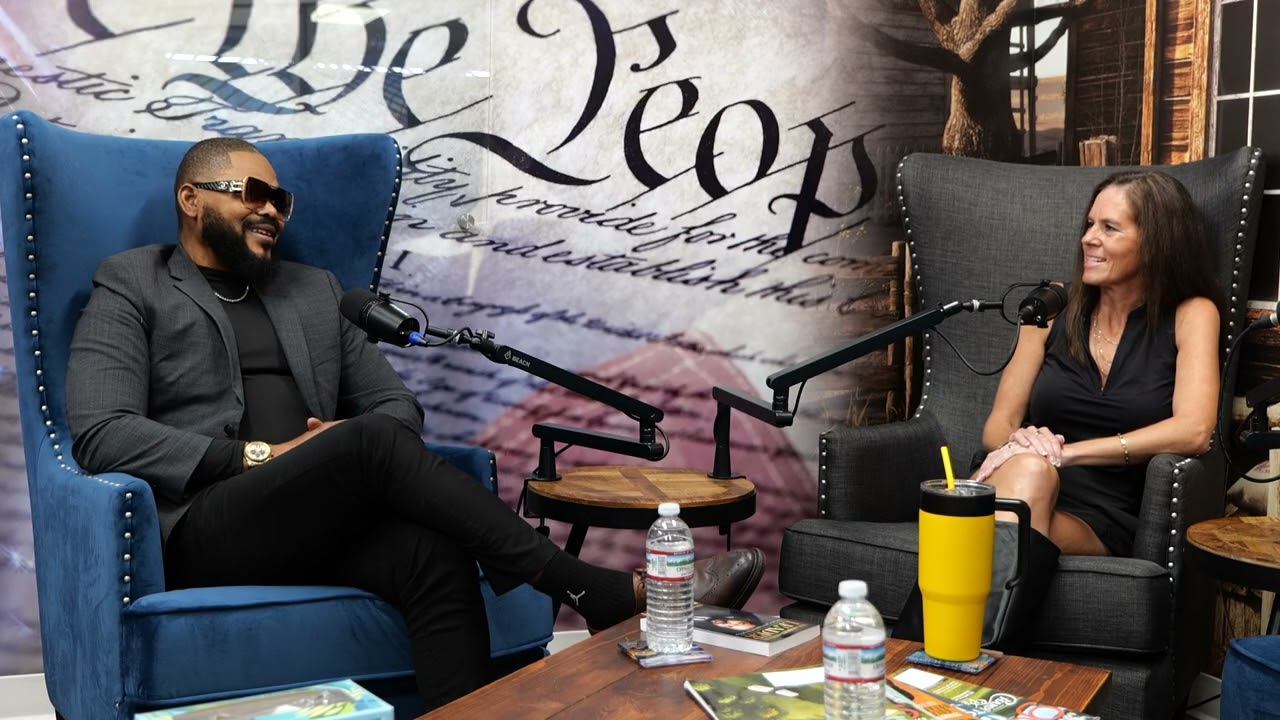
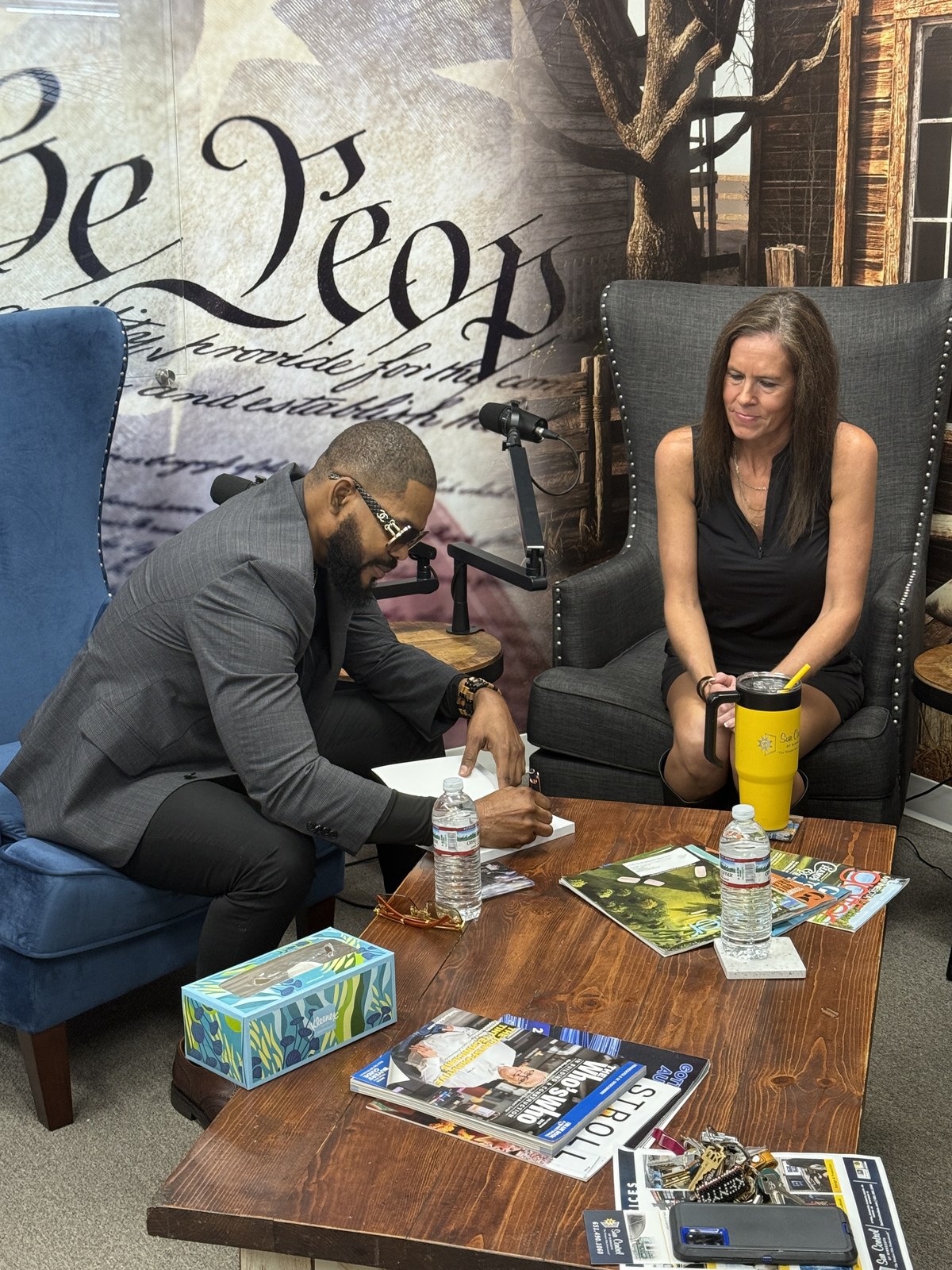
Hey everyone, it's Karissa from Shining Light on Minnesota. Super excited we have Emmanuel Wheagar with us today. Welcome. Thank you so much, Karissa. Yes. So, I've been reading this amazing book, Modern Servant Leader. Sorry about that. Tell us a little bit how you got into writing the book and what got you to it. Well, the modern serving leader um is a project that I've started a long time ago. um somewhere in 2013 when I was hired uh at this uh accounting firm in New York uh as director for staff development and uh training. So I got into this role h in such a way where I didn't see it coming. I came back from lunch at one time and at that time I was on a six weeks um probation to find out whether or not the firm likes me or I like them. And so when I came back from lunch uh week four I got a welcome message that says congratulations. I'm like what's going on? It's not my birthday. Um and you're being promoted as uh director for style development and training. I'm like, hm, we have these CPAs who could be my mom and dad and uncles and I just got out of school. I just at that time I just completed my NBA and it was my first gig and I'm like they have to have seen something in me. Y um so I got thrust into that role and my job was to create training uh materials and it was pretty intriguing because I created materials out of creativity and throughout the firm uh it was a rule that you had to study at least an hour uh per day and my first thing was to understand the lingo the jargon that went through our accountant and the firm so everyone knew exactly what the firm was talking So if upper management is talking about something, you understand the lingo. Yep. Uh and bring it to everybody and bring it to everybody's level. So we have one word in the firm. And I got very uh good at it. Uh because I was empowered. I gave it to him. His name was Frank Aaliyah. Kudos Frank for giving me such an opportunity. Absolutely. And from that point on, I got very interested in leadership in general and and how powerful it is to be in such a role where you can make an impact and have an influence. And so, ever since I have studied uh leadership and I went back to school and got an advanced degree in organizational leadership, y I'm like, okay. So, all of these years I corroborated all of my experiences, uh my own personal journey with leadership. I looked at my errors. Yeah. And and successes and decided, listen, let me just put this in writing for sure and make this distinct and make it engaging. Um unique from other books. I've read so many books. There are so many leadership books out there. Yours really does stand out. It makes it stand out. It has to stand out. So that's a background for which this book sprunk. Yes. So let's talk leadership for a little bit. you kind of make some pinpoints which stand out from other ones about humility and being humble as a leader. Let's talk a little bit about that. Um, from my perspective, humility is a superpower. It it's a superpower. Humility allows you to be to to exercise empathy. Um, if you're a humble leader, you're very attractive. People come to you, they're they're open. You don't have a shell that people have to crack before they can get to the human being. as a leader um if you exercise humility uh you open up you open yourself up to a lot of possibilities people you're you're easily reachable you can engage with an individual uh quickly because you're humble right you're reachable you're approachable you're one of them yes that's the background for being a humble or exercising humility it doesn't make you any weaker it makes you stronger actually because I see you on same on the same page. Yes. Yes. And when you are talking about being on the same page as them, then they can help open up to you as far as what their goals are and how they can help achieve those goals and then exceed those goals. Absolutely. Yes. Absolutely. So, let's talk goals for a little bit. What have been some of your goals getting to the book? And what are some of your goals in the future? My ultimate goal for this book is to open up this this this atmosphere of leadership and what leadership really is and what make leadership to stand out um and why do we have some leaders that are very effective and other leaders uh that are continuing to struggle. Yeah. And I chose servant leadership as the model that I think this contemporary world need today. Yes. We live in a world now where we have Gen Z's, we have millennials. They have they have a different world view as as far as dealing with individuals and dealing with leadership. So the servant leadership concept bring people together. As a servant leader, you are a coach 100%. Uh you are um an inspiration to those that you work with. You are an encourager. You're an inspiration. You work with the team. Yep. You're not a topheavy leader who doesn't understand what's happening in the field. Just gives orders. Yeah. Like I came in today, you you gave us a tour and you're very warm. That's those are the elements of servant leadership. Uh this in this contemporary world, we do not um appreciate leaders who are just very topheavy, who do not understand what's happening. You want to collaborate together. You want to collaborate together. We all win when we all win. We all work together, right? And you want to create other leaders. So when you're not there, the work is still going on 100%. Right. So there have been a lot of leaders in the past, Socrates, Susan B. Anthony, that have successfully done it. Who have been some of your other leaders or people that you've seen that have successfully done it? How do you think that they've successfully succeeded? Well, in our contemporary world, um, I see Elon Musk as a guy who's a servant leader. He's hands-on. Yeah. Elon Musk knows what's going on in his operations. Yeah. A to Z just like you. Y I see Steve Jobs. Y you know um those are serving leaders who understand the role of the guy in the mail room. So as a leader you want to understand, you want to know the job description of the guys that you work with. That way you're able to help them out. Right. If a person is falling short in a certain area, you're able to go in there because you understand the job description. You wear many hats. Exactly. If you're a topheavy leader, you don't even understand what the marketing guy's role is, what the areas that he's struggling in, it's incumbent upon you as a leader to understand the roles of those that work with you and you can identify the weak links. Yep. And then not fire them, but go and empower them and and coach them more to get better. That's the role of your of a of a modern leader. Correct. Yeah. How do you see the shift that has happened uh from the different businesses that you've had from when you were younger to now? Like obviously now family is important and they're giving a lot more leniency to working from home, working not working as much, giving a little bit more time off, but also just the shift that's happened. I think the shift that's happened from co uh the book mentioned a lot of postcoid leadership. Yeah, I think uh family is param. Absolutely. Like for those who come to me for coaching or mentorship, I ask them what does your your family dynamic look like? What's your relationship? What what's the relationship with your kids? Uh your family um and if that's not corrected, we want to talk about that, right? Let's talk about that. There's always room for improvement. Once you have that baseline, then we can move forward. So family is critical. Family is very very important for every leader. Um and self leadership as well. What are the promises you're making to yourself that you are fulfilling? Yep. Are you making promises to yourself that you cannot fulfill? Y u are you loving yourself enough that you can also project that love towards the folks that work for you? Right. So the the modern leadership dynamic speaks to your ability to bring your family together and then extend that into your team, bring your team together. Yep. The people around you, are they comfortable to come to you as a leader with their errors or are they afraid of you, right? You do not want to be that leader that they're afraid of. Right? If I work for you, I want to be able to come to you. a curious. Listen, I I'm struggling in this area and I'm not afraid that you're going to fire me because I know that you're a coach. Yeah. Let's see it. Let's Let's figure it out. Exactly. Yeah. Exactly. Well, I think part of that stems from as well like how you think about yourself first. It's yourself, your family, work, your faith, everything else. Absolutely. Let's let's talk a little bit about the faith in in business as well. Uh faith in business should be um it should be your foundation. Yeah. Uh because faith is the foundation on which families stand. Um you have to have that and the book we have a lot of reference to the Bible. Y uh the Bible is the greatest book that have ever been written and is the best seller. Yeah. Uh I will sell every single book. Yes. Right. So there are nuggets from the Bible that speaks to servant leadership. Even Jesus Christ spoke about that. He said the greatest amongst you should be your leader. Even John Maxwell, one of my mentors, he said, "Listen, uh, great leaders are servants." Yep. Servant first. And servant leadership doesn't make you weak. We can go into what is not a servant. What what are the what are the attributes that are not servant leadership attributes? Because when people hear about servant leadership, they looking at a subservient leader. The the servant leader is not subservient. He's a very powerful individual, very innovative, very inspiring, very much and stuff like that. So we can go into areas that servant leadership is not right so people can get the picture clearly because across the world uh in Africa in Asia in other parts of the world servant leadership is unheard of 100%. The leaders are unreachable. Uh they don't understand you. They don't even know who the leaders are. Right. Absolutely. And even here, corporate leadership, the CEOs are very invisible. They're not reachable. Right. And that's why you'll see companies hiring CEOs from outside, right? Yep. Because they're unable to groom or these fractional leaders coming in once a week just to try to help a sales team or do what they do. Yes. Yeah. Yeah. So, let's let's talk a little bit about family. Family's family is big for you. There's a lot of good things happening in your family, too. Absolutely. So, you have a son that's a pharmacist. You have some family that are here today. Yes. Let's talk a little bit about your family. All right. So, I'll start with the big boy. Uh that's Manny. He is he just became a pharmacist from ROS University. Wow. Um it's a it's a program that had a 2% retention rate for minorities. So we grind through that. Uh during the process when it got tough I'm like man you know what let's let's do a 50 day of prayer. Let's meet every morning every evening. Let's let's pray while you grind. That's fit. Fit is when you pray and you act. Yep. And double your grind. Be very intentional. Uh then the prayer has some elements to it. Yep. And so we did that and uh he came out with flying colors. Now he's uh doing his residency here in Minnesota in in Still Water. We're excited about that. Yeah. Uh we live together. Y my boys and I and I'm going to get to Neil as well. Um and so we live together. The the goal is uh we're going to live in this house and you're going to buy your house. You're not going to ever rent. Correct. That's our goal. That's our trajectory here. So that's for me. And for Neil, uh he's just a sophomore. Yep. Um, and he just started his own business. Nice. He is a photographer and a videographer as well. Very good. Um, he already has some real gigs that's going on. He's looking to scale this business within the next three or four years to seven figures. Yep. Um, while he's going to school. Absolutely. Studying cyber security and stuff like that. And we're supporting him. We have a meeting every Monday. Yep. And the core of that meeting is to see where are you, you know, in your journey. Where are you going and how do you want to get there? What are your goals? Right. Exactly. And how can we help as a family? How can we scale as a tribe? How can we help, you know, and um I have a daughter who is not within the the rim. Yeah. As well. And uh you know, I have other family members that are helping out. Yeah. Um it's all just being a mentor and being there and just helping guide, right? Yeah. Yeah. Yeah. Uh not married yet, but you know, I'm looking forward to making that happen soon. Right. Uh and there's a there's enorm Yeah. coming from my partner and stuff like that. Uh that, you know, we we just look forward to building something very very very solid as a family that we can spring from. Yep. And then you got to grow and you got to go through the ups and downs before you figure everything out, right? Yeah. Yeah. So, we have I have a girl and then I have another uh adapted uh girl from Kenya that I Yeah. So, that's Stacy and then that's Fela um here with us in u um Eden Prairie and then I have uh Yanni. Okay. So these are people who are in my life that I may not be a biological parents too. Y but I decided to bring them in the fold that I can have an influence. Yes. And then uh my community is also considered my family as well. They're your tribe. So family goes deep for me. I go hard for my family and my friends. So if you going to be friends with me or be in my life, you have to certainly um work with me along those lines. It's very critical for me. Yeah. So, thanks for bringing up the family thing. Yes, it's it's important and I think that people don't realize family, friends, they all want to see you succeed, but they all have to have the same goals in mind, right? They want to see you win. They want to see you they want to be your biggest supporters, though, too. Absolutely. Yep. Absolutely. You start to realize as you get older, your circle gets smaller. Yeah. Because you start to realize who's there for you, who's not, who sticks by you through the ups and downs. Absolutely. and how you can all help and how you can all be at one. Yeah. Yes. So, going through the book, there were some important parts. I mean, I was reading about setting goals. What have been some things that you've helped your mentors with setting goals and what are some points to having them set goals? U setting goals is an easy process if you just work the technology and and set goals. In the back of the book, I have the ER derby goal setting metrics. Y where you can set goals throughout the week uh but do achievable goals right in before you wake up in the morning uh the night before at least give three important goals that you must do and I call those the battle plan uh get a battle plan where these are goals that you must achieve and then after you achieve those even after you achieve them and and you still have a lot of time then you can go back and add some more y so what I would like to do or what I would like to leave with folks is, you know, get a notebook or get some some things, some sort of app on your phone and write a list of goals that you would like to achieve. It could be up to 20. I guarantee you, even if you don't look back on that list, when you come back to that list, you would have exhausted at least 80%. Yes, you would have. It's important to take the goals from your head on paper, right? You know, Brian Tracy have this technique where he wants you to take you write it down, you'll remember them. You will remember it. You know, because you're writing it down from your brain. You you have that reminder. You have that connection. Uh I know Brian Tracy talked about this and he has his seminars strictly on goal setting. And I picked up some nuggets from him that I think is very important that I use every day. Yes. Y Yeah. Who have been some of your mentors growing up? Obviously, you mentioned a couple here, but who have been some of your main mentors and what have they taught you? My father is one of my main mentors. He was a fed-based man, but he was a very personable individual. He taught me how to be humble. He taught me how to work very hard. Um, and he taught me how to uh take some risk, some calculated risk. Um, and so he stands out in my life. Uh, one of those other people will be Tony Robbins. Yep. I studied Tony's uh, journey. Yes. Um, very difficult journey. Yeah. And he grown through and and look where he's at now, right? David Gurgen. Yep. Um, these guys I look at him and I feel lazy, right? When I look at his constant grind and it's like your calendar booked up and it's like, okay, as much as people think I'm busy, like look at everybody else. Yes. Yes. It's important for people, I think, to stay active and keep going and making that first step. Yes. What was the first step into getting into your businesses and how did you get there? It was faith that got me in there. Uh, growing up, I saw a dynamic of people who work for other people and people they work for. And I asked myself as a child, which category would you want to be in? Yep. And I'm like, I want to be that guy who's owning the business. And so ever since as a child, I would pick up items and buy items and add a profit and sell it. Y and it became very empowering to me that I'm able to convert nothing into something, right? Um and ever since I've studied study um and started several businesses, some of them I came with some challenges because I didn't understand how to run a business, right? I felt running the business was just buying and selling far beyond that. I've come to realize that the taxes obviously the tax business and everything else. Yes. Yes. So you have the businesses and everybody always talks about the why going three steps deeper. What have been some of your wise? My wise is how much can I give back? How much of my self can I give back to individuals folks that work for me in my community? When I started the tax uh business, it was like, all right, I'm about to I have these credentials. I have, you know, these experiences, what business can I get into that's going to serve everyone, right? So, the tax tax business want to touch you from birth to death. So, I'm able to serve everyone along those lines, right? It's more of a commodity. So, those are the drivers for the businesses that I start. Even in the healthcare business, y everybody in your life, you're going to healthcare is going to touch you regardless whether you're feeders or you know you're you're uh an elderly person. So the reach uh is very critical for me when I'm starting any any sort of business. I was just discussing with my son here uh on our way here that I would like to get into uh a business that's going to help homeowners with lawnmowing. Yep. Snow removal. Yeah. It's in such demand in Minnesota cuz I know we have struggled to get folks to mow our lawn consistently. Y and we have tried diligently. Yep. There's a grave need for that. We've got some high school kids in our neighborhood that 18, 17, 16, started it when they were young, almost like the 14, 15 year old, and now they're building their own business just out of high school, a cheap rate, but going rate and it's it's phenomenal. They do a great job and, you know, it's one of those that you you can't pass up. You can't beat. And then you get into the irrigating and every or the irrigation and everything else. Yeah. Got Yeah. It's a great business. So, you have your why, you have your driving force. What are some real nuggets that you've passed on to your kids? I tell them believe in yourself first. Mhm. Believe in yourself. Believe in your abilities. I always tell them you you're brilliant. You're smart. Uh and my goal whenever I mentor people. Y I'm not here to give you brand new information. I'm here to help you discover what's inside of you. Yes. I'm here to help you discover that that gold that golden nugget that you have. Most artists, they didn't know they were great, but they got discovered. Justin Bieber, you know, just playing in his basement, he got discovered. Oh, wow. Do I have this? I'm on YouTube. I'm just making videos, right? Exactly. Do I really have this? You know, people have to discover you. And my goal is to try to when I work with entrepreneurs to get that that missing piece. Yes. What's that missing piece that is stopping you from getting to where you need to get? said something as minute as rest. Right. Right. Do I coach you to rest? Right. And and what does rest look like? Right. Is it resting all day or are you actually getting up and doing something with yourself? Exactly. You know, and and stuff like that. So it it's more getting to the person's psyche and doing a SWAT analysis to see what their strengths are, what the weaknesses are, what opportunities do they have, you know, to get better, what are the threat, what threatening their core existence, what's threatening their business that they don't see. Right? So those are the areas that I look at when I'm coaching a person, when I'm mentoring, I do a SWAT analysis first and we agree to your weaknesses. Yeah. And then we start to work. You have to know what your weaknesses are so you can grow and get past and move to the next level. A lot of leaders do not know what their weaknesses are. Yes. And it takes a coach, a mentor to identify that. If you don't know your weaknesses, then you're never going to grow and you're never going to get past that or to the next level. Absolutely. Absolutely. So, I mean, there's a lot of shifts and change obviously with the different generations, right? um the younger generations kind of thinking they're going to just finally invent something and be famous and putting in different steps to get there and generations that are older that have worked all their lives and trying to get that that different generations to kind of work together. But I think it's it's interesting for the younger generations how they're working smarter and they know the technology and they know the AIs. And how do you coach people working with AIS that aren't familiar with those those technologies out there? Well, AI is the new normal. Yeah. Uh people frown at cut and pasting, you know, back in the day, but now AI just just put it on steroids. You make it you work smarter, not harder. Yeah. Yeah. That's why that's where the modern servant leadership concept comes in. The book talked about AI. A whole chapter talks about that and a whole chapter talks about intuition. Yes. And stuff like that. So the the modern leadership concept for Gen Z millennials emerging leaders who are deeply immersed in AI. Yes. Have to be able to bridge the gap between technology and individuals. You still have to be able to relate to people. Still have to communicate. Exactly. That's the big part. Exactly. Now you have a technology that is smarter than a 100 person. Uh you know uh even chbt will provide some things that challenge a PhD. Yes. In a split second. Yeah. So you still you still have to bring that human element so you don't get rid of your people. Right. Make sure your people you're not going to have a job if you don't aren't able to communicate. Absolutely. Absolutely. So if you're unable to embrace AI and embrace your people along with AI um your folks the world will be obsolete you wouldn't have any work for them to do. So I believe that AI and people have to come together so we can blur that element to it. Yes. Add a human element to it. Yes. Yeah. It's very important I think with not just AI and not just with humans but I think once they both come together it's going to do some amazing things. It's already there. I mean, with with a lot of things, it's the way technology is going and the way the world is going, it's it's phenomenal. And I love to see growth. A lot of people are scared of the growth and they're scared to see it. But I'm welcoming to it. I think it's fun. Yeah. It's here and it's I feel like it's been here for a long time, but people are more engaging in the they're more welcoming to it and and wanting to see what happens with it. You have to rewire your brain now. Yeah. You have to rewire and you have to put your ego aside that AI is 100 times smarter than you. Yeah. Well, I mean, look at the quantum computers. Look at everything else that's out there, right? It's a quantum leap that we're in right now. Yeah. I think it's it's part of the generation that's out there that's always wanting to learn. And it's it's the way you're raised part of it, too. I mean, it's not the pencil and paper handwriting time anymore. I mean, no. It's it's interesting for sure. It's a new day. Yes. That's why leadership have to take a shift. Yeah, we have to take a a radical shift in leadership now. We have to be people centered. Yeah, you're going to lose people if you're not people centered. If you go to Walmart, you see the kas are gone. Check out lanes and selfch checkout are like 90% now. Yep. It'll get worse. Yep. We have to adapt a new skill set, a new way of leading our as leaders. M um you don't want to be just dealing with um well without the self selfch checkckouts you can just order the food from home and not even have to leave your house. You don't have to leave your house which is scary in a sense. I mean you want to get out there. You want to get outside. You want to be able to do things on your own and be independent and see people and talk to people because I think with co that was one of the big things that people didn't and weren't used to is staying home all the time. Right. Yeah. So we've talked family a little bit. Let's talk artistry, music, painting, all the all the artistry things. Okay. So, you've you're a piano player. Tell people a little bit about your your musical life that you've had. Well, that goes way back. My dad was a pastor and he thrust me into gospel music. Yeah. And I picked it up ever since. And the piano is my go-to instrument. I've played it for years. I always have piano in my house. I do have piano now. My boys are learning how to play piano. Amazing. We've got a baby grand at our house. I don't play, but Mark does. I'm trying to teach myself. I used to play the violin. Now I'm trying to teach myself or getting back to trying to play that guitar, acoustic guitar. So music has always been around our house, too. Yes. Yeah. And if you see a if you want to if you know if you want to know if a person is happy in your home, Yeah. hear them home a song. Yeah. You know, the brain is wired in such a way where you sing when you're happy. If a person is sad, it's hard to find him singing. Yeah. the catch I'm singing. Yep. So that's the background and I started a gospel group in New York, Second Chance Gospel Music Convention. And I started that group when I survived a devastating accident. I broke my femur, broke my I broke my clavicle. And when I survived it, I'm like, I have to give back. Yep. And the medium that I can use would be music. Music's got me through things. Yep. It got me through that. And then I use the music as the platform to get into community service and I did that a lot. We've done some major things in the gospel music space. We've been to the gospel the the Mcdana's Gospel Fest twice selected out of 40,000 groups in the United States. Uh the last concert I did was with Kimberell. Got it. uh brought her to New York uh to do a concert for the first time and uh that's how far I have gone with gospel music. It's on the back burner a little now at the moment. Well, you get busy and life happens and it's one of those things like even with our music it's like okay we we need to get back to it. I'm like okay it's winter. play golf. So, like golf has always been my my out, my go-to, but I'm like, "Okay, winter time, I'm like, do I not do I I am gonna play guitar and I'm going to teach myself and I'm gonna do it." But I always make time for golf no matter what. That's kind of my wife. That's my That's my out. That's my thing. But I always make time for music. Yeah. Yep. It's no matter what, you have to have something that you do for you, right? Yes. As far as art is concerned, I've always had an artistic mind as a child. Uh, I will find myself printing t-shirts. Yeah. Sponge printing. Yeah. Screen printing. Um, drawing. I can look at something, just draw it. It came naturally to me. I have a collection of art in my house. Amazing. Uh, that I'm looking to hopefully let the world see eventually. Um, and everything that I do. We can put it on your cars. Yep. There we go. Put it on mugs and stuff like that. Um, yeah. On mugs and stuff like that. So the artistic part is there. Um, and that's why I do appreciate art a lot. Everywhere I go, I take pictures of art. When I came in here, you said it's very refreshing. Very refreshing. I encourage everyone to embrace art. Yes. Cuz we're an autistic being. Yep. You know, we're an autistic. I mean, there's art of some kind and you can see it in everything. Absolutely. Absolutely. What kind of art is your favorite? Abstract or what? What do you what kind do you like the best? Uh kind of probably depends on the day. It depends on the day, but it's mainly family. Family art. I see myself paint in families. Um sometimes I go into nature and I will paint um I will paint uh plants and stuff like that. Uh go I would paint a a winter wonderland. Yeah. Martins, families together. Uh, cities. I love cities. Yes, I was born in the cities. Cityscape. Those are my go-to. Nice. Uh, art. Yeah. Have you done any traveling lately? Or where are some of your favorite places that you've traveled to? Uh, I traveled to London. Mhm. I I loved it because when I went to London, I saw history. I thought I was walking into history. Yep. The ancient Yep. Yep. The buildings are still there. The cars are still I'm like, "Wait a minute." So I felt it takes you back in time. It takes me back in time. And I went to Kenya and I saw an imagination. Amazing. I saw a self-empowered people. They have amazing infrastructure, great cities, but yet and still you do still have one of the most massive uh ghettos in Kira where I adopted a little girl from. I've traveled to Ivory Coast. I've traveled to Jamaica. I love to travel. Yeah. Quite recently, I have slow travel because mom is not well. She's sick. She's in the hospital at the moment. Bless her. So, I have focused on working with mom and supporting her and it has slowed me down a little. But I love to travel. I love to see different cultures, different art. It's important. That's something that sets you back and it's it's important to do make those memories and travel. Yes, absolutely. What are some of your favorite memories you've done with your boys and your family? The My favorite memory with my boys will be football. Uh Manny played football in high school. Yep. He became captain. Um and I went to every one of his football games. Those are memory that stood out. Neil played football. I went to most of his football games as well. Um and and just resetting and just and just feeding off each other's energy. Yeah, I see that it feed off a lot of my energy as an entrepreneur. He started his business before I even knew about it. Everything was already set and you know he has corporate gigs that I have no idea what I'm doing already. I've already got it set up and lined up and I'm doing it. Yeah. Yeah. So, I like to see the entrepreneurship spirit in them. Even the guy who's a pharmacist, he think that pharmacist is just a well that he can draw from to support his entrepreneur. This is my beginning and this is where I'm going after this. Absolutely. Yeah. What's your I I know this, but we'll let everybody share your favorite quote. My favorite quote is whatever a person wants to do in life, they will figure it out. They will find a chance to do it regardless of what it is. If they don't, they're going to give you an excuse. Yep. Absolutely. Yeah. Favorite food. Favorite food. Now, I I just I'm threading along the line of uh plant-based eating at the moment. And so, I'm trying to gauge what my favorite is at the moment. Um, but I love fruit a lot. I love fruits and I love vegetables. Fruit is your favorite fruit? My favorite fruit? I love apples. Yep. I love apples. Yep. Uh very crunchy and uh it's friendly to the stomach. Absolutely. And I love it. Yeah. Good. What do you think's next for you? You've got the book now. What do you think your next your next step is? My next is to ex expose servant leadership to the world. Yes. Yep. Uh leadership is because servant leadership goes from your home, right, into your community into government into corporations and everywhere in between. My goal is to help people become servant leaders because absolutely to be a transformational leader you have to be a servant leader you cannot transform a person who you do not know correct and who you don't a person who you don't have an impact on it's difficult to transform them so I would like to speak to companies I like to coach individual who are in leadership uh leadership roles is one of those uh roles that we sit in and we don't learn leadership you become a manager and you just start working. You don't they don't you get the grind and you just don't you're just there. You're there to be there. Yeah. So I think every leader, every manager needs some sort of coaching, some sort of mentorship. Uh you will find those areas of weakness and you can you can help yourself and you can work together. When I whenever I work with a person, I would like to work together with you. Yes. You know, to achieve those goals and I'm not just dumping things, you know, at you and stuff like that. So I will look for I look forward to spreading this this doctrine this servant leadership doctrine so we can come back to a humanist the fact that we're going away from connect from from connectivity from working with each other uh because of technology or what whatnot. So the servant leadership concept is going to bring us back together for sure. Yeah. As a leader, other than your book, what has been one of your biggest successes that you've had when you're out there? Besides the book, I one of the biggest successes is the fact that folks can feed their families. Uh they can buy homes because they work for me, right? That's the hardest thing is like the stresses of the people that are below me. Are they going home? Are they able to feed their families? Are they are they making a difference? And are they able to get home every night and feed those people? Absolutely. It is my greatest joy that I'm able to provide opportunities for people. Yeah. That they can depend on the infrastructure that I have created. I have developed where you can come to be safe and get some resources to support your livelihood. Yes. That's one of my greatest successes and I'm I look forward to maxing that out. Yes. What about So you have a tax business. Tell everybody about some of your other businesses that you have. We have a tax preparation business where we provide tax advice. Yep. Um tax planning. Yep. Uh individual taxes, business taxes. Uh and I just partner with one of my friends uh Steve Kofer who is a CPA. Uh for those who need those kinds of services and we for that firm uh we we focus on healthcare companies. Folks in healthcare focus more on the work and the the services, the care. They do not focus on uh the financial part of things. So we want to come in with that niche. So it's two help it's two accounting firms. The one with teeth and then uh the ERW tax services where we provide services to everyday people and everybody. Uh the one with the CPA um with Steve is strictly for healthcare company. That's the niche that we want to help. Yes. in the space. Um, so that's for the tax side of things. The healthcare businesses are there to provide services to vulnerable adults, adults who cannot provide for themselves as far as ADLs, as far as uh making decisions, making financial decisions or taking care of themselves, right? So we send folks out to different homes to provide services to help them reintegrate into the society. Right. And the other arm of the healthcare business is we have homes where we have vulnerable adult live and we provide services 24/7 for them. We have a registered nurse who's which is needed. Everybody in their family have people that need that for sure. I know I do. Yes. Yeah. It's very interesting. Um, I mean all the things that you do, how or what have been some of the ways that you've given back to the communities other than just the businesses? Other than the business, uh, giving back to the community, I do have a food drive that I do twice a year. I do have a nonforprofit uh that provide youth empowerment. Uh, that I did for many years, but I did it full-time for two and a half years strictly focused on that. And um we are looking to expand that into Minneapolis. Yeah. Into the Minneapolis area where we can provide resources for uh the disenfranchised communities. Uh it's not hard to do. It's it's just the intention and I encourage everyone to do stuff like that. They have to. Giving is so critical. Sometime I just go out and if you're behind me uh you know at the cash shelves I just opt in to pay for your groceries and stuff like that. You you need to do stuff like that or volunteer and give back. Go to Hearts for Hammers, do the food shelves, do whatever's out there. Yes. Find multiple events anyway that you can. It's very It's very rewarding. People don't understand giving is more rewarding than receiving. 100%. No matter what you can do, anytime, any day, give back. But also be caring. Say something nice. Get out there. I think I had a podcast just the other day and we talked about how important it is to make it known to people, even if you haven't talked to them in a while, that you care, that you're appreciative, that you are a person. But sometimes people just need that small little, hey, I'm here. I need you. I I need to know that there is somebody out there that still cares, right? A compliment, something. You know, you just have to put down the street. Hey, that color looks really nice on you. And genuinely mean it. Don't just Yes. Yes. That's the important part. Like so many people are just Yeah. Hey, great shirt. Just keep walking. No, just look them in the eye and be nice and be kind, right? Yes. And and sometime when I give and people come back, you know, and being very grateful. Yeah. Um for some reason, I just don't like that very much. Yeah. Cuz that was not intention, right? I know it's good to be grateful, but let's be grateful to God that I'm placed in this position to do so. Right? And everyone who put themselves in a position to give, do it from the heart, right? Do it from the heart. Expect nothing in return. Even if they don't say thank you, even if they took that and put it in the garbage. Yep. Your part is completed. Yep. I mean, even if it's not monetary, if it's just giving your time or you see someone drop something, go pick it up. Or somebody's sitting alone at a table, go sit by them, just be that person. Hold the door. Yes. So, we've talked a lot about family. We've talked a lot about business. We've talked about the food, all all the important things. And we've talked about what's next. What do you think is important for the boys? Are they going to do any traveling with you anytime soon? Do you have anything there or the family or anything? Yeah, absolutely. We look forward to traveling and experiencing travel together. Life and memories, right? Yeah. Building memories. Building memories is critical. Yes. And we're working on that. Yeah. Yeah. How can people get a hold of you if they want to have you come in and help them or teach them or help them help help you set goals, be a leader, be a coach, be a mentor? How can they get a hold of you? I'm very reachable. Uh my cell phone number, call me, text me. Yep. 952108029. Yep. Uh we're on every social media platform. Tic Tac, we have content every day. Y we post every day. I give nuggets. Yep. I give different tips on leadership, on family, on community and stuff like that. So, you can reach me. I'm very very reachable. Yes. Reach me via email. Uh wh e a g a rgmail.com. Um and you don't have to be one of my clients. If you have a question, shoot it at me. I'll provide answers. If you want to be one of my mentees, reach out. Uh we have very flexible uh scheduling. We have different programs. We have ad hoc programs. Um so do not be afraid to come out. As a leader, you need a mentor. Yes. And sometimes it's good to have people be your mentor and you can be the mentee. You always learn from people too. Absolutely. They can certainly reach out to me too and I can put them in touch with you or however they want to do it. We'll have the link in here when we have this go out. I think it's going to be out next week. So Wednesday this podcast will be out. Thursday, it'll be in our newsletter. So, yeah, reach out to us. And it was great to have you on today. We really appreciate you. Thanks so much for having me, Karissa. Thank you so much. Let's do this again. For sure. We'll we'll have it come out in phases. Absolutely. Yes. Thank you. You're very welcome. [Music]