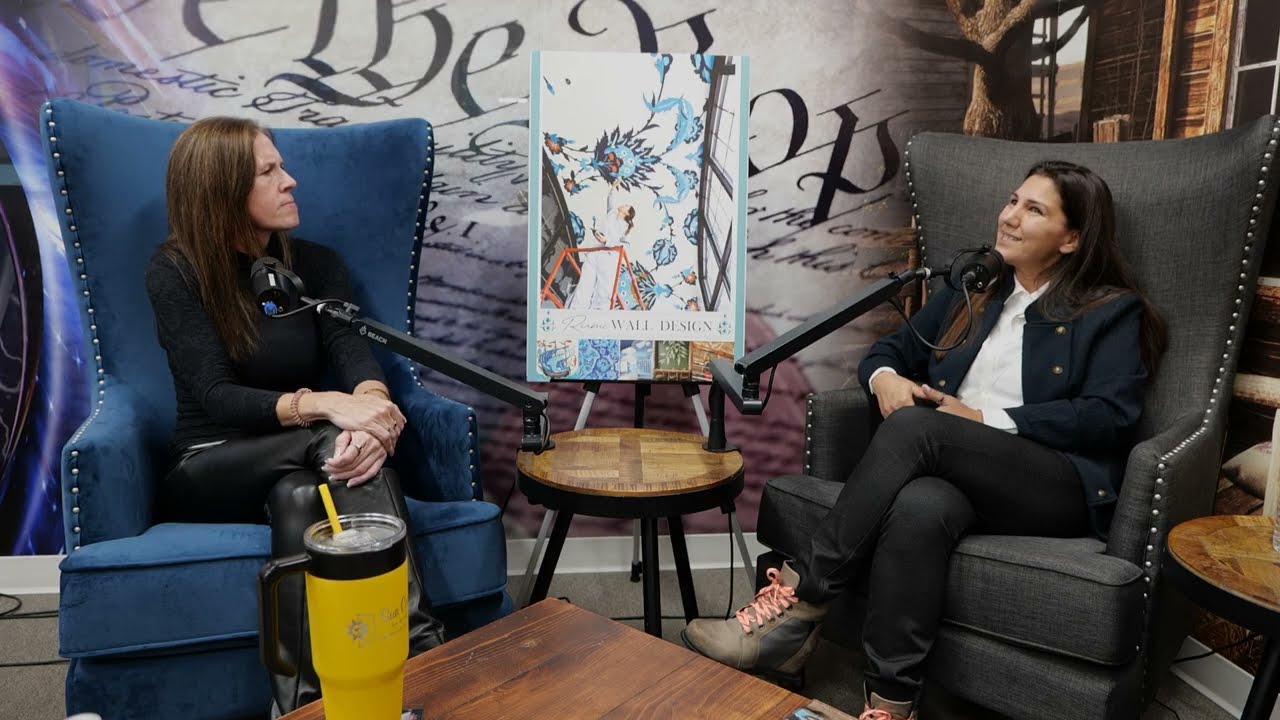
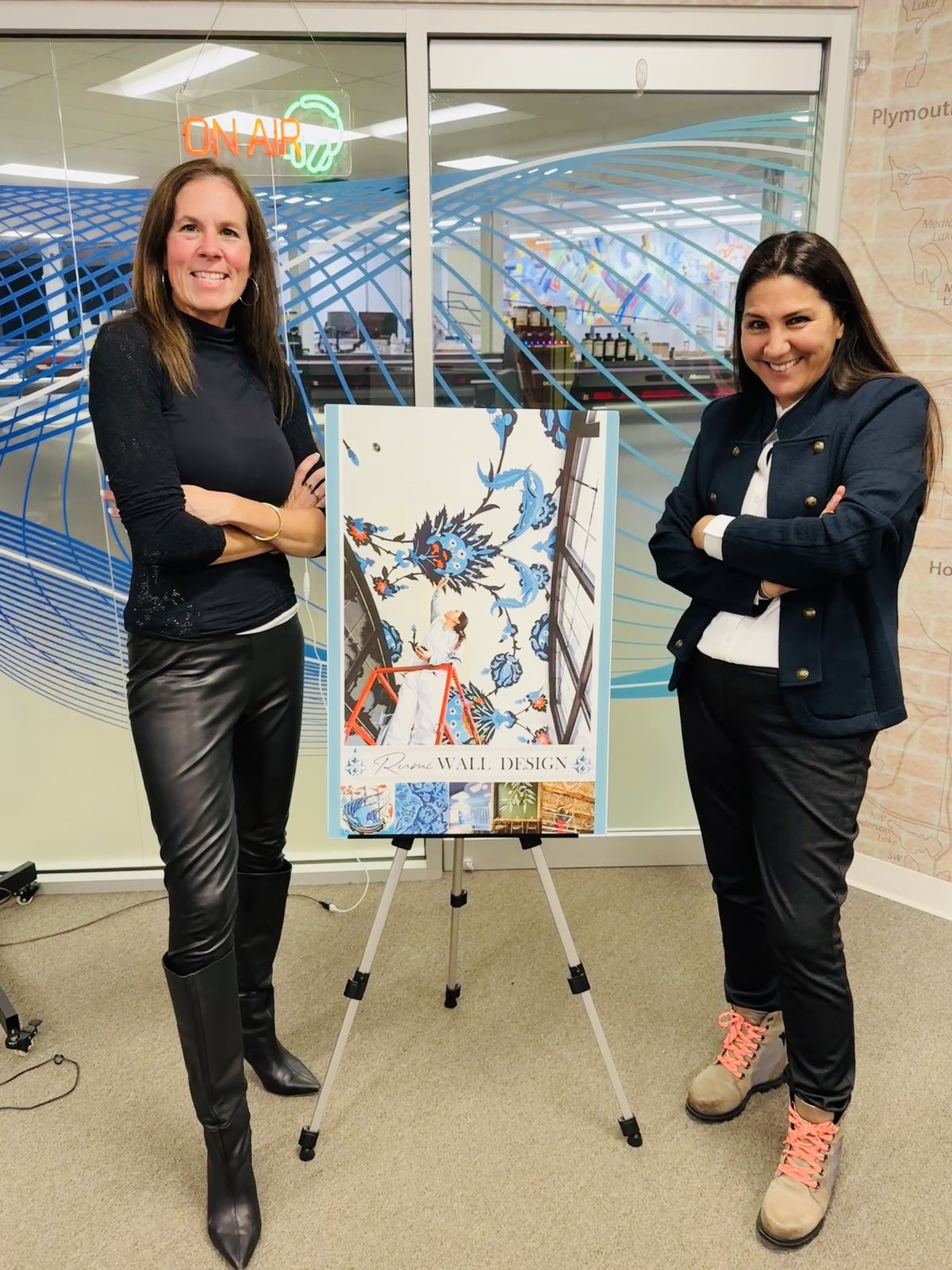
Hello everyone. It's Karissa from Shining Light on Minnesota. I'm super excited. I have Rumi Wall Design here and I can't wait to share the story with you. Welcome. Thank you very much. Yes. So, let's get started. I know we've chatted a little bit, but let's tell everybody the story behind Rumi Wall Design. So, um the story started uh probably um almost 30 years ago. Wow. Um I am um serial entrepreneur if I could just call myself like that and a serial immigrant probably. Uh this is my fourth country, fourth language. Um but all of that was to um get better in my career in fine arts and design. So I just pursued whatever would be the best place to learn. um I just uh followed my heart um to achieve those goals and um it's been a long trip. I I studied fine arts and design in Istanul. That's where I'm from originally and Italy had to be part of my life of course. So um so I suddenly started learning Italian and uh moved to Italy when I graduated. It was in 2000 and there uh I mastered my skills to integrate fine arts with uh interior art architecture uh because that has always been the focal point of me my vision as a person since I was little. I was just visualizing even when I was just painting something um I would just stop and stare at the walls around me and just try to imagine how that painting would look on the walls. So, um, so anyways, um, I moved there and, um, I designed, uh, commercial tiles for Italian and Spanish and Turkish manufacturers and, um, that was my dream, uh, to achieve that goal and I'm happy that I've done it. Um, fresco restorations and decorative painting, Trump loyal. So, uh, walls has always been my, um, my focal point. What have been some of your your favorite tiles and some of your favorite pieces that you've done and some of your favorite colors and some of your favorite artworks? Um, I think my favorite tile designs are going to be definitely those ones that I um I kind of like u modernize the um tile designs from 13th century uh from Ottoman Empire or from even Seljuk Empire even um way before that. Um so those were kind of my favorite tile designs. Um, but I don't know if as much as uh when it comes to mural paintings, I don't know if I have a favorite project to be honest with you, but um my recent most recent project that I've done with Old Inc. uh luxury appliances and chemistry in for their new showroom uh on Highway 55 in Plymouth. Um that was um my one of recent probably favorite projects. Yeah. um because it just gave me an opportunity to um reflect many of the things that I wanted to project and um and it turned out really well. So, it's always happy to see the happiness in my client's eyes. Yeah. Right. How as an artist do you reset? Sometimes like when you're drawing you kind of get into a zone or you want to reset and refresh and like okay I got to clear my mind and start over or refocus and get to a new project. So um I honestly I define myself my work somewhere between art and design because I have the interior design background. Um I always approach the projects from a designer's perspective. Of course there has to be that artistic part of it that I need to create something. Um but it is not necessarily I think the biggest difference between an artist and designer. When an artist is in a creating phase um we usually uh do it with our instincts like it is something like an internal journey and then you find the best vocabulary to project it on a piece of paper or whatever uh material you're working with. So it is more like an internal journey when comes to designing that's problem solving. So you need to fit it's definitely there is that aesthetic matter but that's um also as important as functionality and problem solving what will work for them. So um so as much as um it sounds challenging um to combine those two together I think they work perfectly hand in hand. Yes. because it's like checking multiple boxes with a single project all at the same time. Yeah. What has brought you you've you said you've done some other traveling obviously you've gone to other places. What's gotten you to all the other places to traveling? So I moved to Italy because um it's Italy. It is Italy. Exactly. Obviously. So um I lived there almost four years and um I learned a lot. Uh I learned a lot from the culture. I learned a lot um about myself to be honest. I was only like 20 21 years old when I moved there and um that was kind of like a journey that I took within myself because you want to learn about you maybe a little too. Yeah. I mean that's the thing like when we travel we think that we're just going to learn a lot about the other culture their people but actually if it is maybe that's the case if you're just traveling somewhere for a couple of days but when it is a longterm stay then that just gives you the possibility the uh reflect to yourself because you make you start from the scratch you make your choices because you don't have friends you don't have family you're I mean in my case I was all alone so all by myself so I had to define mind who's going to be my friend. So where do I want to? So you make lots of choices again from the beginning and and those choices define who you are as a person actually. Absolutely. So um that was Italy and then um I moved to Spain um I think it was around 2007 that I started my master's degree in fine arts and design and then I got a scholarship from European Union which gave me the opportunity to study uh part of my master's degree at the univers university of sevil y which was an amazing journey again um to uh reflect on myself to get better in my art and to do my research. Uh so those were both career oriented decisions. Yes. But this me being in Minnesota, it's definitely love oriented because my husband is from Minnesota. Wonderful. So that's why I'm here. How did you meet your husband? So he's practically um I'm a huge believer in destiny by the way, especially the way that I met my husband Ham how we just end up just getting married. Um, but uh he is my sister's husband, my brother-in-law's best friend. Oh, wonderful. Uh, so it just it just happened. It just happened. It was such a coincidence because to be honest, I have always found myself as a free will. Uh kind of like have a like a gypsy soul. Like I could live where, were, and whatever. It'll happen. It's meant to be, it'll be. Yep. Um but living in United States was not one of the I mean has never occurred to me. Um I never thought about living in US or moving here or um any of that but um but it happened and I'm glad that it did and I'm so happy that uh it is Minnesota not any other state. Good. How has your traveling changed you today and in your belief system? Oh in multiple ways. First of all, when I first moved to Italy, like I was 21 year old and I was um I was probably I could define myself back in then like as a nationalist like um so I was proud to be Turkish and so proud of my history and um I'm still am but um loving your country I think uh there's a huge difference like if you can still love your country if you still can be proud out of being a part of that country despite all the effects, all the errors, all the mistakes, all the um bad things that happened in the history and despite that you could still love your country. I think that's true love. Yes. So what I realized when I moved in Turkey that I was just hearing these lots of comments and opinions about my country, my religion and uh it was kind of really hard for me to handle those perspectives and I was just in core of my heart. I was like, "No, that's not true. No, this is not what happened in the history." But um that actually gave me um a great opportunity to be more open-minded and listen what are they saying? Um just continuing the conversation and hear their part. I mean that can be totally wrong, but um let's have a conversation about this. So um that gave me a huge I think uh opportunity to change me as a person in this life because uh I think this is where we all struggle. We have very very limited patience when it comes to have a openhearted conversation with those ones that they don't share necessarily the same um opinions, thoughts and beliefs with us. That is Don't just shut it down. Just Exactly. There are three sides to every story. One side, the other and then what's actually happening, right? But I think that's where we learn. That's where we grow. That's where we transform. And I think that's why we are here as human beings to keep learning and just to become the better version of ourselves. So um traveling in abroad definitely uh was an eyeopening and I come from a very modern very open-minded family as well but just experience is different than you know traveling in life. Exactly. Yeah. You get to experience all different backgrounds and all different cultures and you get to really figure out how you want to be and who you are too. Absolutely. And we learn like we we just as much as we can interact with other um cultures, we can learn from each other. Yes. And I I find it honestly fascinating and languages like it just gives you an opportunity to learn a different language and it is really different than like if I go to Italy and um never happened but because I was always trying to learn Italian and practice Italian there also. So I never used my hand. How can you not like go into a culture and stay there and not want to learn and not want to understand and fully be engulfed in that culture? Right. Absolutely. I mean when you learn the language and and just master it and then you just distinguish the differences uh or the the the huge um hidden secrets in their expressions and the way um because if you don't you're going to take it the complete wrong way. it's going to be misunderstood. Yep. Yep. So, um I think I find it that's another way of learning. Um so, I languages play a huge part in that and I think I love learning new languages. Yes. So, who have been some of your mentors along the way that have really changed or helped guide you to who you are today? I'm going to say definitely um my parents, my mom especially. Um, I didn't know either, but when we discovered together my talent in arts, and that was when I was 11 years old, my middle school teacher, art teacher wanted to have a conversation with my parents and say, "This child is gifted, so you should pay attention to this talent because she can really become someone." So um my mom uh she's a very open-minded person and she's uh my dad is very emotional, my mom is very logical but they balance put the two together balance as well. Yes. Yeah. So she kind of really helped me to um open up the horizon actually because she was the one who was encouraging me to go to other uh countries and just master my art and um she wasn't necessarily just you know just go and move and live there but she was saying like do your master's degree there take study figure classes and um all the resources we can provide for you just they they supported me wonderful uh 100% because there are lots of doctors and lawyers or engineers or pharmacists in my family both from my dad's side um and even you know older generations so I come from a family who truly believe in academics for sure we take it very seriously so despite that fact they never approached my talent in art in a way that okay you do your art as an hobby but go study study and figure something else have it as a secondary. Y exactly. So I never ever experienced any of that approach from them. The opposite. Uh they always encouraged me to to become better. You can do more and you and how can you make it a profession and a lifelong journey. Exactly. So they have been great mentors for me. But also uh my grandparents um my grandfather was a medical doctor and he was a huge believer. He was a very religious person. Um he um uh he practiced Islam. Um and but he studied every single religion um like letter by letter and he was um he was a huge I would say he was a very very wise man. So I learned a lot from uh from him too. Wonderful. Was anybody in your family an artist or was anybody able to help like kind of culture and help you figure out what kind of art you wanted to grow into or an interior design or anything like that or that was just more your draw? To be honest, nobody because when I look at like lots of interior designers, um, it's more selfaugh. Yes. And or some of them they have like oh I grew up in in a warehouse and my parents were builders or you go into a job and they teach you how to do it there. Yeah. No, not really. My mom was a pharmacist, but uh she was a I mean she was a stay-home mom and um my dad was a dentist and he's a worldwide collector. But um I heard from my dad that his grandfather who I never met uh was an artist. I mean he was a pharmacist but he liked to draw. He knew something. He was he was drawing and we have uh his paintings and I think he was really talented. um but he didn't practice it as a profession but he did his own um he owned his own pharmacy and then he was practicing his profession as a pharmacist and on the side as a hobby he was drawing but other than him um no one but my grandmother was a huge traveler so I think I took that sideb her when you've done your traveling to Italy and other places what have been some of the fa favorite places that you've seen or some of the favorite things that you've done Well, I'm going to say um first of all, when it comes to Italy and Spain, I love South more than North because there is a huge difference, especially for Italy. South Italy versus North Italy, it's like two completely different countries. um you don't necessarily maybe realize it in their architecture but it is in their language like from Rome culture and sour they have their including Rome they have their own dialect and they have their own language their own language so I was living in Bolognia in north because that's where the tile industry is um but there was no water I'm coming there from Istanbul Istanul is surrounded with with sea So um and the the the weather was always dark and cold. So I I struggled a lot. Oh yeah. And the the culture, the personality of the people, it was so different. Yes. And then I um I took a trip to Naples and there I said, "Oh, I could live here. Something totally different. This is so different. Their culture is so similar to Turkish culture." And also the language like in in Neapolitan language uh it is a mixture of Italian, Spanish, Arabic and Portuguese. So because of uh we don't speak Arabic and Turkish is is not Arabic but it's not even similar but we have some sounds uh in Turkish from Arabic and from French and thanks to those sounds I could pronounce uh Neapolitan words correctly and even Italians couldn't correct u because they don't exist. dialect is a little different. It was different there. So um that was um uh that was a nice experience um experiencing South Italy because as I said I love the culture, the food. My goodness, the people like the food is natural. It's just it's Yeah, it's not processed. It's It's just It is It is It's so delicious. And that's the heart of pizza. Yes, Naples says. So um um and people love to get together. Family is super important. They they love gathering and they have to have those long tables and have wine and because in Naples they have Vizuvio the um volcano there. Y it's um po where Pompei is because they had this trauma in their history. The mentality of Neapolitan people is that today we're alive. You never know what's going to happen. We have that volcanic mountain right over there. If anything happens tomorrow, we don't know if we're still going to be alive. So today that we're alive, let's eat and have fun. Eat and be merry for tomorrow we may die. They don't love to work, right? Yes. But um but they love to have fun and they love they it's it is um it's a beautiful culture. I loved it. For Spain, I think uh I again I fell in love with South Spain. Yeah. Because um maybe part of it because I found my cultural um remnants there as the architecture of the cities and because you see this Jewish, Christian and Muslim cultures combination. It is a very unique place. Andalucia especially um it is the architecture is so unique, the food is so unique but it is um the vibe and the energy there is some warmth there. Flamnco. My goodness. I had no idea. Actually, it I wasn't a huge fan until I moved there. And I had an Italian friend from Naples and one day she said, "You're coming with me. We're going to watch Flamnco." And I'm like, "I am not sure fond of it." And she said, "Just you're going to give it a try." And um and it was such an such an experience because you feel the emotions of the dancers and the musicians and it is such a a art of emotions probably it's music in the end but I think I discovered there that it is way beyond it and just became um addicted to it probably. Oh yeah. Because it's it's in your soul. It's part of it's part of who they are. Yes. Yes. So, South Italy and South Spain, I loved exploring every single square footage of it. Amazing. What do you think you've learned that your why is and what drives you every single morning to get out there and do something new? Um, I think breaking the habits probably. I mean, we we live in in in such a cycle like we pretty much do the same things. we we need to because that's what is life is about probably how it's built created um designed but at the same time like I think uh breaking habits is a um is could be a good example also um I love to discover what people and how people are thinking like what we do and why we do it like the reasons behind it because I don't find um life superficial at all. No, I think it's super profound and us humans especially as creatures I think uh this is a very complex uh being but at the same time um there's so much depth so many layers to it. So um when we just try to look at things from a different perspective or just be open to not only to discovering other people's opinions or their perspectives but also to ourselves first of all um so let's say that I enjoy taking a journey within myself internally right and I love every single bit of it. It is definitely challenging because um it just brings awareness there and it just brings the challenges because you realize that when you're aware of any of your defects you realize that that is something that has to be changed and that's not an easy task but not yet impossible either right so I think I like to challenge myself um through that um perspective also right well it's one of those things that not a lot of people like to think, "Hey, there's something I need to change." They like to think, "I'm just going to float along like I always have and hope that it works out, right?" Definitely. Yes. So, when you go into something and think, "Okay, I'm going to take some time to myself and try to reset and recharge and take a step forward instead of just floating and coasting along and hope it all works out." Absolutely. Yes. So, you now have a family. Yes. Let's talk about the family that you have. You have a child that you're raising. Yes. And what do you hope for your child that you're raising? Well, I hope that he becomes a nice, kind, uh, beautifulhearted human being, a world traveler. [laughter] Definitely. Maybe. Well, I think he is he has it in himself because uh, poor kid didn't have a choice. So, he's going to travel with me. Yes. Yeah. We've been going to we've been taking these trips every summer to Turkey since he was 6 months old. Amazing. Uh and we stay there almost like a month and sometimes two months. Um because I wanted him to learn Turkish and see the roots. Yeah. And because I didn't want him to feel like a tourist, right, when he's in in Turkey in his family. Um most of all um creating those relationships with the with the family extended uh relatives but also I find friendship there and here yes quite different to be honest create that bond. Yes. So we give and I think that's Mediterranean culture overall because I found the same thing in Italy in Spain. Um when we create friendships and they are profound and um you can go deeper and deeper, it just becomes like being truthfully like siblings. Yes. You can reach out um to anyone that you're really close friends and those people put their hearts, their lives, you know, for you. So absolutely that is uh I think that isn't that is amazing. They're family. Like when you have those friends, no matter what's going on in the world, you call them. No matter how long you have talked or not talked, they're going to be there for you. Absolutely. And um and it is different here. I see that here. Um there is that motan bubble. I'm going to call it. There is. And it is the same thing with when it comes to like business relationships. Y um and then personal relationships as well, right? It takes so much time, so many layers to get into that deep connection, right? Otherwise, it's always so superficial. That's why I do the podcast, to be more intentional and really get to know people on that deep level. Because otherwise, it's all day long constantly seeing people, but it's not being intentional. It's not having that deep connection. So then when I see somebody, I know them more on a deeper level. Then we can have that have that relationship and deeper relationship. Definitely because um cuz then I can be like how's your son? How how was your trip to Turkey? And then we can really relate, right? Yeah. Yeah. Absolutely. So um I think taking those trips is definitely helping him a lot. I mean his Turkish is phenomenal. I'm so proud of him. Yes. For that. But I think the kid is talented in languages for sure. Which you need to have too because then you can in life you can translate, you can do all sorts of things and it'll get you further no matter where you go. But for that I think I'm going to be grateful to especially um I live in Minnetanka Mitanka Community and Education Center. We took ECF classes, early childhood and family education. And Benjamin was only 10 months old. And they as soon as they heard that I was Turkish, I was an immigrant. I speak another my native language is different than English. As soon as they heard about it, they put flyers in front of me and they said, "Read these flyers. Please keep speaking Turkish to your child. We want them to be bilingual. Just do not focus English. They're going to learn no matter what." I wasn't necessarily planning to speak English to my right child, but I see a lot of uh immigrant families, they are concerned that they won't adapt. those children are not going to be adapted to this with their their skills and have you know um have English be the second language. Exactly. But that's not the case. Those children um especially you know their brains are sponges so very early age. So they are equipped to learn multiple languages all at the same time and master them incredibly. And why wouldn't you have them do that at a young age? And if they're living in an English-speaking environment, they're going to speak English like you know natives. So it's that's not going to it's not under risk. But I think a lot of families even today they are uh kind of like finding it risky. But thankfully I didn't I haven't and uh and they were telling me that being bilingual like how you just transform bridges between neurons and it is like um designing and um mathematical brain for such an early age. So that was great for their brain development and everything. So um I never stopped. I lost my hope. I'm not going to lie. I lost my hope along the way because there has been years that he didn't want to speak one single word Turkish to me and then I um sent him to Spanish immersion. Y um so he started learning Spanish at age five and he wasn't really willing to do that and um but I went to an English immersion school in elementary not in elementary back in then my time it was in middle school it was starting so I studied English for two years um I think it was like 36 hours a week and it was challenging for me it is because 11 years old is not so early to learn language of course it's not like being an adult advantage, but it was so challenging for me. So, I did and when I see that there was this opportunity to learn um at a younger age at a younger age in the natural environment like immersion um way. So, I'm like, "Okay, this is it. We're still doing this." Yep. We're going to go. So, um, he is, uh, because he mastered Turkish, so because he's experiencing Turkish friendships in a younger age, I'm just hoping that, um, he would just keep exploring the world and keep learning languages and um, defining what is he passionate in this life about? Stay open and figure it out. Exactly. So, I would like him to like myself because I literally kind of outside the box. Think outside the box and figure it out. Yes. I mean, wherever your passion stands, I think that's uh we all human beings because there's a difference between like waking up every Monday morning and saying I have to go to work versus I get to go to work. I can't wait. I can't wait. Exactly. And every day is going to be something new, right? Exactly. And I find myself so fortunate that I realized my I mean thanks to my art teacher of course like I was I realized my talent in a very early age. I had my parents my family's full support behind me. We had the funds to go and um take other classes and and um just walk in the right path for my career and um so I I feel super fortunate to do what I'm doing. You get to be creative every day. You get to do what you love to do. And not many people get to say they get to do that their what their passion is. I mean, even if your passion is something you don't get to do every day, you can intertwine it with what you get to do. I mean, I love to play golf and who would have thought at a young age I'm going to be in a window film shop and getting to be creative with wall graphics and getting to be creative with whatever I get to do and intertwine that with everything else. And I love what I do. I get to speak to people and I get to be out there and every day is something new and it's something that I love to do. It's I wake up and I'm like, "Okay, what can I do that's new and different and creative today?" It's it's invigorating to wake up and be like, "I love what I do." So many people are like, "Okay, I'm tired. I'm more out. I've got to go to work again." Mhm. And it's like, no, I get to go to work again. And it's just one of those things as as young children thinking, hey, I'm just going to wake up and invent something these days with AI or whatever it may be, the work ethic is different as well. So, it'll be interesting to see in the future what what's going to come of that as well. I totally agree. I do. So, yeah. I mean, um, and working in a creative and being creative. Yes. As much as it sounds super cool or, you know, um, it's work. It is it is work and it is like I think we creative people we have a little bit more complex brains than others maybe I don't know I have ADHD so um and I think that's if it is that's the price to pay uh for a creative mind so there are lots of um different tabs like open in my mind and my brain is spinning all the time kind of like even when I'm I feel like I'm thinking I keep thinking even while I'm dreaming so that's but it's being creative like I can do this and I could do that but then I could go over here and try that and put it all together. It's like a puzzle piece, right? Absolutely. And it is maybe it is my professional defect that I have. I don't know. Whatever space I walk in, I cannot help but thinking like visualizing those especially if they have blank walls like what could have been done differently and of course the sky is the limit. There's so many alternatives to do rather than just plain walls. and my brain is spinning with multiple ideas and when I find something appealing it could be like a total transformation right then I reach out to the you know the owners and say hey I have this vision about your your space and um how can I help exactly what can I do how can I intertwine the colors or how can I make your patterns come to life or how can I how can I make it work exactly because I think like especially for interior murals Yes. And that's what I'm more focused on. Um this is interior murals are especially integrated mirrors are when it comes to commercial or multifamily uh projects um they can do so much more or what branding cannot do. Right? And because there is that it's not that only aesthetic level but there's it is so much profound. It just speaks with emotions. It's a piece of art that I'm going to bring your colors, bring it to life. Right. Definitely. So, um, and I don't necessarily see myself um this is not about me. My projects are not about me but they are totally about my clients and however they would like to project their branding for their and it is the bonding piece and it's a very powerful tool because it is I use art for that um between them and their clients and my job there is to find out their authenticity and their um even their style their personality or let's have that conversation, figure out who you are and what you want to do. Exactly. And then spread it around their their walls that then art becomes so powerful and so meaningful, I would say. Um because it just creates connections and bonds and um and then that is a um memorable experience that they have in those uh spaces. Yes. How many times have you walked into a place and having a conversation with somebody and it just all of a sudden automatically clicks? You're like, "Okay, I know exactly what we need to do based on your conversation with them." So, it it it depends. Sometimes as I walk in, I can if the architecture of the interior is so Frank Wright or something like that. Yeah. Then I mean it is it's just screaming all over. Yes. So, that's very easy. Um, but sometimes it could be I would say probably the interior design of the space is definitely the big uh integrator. Hard when you have somebody that wants something and the building is totally opposite or the the vibe is something different too maybe. Um, not really. I mean sometimes um well it's it it all depends like for example sometimes like uh interior designers reach out to me and they uh say okay we have this wall uh we want an accent wall here. Mhm. What do you think? What are the ideas? So there there's already a mood board there. So there's already the the style of the design is already there. So my job is really easy that matter because all I need to do just just make the last touch and maybe most powerful touch there with with art and just project their vision there. Y um this could be the style of the designer, it could be the personality of the homeowner. If it's commercial, then it's the branding. So there it is. It's easier. But sometimes um my clients reach out to me and they have no clue what they want. They just know that they will have I don't know. It's the whole I don't know. Exactly. And which is and they can't make a decision. Then it's like, okay, I'm going to do it. I'm going to go to work. Yeah. I mean, it is that's still a challenge, but I I I think it is a very fun challenge. I find it super fun because then it comes to my skills to help those Exactly. to ask them the right questions and then uh to understand what they want and what they like and what they kind of like concern about and their dislikes. I think I find it as important. Right. I've done interior design and design consultation in Minnesota for many years and I um did color consultation as well. So when it comes to motans, a lot of times um I experience the fact that they already had some couple sample color uh swatches in their hands, but they just need someone to give them an, you know, give them advice. Exactly. Or or agree with and lighting colors change and the colors change and what accent walls work and which ones don't and yes, the pops of color. or sometimes they have no clue what they want, but their house already tells gives you lots of hints. I think it is like a just finding here's the grays and which one to go with the gray or here's all the blues and what goes with the blue to make it pop. I think just following those hints and just finding and defining having you make the decision for them. Yes. But I love to work um with my clients in the way that like this is a a collaboration like it is never my project. It's never my vision uh or my you know you're the expert but they have to make the decision. Exactly. I just um I just see myself as I said like like a bridge between them and themselves and just use art as a tool. And colors play a tremendous role. Yes. Uh defining the style of the interiors but also like how we feel you know throughout the day. Right. also like the walls that we're surrounded by or the colors of the theme of the mood of the space that we're surrounded by it just makes a huge impact of us. So I think the colors play probably a huge role there. Yeah. And I can say that probably the secret of my projects are definitely related to until I find the exact the right the correct that perfect hue I take my time. Yep. Um and u because it's got to fit the person, the personality and the lighting and everything. Exactly. Cuz I think a lot of people don't realize they're like, "Oh, I have some colors from the store." The store's lights could be amber. And they get home and their lights are cool white and it's totally a different color. Definitely. And also or they're outside or whatever. Like when it came to my own house, to be honest. So, um to find out the color, the right tone for my walls, um I don't know how long it took me, but I know that I remember this that I had to custom um find a custom color because as much as there are like thousands of colors and hues out there, none of them were not perfect enough, right? So, uh I had to do it myself and probably I'm going to say 10 people. Yeah. So far, we've been living in that house for the last 10 years. At least 10 people asked me the the code of that color or whatever it may be. Yeah. Yeah. So, um, so I had to give them the the color code, but it's going to look different where you're at. Most Exactly. Most of them came back to me saying, "You know what? It didn't look like your lights, your room, the shading, everything's going to be different where you're at." Yes. because it's like as each person is an each individual is you know special each space is so um so yeah that's the hardest thing to explain to a client I mean we go through that every day with our painting and our swatches and matching Sherwin William colors with our with our prints and everything it's like okay I can print that but it could be three shades lighter sun beats on things there's all different colors here's our swatch or let me just print you a sample and you put it in your room you put it on your glass you put it on your wall to see how you like it in your room. If you want it lighter, we can do it lighter. Whatever it may be. And you know, sometimes it it's actually it is never a cookie cutter. So, there's no job for cookie cutter. Exactly. There's no one. But at the same time, so I um since I have been interacting with lots of designers and because I have my uh background as an interior designer myself and now I'm on the other side like I'm the contractor. You're doing the design for the interior designers. Exactly. Now I'm the contractor. I'm trying to help them with their own designs. So, a lot of times that I get the question, okay, we love this work. Um, how much a project like this would cost? How long does it take? It's all price variant. Exactly. And then when I start with, well, it depends. I know how many layers, how much time, what the walls are like. There's no there's no there's so many variants. They need more of that. So, they need more than that. So I came to realize that I'm going to uh launch this catalog just I want to kind of like turn my services to a product maybe because when yes each project is definitely different than the other has to be customized definitely um individually designed but at the same time when the sky is the limit when it comes to design options what they need right now versus What's custom? Yes. And that is that that could be so overwhelming too much. And they want to show something like to their own clients. Here's an A and a C option. Exactly. This is how it looks. This is how much it cost and this is when it's going to be done. So here's an A option, a B option, and then the custom option. Yes. So I am just preparing a catalog like a especially for interiors like a mural hand painted mural design catalog for interior designers for builders um general contractors. So and I can't just wait to share it with them once it's ready. So there's going to be all sorts of information and it is still going to be there is that room to be customized definitely but at least it's going to just give them a kind of like guidance about like what could be per square foot or whatever it may be or how much time or and what are the design options for their own specific um so they have a little bit more options to tell people. Yep. Because there's a difference between commercial and residential. There's a between difference between how many layers, how much coatings, how much time, how many paint. Yep. Y exactly. So I just want to make my services, my um mural painting, decorative painting and wall coding services to be more accessible to designers and builders for sure. So well, you would think as interior designers, I mean that they would understand that a little bit, but they don't. No. Well, yeah. To an extent. Yes. Yes. Some do, some don't. I mean I think some fear to take first of all to be honest with you if I am the interior designer working with an artist kind of like sounds risky because I don't know how much it's going to cost I don't know how much it's going to look like or what it's going to look like when you're done what it's going to look like because if I'm an artist I can say this anybody can be an artist exactly this is my art and this is it but the way that I work with my clients specifically is because of that that's why I collaborate and just um this is a design that we do together because my job is to fit their needs, resolve their problems. There's my previous design bug on pieces I've done. So, you know, my quality absolutely and also I think consultation is a big part of this because yes, I have a visual mind. I can visualize everything. Y but you don't have to. Some of us from this side of the brand, some of them that side of the brand and even though designers were on from the same side of the brand, they don't have the time or they just want to get things done. Yep. I want to get it done way so that their clients could be, you know, great. I want it done and I want it done yesterday. Exactly. So that's why I just uh do this uh consultation and there's no price for this. um if they want to explore ideas, other ideas um to again project their own style or the mood of the of the design of the space um I'm just uh willing to you know uh work with them. I provide designs for them and um take the pictures and photoshop those designs, those ideas on their wall so that they can see what the project looks like at the end before there any commitments anything. provide samples and because when I walk into a space and if I believe in to a wall design project, it is my job to put it in front of others. Here's what I'm seeing. Here's what I I I can incorporate what I want it to look like instead of this is what's in my mind. How can I explain that to you? Yeah. And not all spaces and all walls are mural friendly either. You know, sometimes there are better alternatives out there. It's not a level five finish or it might have nails popping out or it might be a different type of material or absolutely but sometimes it has to be a hand painted mural because you know that is more powerful and just the impact is a child's room and you want some Winnie the Pooh with all Yeah. Whatever it may be. Yes. Yeah. and just giving that to my clients. I think that is the best part of that's why I'm passionate about this because I resolve their problem but at the same time it's personal. It is because just taking whatever they have inside of them as their style or whatever they want to project on their own walls in their own language and their way and the way that they want it and within their colors. So when I do that and if I can totally comprehend their likes and dislikes and everything and if I can just deliver beyond their expectations and that's always the goal then I can see the happiness and and that just it is that's priceless. Absolutely. It's bringing your passion into them and bringing their passion into you and putting it into one and it's a piece of art. Absolutely. And in that case, I believe that then my art, my talent has a value. Yes. Because Or it doesn't have a value because it's invaluable. Exactly. If it is, if I'm just experiencing or just living, you know, my my my art within myself and if I'm not sharing it with my community, right? I don't I think the value exactly the value is very limited there. But in this case then it's showcased everywhere like this old ink project like this is the entryway of their this is the entryway of their new showroom in Plymouth. Amazing. This is a third generation business and based in Minnesota and I think their story is very cool and um they have an amazing team. I loved working with them and we designed this project all together like we um just defined what is the purpose that we're trying to achieve here and what is the tone that we want to what is the so we just define it within their own branding colors um and we wanted to make their visitors feel special and valued and appreciated as they enter to this building because there's this entrance door and And then there is the other one to the showroom direct. This is the exterior. This is the door of the entrance. And visitors, they have like literally like 3 seconds between. You want that oh wow factor. Exactly. We wanted their visitors to say to stop for a moment. And say, "Wow." Yeah. And I mean, how does that not do it right? Exactly. And we did it. And I'm and I'm so so happy because the feedback that I'm getting from this project is uh is beyond words. Yes. Um because as much as I'm a creative and I might look like and I'm a very you know uh extroverted person. Yeah. Um sometimes I'm really not. And when it comes to I think this is another defect for creative people. um the line between your own personality and your job like it is it's very slim. Yes. So where do I distinguish the difference? Because sometimes like when I reach out to people in the past and I see that they were not as excited about you know their project like you're excited and you're like how did you what do you think? And they're like well exactly. I'm like I put my heart and soul into that. What do you mean? this is you know we can do this like I can purch like this and then I saw that they didn't they weren't interested in it or they didn't understand it or it was not whatever reason it doesn't matter but it was not yes let's do it and I couldn't help but I took it personally and then I come to my house and talk to my husband and he's like honey this is not about you they just didn't want to do your project this is I'm like but how do I distinguish this like it is you bring it home with you. Yeah. So that kind of like as much as it's kind of like um it breaks your courage for the next approaches or um I had a pause um period I have to say because the the name of my company was different. I was doing interior design and color consultations here in Minnesota until probably uh a year and a half ago. Okay. And then I came to realization like I turned 47 and I said I was always painting murals at the same time but when I realized like I turned 47 I'm like okay life change for how many years I will be climbing on those letters and paint on walls and ceilings like I'm getting older right um and I said from now on I'm just going to pursue my passion which is painting on walls and I'm just going to accept only wall projects focus exactly and I realized that I never ever put my all in on that table as a wall designer. I had too many hats spread too many ways. This was well a couple of things. First of all, there was a cultural difference. First of all, I when I was uh working in Italy, I was doing murals and decorative painting. And this is the same thing in Spain. I had a sample board. Yeah. Imagine like a plywood y and I would carry it from one architecture office to another one. One building, one designer, another I would just knock those doors, get in. Hello, my name is This is what I do presentation. Exactly. If you would be interested and that's how I got my business there because I don't know what to do, right? Um and then that's how my network just started to get bigger and bigger. Here I couldn't do it. here. I went to, this is a funny and a sad story. I'm going to share it. So, I went to uh the children's hospital in Minnetanka and I see these blank walls. And back in, this is 2017. My son was little, so I was mostly focused on the preschool projects like murals for kids, making them happy, but also helping. See here, like this one over here, that was a a playhouse in Deep Haven. So, I reached out to them. I just looking detecting all the blank walls or the waiting area. There's nothing that just kidfriendly there. Stepped out. Yeah. Stuck out. Um and they were not very um there were two receptionists there. They were not very friendly. They didn't want me to be there and one of them started to make fun of my accent. I didn't feel very welcome. And then they were like they're the gatekeepers. They don't let you. Yeah. They were kind of like they were kind of rude. Anyways, and I'm like, why are you guys treating? They were like, well, you can't just walk in and ask questions and just look at the walls. And I'm like, okay, I'm so sorry. I apologize. I mean, apparently I'm from a different culture. Then please, can you please help me? Like, what is the right way to do like what what have I done? No. Like, okay. All right, cool. And I left. And then a week later, I shared this with my friends and they were like, "No, this is no no this is this is not okay. They should have never done that. That's disrespectful. What do you mean mocking you?" Like they got really I'm like, "Yeah, yeah." Right. So I went back there and I just wanted to talk to the manager. Yeah. So I as well walk in. The lady was sitting there and I wanted to ask her name and she started to just um lie about what happened. She said, "You just walked in. You didn't ask any permission to anyone." I'm like, "No, no, no. It's not. Look, we have cameras here. So, when you look, there's no audio. Rewind it. Let's watch it. Y. But anyways, an hour later, I have a knock on my door. Cops came. My son was a year and a half years old. And I'm like, what's happening? And and he was like, would you like to tell me what happened at Children's Hospital? I'm like, I would love to. Please listen to me. Finally, I have someone who's going to listen. So, I had a um what is it called? Uh what order it is called? Um like I should not be around um the hospital like two miles. Yeah. Two miles ratio ratio is there. So restriction order. Oh, restriction order. Yeah. For two years. But I live in Minnetonka and if my child is severely sick, I might have to take him to the children's hospital. So we called the administration and they just we explained what happened and they apologized but that was my very first experience. So it wasn't very pleasant but it was an eye openening experience also. So then it just make me realize okay this is not how you make business in Minnesota. Things work differently here and you can't just um you know go and just talk to people door knockocking. Yeah. You need um network connections. Yeah, you know, um, everything goes through here. Personal relationship, what's the funnel? How do I get in? How do I get Yeah, how do I get in? Or, you know, the other way that I found that it was has been effective also, uh, instead of waiting for the phone calls, uh, when you're desperate, which the phone doesn't always ring, you got to figure out ways and different ways in and tomorrow might be different than what it is today. Yeah, exactly. So I just walk in and just if I see that there could be a transformation like if a mural painting is going to make a huge impact for the business owner especially for their own marketing and branding uh purposes then I share the idea and usually I have to say they're interested and almost always here I'll leave a flyer I don't want to talk to anybody here's my flyer just take it you know it's like don't need to talk or we just you know arrange a a consultation meeting, you know, with me like with the pictures um and the ideas and everything. Then it just we we we just go from there. But the way that we make business here um [clears throat] obviously there's cultural difference. It is different than than in Europe. M so um I struggled a lot as I learned and then the fact that um I didn't get enough requests um was kind of like uh demoralizing as well but then I just question I just kept questioning myself and what I like what am I doing wrong what am I doing wrong and then I realized that I was doing a lot of things wrong right like I never written a business plan until last year because I thought okay I'm an artist I'm not running artist painting why can't I just go in tell people I'm a painter and I want to paint, right? And then I realized that, okay, that's a mistake. It doesn't matter what kind of business you're running, you still have to be professional and figure it out. You need to learn how to run a business. And um Henipin County, but there are so many other counties and so many other resources out there in Minnesota for small business owners. We have incredible amazing resources and all of them. Yep. Yes. And there is like and these these are free resources like those people are there to help you to make more money. Yes. Yep. So that you would obviously pay more taxes and they make more money. I mean it makes so much sense. It's a win-win. But how amazing it is that that they are just willing to help y with whatever you need. Like I had a for over a year and a half uh marketing uh I work with a marketing lady co-consulting with Paul. She was amazing. Uh she helped me uh how to you know uh what to say what not to say. I'm still learning. Yeah. [snorts] But I realized that I was saying a lot of unnecessary things like uh and she was like why do you say that? You should. I'm like I'm being honest. Well you don't need to honey. It's that's too much. Like it is, but at the end of the day, you've got to be you and people aren't going to like you and not know who you are if you're not you. So why change it? Exact. That is another I think it's a very important piece of it. Now here comes another cultural difference. In Europe, we wear this avatar. Yeah. Like there is a certain way of um speaking. There is a certain language of business and there are things or how you project yourself or here there isn't like I and I love this about it. You be you. Yeah. You have to be you cuz if you're not you then and that's that's totally who I am as a person in this life too. I don't like fake, you know, like let's be truthful. Let's be real and we can handle it. But instead of just living a pleasant lie doesn't exist. I prefer, you know, if you don't like something about me, then tell me. Definitely. Don't go behind my back and say it. Just And why do I act as if I'm someone else or my business is in a different position. If you don't like the what I'm doing artwise, tell me so I can create it and fix it while I'm there. Then have me do it and then tell somebody else you don't like it. Yeah. or like I don't need to pretend as if I'm super busy and I'm the like that's it is okay because we're all just figuring it out. Exactly. Just step by step and it's it's okay. So one thing that I think it was a game changer for me as a business owner. Something shift here. First of all, Rumi I changed my business name. It was I mural. Now it's through me and I I own it to Minnitanka High School kids because I uh attended their they have a vintage program. They bring the high school kids with the professional business owners and we create a project together. Nice. It is an amazing program. So thanks to those kids, they said one day, "Siran, apparently you love your work. Like you're so passionate about what you do, but you just mentioned that you don't like your company. Why don't you change it?" And I'm like, can I like Yes, you can change branding. People do it every day. Change it. Why don't you do it? Like, oh, but it's going to be complicated. Shall I go with Turkish? This is They're like, just focus on something that it reflects you. And we were going to have a meeting after a whole month. And I said, okay, I'm going to write down a couple of alternative names and then we can discuss it on our next meeting. I didn't have any other name in my mind for the whole month other than Rumi. Rumi came to my mind and it stuck. And is the name of a 13th century poet and he's a philosopher and he believed that the core a sense of u reason of our sense is just it it is love like that is the root of all of us and that is the root of existence and he approached anything and everything with love. Yeah. And I think it's so beautiful. Yeah. and he has lots of quotes that they just help me, you know, when I'm feeling in the dark darkest spot and I just read one of and it is his wisdom. It's amazing. Do you remember one of his quotes or do you remember any of them that you can I think it one of them says um it is the want where the light enters in you. I think that's very powerful. Like when we feel like we're in the dark space and we're just in pain and maybe we lost a beloved one and you know our heart is aching and that's where we really just um we find the light. We find the light. We we become more internal and maybe that's where we just approach more to the to to the divine creator to God maybe. Yeah. So um the other thing was like this pattern here. This is in Turkish uh patterns. The name of it is Rumi as well. And this is I'm passionate so passionate. I'm love in love with this uh pattern since day one I've seen it which was obviously so many years ago. But um so Rumi was the the name that I had to go with. And then I changed my business name. And um one thing that I promised myself, I said, since I choose a name related to love, whatever I'm going to do and every single step along the way, I'm just going to appreciate and just have fun with it. Exactly. each person I interact with like because this is a path that I think we just walk along together you know all those network events that I attended in the past like oh I have to go there my goodness well and you're just a person and it's just a number and it's just a it's just a it's almost a game like how many people can you get in front of today it's just one after another too yeah I mean it it it was like you know first I had to I thought that I had to wear that avatar and to go to those network events and pretend that I to someone else. That that was the worst part for me and that's why I never liked it. But then I thought that okay this is something that I'm doing to myself. No one is asking me to bring that as someone else first of all you and no one is asking me to take the fun and the love out of it like I can still go through those phases to get where I want to get in this life in my career. Like if I go to those who can I talk to who can I network with to find out how I can grow from it. Exactly. and the relationship we can create together. The bonding we collaborate. Exactly. And I want to know about your life. I want to know about your challenges. I want to know like what are your goals and I want to applaud you when you achieve those goals. We can grow together. Yeah. Or I would love to support you when things get more challenging for you and I want to be there. If you need something, let's let's figure it out together. This is this is life. This is this is this is this is why I think God created as all of us like we're all individuals but at the same time we need our community. Yeah. Otherwise we would suffer. It's too much of a divided community. We all need to be one. Yep. Yep. And once we have it like when we have our own community we have the help and the support and we support each other and we just have the you know love for each other and compassion one to another. I think that's where we all shine and it just life then becomes heaven, right? Well, part of it too is I think that people are too close-minded and they don't have those conversations and they don't want to be open enough with certain people. Their circles so small that they're like, I don't need anybody else in. But then those people that are so small and their circle so small, they start to lose those people and then they don't have anybody left. And it's kind of sad to see people with the close-mindedness to not be able to have those conversations and not let other people in. It's like there's so many amazing people out there and so many connections that you can have and you can grow from and your business can grow from and just let people in. Absolutely. Yeah. And I think like in American culture, we don't necessarily like to show how vulnerable we are, right? And like I think losing someone like I lost my my aunt um a year ago, a little bit more than a year ago and she um she passed of cancer and that was one of the hardest thing because as I said like I'm very fortunate to have an incredible family and I have an amazing mom but she was definitely a second mom uh to all of us all of our uh cousins as well. So losing her um saying my goodbye to her was super challenging and you know that the day is going to cancer is something really um I wish I mean no one has to experience that no family but unfortunately um today we do uh but it is it is very um [clears throat] it is it was hard but then um I dealt with depression in my life I don't know multiple times and this time instead of um approaching it or dealing with it, you know, going to a psychiatrist, maybe taking some pills and anti-depressants so that I can function. I just opened all my doors to depression and I said, "Okay, I'm mourning right now. You know, I lost a beloved person. I lost my second mom. Obviously, I'm going to hurt. Obviously, I will be broken." So I opened I just embraced that depression and I just decided to take my time like as a mom I need to function. I know I'm healing. I know there's something here. Absolutely. I have responsibilities. Um so as much as I could just you know give yourself grace give myself grace and just it is like the whole world could and because the whole world stopped spinning for me and it was okay. And I questioned lots of things. I questioned my existence. I questions like why are we here? Where are we going? Like a lot of things and it was I think it was a very um eyeopening experience for me. I discovered so many things about me. Who am I as a person this and I always do like I time by time I always I ask myself those questions. I I love that journey within me as I said but that experience made me realize that one um when you people don't want to talk about uh mourning here like they they they they want to pretend as if it doesn't exist or like I got this you know it's okay I lost my mom but I'm good I'm okay no I'm hurting I'm in pain I'm I'm devastated and I'm just I'm feeling horrible I'm broken I'm in peace pieces and I need your help. I need help. And it's okay to say you need help. Exactly. But like as soon as I would start that conversation about losing someone, I realized sh everyone because and I get it. People don't know what to say or they don't want to they don't want to make you sad. But I think we should start having those conversations because it's okay, you know, and we don't have to be cheerful or happy or No, it's okay to feel sad. It's okay to feel mad. It's okay to even if people don't want to talk. I mean, I've I lost my dad about a year, oh, two years ago, and then my daughter went through a really tough situation just a few months ago. And I was talking about it. And there was someone just a few months ago that said, "I understand what you're going through with your daughter and her rare disease. Even if you don't want to talk and you just want to go watch the sunset, I'm here. Let's let's go do that." She's like, "I know what you're going through and I know you want to talk." Yeah. She's like, "Pick up the phone." She called me. She's like, "I'm here. Let's have this talk. Like, I know you want to talk." So, we talked for a while and she's like, "I understand." She's like, "It is okay to talk." She's like, "A lot of people don't know what to say for a while. you don't want to talk because you don't know what's going on in your mind. She's like, "But you need to talk. Like, let it out." She's like, "It is okay to talk." So then once you do start to talk, you understand it is okay to talk. You let it out. It's grief. It's something you have to talk about no matter which way it is, whether it's it's a death or anything else. Yeah. You have to do it. You have to get through it and you have to understand that it's part of life. But then you start to understand that everybody does have grief, but you also have to live for each day. Absolutely. And you have to grow from it. And you have to understand that every day is a gift and every moment and everything that you do is is precious. And it's you got to make the best of it, too. Absolutely. And I think we need to have a little bit more mercy on ourselves. Especially when it comes to grief. It is okay to hurt. It is very normal. It is very normal to feel like you're scattered. You're just all on the floor and you're in pieces. And that is so human. That is very normal. And it is okay to ask help. But I think but you have to let people do it at their own time and that's the hard part. You don't want to just jump on people and how are you and how are you. It's like I'm here when you're ready to talk. Absolutely. I'll be ready. Yes. Yes. But I think those are really really important because first of all it is we've talked about relationships and being more profound you know those memories you know those connections when you are griefing and I reach out to you and I try to do something for you or just be there with you put a hand on your shoulder whatever it is whatever whatever it whatever you need to make you feel better um and not because you cannot do it on your own necessarily Maybe there's somebody there that understands what Exactly. Let's share it. So, let's be more profound. Let's have more profound connections there. Create them. And I think that is that is so powerful and that's priceless. And it's things that you carry with you now. It's like, okay, I know this this mom that's gone through it. She showed up for me. Or the people that were actually there for you versus the ones that never even said anything. It's like, oh, okay. Like, now you know. like it's people that want to talk and carry on those conversations with you. You know, those are your people, those people that you can turn to. Those are the people you bonded with through it all. I think also this topic has those boundaries and the bubbles because in my culture when someone passs away like everyone goes to their house first of all. Yeah. So they bring food because they don't want them to take care of the food. Something similar is here too. you do that meal train but there it is like more onetoone more like interaction with with people so you just go to their house you just be with them and then you know the visitors come that person y um can't stay alone I mean they have company and they don't choose to uh stay alone or even they do maybe I mean they could has to be their own time though that's the hard part like absolutely people don't understand that when people aren't ready. They're not ready to talk or face it. It has to be when they're ready to talk, they will too. But when I lost my grandmother, I was here and that was the year that I couldn't go to Turkey and it was a very painful experience for me because I couldn't say my goodbyes to her. And um my next door neighbor, she came to my door with flowers and she just came to give me a hug. And I would never forget that because that felt so uh it's like I don't need to talk. I just want you to know I'm here. Exactly. And I felt her support and you know she was sharing my my pain with me truthfully. And and I think that's we need that. We need those connections. We need those gestures instead of texting. Oh, I'm so sorry. Or from Facebook, I'm so sorry about your loss and um give me a call. like have me hear your voice the human connection. There's not much human connection anymore. Maybe our children are in that generation. You know, they have this but there's no human connection behind it. The digital stuff. Maybe this is going to be normal to them. Maybe they won't be. I don't know. I truly don't know it. I We're going to watch and see. You know, there has always been a um disconnection or challenges between one generation and another one. But I think what we're going through right now, it's a shift. It is a shift. I think these children have a different chip than we have, right? Um, so I think the difference between us and them, this generation, is going to be probably more than ever, maybe. I don't know. But it's hard because they're seeing words where we used to hear the words. Yes. Like the the bowling, everything like that, we would hear them. They're seeing them. the stuff you see doesn't go away. So, they keep seeing them where people would say mean things to our face where they're seeing them and it's going around and it's going viral and they see it over and over and over again where someone will come up to us and be like, "Your outfit's ugly where now they're seeing the mean stuff over and over again." So, it's it's an interesting little battle that goes around. Can you imagine like the difference between our generation and theirs? Like I remember when I was just running in high school hallways. Yeah. Um so you know if you just you know fall or something it's an embarrassment but only the people who are standing there are going to now it's videotaped and it's going to go viral and it can go just the whole town can and the pressure on the shoulders of these kids are I think it is it's too much. It is way too much. It is too much. And the fact that people can just recreate videos that never even happened. Yeah. And kids can be mean and now they have more tools and equipment. Yeah. You can say things because you're not face to face with someone and it's going to hurt a lot. Yeah. It's much easier to text it rather than say it to their faces. But yeah, hopefully it's going to be all good. Well, back to business really quick. So, you've got the tile, you've got the paint, wallpaper. Yeah. So, wallpaper. Um I'm a huge fan of wallpaper. Yeah, I always have. So, um, a lot of the times that I, um, I thought about my my products and my projects and my services, um, I just wanted to create something that is as accessible as wallpaper um, within my own design. So, I'm launching my own wallpaper collection in 2026. I am super happy and excited about it. So that is going to be um something that those clients that I had in the past or potential client I should tell them uh either it was the the timing or the expenses uh were not the best fit for them. So to eliminate those two uh facts from there to for me to reach more clients uh I just um want to an easier process. Exactly. an easier process, more accessible and um I'm considering handp painted wallpapers as well. So that's going to be something between wallpaper and hand painted murals. So um that is going to be something next. Yeah. Uh for sure. But for now, I'm very excited about this uh handpainted murals catalog, the decorative painted catalog to put uh my services in a catalog that it is more accessible and um like to see them more like a product come to life in a product book. Yep. Correct. That way you can reach more people. I think the projects are going to go much faster in that way. And put it in your backpack and go door to door and say, "Here's my book." Exactly. [laughter] Well, that is going to be I see it because like you know delivering that catalog to designers or builders I see it as to be honest as an opportunity to make those connections with them because I love that's what I do. I mean that's what everybody does. Yeah. You get in front of them. Here's my presentation. Here's my book. Exactly. So, and um I I love to talk about my my work as well. So, I can answer here's everything. Yes. Yep. It's an opportunity for me to answer their questions and everything and to tell them more and for me to learn about what they do with their projects and their needs and how can I adapt my skills according to their needs because that's that's what I exactly want to do like with my services. I want to solve their problems. Yes, that's my priority for sure and then obviously exceed their expectations. Yes, that's the goal. So you have a milestone. This project is going to be showcased where? I heard I heard a rumor of it. Oh, yes. So, this is going to be a project on Life magazine in Estanbul. Yeah. Um so, and we're very excited about it. Exciting. So, um as a former tile designer, um I had my projects there and a couple more magazines in Europe, um especially tile magazines in Spain and Italy and some interior design magazines as well. So years later, I moved after I moved to Minnesota, Life magazine, they reached out and they asked, "Hey, how's your tile business going?" You know, and I said, "Well, no tile manufacturers here. I'm just doing interior design and um mural painting." So years ago, they um they just highlighted my work here with them. And then um as I was working on these projects with all ink uh because I have multiple mural paintings there and there will be more to come in 2026. Uh they just wanted to highlight those ones and they are very interested in because these are have um these designs they have u Turkish patterns. Yes. and our Ottoman empires like uh from 16th century uh isnic tiles u and obviously we modified those patterns according to the um all inks um needs as a branding and for their marketing purposes um but that's the where the the muse comes from so they just um they want to highlight it and we look forward to that. Exciting. How can people find you and get a hold of you if they want you to come in and do a project? So, I'm on Instagram as Rumi uh Ru Mi uh Rumi Wall Design. Uh I have my um Facebook page um as Seran Otterson or I have my business page uh I mural MN that was my previous uh business name. Um, and also I'm on LinkedIn. Um, as said on Otter, Wool Designer. Um, yeah. And they can get a hold of me on here as well and I can put them in touch with you. It will be on uh in a couple weeks. It'll go out on Wednesday and then it'll be in our blog post and in our newsletter, too. So, it's super exciting. We really appreciate having you on today and can't wait to have you on again once it's in Life magazine and showcase the wallpaper. Super exciting. Thank you so much. I really appreciate um your time, this opportunity and it was um it was great to meeting you and [music] being here. Thank you very much. Thank you as well. Thank you so much.