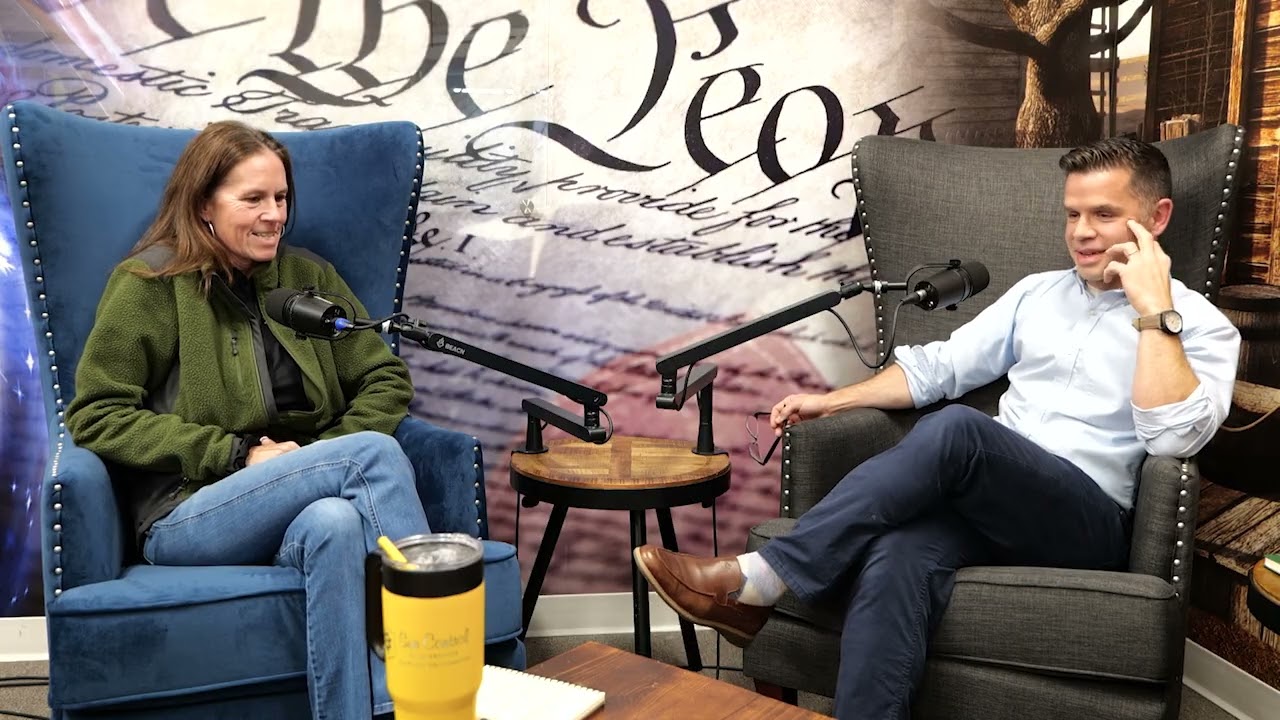
Hey everyone, it's Karissa from Shining Light on Minnesota. Very excited. Today we have Stuart here with us. Welcome Stuart. Hi. Thank you for having me. You bet. So, we are going to be digging into the world of AI. Exciting. Your your realm. Let's get started and tell everybody where you got started and how you got into the AI world. Uh, you know, I'm I'm going to add something on to that. It's going to be so much more boring because we're going to talk about the AI policy and the rules. That's not boring. That's exciting. Yes. the governance, all the fun stuff. Yeah. Yeah. So, we're going to talk about what you can't do as long as well as what you can do. Um, I got started in AI very similar to most people. You know, AI was this thing where I was able to uh use it to revise drafts. Yeah. You know, I was writing emails and I was like, I could write that a little more professional. You know, one of my favorite prompts, I still use this today, is put this at a 10th grade reading level. make it professional and take out any dashes because AI has this uh proficiency. They It always puts these little dashes in it. One or two, no matter where. Yes. Yeah. And and you always know that somebody's written something with AI because it has like let's go take the dashes out. Take the dashes out. So that's a part of my prompt that I give it. I say, you know, 10th grade reading level, make it professional. Take out the dashes. And usually I'll give a draft like, hey, here here are my thoughts. How can we make this better? And so that um morphed into and I'll be honest with you, you know, AI started in this space um where that was really the extent of what you could use it for, right? I was trying to write code with it and it was just was very [snorts] difficult. The these models were not very sophisticated. This was three four years ago and it has been incredible to watch how fast AI has moved into that space where it is creating and writing things that are so far beyond where it started right and uh so for me in a professional setting I was drafting I was using it in that way and then I slowly began to start working with it inside of a um a coding space. Y um and so I have been writing Python code since college. Yep. I have dabbled in HTML, right? And um and VBA as well. I'm, you know, I'm not trying to give you my resume, but Yeah. Well, people want to know like is he established? Does he know what he's talking about? That kind of stuff too, right? Sure. And so I was effectively a business systems analyst y uh for a small shipping company and um I was able to create and write some analysis tools uh and then I slowly started working with uh AI in the past three years. Yep. When it's kind of started slowly gradually taking off. Yeah. Yeah. Yeah. You know, I think chat GPT came out with their 2.5 model or their three model and it was it was it was at this point where I was like, okay, it's telling me which libraries it's telling me how to implement, what to use, how to use it, and the right ways to use it, not just what the rules and regulations are too. Exactly. Exactly. And um I I was lucky enough to think about it in terms of a project orientation. Um, you know, you can't, and you still can't even do this. You can't say to AI, "Hey, write me code that goes here that pulls this, put it into this, and then have it pop out this." It'll tell you how to do it yourself, but it won't do it for you. or if it does, it ends up highlighting the wrong rows or putting the wrong, you know, it doesn't have the most up-to-date information from the most uh recent update from say like Windows 11 or the settings feature inside of whatever program that you're working with. So, it really requires you to have that human interaction with AI. Say, okay, here here's what I see. here is how these systems are working. Y let's begin and let's start with can you open up a document right okay and then I've got that code okay now that we have the document opened up let's see if we can create a template and you can open that okay now can you open up an excel spreadsheet and then slowly you start to put these things together and AI and you are working in this space to create something in a project way yes um and so I was starting to do that And I was doing that in the professional setting. And then I realized that I was in a place where AI was creating this disparity between individuals who were able to uh effectively operate with AI and it seemed like and I mentioned this to you before that it seemed like it was giving individuals a jetpack 100% those people with those profession professional skills, those technical abilities, and then on the other end of that spectrum, it was essentially putting on a blindfold, right? And it was creating a lot of risks. And I since I've been working in governance and been working with a lot, you know, the the myriad of those individuals in that entire spectrum. Yeah. I have seen individuals that have taken thousands of rows right of Excel data and put it into chat GPT right so that they can write an email or so that they can make a PowerPoint. Yep. And people don't want to write these days. They don't know how to write. They don't know the professional way to do it. They want to just make it easy. Yeah. Exactly. And and through that ease of use comes an increased risk. 100%. It's copyright. You don't know what it is. You don't know what they're going to say, how they're going to say it, too. Yeah. And you don't know where it's going. Right. And the thing that has really struck me is that a lot of people don't knowing the risk. Yeah. They don't they don't actually realize that as they're putting these things into these large language models that they have broken a rule, right? That in a lot in some ways they've broken laws. Yeah. And um so I I saw a nuanced part of the market that needed to be addressed, right? And I uh began to work on and refine my policy scope. I worked with a lot of attorneys y to make sure that when these policies are implemented that they can be structured in such a way that reduces that risk not just for the stakeholders inside of their business but also externally so that when they're working with their clients that they have that fallback that like we've done our due diligence. We are making the correct disclosures. We are providing you with then understanding that we are doing everything we can to make sure that your data is as safe as possible. Well, we have a lot of viewers out there too that probably don't understand when you get the free version of something, it's not always the safe version, right? So, you get the free version of chat GPT and they start putting in all the personal stuff or all the stuff that they want. There's not always a safeguard to it. So, your information can be leaked. Absolutely. It's funny that you mentioned that because um I take the same approach with my daughters and their um we actually absolutely forbid social media, but that's because they're too young. Yeah. But when we look at and providing them with educational apps Yep. on their screens, we do our best to pay for an app. like I would much rather pay $3 or $4 to buy an app so that I can ensure that my daughters aren't being tracked or that their information isn't being shared or that somebody's not trying to sell them something. You know, a friend of mine said if you are not being offered a commodity, then you are the commodity, right? that your information and your eyeballs and your attention is what's being sold. Yes. And oh my gosh, that just hit home. It hit home. Absolutely. And the same is true like you're saying with a lot of these models is that it is sometimes in the world that we live in right now. Hard to see that. It's hard to see beyond that free. Yeah. It's free. Let's let's quick have you type a paper for me and let's not look it over and let's just submit it. Absolutely. Wait, what? All the stuff in the middle doesn't make sense or it doesn't sound like me or it's something else. That's it's not going to fly. Yes. But people are passing tests and people are passing papers and it's it's not them at all. So, yes, it's great that teachers are and school districts are finally coming to realms with, hey, let's check if this is copyright or if this is chat GPT and all of that information, too. Oh, you bring up a great point. You know, there's this educational as aspect of AI. even heard of. And uh teachers will have students write essays on a piece of paper in class. Imagine that. That's how we used to have to do it, right? Get out a pen and paper and write it down. Yeah. Yep. Well, and it's it's essentially it's changing this idea of education, right? Where, you know, you and I used to have to we would and we would go home and we would write it or, you know, here's a 10-page handwritten paper on college ruled paper. Exactly. Exactly. But now it's, hey, you're going to do that in class. Yeah. And so if you want to do your research outside of class and you want to use AI Exactly. It turns it into a learning tool and and treating it like a tool. I think with little turns, not just educators, Yeah. but business owners. Absolutely. Stakeholders, turning it ever so slightly. Help me understand. Let me work smarter, not harder. You can put guard rails in and that helps. It gives people that that push that they're looking for as opposed to just making it just 100% ease of use. Yes. Now I can do this thing and I don't have to put any effort into it. You know, you you're actually turning it into something where people get something out of it. Calendars, scheduling, bots, let's talk all that fun stuff now. Oh, sure. Let's switch that realm and go to all that stuff because we started talking ease of use and tools. Let's get into that in the governing sectors that get into the scheduling and all of that with it. Sure. So, calendars and well, you and I were talking about a second brain, right? Let's let our viewers know about a second brain. That is sure. A second brain. And honestly, I think that the interpretation around a second brain can can be subjective. Yeah. Right. People like it, they don't like it. They might not know about it, but Yeah. or if there is a different way that you can adapt to it. So currently I have um put this in place is um and I've used the Google suite because Google workspace is just a wonderful all-inclusive place where you can um you know Google Sheets and Google Docs integrated with Google Calendar integrated with Google Keep. Yep. And um so what it is is essentially a place where you put in your ideas throughout your day. Yep. Okay. I'm just going to throw a whole bunch. It's it's more or less like a brain dump. And then you set a aside some time during your week. I have two two blocks during my week of which I take about 30 minutes and I go through all of those brain dumps and I organize them. Yep. And if I need to set up a time where I need to create a Google sheet or create a Google doc or something that I've already created y um like I have an Etsy uh store where I have some Excel spreadsheets and some Google sheets that I offer for sale and I need to integrate those into this idea that I've put down. But then I also need to put that on my calendar for outreach or as a reminder in some capacity. Essentially what you're doing is you are moving your brain away from that analytical and focused and I'm going to do this then this then this. This is my checklist. This is my checklist. Yeah. You are offloading all of that and you're putting that into a space that is set up to remind you of those things that is set up to expand how much or the capacity by which you can have on various different topics. These are my tasks and this is a sequence to complete them and everything else kind of sort sort of in a AI world. Yeah, exactly. And and and as you move your brain, your first brain away from that that structure, you allow space for more creativity. Yep. You allow space for more of that brain dump. Right. To kind of feed that cycle, right? Because once it's out of one brain and onto the other brain, then you have more room to delegate to other areas, too. Exactly. And this in my mind this is a really great adaptation of how AI can increase productivity 100%. It can turn you as a professional into one and a half yourself. Yep. If not even more. Yep. And I think that is what business owners are looking for right now. I don't think business owners are really looking to fire people, right? They're not out there like, "Hey, chat GPT can write these emails, right? And it can do this chatbot for my website. So, I can get rid of these three people out of my office. I can save this amount of money and then move forward." They want to utilize them to where they're needed with the communication. I think the communication and the human aspect is is the biggest part, but they want to use them where they're where they're needed. Ex. Exactly. Exactly. And and as an enhancement tool. Yeah. Uh, you know, there was this idea of, um, at the turn of the 20th century, the Lites that would go around and they would, uh, uh, compromise or or disable uh, large equipment because they felt like it was taking over people's jobs. Uh, there was the idea of the ATM was going to take over uh, the job of bank tellers. Yeah. And what it actually ended up doing was it made space for those people in those capacities to do more, right? And so businesses became more efficient and they actually produced more and the economy was was built up as a as opposed to replaced. Correct. And I think that we are in the exact same paradigm shift right now is that AI is going to create this space for all of us to do more right and if we can adapt and if we can use AI in that way then I think that all of our businesses our economy our society our culture will be better granted there are certain inherent risks to AI you I'm not going to deny that um there are things like AI AI hallucinations. There is inherent bias with AI. There is definitely still a need for all of us to have that human review, right? And uh you know, as you and I were discussing leading up to uh this discussion here, you know, we spent most of our time talking about humanity, correct? And talking about that connection and how people interact with each other. And I think that AI is uh never going to have the human experience. So sorry. So, you know, I'll recap that it it really is about how AI can add to or enhance us as professionals. And and I don't ever think that it will be in a place where it's just going to wholeheartedly replace everybody. What about people's fear of AI taking over or AI's resetting itself and controlling itself or the hackers coming in and making it take over? Well, that's what I'm here for, right? I'm here to set where the professionals are, right? Yeah. Yep. I I don't want the governance know. But I mean, you see you see the way technology has gone and if it's gone there before AI is taking over themselves and there they are. Uh so the name of my company is Velocity. Yes. automation [snorts] and management partners and the velocity by which AI has moved in the past 101 15 years y is in in a way I don't think that I would ever be able to make a prediction about what that is and I you know I I hate to like not be able to answer your question right but I think that it could go in a number of different ways right um but honestly And I think this is how I'll answer your question. I think that we setting the rules for AI and focusing on AI governance, right, we can get more out of it than if we don't, right, than if we just let it run rampant and [clears throat] in in its own own ideas. But as far as like if we wanted to have a discussion about like the Terminator or the Matrix or No. Yeah. you know, but setting the rules is important for people to know. I mean, there's I mean, us having our own bots and doing the things after hours that they're that are out there. I mean, we have customers that will come in and say they want to speak to the bots that they they've been dealing with after hours. I mean, that's how good they are. And it's it's one of those things you've got to set the rules, set the parameters, and let them know the specific things because if you just say, "Hey, do this for me." They won't know what they're supposed to do, right? and where it's coming from. They'll get a lot of good information, but it might not all be accurate. Oh, no. Yeah, absolutely. You know, AI is certainly far from and and here is where I think that AI could s make a big difference is that right now, and I I mentioned AI hallucinations, and it's kind of I mean, hallucination is not exactly the term that should be given. It's really just making stuff up. Yep. like, you know, here's everything I'm gonna pull about your business, but here's the stuff that I'm just gonna pull out of my head and put on there. Yeah. Yeah. I'm just gonna fill in the gaps a little bit here and there. And so, I think that uh AI and the industry in general could do a better job of and as we as humans have learned, y I don't know, right? You know, just simply I don't know instead of I'm going to fill in the blanks and make it sound good just to make it sound good. Make it pretty. Yep. Yep. Absolutely. And you know, we as interacting with these systems are able to say, "Okay, well, how do I work around that? Thank you for being upfront, making sure that you're you're not going to give me the wrong information or lead me down the wrong road." Right. And u you know, just like with anybody else, uh if you do start on that wrong road, it's it's just the you just end up in the way off track. Yes. And um you know AI certainly has and I've been in situations where I've worked on projects where um AI has led me into the wrong place, right? And I've had to basically wipe the slate clean and start over. Yep. I mean, you start talking about AI and cars, cars driving themselves, blue cruise, everything like that. There's so many different worlds and realms, but there are still so many generations of people out there that are still very scared to use it and won't use it. And it's interesting to see what's going to happen with the ones that won't use it. Yeah. You know, the um autonomous vehicle revolution. I have I kind of have a theory about this in that we still have cars on the road today that don't have to have seat belts, right? Because they were around before the laws were made where seat belts were implemented. But with cars that were made a long time ago, they last a lot longer than the cars that are made these days. That's true. Dexterity wise, that's true. But having blue cruise on your car, having self-driving cars is a really nice feature. I'm in a car a lot. I really enjoy having those automatic features. I can't I'm not going to lie, I do like it and I use it a lot. So, it's one of those features, but it'll be interesting to see no seat belts, the dexterity, the the life of the cars, what what that'll look like, too. Yeah. And I I think I think my point is that no matter what law is created around autonomous vehicle driving, there will always be those individuals that say, "I'm not doing it. I'm not going to do it." Right. Yep. Like, I drive. Yep. I'm going to do what I do. Y even though you know if we could like talking about wiping the slate clean if we if we took it all away and we said that every single car on the road right now has to be self-driving. People still write pen and paper everywhere they go. So yeah. Exactly. I mean we were talking about copy and paste being a struggle for someone to computers, telephones, cell phones, anything. Yeah, absolutely. But certainly if if every car on the road right now was self-driving, one traffic wouldn't be a thing, right? And two, you It could because they might get in accidents. They have to learn right away. So you never know. Yeah. Exactly. You know the uh so so yeah I think that there will inherently always be the human limitation right of the advancement of AI or any other technology. Yes like that. So what's next with the governing and the laws do you think what's coming your way? I honestly I think that the international uh perspective on governance is probably the next big thing to take hold. Europe has set some really strong regulations. Um Canada has is at the forefront of this. um the United States is working on and you know some independent agencies and businesses are really kind of leading the scope when it comes to um governance. Um but I think that it's also going to fall in line with a lot of other industries when it comes to regulation. uh China has their own way of looking at and following rules when it comes to but different countries have their own technology or their technological levels too like we're a little further behind than other countries as far as where we are advancing too. So that's that's interesting to see and honestly uh in addition to that I think it also comes down to power generation. Mhm. So, who is going to be able to create the amount of power needed for these data centers, right? And that is a huge part of this puzzle. It's not just about AI and how much AI can move or how quickly it can move. It's about where is the data coming from, where is it stored, and how do you keep the lights on in that building. Yep. And those are popping up all over now these days. Yes. Yeah. And then there are political ramifications when it takes those. If you live near a data center, you are not happy and I don't blame you. Right. There's that what that hum and the the buzzing sound. Yep. Oh gosh. Yeah. I Yeah. I you know, fingers crossed I that I live in a place where we You're far enough away. Yeah. Yeah. Yeah. I hope so. But at the same time, there is a reality that people live within those spaces. And I think that we should as not just stewards of the technology but stewards of our planet and stewards of our culture y and individuals y um we have to realize that we are exposing people to or or or we are making a tradeoff and that trade-off is is people's well-being. Yep. So that we can you know for the most part write a better email. Yeah. Right. You know what I mean? faster, smarter, harder just to get it out quicker, right? Yeah. Yeah. And so what what is that tradeoff? And and I wonder if um is it worth it? Is it not? Yeah. Is it worth it? Yep. Yeah. No, that's a really good question. And so I think that all of those questions go into the future of AI and how we are moving into that space. But at the same time, you can't get left behind. No, you have to you have to utilize it and you have to understand it and you have to know how to work with it. but also what the rules are and how to use it smartly. Yes. As a tool, not as a shortcut. Yes. Yeah. Yep. So, how did you originally get into coding and let's tell our viewers a little bit about that. Yeah. So, I um I was an economics major at the College of Charleston in South Carolina. Uh don't ask me why I left the beach to um to the tundra. Yeah. Why Why are you here in the snow? [laughter] I'm I'm trying to get away from the snow, right? Honestly, uh the Twin Cities is a wonderful place for Fortune 500 companies and other It's a great place in general. It's amazing. I I other than the snow, I would live here all my life. Yes. Yeah. I think I think we all kind of in a small way take for granted how uh prevalent the business landscape is. It is. Y like we have a lot of very very substantial businesses here that have headquartered in this area and that that is just very fortunate. Yeah. So the Twin Cities was certainly a place where I felt um like I could grow a career and and be here for a long time. Um I got into writing code. um my international economics teacher. I was working on a project a a an infographic a visualization for him and uh my question was how do I get data easier from the internet like I want to scrape data from the internet and his response to me was you need to go see professor Staly at the computer science uh department and you need to figure out how you can start writing code. Yep. Of course, I went and the first uh response was, "You need to take this course." And so the next semester, I was I was in a computer science course. Of course, I was a little bit of a fish out of water. Um, a lot of the individuals I was working with had been writing code, you know, since high school, since middle school. It was in their blood. They just did it. Yeah. and and a lot of the individuals there had been working with HTML and working with um gaming and and making games. And so I'm here like writing my first I'm trying to just scrape some stuff up quick. Yeah. Yeah. Um so uh I ended up taking uh two full computer science courses and that gave me a really good basis an understanding of how I can use coding um really in a basic way. Yeah. And that uh progressed throughout my career um as I was working with data and data sets and um started you know googling how to do this, how to do that, what does this take and then eventually you do that enough times and you've gotten to the point where you can write some code that can take data from this uh one reporting platform and you can revise the data to be able to be analyzed in this output Yes, if you can do those, if you can be the intermediary between the data in and the data out, then you are certainly making yourself useful or uh inside of the business world. Right. And now I'm making the software. I can make it happen. Here's the input and the output. Exactly. Exactly. And it turns out that there are so many people that need you to write something that does all write me a code quick. Yeah. Exactly. Exactly. I have done that so many times. Can you solve this problem? I've been copying this and pasting it over here. Can you do that for me? But wait, what's copy and paste? Right. What's [laughter] control V? Right. Control C. Control V. What? What is control? Yeah. Yeah. And so that grew into me being in the office, the go-to guy. And when you're the go-to guy, it feels really good. It does. like and not just because you know you wear a lot of hats but you can't be replaced that. Exactly. Yeah. Yeah. No, no, no. That that absolutely um you know being as humble as possible not you know having having that ideal inside of the office setting and being that person. But really I think what um spoke to me was when I do solve those little problems Yep. four people uh and I've tried to focus on this. It's less about the time savings for me and it's more about the momentum savings, right? And so when I started looking at problems in terms of how do I maintain people's momentum through their day as opposed to like I can save you 20 minutes here, I can save you five minutes here. I want to save you that that headache from going into your next task, right? Let's let's create the m momentum and keep it going flowing through the flow. Yeah. Yeah. And so when I started thinking of it that way, it it took on a whole new mindset for me because if your flow goes and everybody else's flow will keep going through the company. Yep. Yeah. Exactly. And I think that working with AI and integrating AI into that mindset and thinking about it in a momentum aspect as opposed to a time savings or a money savings or an efficiency savings. It is about momentum and how do I maintain that? That I've really been able to utilize my coding construct, put it inside of a project mentality. Yes. And have it output those tools that help people through their day. Yes. As opposed to, hey, now I only have to do four hours of work as opposed to six. Right. Or I don't burn out at 2 p.m. There's not enough hours in the day. I have extra hours here. How can I create more to help me through the day? Yeah. And and then it keeps people flowing all the way to 5 6 7 p.m. so that they feel comfortable and they feel better about what they're doing not just wore out and stressed out and on the next day getting through the grind just to get through. Yeah. Yeah. So when you can help somebody come out of their day and they feel better. Yep. As opposed to coming out of their day and just being like another day. Yeah. Yeah. Yeah. Oh man, that the the positive uh reinforcement that comes from something like that to be able to be a part of that change in people's work days. I think that really is what cemented um moving forward and and and and finding those solutions for people. So Velocity, what all is entailed in that and what all can our viewers find if they want to go to Velocity and how can you help them out when they come to Velocity? Sure. Absolutely. The good stuff, right? You know, um I would say if your viewers do want to get in touch with me, the best way to do that would be go through you. Yep. So, and I can get a hold of that. Get a hold of you. Exactly. Exactly. I think it's I think it's it's great for us to connect and and and form that connection here that um you can absolutely point people in the right direction. You can give them my information. My name is Stuart Andrews. I am on um LinkedIn. Our website is velocityampartners.com. Yes. Yeah. And what do you think two questions I think before we finish up. What is the best advice that you've been given? Oh gosh. The best advice that I've been given. Okay. Um, you know, I was told as a manager in my in in my position in in in a global shipping company, the president of my company, he's very very intelligent man. And as I was beginning to work with and have direct reports, people that reported directly to me, I made a mistake. And he sat down with me and he gave me time and he asked me questions and it was the mistake that I made. It wasn't technical. It was about that human interaction. It was about leading. It was about managing correctly. Yep. leading with purpose and Exactly. Exactly. And I made a mistake and at the end of the conversation it you know and it took me some time to really reflect on what had happened. I really didn't get reprimanded. I didn't I didn't receive this like uh you know a different manager would have probably gotten a little bit upset or you know whatever that means in terms of correcting an individual. And what he said to me, I'll never forget it. He said, "Great leaders don't create more followers, they create more leaders." You need to think about everything that you're doing, you should be trying to in that interaction with that individual, you should be doing what you can to make them a leader. And if you think about it that way, you will absolutely change the way in which you manage people because you will no longer think about trying to correct them or trying to make them do what you need them to do or put them in a place so that they're doing. You will try to empower them so that they will create that environment around themselves about leading others. So great leaders don't create followers, they create more leaders. Amazing. Yeah, I I thought that was great. Yes. And question number two. Sure. What do you want to leave with our followers? Oh, uh, you know, I what I would say is that it doesn't take just a business owner to utilize our services. Yes, we create efficiencies for people all the time as well. You know, not only do we work in the governance space, we can write you some code to get on the internet and file that thing that you really don't want to file or do that booking that you really don't want to do. We can we write all of those things and we are very autonomous in terms of how we work with people. We are not trying to sell you on the next uh serviceable uh uh uh piece of software. We're not that. we are very very nuanced and we will work with you to create those things. Um also what I would say is um I think this is the most important thing is that governance and rules with AI is different than many many other places in the business world where rules are needed because when you put these guard rails in place when you give people that scope and that structure of what they're allowed to use and what they're not allowed to use what you're doing is you are essentially creating creating this additional hire that AI becomes a part of the team and that people start working with it. Exactly. And they start working with each other. You have to set the governance in place. And that is exactly what we do when we come into these small businesses is that we create the policy in under the perspective that your team is going to treat that in a way that it helps enhance and bring everyone together. It's like another teammate. Exactly. It's another tool or teammate. Yeah. And and that's that's how I see AI is going to come into these businesses and it's either going to separate people or it's going to bring people together. And I think that it requires some work and some effort on on the behalf of stakeholders and managers and owners in order to create that space that brings people together. And um so yeah, I would I would say that we are unique in that we're not just giving you policy outlines, right? We're not just training your people. We're not just auditing your AI. You're making it as a whole. Like you all have to come together. Exactly. Exactly. We're we're helping you and your team look at AI as a way in which everyone can be brought up. You and your team can be more productive and your business can grow. Yeah. And all the all the fun things that are out there to utilize. Yeah. Oh, and there's so many. Yeah. Oh my gosh. And you could just go through a list and everybody's like, "Wait, what? What is that? And how do we use it? What half the people don't even know what Copilot is or copy and paste or just the the little things. Well, I have a proprietary list right now and it's 50. Yeah, there's 50 LLMs on it right now and it grows every single day and I have to revisit that almost weekly. Uh but you know what we suggest is we suggest three maybe four at the most and you assign them tasks. Yeah. So, one of these AIs is going to help you write code. Another is going to help you generate uh um things like emails or or presentations or, you know, assign them roles, give them KPIs, monitor their progress, and help people work together. So, for the people starting out in AI, what would you suggest for the people that haven't used it before? That's a really good I know I said I said two more, but that was that was a good one. Yeah. Yeah. Yeah. So, if you haven't ever used AI and you're essentially more or less walking out of the cave, right, and you want to jump into it, honestly, what I would say is I would I would say pick undoubtedly you are familiar with some sort of software, whether that be Microsoft Excel or getting on Google and just pulling up something. Yeah. Or or doing Yeah. even doing some basic searching or what I would say is I would say work on your prompts. So look up and Google prompt engineering and what that can do is that can get you started in the right way towards learning more about some specific part of your life. Yes. Um you can learn how to play the piano. You can learn a new language. You know what I've recently started using AI for? This is this is so much fun. I actually did this today. You can sit down with AI and you can turn on voice recognition mode. So, here's what I said, and I am being vulnerable. I'm not scared to admit it. I had a mock uh uh interview of a podcast because I wanted to make [laughter] sure that I was not a fish out of water. Well, a lot of times people are are coming to me and they're like, I'm so scared. I'm like, it's just you and I having a conversation. It's fun. Like there's there's no cameras on. It's just it's a fun conversation. Yeah. Yeah. So, with anything, if you're doing a business interaction or if you have a meeting with your boss or or I want to quick throw something together for my sales team here, let's pull something together, but then it's making it your own, right? Exactly. Exactly. You are using AI and adapting it to what you need. Yeah. Let me pull it together, but then you put it in your brain and you make it your own. Yeah. Yeah. So really, I think the best way if somebody is walking out of the cave and they are is just get started. Yeah. Just ask it something and look it over when you're done cuz whether it's a spreadsheet or anything else, it's not going to come out the way you want it. Don't putative information in there. Don't put company information in there. Don't put a spreadsheet in there that you don't want in there. No data. No data. Absolutely. Perfect. Yeah. No, this is Thank you. That that's a really good question. I I like that question a lot. And what's your favorite food? Oo, favorite food. fun stuff. Uh well, it's Tuesday. Uh it's tacos. Yeah. Yeah. And family. You have a wonderful family. I have four children. Yes. Yep. They um are the light of my life. Absolutely amazing. Um I took my son, he is two and a half. He will be three on Halloween. Oh, busy, busy, busy, fun, fun. And so yesterday, he and I, he rode his strider bike and I rode my bike down to the lake and we went fishing and Yes. Amazing. Your whole heart is there. Yes. It was just so much fun. Yeah. So, uh, yeah. And he has three older sisters and we spend a lot of time outside. Um, you know, and this weather the last few weeks has been amazing. Oh gosh. Yeah. You can't you can't get that anywhere right now. It's beautiful. Well, it's raining today, but yes, it has been beautiful, but it still is. Yeah. Yeah. Absolutely. So, yeah, family. I really enjoy being a father and um Yeah. You know, being a husband. Yep. All that stuff. Absolutely. Again, talking about the human element, like we're all still humans. Yes. You have to have that human connection. Even with the AI, you're not going to have your jobs taken from you. You've got to have the connection. Exactly. AIS don't have the human connection. So, no matter what you do, you've got to connect. And it can help us. It can help us be better in our professional settings so that we can compartment. I use it for my schedule. I use it for my emails. Help me summarize all my emails through the day when I'm not here. Help me pull my calendar together. help me when we're not working. Have someone answer the phones, whatever it may be. Yeah. Yep. Mhm. Absolutely. Yeah. Yeah. There's so many different tools out there. They've just got to use it. Yeah. Yeah. That's great. Well, we appreciate having you on today and thank you [music] all for being here and let's continue to shine a light. See you guys later.