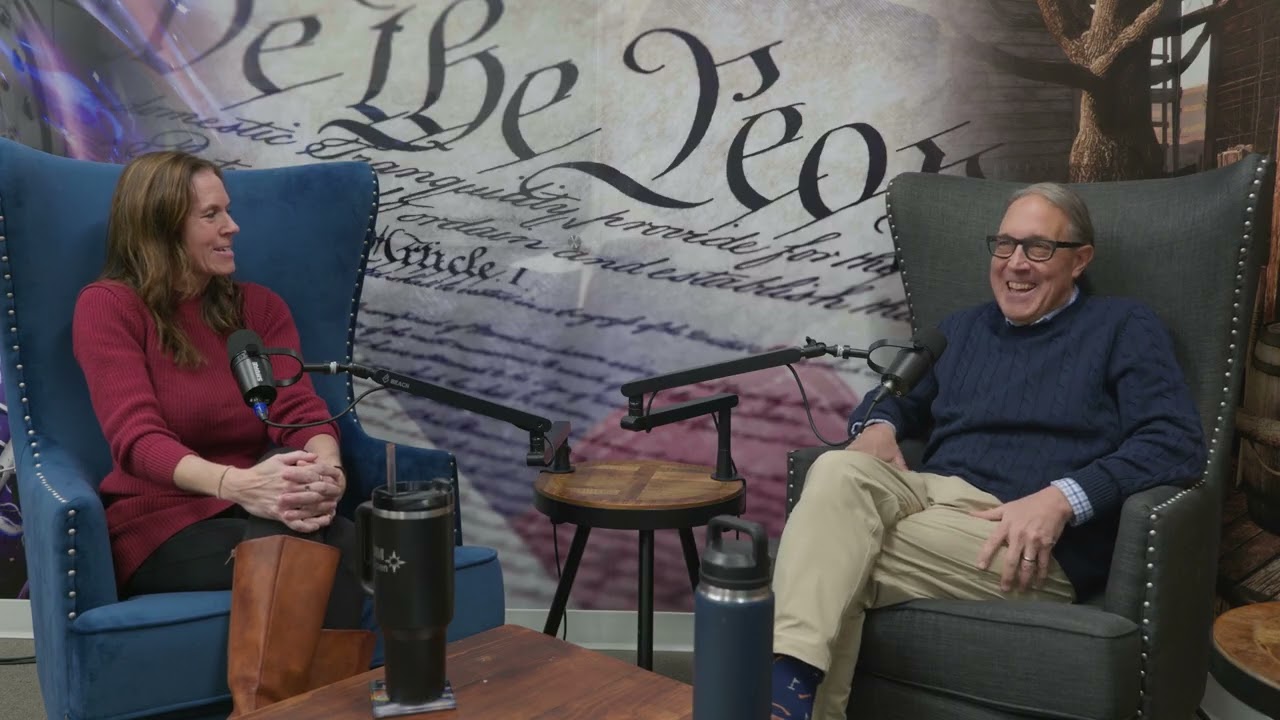
Hello everyone. It's Karissa from Shining Light on Minnesota. I'm very excited we have Paul Long with us today. Welcome Paul. Hi Karissa. Nice to be here. Thank you for having me. You bet. So, let's get started. Tell our guests a little bit about your past in the medical world and kind of what got you here today to Shining Light on Minnesota. Oh, sure. Well, um well, I again just appreciate being here and um I like I like how you um enjoy talking with people from around Minnesota and just to like like to hear stories. So um you know my story in healthc care started really when I was uh in the airline industry um and learned a lot about um digital health um or dig being digital anyway. So, I was part of the team that built the first ever booking engine um for Northwest Airlines and um learned a lot about um the digital space and helping uh customers kind of navigate that journey around finding um their flight and finding their travel. Um if you translate that to health care, um people are on a journey all the time um as they navigate their own health care journey. Um and no journey is the same. Um uh having having worked in um the airline industry and then in loyalty marketing um and really understanding what it took to um uh make customers sticky toward a product or a brand. Um all of that led me to really trying to understand what is the experience that members are having or customers or patients are having in their own healthcare journey. Um and so uh um in about 2012 I um made a big shift. I actually was a a company owner. Um, I uh owned a loyalty marketing company and I said, you know, I really want to go um to a place that uh will uh focus on the endto-end consumer experience of something really big. Now, that can be a lot of different right organizations. Um but uh the industries the industry that I chose was healthcare. Yeah. Um and it's been very fulfilling and at the same time it's a big big challenge because we have a lot of challenges in healthcare as we try to make it better for everyone. Yes. Um and uh make it uh make it just simple to use and and lower the cost. Well, and it's it's interesting because no matter where you go, it's always the needs of the patients and the needs of the care and end all is the needs of everybody, right? So how how you get there and how you navigate through it is very interesting, right? Yeah. Um you know my my own journey um in healthc care really has been through um my mom and dad um who uh recently passed away. My dad passed away in 2019 and my mom uh uh went to be with him in 2022. Um but being a caregiver um of elderly parents is is the way that I've really experienced the health care system. I'm a pretty healthy guy, right? Um and my family has been healthy. Um but but helping my parents um uh navigate their their later years in life has been really my journey. And the journey is challenging especially for uh um older adults um where they're taking multiple multiple prescriptions. Um today Karissa 74% of people in the United States, adults in the United States have at least one chronic condition, right? That's what we are dealing with. Right. And um and so that's something that just drives me um because I don't think that uh we should be having um you know three4s of our population in chronic conditions, but when we do, how are we taking care of them, right? Um and how are we helping them to get healthy? And it's only one. You look at I mean I have one parent that's passed away and another one that's ill. and you look at their list of prescriptions and you look at their list of chronic conditions and it's multiple, multiple, multiple. There's lots of them there and you think of what are the steps that you took to get there and let's look at your lifespan and the care that you had getting to those stages and what were you missing throughout that lifespan too, right? What what did you do? What did you miss? And how can I better myself to get there too, right? That's right. Yeah. you know and even even as you you know and when and we can look back and at the same time what is what is happening with them right now right um those multiple medications as an example um in in the work that I've done around consumer experience um we would go into um some of our members homes and just look at you know kind of like well how are they kind of like you know managing their day-to-day life um I used to um deliver meals on wheels with my dad. And um when you walk into a house um that may not have electricity or um they're living um in squalor or they have multiple um pets that are um uh you know they're not taken care of, they're not going out, they're not going outside. Um and then you're looking at well how are they taking their medication? They're often or are they or are they taking their medication? And if they are, what we've seen in the past is they're literally pouring all the medication in a bowl, right? And they're just sort of taking a hand a little handful and and they're saying, "Well, I'm hoping for the best that these are the medications that I'm supposed to." Well, they all look the same. The numbers are the same. They're all white, they're all green, they're all yellow, whatever colors they may be, they all look identical. And even with the pill counters, you can't see dayto-day what what you've taken, what you haven't taken. I mean, it's hard enough for the care of a parent to know enough to get up through the day. What time you're getting up? Did I take my pills? Did I not take my pills? None. Nonetheless, did I shower through the day? Did I eat my food? That's right. Am I not eating my food? Um, I mean, I'm going through that with one of my parents. Kind of enough information there, but it's it's a lot to even see if they're taking care of themselves through the day. Nonetheless, are you taking your pills? Is the care there? You know, are you taking care of yourself in your own home? What's the next stage look like? That's right. Right. Yeah. So, it's interesting. Yeah. And you I I think that um when I joined um a a company in town back in 2012, um it was just starting where the government was taking a more active role in um helping members get the care that they need. Yeah. um uh the industry itself has um I think come a long way to try to understand well how much does healthcare actually cost and how do we lower the cost of care right so there's a whole sort of pillar around lowering the cost of care yes there's a whole pillar around um making sure that the care that members and patients at deliver good health outcomes, right? Because there's a lot of things that we do. It's sort of like busy work at work, right? Like it's busy work, but it's not really having the outcome that you want it to be, right? So, are the patients getting uh the right outcomes for the care that they need. Um are they getting the right access to care? Correct. So, access to care is another pillar, a third pillar. And then the last one is are we delivering a good experience? Now in my perspective, I actually think that that experience that members or patients have in their healthcare experience is the thread, yes, that delivers better outcomes, makes sure that we give them the right access to care, um, and will lower the cost of care because if they're having a good experience, they're more likely to perhaps get their preventative exams when they need them. they're more likely to better understand how to take their medication and so ultimately they're going to live uh a healthier life. Correct. Um and um and so that's really the just been my goal um in this whole thing is being a chief experience officer is to focus on what is that experience that members or patients are having and how can we make it better. And so what that requires is man do we have the right technology right? do we have the um the right people in place to help and then what are the processes so it I always try to look through the lens of uh the person who is dealing with whatever experience that they're given whatever it is whatever moments those things that whatever moments that they're having throughout any sort of a journey um and then how do we make them better what are the processes the people and the technology to make those things better how has experience changed in the last couple or the last 5 to 10 years? Obviously, it's changed quite a bit in your eyes and it will continue to change, but what what have the process has changed and how do you think it's going to change in the future? Yeah. Well, good question. Yeah, I love that question. Thank you. Um so I think you know first of all um uh if you take if you take something like um the Affordable Care Act, the Affordable Care Act um was something that was um uh implemented kind of right around 2011 2012. I think it was ultimately um uh enacted in 2014. Um, now there's you can have, you know, an opinion one way or another of the Affordable Care Act, but um, one of the things that it's doing is it's causing us to think about, wow, do you even know how much healthcare costs as a person yourself? And so if if we can start to sort of use the framework of the affordable care act um for new products like um a new product that it's currently on the market is called IKRA and that stands for individual coverage health reimbursement arrangement and many employers now are considering instead of delivering uh or giving health care to their employees they're suggesting why don't I just give my employees money and they can go out on the open market and shop around and shop around and get the right plan for them because as a healthy person I don't necessarily need a gold plan in which everything is paid for but I could use the excess dollars to get um for example um better eye care or I could get um you know my dental care if I need a gold plan I'm still getting money to go out in the open market so that is I consider that a very consumerry plan. Um I think it's great for employers as well because it's a defined contribution that they're giving to members um and or to their employees and um and then what that that allows for is um is uh the employers then have a better understanding of how to budget. Correct. This next year we're all going to see some pretty significant rate increases um in our overall health insurance. And so by thinking about um IKRA as an example, it puts the responsibility in a good way on the person to get the right health care that they want. So that's like one example, right? On the health services side, I'm seeing a lot of um uh navigation companies. So helping company helping um people navigate to the right care that they need at a lower cost at faster service um and and and getting and getting better outcomes as a result, right? Um so um for example, let's say that I'm thinking about getting a knee replacement. Um, I can I can use a care navigation company to find um perhaps a closer uh um uh doctor for me um at a better cost. Or maybe it's farther away, but they'll pay for it's still in network and they'll pay for my um uh my flight or my travel to get to that um doctor to get the um the procedure that I want at a lower cost. Yeah. Um and so those are two, I think, really important things that are um getting more widespread um acceptance that I think will ultimately um improve the experience as well as outcomes, costs, and access, which is important. You've got to have that. And people don't understand that sometimes health care isn't always let's go to the highest plan and get what we need bang for the dollar because especially within the next year you're getting older, rates are going to go up, things are changing in the economy, things are changing everywhere. You've got to go where it's going to make sense the most. That's right. Yeah. That's right. And with a health savings account, another example of a really really good um uh product um that's part of health care is that you can take those funds and if you're not using them, you get to keep them in a health savings account. Some some accounts don't allow you to, but a health savings account does and you can actually turn that into an investment. you can actually invest those dollars and so that when you do get into those elder years um where health care gets uh more costly, you can use that health savings account later. Yes. Um and you can use it for um the the care that you need at that time. So So how has technology changed obviously or how is it changing in the consumer's eyes and in the healthcare eyes? Well um so it depends on what you think about techn or it depends on like how you define technology. Um I think that um there are some really big challenges in healthcare. Uh one is um uh HIPPA compliance which is really important which is scary but it is important. It is important but at the same time it really causes health care companies to be a little further back on um privacy well because they have to be so regulated and so private it really is setting them back from delivering I think more um innovative technologies as it relates to sort of um things that are on the internet so like digital care it's hard to log in to my account as an example so I even think if as I think these journeys that members take. I consider them sort of journeys, moments. I think of them as um you know little subjourneys. The journey of logging in should not be hard. No, but you still have to get those files and you have to get them from one place to another. But at the same time, those are still files of a patient. You don't want them to be leaked everywhere, right? You don't want them to be leaked. Absolutely not. And and at the same time, so then how can we um still deliver them somewhere? Yes. Right. Do we have to hand deliver them? I mean that right that is let me send them through the file downstairs just to make sure they get there. Yeah. But I will say that there are some really amazing technologies that are delivering a better experience. So um take a doctor for example. So we talk I've been talking a lot about the patient experience or the consumer experience. Um doctors um are uh high stress. Yeah. They can be very burned out. Um and staff can be the whole staff and the and and I think um delivering a better provider experience and helping the provider to do their job better will reduce that burnout. Here's one real uh important example. Doctors often um have to stay late. They don't get paid for that, but they have to document and take notes and do all of the do all of the things that for the patients that they've already seen. Um and often you'll find doctors um uh um this is this is me having talked to doctors doctors will say I'm here talking with a patient and I'm not even looking at that patient right I'm typing taking notes for that patient and at the same time I have in the back of my head the last patient that I saw right and trying to remember what I need to document for that patient. Yeah. So, great technology that is happening today. Um, and we need to get patient approval on this. Every time they ask for patient approval, but it's ambient listening in stereo, right? Where um, if you're the doctor and I'm the patient, we're having a conversation and it is documenting everything that is being talked about um, in that exam room. Yeah. Um and then it will also turn it into CPT codes and put it into um the electronic medical record. It is amazing. Trying to record and listen and do everything at once and then go to the next room and then okay that was important but I don't remember like but I don't remember. And it get it gets rid of all of that. Um and and it allows then the doctor and the patient to be able to look each other in the eye. Um, which is something, you know, when it comes to trust and empathy, um, doctors are trained to do that. They're trained to do something that they're physically not really able to do at this point, but with ambient listening now, they're able to do that. And and I think that that's pretty cool. Um, I think another really um important one is um what's called remote patient monitoring. And there's lots of ways that you can think about doing this. One um one company uh that I think is is really interesting is a company in which it's just a simple mat and um somebody stands on the mat every single day while they brush their teeth. That's what they like to say. Just spend spend time brushing your teeth and within 30 seconds um it will identify the prevalence of foot ulcers five weeks before those foot ulcers actually rupture. So this company's goal is to prevent diabetic foot amputations altogether which by the way is um extremely expensive. So talk about lowering the cost of care and also it is um it has a 50% mortality rate. Once somebody has um a foot amputation they're more sedentary. Yes. um and within a year uh 50% of people who have these foot amputations actually pass away. Um and so by by um creating this technology that will identify the prevalence of these foot ulcers, get the patient in touch with the doctor um so that they can um uh do other treatment besides prior to having it y prior to having it um amputated. Um it is a huge huge cost savings, right? Um, so very very cool technology. Everything from the internet, which we still have challenges, right? Obviously, all the way to ambient listening and uh remote patient monitoring. Um, there's some really really cool technology and there's so much out there that we don't even know about or that's coming that is out there. I mean, from research to everything else, it's just it's amazing to see the way it's going and how much is out there and what what's to come. But yes. Yeah. And I'm probably just scratching the surface, but these are these are, you know, some pretty amazing things. So, who have been some of your main or big mentors along the way that have gotten you to where you are today from wherever you are in life? Wow. Well, you know, Karissa, I think it uh it there's something that that that I'd like to share. Yes. Um and that is um something that's really important um that's been an important part of my life. And um something you and I talked about recently um and um when I was only 10 days old, I was adopted. Yeah. And um uh my uh you know my birth mother uh made a really really difficult decision and um uh went away and uh had had me as a child and and then left and went on and and you know uh um lived a life and and uh and I was adopted by two amazing parents. So to answer your question on mentors in my life, um certainly uh the mentors in my life are the the parents who raised me um and then I was able to give back to them as well um as uh as I um um cared for them um during their later years. Um my dad was a professor his whole life um worked in the university systems um all across the nation. Amazing. UVA and uh Michigan State and University of Michigan and um he was at the University of Arkansas um when uh they got the call that I was um I was available. So you're a Razerback fan. Uh no, I had I spent [laughter] no time and and I spent uh I was born in Denton, Texas. Um and they drove down from Little Rock to pick me up and brought me back. But I think when I was two, I was moved uh to Minnesota. and uh and so I've really lived most of my life um in Minnesota. Um but my parents um um you know and and watching their example and how they raised me. And by the way, I'm the youngest of three adopted kids. So they never had kids um of their own, but um but they raised um three very different children. Um we all came from different walks of life um and different um different circumstances but um but they were they were pretty amazing in my life. Very blessed. [snorts] Um from a career standpoint um I've had wonderful mentors um along the way. I think um one that comes to mind is uh a uh a leader that I recently had probably 15 years ago um who really taught me everything about uh moving from a small company uh where I was a big fish in a little pond. I was the the president of a loyalty marketing company to uh a very little fish in a very very big pond um in healthcare for sure. Um and uh and so um I've still today learn a lot um from that mentor. Yeah. And you like to do some mentoring yourself, Paul. Tell everybody a little bit about about the mentoring that you like to do and how Sure. Yeah. Well, uh so I'm a uh I've been asked to be a mentor at Bethl College, which is right here in um uh in the Twin Cities. And uh I'm uh just starting uh my my journey around being a mentor for a college student. I've been a mentor for um for uh in in the corporate environment. Yeah. Um for a number of people, but I would say um if I were to, you know, if you were to ask me, you know, for any um advice, I would say be a mentor. Yes. It is such an amazing Absolutely. I think I get more out of it. I hope. Uh I hope they get a lot out of it. I get a lot out of it when I do it myself, too. Do you? And so tell me tell me a little bit about like who do you mentor? What what's your mentor experience? I've mentored quite a few people. I mean, I think right now I'm mentoring two or three people myself. I love mentoring. Um whether it's mentoring people in my field, just people in general, um young, old, whatever it may be, just giving back, helping out people. Um I think I learn more about myself and I learn more about other people. It's it's ingenuine, but it's being intentional. I think it's it's a lifelong journey. So for you is this um is is this a mentorship as part of a program or not always. Sometimes it's just because it's just because like you just be like I'm going to mentor that person and may maybe you won't even tell them that you're mentoring them, right? Sometimes but sometimes there are programs too where they're like, "Hey, we're looking for mentors." And I'm like, "I'll take a couple. Whatever you whatever you need, let me help out." Yes. Sometimes people will be reach out to me and be like, "Hey, I have a couple people that'll or one person or a couple people that'll be a great fit that really want help with, you know, leadership or want help with business development or want help getting out there and learning how to network or want help with this or that. Could you help?" And I'm like, "Absolutely." You know, let me let me help. How many days a week or how many days a month or what do you need? Yes. But a lot of times it's just taking them under my wing without even them knowing. Yeah. Exactly. Exactly. And I so so and sometimes I would say um and I'm curious your thoughts on this. Sometimes it doesn't always work out. No. Right. Correct. Yeah. Yes. And and I think that's okay, but I think it's it's important to sort of just call that out. Right. So um you know I remember one uh mentee um the person liked uh they were a foodie and so they wanted to talk a lot about food and I said great if you want to talk about food. And uh most of our uh mentor meetings were at restaurants and uh that person liked to talk about food a lot. Um there wasn't probably a lot of um learning mentoring around like career development or anything like that. Um and so you sort of chalk it up and you say, well, you know, that's just kind of more of a friendship or whatever maybe. Yeah, maybe. Yeah. Um but but at the same time I think um the the pros definitely outweigh um the cons in mentoring. Um and I think you just sort of got to like step out. I have a a a a colleague of mine. We're in a a networking group together. Um and I recently went to um a u a purposefueled there's a purposefueled uh meeting. I'm sorry if I'm getting the name wrong. Purpose driven or something. Purpose driven something. But he was a meeting and he was presenting and his whole idea was just show up. Yep. Right. Sometimes it's going to work, sometimes it's not going to work, but just show up because you never actually know. No. Um what what will happen and um that's sort of kind of how I live my life a little bit is just showing up. Yep. And if you say you're going to do something, do it. I think that's important, too. You're you are you you're I I feel like I feel like you took the words out of my mouth. You're right. I think, you know, your reputation and your brand is all about um building trust. Yes. Um and integrity. Um and and sometimes that might look uh you know, your brand might look like, oh, I trust that you're not going to do the right thing. Um what what I want to um live by is that um people trust that my yes is yes and my no is no. Sometimes I'm not going to be able to do things because it it's simply the the fact that I um I just don't have the time because I'm doing some other thing too. I'm gonna get too pulled too thin. So it's it's it it takes integrity to say no. Correct. Um but always do what you say you're going to do. I completely agree. I agree. And I think for me, I mean, I was raised when you're 15 minutes early, you're still late. So, I mean, being being early is in prompt, courteous, professional. Being early, it's kind of one of those things you stand by and you do and you say if you're going to do it, you do it. Um, but when you're there, you show up. You be intentional. You You show up ready to be there. Put the phone down. You listen. Yep. And when you're there, you be there. Don't just show up to show up. You want to You want to have those conversations. You want to be that person. You want to be there for people, too. That's right. What have been some important moments in your life that have really changed you? Well, I already talked about my adoption. Yes. Um and that was uh you know, again, a very important um uh moment in my life, although I just didn't really didn't really wasn't wasn't aware of it. I would say um 15 years ago. Um well, let me tell you a little bit about my mom. I talked a little bit about my dad, but I'll talk a little bit about my mom for a second. Um, do you remember when um, Ancestry was kind of a thing? This was before Ancestry.com, um, but this was more around, you know, like where um, uh, parents or, you know, family trees. Yes. And and I think ancestry was actually ancestry.com was where you would log in and you would like physically Yeah. But you had the family trees. Your parents were writing out the trees and trying to figure out Yes. who the grandparents and who the great-grandparents were, and you actually had the books and all that stuff. Exactly right. So, well, my family's unique in that way because we're all three adopted children and so we don't have family trees. So, um my mom decided, well, you know what? The gift that I want to give you is I'm going to try and find your lineage. Yes. For all three of us. Um and uh so she reached out to the, you know, different adoption agencies to try and get as much as uh uh she could get. And I got documents and they were documents around um you know they were redacted um and uh I learned a little bit about my birth mom and my birth dad um said things like um they have good teeth which I don't know why they would say something like what [laughter] that what is that going to do for me right that's right that's right but you know like mom like amazing [laughter] okay good to know good to know um and um but my mom kept soothing and she found a name And um and I sat on it for a while. Um and uh in fact, there were times that I just, you know, do I want to know this? Do I not want to know this? Am I going to dig? Am I not going to dig? Exly. Yeah. And I'm a big believer um this is just a personal thing for me. I'm a big believer that um uh when when a birth mom or dad gives a a child up for adoption, they sort of lose the right a little bit. Now, there's a lot of new laws that, you know, call for open adoptions and things like that. For me, um I I felt like that separation was important because I was being raised now in this new home and I I I didn't want confusion. Correct. Um of course, I'm, you know, at the time at this point was probably 30 years old, 29 years old and my mom had um had uh found um this name. Um and so I did. I sat on it. That's huge. It was very huge and it was very sacrificial if you think about it, right? Um and she said, "Here, you know, I'm going to um give you this name." And I uh sat on it. I didn't do anything with it um for a number of years. Um and then one day I typed that name into Facebook and it was it's a new it's a unique name. Yes. You knew if you were finding it, you would probably find it. I and I and it just came right up and I immediately um texted my wife and she immediately called me and she said, "Wow, what are we going to do?" Yeah. Um and so we spent a lot of time thinking and praying um on, you know, uh how how are we going to approach this? Like should I reach out to this person? Should I not reach out to this person? Um and we went through every scenario. um you know what if what if this person doesn't want to talk to me? Will they feel rejected? What if this person um is overbearing? Will I be okay with that? Right. Um how will the adoption mom feel? Just kind of a little bit of everything. How how will the how will the person who has raised me for the last, you know, number of years feel? Um, and we went through every scenario and we again talked and prayed about it and um, and really what it came down to is I'm going to reach out. So I reach I reached out through messenger. Um, I did not friend the person. Nope. [laughter] Nope. Just one simple message. Yeah. But I did I did say um I think I think we know each other and um that turned into um well it's the the end of the story is it's turned into a beautiful beautiful relationship. Um, and so as I've um, uh, said goodbye to the parents who've raised me, I've also earned an entirely new family. Um, that has, um, that has has, uh, been a a huge blessing throughout. Um, my birth mom uh, printed out the dial the the dialogue that we had through Messenger um, in eight point font and it was over 80 pages. Wow. of correspondence back and forth before we ever picked up the phoneing to talk to each other. Um, and so we have that as an archive which is really a blessing. But for the for the for all it's worth um you know my children call her grandmother. Um they called her husband grand you know granddad and um and they have uncles and nephews and aunts and and everything on that side. It's wonderful. And we we uh we take family trips together. And so I've I've I've gained a new mom um later on in my life. Um that's been a huge blessing. So I give back. Um that's been a a big, you know, as I've already talked about, it's been a big blessing in my life. And um and so I give back through the gift of adoption. And that is a that's an organization that um I've recently joined the board of and we are um uh we raise money to give uh children mainly in vulnerable circumstances give them a uh give them their forever home. And uh it's amazing too, Karissa, because just just $5,000 y um will give the child the chance for their forever home. It's really not a huge investment, but it's a big big need for children, which is I mean, a lot of people don't think of, but that that is enough. I mean, that's enough to set them up for what they need, what they don't have, and to give them the next the next opportunity. That's right. Because there are a lot of foster places out there where kids will go from home to home just trying to figure out where they fit in, what they have, when adoption could be the right fit. That's right. Yes. Yeah. What do you think is the best advice that you've ever been given? Well, I like my friend who said just show up. I think that that's a great one. Yeah, that kind of covered that one. Yes. Yeah. Um uh and and I just along the theme of like, you know, do what you say you're going to do. Um I want to just add serve others. Um that's the best advice um that I've gotten. um the idea of of of spending your time giving back to people um giving over to people without anything expected in return um is really the thing that I think is the the best advice that I can give. Um, I was once asked just recently, um, what is one thing that you would, um, what what's one piece of advice that you would give your younger self? Your younger self. Yes. And, and that piece of advice uh, I I almost I barely flinched on it. That piece of advice for me was treat every interaction as the opportunity to build a relationship. Right. And I wish that I would have known that when I was a lot younger. Yeah. Um uh because I think uh you know just you and me like I reached out to you, you reached back out to me and you said, "Hey, we should talk." And now we've developed a relationship. Right. [clears throat] I think those are that is that is a piece of advice um that I would like to give my younger self but also like to give your audience is treat every single interaction as the opportunity to build a longterm relationship. Absolutely. Because you never know. I mean kind of like what we do here. You never know what anybody's story is or what they're battling or what they're going through. So, if you can just be that person to listen to their story or just be a person to put a hand on their shoulder and just say, "Hey, I'm here." Or to open a door or just to to be that person to care. Yeah. Whether it's maybe you don't need me right now, but just know I'm here to show up or just to say good morning or to be that person because sometimes people just need that. Yeah. Yes. So, you probably answered this on uh probably multiple podcasts, but what what's one piece of advice that that you live by? I think to not only treat people the way you want to be treated, but to I think the best one is to treat people with respect. Yeah. Yeah. I think I think and that I think that's handin glove, right? Treat them with respect. Um and live by the golden rule. Yeah. Um, you know, there I I I um one one book that changed my life um other than the Bible. Yeah. Um is uh is uh what's called the ultimate question 2.0. This is actually something where I decided after reading this book, I decided I'm going to sell my business and go um start to focus more on consumer experience. Um and that book, The Ultimate Question 2.0, Um, that question by the way, I'll uh bury I won't bury the lead. Yeah. Is how likely would you be to recommend a company Yes. or a person or a product to a friend, a family member or a colleague. Um, it's written by a gentleman named Fred Reicheld who is also a mentor of mine. Um, that's the golden rule, right? is is when I walk out of a meeting um if I work for a company, are me are people going to recommend me? Are they going to recommend my company? Are they going to recommend my product? And why they would or would not recommend is the way that they're treated, right? It really comes down to the way that they're treated. So, um, I've spent the last 15 years trying to operationalize the golden rule, right? Operationalize treating others the way that you would want to be treated. Correct. Um, and um, and so if there's if there's anybody out there that's interested in learning more about um, operationalizing the golden rule. Yes. Um, and understanding how people can uh, can uh, recommend or not recommend you. Um I'm happy to talk more about that. What have been some of the processes that you've been or that you've put into place that have been some obstacles that you've kind of overcome? Processes processes that have put been put into place in in that you've put into place that you've put into place that have been obstacles that you've kind of overcome that have been difficult that you've that have been Let me reframe. What have been processes that you've put into place that have been really difficult that you're like, gosh, that took a really long time, but I'm glad I've done it. Oh, sorry. Um, no, great, great question. Um, so if if you don't mind, I'll talk about healthcare again. Um, one one thing that come it's it's sort of a whole system um around um uh a a governmentmandated program called STARS. And it's really important. Um I actually believe that STARS is one of the best programs um that that has led to a lot of changes in the health care system and it focuses on those four things that I talked about outcomes, getting members access to care, getting um lowering the cost of care and delivering a better experience and they actually weighed it more on experience. Y um so talking about getting uh getting people the outcomes that they need. Correct. Um I asked um advocates at uh at the company that I worked for. Advocates are the people who answer the phones. Yes. Right. When you call um I asked them, "Hey, what would you think about um helping the people who call get their preventative exams scheduled?" Correct. [laughter] The the advocates uh at the time they were called agents. They weren't even called advocates. Um, so they didn't really have the mentality of being an advocate, right? They said, "Well, that's not my job." But I found like a couple of people to say, um, "Okay, I'll try this." Yes. Um, and so it's difficult when people say, "That's not my job. It's not my job." Right. And absolutely, let's do this. Yes. And and for for to get a few to just say, "Okay, I'm willing to try it. I'm going to get out of my comfort zone." Um, and of course there's many, many processes behind that to even try to do that. Um, but they would put the member on hold. They would call the doctor's office. They would bring the member back onto the phone and they would help to schedule that appointment with that doctor's office so they could get their mammogram or their colonoscopy. And um, and uh, there were, I think, two advocates that did it the first month and might have gotten like 15 appointments scheduled. It was barely anything. the next month there were maybe four advocates that were willing to try very minuscule and it was just this like slog and then there were 20 and then there were you know 50 um and we started to just sort of gain momentum around this right and we would get like a hundred appointments scheduled that month and 300 the next month or whatever it was and then one member sent a letter and that letter said Denise helped me at my mammogram. I would have never scheduled the appointment. I found out I have cancer. Boom. And we got it in time and I'm going to be okay. And we realized that the thing that we were doing was actually saving people's lives. It's helping. And so processes very hard. Yes. But make a difference. Changing the mindset very very hard. Yes. Amazing. The impact was huge. Yes. Super amazing. What do you think like after everything that you've done, you've worked in the airplane industry, you've worked in healthcare, what do you think's next for Paul? Um, what would you like to be next? Or what do you think? Yeah. Big picture, you know, I'm not done in healthcare, right? Um I uh I still want to um change the mindset of organizations to put the consumer at the very center of everything they do whether it's the product design um the product imp implementation um what's called the last mile of service. I'm sure you're very very familiar with the last mile of service. Explain to our viewers if they're not familiar of it. Well the last mile is sort of like um what what ultimately ends up happening on the stage. Right. It's that thing that like at the end of the day um you know I walked into the theater and somebody was in my seat. Well then we missed out on the last mile, right? Um and so so those last miles can they can come in a lot of different shapes um and and uh and uh um examples but um but it is that you know delivering the thing that you promise to deliver all the way through. you can do all of this leading up to that thing, but if you don't ultimately um get that appointment scheduled as an example, that's the last mile. So, um so I uh I'm still a big believer in putting that consumer at the center, creating [snorts] those journeys um that end up being um my hope is delightful and um and I I believe that healthc care um is still a place that needs a lot of help and that's my that that's where I want to be focused. Do you think that AI with health care is going to start taking jobs away or do you think that having that human connection will still integrate and be implementful in the healthcare world? I I don't think that AI is going to be taken away. People worry about that and that's that's frightful for a lot of people thinking, "Hey, my job's going to be taken away." But human connection and having that human world. I mean, even in the medical world, having robots clean floors, you still have to have that human connection and you still have to be able to work those robots. That That's exactly right. And um you know, we we talked a little bit about the um the ambient listening, right? Well, it is it is changing jobs. Um, so they don't uh hospitals or health systems no longer have to hire coders that, you know, basically take the notes and and you know, try to transcribe and and understand them. They don't need to do that anymore. So, um, it's just like the internet, Karissa, right? Like remember we thought that everybody was, you know, our the world's going to be ending. We're going to have Yeah. nobody to type on a typewriter anymore. Well, guess what? People have to run the computers. They still do. do they still do? So I um there's some really great examples of where um I've implemented AI initiatives um that still require that human in the loop. Advocates are a great example, right? That human connection is so important. So if I call a call center, and yes, we still call call centers, right? Right. Um but if I call a call center, um that advocate needs to be there to really care for that person who's on the other end of the line. Now they can use AI, right, to go get the information and bring it back more quickly. Um, and I I think that's one example of where I uh have implemented an AI solution um to make the con the calls shorter, which is great because it lowers cost, right? Um, but there's still um that that uh person on the other end of the line is still um you know having that patient care still needs to be taken care of. That's exactly right. Yeah. Y. So I uh I I think it will speed things up which I think is great. Um and just like um we've had other things that have created um you know faster technology. Well, it's working smarter and working for the needs of the patient. That's right. Right. At the end all goal, right? And helping their health and their well-being. That's right. Yes. It's ruining it or it's I will say it's ruining it's ruining inefficiency. Yes. Um and that's my hope. Which is good. You want the effectiveness to be there. That's right. Yeah. I've been thinking a lot about um uh something that I've coined as the chauffeur paradox. And the chauffeur paradox is uh if you think about chauffeers um in the early 1900s or late 1800s, the um the the chauffeur was originally uh probably a stable hand. Um they were the ones that took care of the animals, took care of the the carriages, the horse and carriages, and they would they would, you know, um make the loops and make the loops and bring bring the the uh the manor uh owners around, right? Well, the manor owners are the ones who afforded the vehicles. And so when when vehicles were first um created and and uh and there were engines, they needed somebody to drive them. So they could afford them, but they didn't know how to drive them. So that's what the chauffeers were for. Well, chauffeur actually ended up being a really big nuisance. Yes. Um because they were the they were the uh the uh the people who had the control of the vehicles in all aspects. They knew how to drive them. They knew how to maintain them. They knew where to store them. Um and they used that superpower for not necessarily good thing control, right? Um, but when technology made it happen so that the ve the cost of the vehicles went down and everybody could afford a vehicle and everybody learned how to drive, the chauffeur became more obsolete. Yep. And they turned into mechanics and we all uh, you know, remember maybe you know the the uh the the more kind of older um uh or the the point of view around mechanics. I think of vacation when I think about that when they needed new tires, right? When and uh but but like you know they turned into mechanics and then they also you know turned into um what was probably the you know 20th century auto dealer. Yes. Um which also didn't have the greatest reputation. Correct. Right. Now I think that's changed. I think auto dealers are um you know really amazing business people um and they really try to deliver a great uh consumer experience. Um u but that took time and we've gone through these chauffeur paradoxes in so many different ways. We've gone through them with photography. We've gone through them with computers where only a few people knew how to um uh develop film or only a few people knew how to um run computers. Pen and paper handwriting. That's all they knew. Or even telephones, right? I needed somebody in the middle to actually make a phone call, right? And that person had all the information, right? Those operators, cell phones are going away even. Yes. Right. And now with technology and how technology lowers costs and make things simpler. Yep. That those are the things that will um ultimately um cause health care to um to shift. Um because I do think that um we h we are on the precipice of being required to lower our health care. we're on the precipice of um needing to make uh the US healthier, right? Um and so I think the chauffeur paradox and that veil between the consumer and the health care companies is being lifted. Um and um we will will make it a a better a better overall society. What do you think about health care costs and people trying to shop around for what's out there versus what's regulated and not regulated and trying different things? I think it's okay. I like um I don't know why um you can't get acupuncture um and and have and have your health insurance pay for it. Right. Right. Um I I don't think I don't know why you can't do um alternative types of medicines or types of care um and uh and not allow uh the insurance to pay for it. Now, I think with the this new sort of, you know, kind of health plan and a health savings account, if if you can use health savings accounts for acupuncture, I think that that's a step in the right direction. I'm using acupuncture as one example. Um, but but I I I think that um that in order to allow people to take ownership of their health, you need to allow people to take ownership of their health. If they want to try something and something is going to work for them, then it might work for them. It might not work for everybody, but it might work for them. That's right. Yeah. Y not to say that going out on the street and trying something that's not regulated is going to work. But Yes. Right. Yeah. Yeah. I mean, yeah, obviously there needs to be guard rails, but Right. But I do think that we need to um you know, maybe expand a little bit of what stem cells out there, their acupuncture or something. That's correct. some med medically regulated option is available. Yes, that's right. Yeah. Yeah, I think I agree with that 100%. I mean, there are lots of options that are out there that are and have worked for lots of people that should be an option. Yes. Yeah. So, you have worked [snorts] in a lot of different fields and there are a lot of different viewers that are out there and that are looking for options and in the medical world and we hope that you can find something that you're looking for and we want to help. So, how can people get a hold of you? Oh, they can find me on LinkedIn. Yes. Um Paul N Long um and u I'm I'm there and I'm I'm actually pretty active on LinkedIn as well. So, um, happy to get into a conversation with you. And last important question, what's your favorite food? My favorite food? Yeah, it's a fun question, right? Uh, so my wife um just made this uh bean soup. Um, that was absolutely delicious. So, I think that is my favorite food right now. Right now. Yes. Um, in fact, uh, since I just, uh, since I just mentioned it, I guess I'll have to put it on LinkedIn. And there you go. We'll share that recipe. She's we're going to be having that on there. Yes. Well, thank you [music] so much for being on, Paul. And we wish you the best. And for all our viewers, let us know if we need anything. And thanks for shining a light. Thank you. [music]