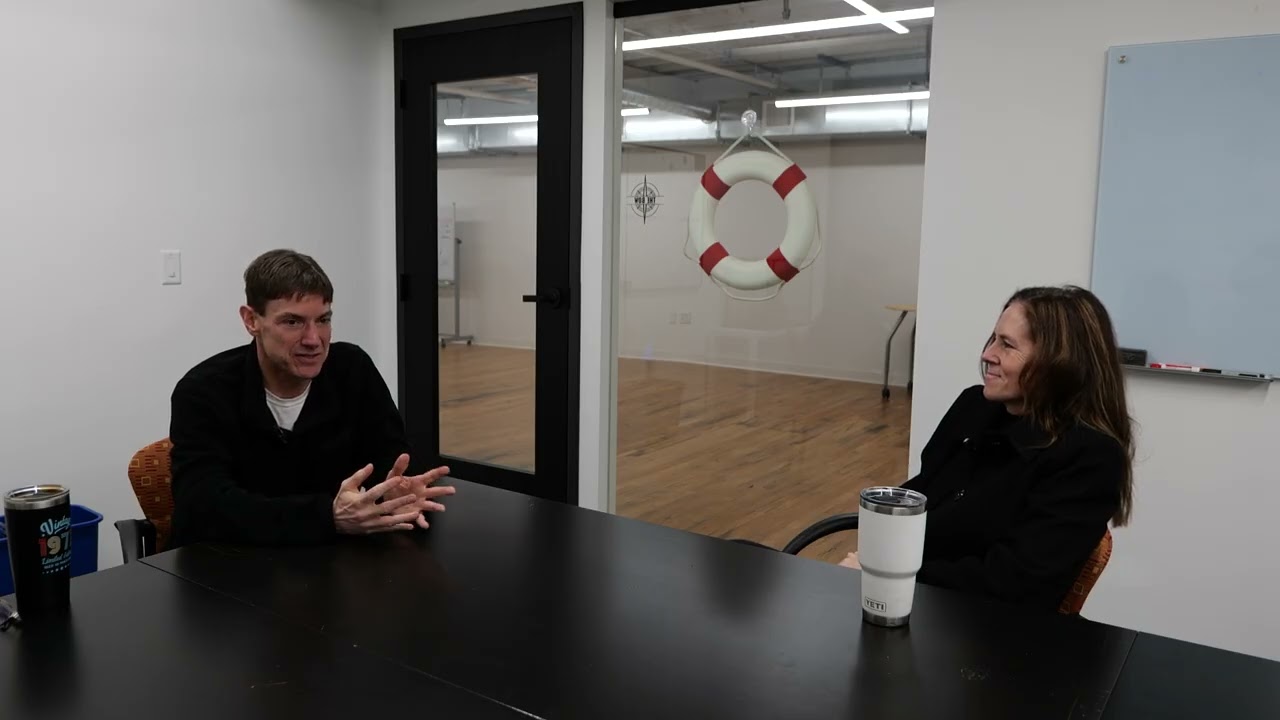
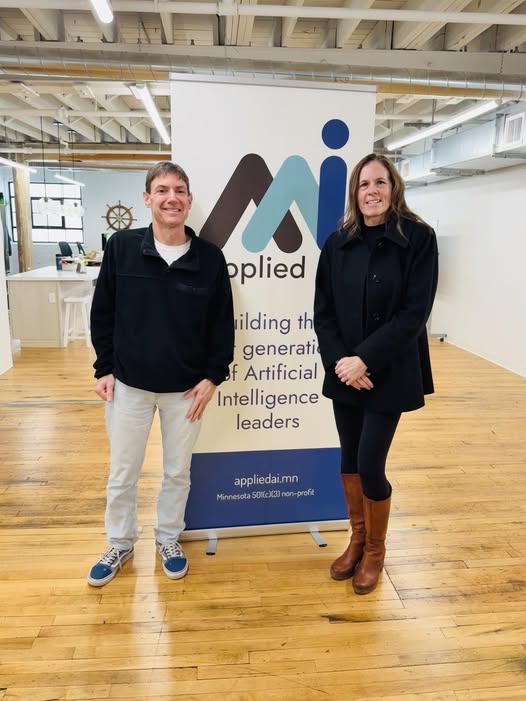
Hello everyone. I'm Karissa from Shining Light on Minnesota. Today we are in St. Paul with Justin Grammens. Welcome. Hey, thank you so much. Yes. So, tell everybody a little bit about where we're at. We'll start with that. Yeah. Yeah. So, we're at Lab651 uh one of the businesses that I own. Um and we do custom software development. Uh you'll probably see around here uh kind of a nautical theme there with the uh Light Preserver. I like to tell people that building software is like going on a journey. And so we are your trusted uh team, your trusted crew to make sure that you get that software developed properly and uh you sort of find the treasure I guess with regards to getting your software out into the marketplace. Um I also uh have a strategic consulting AI company called Recursive Awesome and we go into businesses and sort of take a look at their um process, their workflows and try and figure out how we can bring technology to their organization to speed up efficiency and build some automation in. So that's where the AI sort of piece comes in. We do a fair amount of AI here too at Lab651. A lot of companies are asking to have their products be smarter and smarter. Yes. And so uh using generative AI specifically over the past couple years. We built a lot of chat bots. We built a lot of um uh you know data analytics tools. We're doing a lot of stuff with computer vision. All this sort of stuff sort of falls under the AI category. Um I also am a professor at the University of St. Thomas. I I teach a class there um every Thursday night. So I'm an adjunct focusing on machine learning and AI and focus specifically on the internet of things. So sensors, um, smart buildings, all that sort of stuff. So I teach graduate students on that. And then I am proud to say that I'm one of the co-founders of a nonprofit called Applied AI and our website is applied.n. I like to tell people if there's anything you want to remember about me, remember applied AI. And so we are a 501c3 nonprofit started here in Minnesota in 2019. Our sole purpose is to build leaders in artificial intelligence right here in the great state of Minnesota. Yes. So we do everything from podcasts. We have a a conference that we do a couple times a year. We have weekly newsletters and we have monthly meetups as well. So yeah, I'm I'm pretty busy. So you dabble in a lot of hats and there's a lot of things going and changing. What do you think has been the biggest thing in the last month that's changed in the AI world? What has changed in the last month? Well, I think so. I come at it a lot from the technology side with regards to software development and software engineering, right? And so we're seeing better and better coding agents, right? These are things that uh I would have thought a year ago um it would have been very difficult to have someone who's not really an expert in software development to be able to sort of get their product very close to the edge. And I'm not saying that uh anyone can go out there and can all of a sudden just start writing writing code with this and have production level code. Um, but they're getting better and better and smarter and smarter and there's this one tool called Claude Code. Um, but that's just one of many that are out there and they're doing some very very impressive things. Um, and not only with regards to coding, but even just more and more um, scientific analysis, a lot of sort of deep understanding. Um, they're still not eating humans. I just read an article today where um, depending on how you ask large language models certain things, you can ask it sort of gibberish in a certain way and it will give you the answer. Um and the answer is makes no sense. So, we still find that in a in a lot of areas, but um yeah, I think you know, you're seeing these models get better and better and things that you would have had to actually go around with the model maybe three or four, five, six, seven, eight times now. Um they're getting more and more intelligent and u I think some of that is also just a function of um they're starting to understand us better, you know. So, I am, you know, always sort of in chatbt or using cloud or using one of these other tools out there. Um, and I am impressed by how it remembers things that I maybe talked about months ago. Yes. Um, and so some of that is a little bit of like, well, of course they're going to get better because they're gonna understand more and more context about, but yeah, it's it's it's it's becoming crazy. And I mean, even again, so the moment I talk about large language models, the other side that's really awesome now is video. You know, I'm not sure if you've seen a lot of the new stuff coming out. Google just had just released uh, you know, their video model. Um, and uh, it's super impressive. Yeah. So, yeah, tell our audience a little bit about the chat bots and what happens when let's say for instance you ask the bot um tell us a little bit about the company even though the bot doesn't understand it won't understand. Okay, let me refrain. If you ask the bot a little bit, let's say tell me about some control they will tell you xxx and they won't say I don't know. Yeah. [laughter] Yes. Well, so until you train it. Yeah. Well, the but the underlying um technology there is called generative AI. Yes. Right. And so really what I like to tell people and other people have said in the industry is that it's really a next word predictor. Correct. Right. And so it's always going to respond with something. Right. It's going to say, okay, the way that the sentence starts, I'm just going to keep going going going. Um and so the way around that is of course is to sort of give it that context um um when you ask the question to say if you're not 100% sure, tell say I don't know. Right. Right. And so a lot of these uh systems don't have that sort of built-in anatability. It's up to us to do that. Now these models have been trained on everything that's on the internet how much they can sort of scrape over you know series of time and stuff like that and they've been building uh you know they have a knowledge base basically a centralized knowledge base. Um but it could be months old. Right. Right. And so sort of the big thing now is is how can we actually get new data to sort of put that into the context. So it is getting a little bit more recent information. Um and that's this idea of of being able to fill this context window with more and more relevant information. And so if you build a chatbot for your business, what you should do and anyone who is doing this is actually use there's a there's a terminology called retrieval augmented generation. Rag is sort of like the the word, but there's a lot of other ways to do this. But you essentially sort of give the model the information that you want it to respond with in a general context, right? So give it all your FAQs, give it give it all um of your uh what whatever documentation that you actually want to make public publicly accessible, right? Um now that can be a little bit uh interesting because maybe you might want to give it too much information, right? So that's where a lot of these worries are is like well where is this headed right now? we got to make we need to make sure that these things are have guard rails to it, right? And it's not sort of wandering off and sort of making things up along the way. But these models um are actually and this is the other thing that's kind of interesting that's been happening in the space for a number of years that I've been talking with companies about is this idea of what they call a small language model. So these you don't need the entire internet. Honestly, you don't need all of that information if it's going to be something on a specific um maybe specific industry or a specific company. Um, so you're much better off actually sort of taking a much smaller language model, training it on your information, and then it has much less chance of grabbing, you know, basically as a neural network sort of outputs the next word, it has much less chance of sort of making up things, right? You know, hallucinations is what they call it. Yeah. What do you see with technology in homes and cars? Obviously, it's taken a long time for the cars to get to where they are and where smart homes are to get to where they are. Yeah. Yeah. Well, um, so I'm again, I've been working in the internet of things for 15 years now, right? And so I've been thinking about smart homes and and all these sort of, um, capabilities that we can start doing. Um, stuff like this, consumers are difficult to actually want to buy something. It needs to be super easy, right? And so that's been, I think, has been the largest adoption curve is companies and people have had a tough time even just getting an appliance. So, we do a lot of work with Kenmore and we built we built all of their sort of um smart appliances. Correct. Um so, their their mobile apps and stuff like that, talking to the refrigerator and talking to the dishwasher, right, and all that sort of stuff. And so, what they had found was only 10 to 15% of people actually even turn on the sort of the the smart feature, make it work, right? Make it work. Yeah. Yeah. Because I think a lot of people are just it it can become either um an annoyance for them or they don't see the true value in it. Um, and so that picture needs to be painted a little bit better, right? You know, around why should I actually have my dishwasher, you know, they have the capabilities, they just don't fully use it or engage in it. Yeah. Yeah. And sometimes it's just because the the the apps are designed not very uh user friendly, you know, but I can tell you one of the use cases, you know, again, these use cases sort of need to get out there. Um, is, you know, wouldn't it be great if your dishwasher could just order new dishwasher detergent for you, right? Right. That's sort of the promise. And the moment that that happens to somebody in their home, they're like, "Ah, okay. I get this." You know, this is this is really interesting. Or should should it, you know, can can I learn that I need to actually add more um you know um what do they do? Uh the the um spots, you know, like the rents and stuff like that, right? So um and so yeah, all that information can be sort of fed back to you. Um and I have a nice story that I won't go like bel you with, but um you know, these machines can actually tell you, hey, I'm about ready to fail, right? or when I do fail, here's the part that I need to actually be fixed. Right? So, smart homes are taking a long time to adopt. I think um the more and more that you see Alexa in the home, the more and more you see the Ring doorbell, the more and more you see the these other things, people are are are starting to sort of build their home ecosystems now because they're seeing huge value in it. It's like, oh my gosh, that's amazing. I can see when the package was dropped off at my at my front door. I have small children at home or younger kids, you know, middle school, right? I can check in on them, right? What are they doing? and I can even talk to them through it. So, uh, you know, so the these use cases are are really sort of growing and gonna continue to expand. And I think I think cars are probably in that same same sort of area, right? I think there's been a lot of false promises around self-driving cars, especially here in Minnesota. Um, that they're going to be able to work flawlessly throughout winter and everything like that. And that's a long long way. The trust factor for sure. I mean, I've got Blue Cruise and I I can't live without it now. It's so nice to have once you have it. It's nice, but it's also how much do you still trust it, right? It's kind of like one of those you want it to drive for you, but at the same time, Yeah. It's one of those you you do. Yeah. At some point at some point, I think we'll get there, you know? You're right. It's a trust. It's the same thing I say like with the internet when you wanted to put your credit card in to buy something off Amazon for the first time, you were like, really? Am I going to do this? And now they have everything and I can one button, you know, you know, you know, buy stuff. But it's still the other drivers. It's still everything else. Just like chat bots, just like anything else, hackers are out there, other things are out there, right? Yeah. Yeah. And and so again, the cars are getting smarter and smarter, and self-driving is is is, you know, kind of like the the sort of the the pinnacle that we're all sort of searching for, but there's a lot of other really awesome things that are already sort of built in, right? And one of it is just like just navigation, right? I mean, I could not live without Google Maps, right? We have we have that on our phone, but it's also really nice just to have it built into the car. Um, you know, I just bought an electric car actually earlier this year. Um, I'm just And for me, I had a 2004 before, so I didn't have any technology at all. So, for me, this is just amazing. I mean, any new car actually would have, you know, kind of blown me away. Yeah. But like, you know, on my phone, I can push the button right now and the car will warm up, right? By the time I get out there, it'll be nice and 72 degrees, right? Um, and and there's all sorts of things that I can check on, especially with regards to maintenance, right? and and uh it'll tell me how fast I went over my last miles and how could I drive better to conserve, you know, energy. And so there's just there's a lot of really really cool things that are sort of now becoming standard on cars. Yes. Um outside of even just the driving factor, you know, you know, to and lots of lots of safety things, you know, I mean, my old car didn't even have a backup camera, right? Right. So now I have that. Um so it's just all these really really cool things. Well, it's interesting. I mean, just in my in my in our daily life, we were driving the other day and I was with someone in the car and all of a sudden we both go, "Do you have your phone?" I go, "No." I go, "Do you have your phone?" He goes, "No." I'm like, "Hm." Back in like the 1980s, neither of us have our phone. That's an interesting factor. What if the kids need to get get a hold of us? I'm like, "Okay, that's fine. We're both fine. We're going to make it." You know, it's just one of those like with mind thought things like, "Oh my gosh, neither of us have our phones and we're in the car." It's It's kind of nice though to not have those. But yeah, I agree. I totally agree. there's some time to definitely unplug and you know we're recording this after Thanksgiving but I I basically did a digital detox on Thanksgiving like I didn't even do anything um on my phone and it was great. Y um you made me think of something too I guess when we were talking about Oh I was I was thinking about more around the Alexexas and sort of and you know Google Homes and all the sort of stuff that's happening is with the advent of generative AI now we're actually able to start having much more um rich conversations. Yes. Right. So Alexa's probably been out I mean I I would I feel like it's probably been at least 7 8 years now. Y um and it was always like you had to phrase things a certain way and and uh and so now they have Alexa plus which is just you know their recent like roll out and I've got Alexa scattered all over my house and I've noticed over time you know now it's it's moved into this generative AI type thing where um you know I can tell that it's not so rigid with regards to the way that it's talking to me. um it is essentially making up the conversation as it goes along the way. Um and so it's those types of things and even with your car, right, it's it they're going to get smarter and smarter. Um it's going to understand sort of the intonation in your voice and it's going to understand you don't need to phrase it a certain way. Exactly. Right. So again, that conversational experience that we're so used to doing with regards to our fingers and asking questions and going back and forth, voice is the next frontier. I mean, right. And if you I mean I'm sure a lot of people maybe maybe haven't played around with chat GPT in the voice mode. Yep. Right. So you can basically push the little bars there on the side and then you can just have a conversation and I'll tell you like I'll just lay there in bed at night and I'll have a new idea that I want to think about working on and I'll just sort of go back and forth with it, right? Um and so you know that is super useful and it's just way more easier than having to type everything out. Um and you can just kind of be a little more fun with it. talk to our audience a little bit about the free factors, not free factors of chat GPT and all of that too, just in case they don't know. Uh yeah, that you should always pay. Absolutely. You know, and and and again, I wouldn't say always, but I mean, I would say it depends on what you're going to use it for. So, if you're if you're just a casual user and you just want to get on there and start toying around with it, um then, you know, everyone needs to get an account, so you have to put an email address or whatever, but you don't need to pay for it. you can basically use it now because of that because you're not paying for the service you know open AAI they have servers that they need to run they have electricity they have a lot of of uh of of maintenance and upkeep that they need to do to do this so all the data that you put in there they're learning from you know they're they're training their models and getting better and again if it's help me make a you know Christmas cookies with my grandkid totally fine you know um but I always tell people that yeah if you're if you If you're not paying for it, then you are the product, right? So the moment that you actually want to put anything sensitive in there um and oftentimes open AI also um in these other tools, they are uh they they have the latest models, right, are ones that you pay for. Um there are additional features that you can start adding on and building on top of. So um and so yeah, pretty quickly it's it's I encourage people to move to their their plus plan, which is the 1999 or 20 bucks a month, whatever it is. um you know plan and then you get all the caveats where they will not be training on your information. All your data is encrypted um both ways um and uh it you know you I I just have more um sense of security I guess right that all the information that I'm going to put in there because I put a lot of um confidential information in there that I would want other people to know or find out about. I do say to other people are like, "Well, oh my gosh, OpenAI has all my stuff." Well, where is your stuff today? Right. Is it on your iPhone? Because if it is, it's an iCloud and and Apple has it. Right. Right. And so, and same thing, you know, we use G Suite around here. Google already has all of my stuff, right? But those are services that I'm paying for, right? All of those services I'm paying for. So, again, Open AI, it's just another subscription. You can try it for a month, see if you like it. If not, you can always go back. Um, and then again, OpenAI isn't the only one in in the game. I I use Anthropics. Claude is one that's really good. Um, you know, other people potentially use one called Grock, which is the one from um X. Um, and Perplexity is another really good one. So, again, just sort of like look around. I often say, you know, experiment around with them. Try one for one month, see what feels good, you know, to you. They all they all have their own quirks. They're all good in certain ways and likely bad in others. And they're all um sort of like it's like an arms race, you know, one one month you'll see like one, oh, this one now is the best for what, you know, for for this and then this one's best for that. So again, you got to be kind of light on your feet and sort of experiment. You got to try things out and see what works best for you. For sure. Yeah. What do you think has been useful for the students when they're learning AI? What's been useful for the students, students that I'm teaching, for example? Yeah. Um well well you open up a can of worms there because education is a huge sort of debate right now right should we even allow it in schools absolutely um and so the initial push back from even like I think Australia was like we're not going to allow this at all in our schools right they're even pushing back on the whole phone thing right now again are they okay okay yeah so I haven't really sort of like tracked the details of it but the fact of the matter is that it's coming and it's going to be yeah yeah and so however you can sort of let students um or anyone frankly sort of leverage the tool um the better. Yep. And you know I wear multiple hats. One is I'm a business owner and I tell people I want the most prepared students coming out of school. Right. Right. And so if this is a tool that's going to make them more productive smarter not harder. Yeah. Exactly. Then for sure I want them to use the tool as much as possible. Um and so but then you have the other side of it where I meet with a lot of educators and they fear rightfully so the cheating side of it too. Yeah. And the students actually aren't exercising that muscle, right? And so lots of um the thought is is we are training a a generation that's going to lose critical thinking skills. Correct. Because the question is always going to be well what does Chad GBT say or what is this AI you know agent or whatever positive. Is it correct? Is it not correct? Is everything on the internet what you read correct? Yeah. Yeah. And so I think it's I I mean I think depending on the subject you teach, it's probably it's it's harder um to enforce, right? Someone's teaching English um then students are going to try and use it to write their term papers and all their and all that type of stuff where I am at and true students have to write code in in in my class. Um and I am upfront with them that it's okay, you know, uh and I understand they're going to use it whether I say it's okay or not, you know, to use it. But at the end of the day, they need to be able to explain what that code is. How did you get that? Yeah. Yeah. Yeah. Exactly. And so I have a capstone project that all of my students have to do. They have to build some sort of IoT system and it has to use AI. It has to train. They have to be able to train the model on a certain amount of data. And then they actually have to get up in front of the class and a I have to see all their source code and stuff like that. But then we're going to poke holes in it. You know, why did you choose this? Why did you choose that? Draw me a diagram of all these, you know, systems talking to each other, right? Um and even every week actually. Um, this was an idea that I had, you know, when I first started the class 10 years ago, but everyone brings an article to the class and they share what they learned, right? Um, from the article verbally, right? Right. So, if it's like, oh, just type out what the article says, well, they're going to throw it in, you know, tell me what it is. But, yeah, but they but the fact that they actually have to verbally explain, um, I think the speaking aspect is is the good part, right? Yeah. Yeah. And so, you know, I mean, the internet had I mean, arguably sort of changed how we view libraries. You know, we now all of a sudden everything's online. We can go online and get more and more information. Um, what this has changed now is is now it's actually going and doing the research for us and pulling it all back together. Yep. Um, and I think that's ultimately going to change our jobs. Correct. No matter what job you're in, it's going to that research aspect of going out and generating and and having to to do the deep research to find all this information. What it's going to focus more I believe on the human side of it is then communication. Communication. Yeah. How do you sit with somebody like this? How do you sit with someone and communicate? Right. Yeah. And communicate and talk and and that's going to be more and more needed. Um whereas I used to I tell people like when I started my career 25 years ago, people paid me a lot of money to basically sit there and code and then and code. And now, you know, I'm sorry, but that's just not a valuable tool anymore, right? You have to get out there and network and meet with people and talk to people and actually have that relationship. Yeah. Yeah. Yeah. And then you have to also and in my case probably understand what what you're building and why you're building it and how it's done. Yeah. Yeah. And so there's this whole creative aspect of software engineering that has always been there. And I think you know people maybe didn't value it maybe as much um and they valued more oh I'm just a coder that sits in the corner and just basically you know writes code. Um and so you know that was an aspect of my job but more and more that's not going to be an aspect of the engineers of the future of the future is the engineers of of the of the future or whatever your your your job is is going to be to manage these agents and that's what we're seeing in the industry is this idea of this agentic AI where you might have an agent that goes out and basically you know in the case of software engineering basically might go out and actually um start generating um surveys for for your potential audience that you want to build a product for, you know, and based on those survey results, you have another one that basically says, okay, based on this, I'm going to write system level requirements for this, right? And these are two different things. These are two different language models. These are two different um uh, you know, personas, right? Right. And then you might have another one that's really, really good at writing the software, you know, another one that's really really good at doing the user interface that makes the buttons, you know, like the right way. And so the idea is is you going to have an or you're going to orchestrate this. Yep. Right. Everybody has their lane to orchestrate it. Yeah. And so you you're going to find an attorney that's going to orchestrate a number of different aspects of theirs or an accountant or whatever it is. So, you know, I I' I'm still believing that then, you know, that you still need to have those human aspects to it. Yes, absolutely. I think it's important for the younger generation too to understand that they have to get out there and be able to have those face to face conversations because it's hard. It's easy for them to get on and jump and hide behind the screen. Yeah. But to be able to get out there and be able to communicate and be able to have those conversations still and to be able to understand that You have to be able to face people face to face too because it's it's so intriguable or it's so important to have those conversations because a lot of times they don't understand that what you say means something when you're speaking face to face too. Yeah. And I mean so I'm a big community person. This this the applied AI community that we have built over the past you know since 2019. That's actually my third community that I built. So I was really interested in mobile app development. Y and so back in 2008 or so I started a group called Mobile Twin Cities. And it was one of these things where I mean thank goodness I started doing this because I looked around and I was like there's no groups in town that were actually interested in bringing together people that need apps built and people that can build apps. So I usually cast a net pretty wide in these groups. And so I just basic and this was before Meetup or anything like that, but I created a little WordPress site and all of a sudden people came together and we started building this um community and we moved on and started doing conferences on mobile application development and and sort of built up this whole thing and honestly that then led to my next career change right it led to my first business that I I left the big corporation and started building apps basically at that time. Um and after doing that for four or five years I was like what's this IoT thing? Um and I I actually remember specifically sitting there at home and I had this little Arduino which is just this open source board and I I had it there and I was like interesting. So with just a couple lines I could basically get this thing to turn a motor based on a website. I'm like I push a button on a website and all of a sudden this motor turns bear. Wait, what's that? I'm like oh my gosh this is so cool. And so I was like hey let's you know let's start a community around around IoT. And so we started a community called IoT Fuse and built that up and we did conferences and meetups and all that sort of stuff. And then like I say around 2019 I was like this is really cool. I love all this stuff and I teaching classes and actually we started Lab651 as an IoT company. Nice. Um so we built a lot of stuff for um a number of companies that were you know smart intelligent products. Um but in 2019 I sort of realized I was like no okay this is cool but it's really about the data right and uh and there was no AI community at that time here. There was a deep learning community, there was a data science community, actually pretty big data science and analytics community, but no one really sort of taken this broad approach, right, of artificial intelligence. And so, um, so yeah, sort of started that up. So, I I tell people find a passion. It doesn't even need to be technology related. You know, you could be interested in, um, I mean, my newest passion for me now is renewable energy, right? So, I'm like looking around, hey, is there a renewable energy community in town that I could plug into? If not, let's start one. Right. Yeah. Yeah, but no matter what it is, I mean, especially in the AI world, like even if you're sitting behind that computer, find somebody else that's sitting behind that computer, find someone else that's in the AI world and go out and build something else and go out and talk to someone and find somebody else and see how you can grow. See how you can change and see what else you can do because there are other people out there that are doing the same thing as you and communicate and see what else you can do. Yeah. I mean, forget about the AI thing for a second. Like, I'm just more concerned about people going virtual on everything. Absolutely. Right. So, I come from the days where I worked in a cubicle, right? And I could pop up and talk to somebody over the wall. They don't have that anymore. They don't have that anymore. They're sitting in in their own room, in their own place and sheltered in place and doing what they're doing. And yeah, find somebody. I learned so much so much from some just geniuses that I was blessed enough to work with. Yeah. And I am just I'm it sads me that I think that the next generation is not going to get to experience that. No. Right. Yeah. Yeah. There are people out there too. I mean that there's there's so much to learn in the world. There's so many people. Yes. Yeah. Just got to reach out and talk to people. Yeah. Yeah. You do. Yeah. Yeah. So, what do you think in the renewable energy world you're going to reach out into next? Well, no, I I I that you've dabbled in that I've dabbled. Well, like I say, I mean, I kind of going off topic away from AI here, but I mean, yeah, I just, you know, I've kind of always wanted to buy an electric car, so that was sort of my first foray into this thing. Yeah. And, you know, taking a look at, okay, so now how do those how do those electrons get into my car? Right. Right. And so, so what are the greenhouse gases that are being emitted to make that happen? Um, and the cost to, you know, if if you get a if you get on a plan through Excel Energy and, um, uh, you can charge it overnight, the prices are ridiculously cheap. I mean, I had no idea how cheap they were until I actually sort of got on a specific plan with a electric charger that talks to the meter and all that sort of stuff, right? Um, and so I'm like, geez, I mean, everyone should be kind of at least considering this, right? Um, if you don't put on a lot of miles. Yeah. Yeah. But but even even a lot of the new ones, so I've been doing a lot of research, right? And and uh you know, I mean, newer cars are coming out, 300 plus mile battery, right? Um fast chargers along the way, you know? I mean, like literally they're driving cars across the United States and able to do this. So, um and it and it's kind of like changing quick. Yeah. Yeah. And it's not a matter of of, you know, if but just kind of when, you know, cuz for me, I don't I I will probably never have to stop at a gas station ever again because I have a gas station in my home. I just basically plug it in plug it in. But I also think, you know, the fact that I have two, you know, younger children and I think about what does the future look like for them, right? And, you know, global warming and greenhouse gases and all that type of stuff. Um, I I'm like, okay, how can we get businesses uh to think about um how they could put some solar panels on the roof here? Right? I don't I don't own this building, you know, but if I did, I would very much be looking at, okay, what are some of the new technologies that we can use because um it's all sort of free in a lot of ways. The wind's going to continue to blow, right? Sun's going to continue to shine for another billion years or whatever they're saying. Uh and so it's so it's like why not have steps to make it smarter and more green. Yeah. And again, they're just going to get it's going to get better and better over time. You know, it's the same thing. You know, this is the same thing kind of tied back to AI is is, you know, people were talking about AI, you know, back in the 50s, actually. That's when it sort of came out and it went through these winters, right? Where new technology would come out. Well, let's try doing it this way, you know? And people poo pooed um, you know, neural networks and deep learning for decades. They're like, this ain't going to be the right way to do it, right? And there's a guy named Jeffrey Hinton uh who if you get a chance to read some of his stuff, he was like the godfather of this technique of deep learning and kind of just kind of kept pushing this forward and um kept getting a lot of research and grants and stuff like that. And ultimately that's really what allowed generative AI to really sort of take off the way that it did. That's what's powering all of these is basically deep neural networks. Um, and that was an idea that people had sort of poo pooed, but you know, again, it takes decades for this to finally sort of come to fruition. Um, now we're thinking deep neural networks are probably as far as they're going to be able to go. Yeah. Um, and so what is the next thing? I don't know. But, you know, governments are spending a lot of money. You know, China being one of them. Um, and actually they're actually spending at least 10x or even more if you take a look at at it. Um, and so I'm worried also too about the United States sort of falling behind, right, in a lot of these newer technologies. Um, but yeah, so what's next? I mean, I I don't know, but it's it's it's in somebody's head at, you know, a university somewhere that is trying to work on a grant to sort of build the next whether it be the next, you know, AI model, whether it be the next solar panel for us, you know, the next wind farm, whatever it is. Who has been or who have been some of your mentors when you've been growing up or who has been one of your main mentors? Wow, that's a good question. Um, I mean, for sure my parents. You know, I I I it's not until you have children, I think, that you realize how much your parents really love you. I was like, "Oh my gosh, I can't believe all the stuff my parents did for me." Now I have to do it. I have to do it for for my kids. So, yeah. Absolutely. I mean, you know, my mom was a a educator, you know, math teacher, um then a then a principal. So, she was always in education, which I think is why I sort of ended up in that space as well, which is why I start these groups. Y and want to educate at the end of the day. At the end of the day, that's really what we're doing at Applied AI is we're educating people on, you know, the power of artificial intelligence and building leaders in that space. Um, and then my dad my dad was a was a physician, right? And so again, that sort of aspect of of healing, you know, helping people. So anyways, so I I sort of, you know, knew them as sort of like my rocks definitely growing up. I learned a lot from them. Um, and then, you know, I just there are a number of people that I have worked with that I have just kind of looked up to, right? Um, you know, a couple, uh, the first company that I sort of started working at was a company called Imaginet back here in the Twin Cities. Um, Scott Litman and Dan Min are sort of two legends a lot in the space. They have been, uh, it's just been really great sort of watching their trajectory and also being able to, you know, still call them friends. I'm actually going out to lunch with Scott in a couple weeks, right? And he was my first boss basically, right? So, it's it's really really cool um to sort of see how he has run companies because now I'm an entrepreneur. Right. Right. And now I'm hiring people. And so, a lot of those sort of like things that I saw as I was growing up, as I was working my way through um companies and things that I like, I pull out. Things that I don't like that other companies did, I you know, sort of toss away, right? And so, I would say, you know, from an entrepreneur standpoint, definitely like those guys have been, you know, phenomenal um mentors for me along the way. I mean kind of the list goes on and on. There's educators and stuff here at the University of St. Thomas. Yeah. Um my bosses that are there. I'm on a number of different advisory boards. One is with Mano State. Um you know the person that runs a data science group there. Great. Um you know there are other communities here tech like data science communities. Dan Atkins is one that's that's here in town. Uh so he runs many analytics. So I taken I see a lot of the stuff that they're doing and I'm like that is phenomenal. Let's do more of that. Right. And so he's been a great mentor, you know. Um, so just yeah, just a lot of great people here in town. What would be one thing that you would tell our audience about AI that you would want to leave them if you could leave them with something? [clears throat] I think I think there's a lot of fear, you know, I I think there's there's a lot of fear that AI is going to take over the world, right? Y and um that we're going to lo lose lose control of the world. Now, certainly there is a an opportunity for that to happen if we just go ahead and just let AI drive our cars, let AI fly our airplanes, let AI do all that type of stuff. But, um, and and when we get there, if if if if we get there, I I actually think that um the human race is smart enough, you're right, not to go that far. I think the bigger concern under the covers and that that I have and that more more people I think are starting to kind of wake their head up to is that we're going to start to believe everything that AI tells us. Yeah. Right. And that um uh that we're going to again we're going to lose that cognitive ability, but also we're going to essentially uh everyone's getting in their own isolation world right now. If you go on whatever you search for on Google, the results you get are going to be tuned to what you want to hear. Right. Yeah. Right. and going to be tuned to what I want to hear. And so now all of a sudden we're going to start building up this sort of hatred towards each other and the bots are going to take over and the world's going to be where it was and we've already been where we're at and Exactly. Yeah. Yeah. And then and and and again I think those fears are are real regardless of AI or not. You know, AI can can make it make it be uh you know easier for us to fall into that. But I think at the end of the day, the human connection Yes. is [clears throat] is what's most important and I'll tie back to what you were saying like if you get out and talk to people Yes. and actually have conversations. Um, then you are you are you are going to be safe, you know, and and and so people get worried that AI is going to have all of this impact, this negative impact. And I think at the end of the day, as long as we can continue to do what humans do best, which is relate, understand, you know, debate, you know, there's lots of, you know, polarization happening in government and all that type of stuff. But at the end of the day, I think that's all that's all really healthy and that's all really good. Mhm. And I think that AI is a tool. Um it's a very very powerful tool. It's a tool that can um you know can act like it actually understands us and you know and that it can be very very intelligent seem like it is. But at the end of the day, you know, we we we and I think we will use it for what it's good for and continue to have humans see what they use what they're good for. What's your favorite quote? [laughter] Good question, right? That's a tough one. Yeah. I guess the one that popped in my head is Oscar Wild. Uh it's something like um be yourself, everyone else is taken, right? And so it's the idea that um often times, and this is where I think, you know, I don't get on social media much. Um I use it as a tool to promote what I'm doing, but I I don't ever really get on Facebook and really care what everyone else is doing. Good for them. But I think there's a a a portion of you when you get on there that you it's some something subconscious that's like I wish I was doing that, you know. Um and so often times people can get on these platforms or see someone else having huge success and it's like I'm going to do exactly what they're going to do. Right. Right. And I yourself a little bit. Yeah. Yeah. And I always say just do what you do best because that person is doing what they do best. And so, um, yeah, find something that you're passionate about and just keep going with it. Last question, and it's going to be a tough one. Ready? Okay. What's your favorite food? What's my favorite food? Yes. Oh, wow. Um, I think it's lasagna. Lasagna. Yep. Yep. Yep. It's It's either that or burritos, but no, if I have to go if I have to choose one or the other, it's lasagnas. And I have to say my wife's lasagna for sure. Perfect. Anything that you want to leave our audience with? One more thing before we close up today. Well, thank you for the opportunity. Um, you know, I I usually sit on the other side, so we have a podcast. It's hard when you're the one answering the questions. I know. I've had to do it, too. And it's like I'm used to the one ask asking the questions. Yeah. Yeah. So, I But again, I thank you for this opportunity. Um, and uh and and I think again I think technology can feel scary. It can to to be overwhelming to people. And even, you know, I'm supposed to be the AI guy, right? Um, and I'm having a tough time keeping up with it and as are my peers, right? Just learning. Yep. To it. Yeah. And I guess that is one of the things that we always say at the Applied AI group is just experiment, experiment, experiment, right? So, how can people find you and how can they get in touch with you and maybe find you in some of your groups? Yeah. Yeah. So, the best place to go to is applied.mn. And so, that's our website there and that's where you can link off to our meetup group. You can listen to our podcast. You can, you know, check out our conferences. we have coming up and all that sort of stuff. So, that's that's probably a good place to go. Um, and then you can always just email me, Justin. Perfect. That's probably a good a good good place. One of my probably dozens of email addresses, but no, that's that would be uh for anyone that's interested in AI. And I will say that a lot of people say, "Oh, you know, I'm just getting into this space or whatever. I I might feel, you know, out of place or whatever." Believe me, no, no, no. Yeah, we have more than 5,000 people actually on our meetup. Um and uh and there are many many people that are there that are just getting into it now. So yeah, everyone is welcome no matter what your background. And as a business if they're looking for software, are they looking for anything? Lab651. Yep. So we're in St. Paul here. So yeah, lab651.com or um my AI consulting business recursive awesome.com. Awesome. Perfect. Well, thank you so much for being with us today and keep shining light. See you guys later. Thank you.