
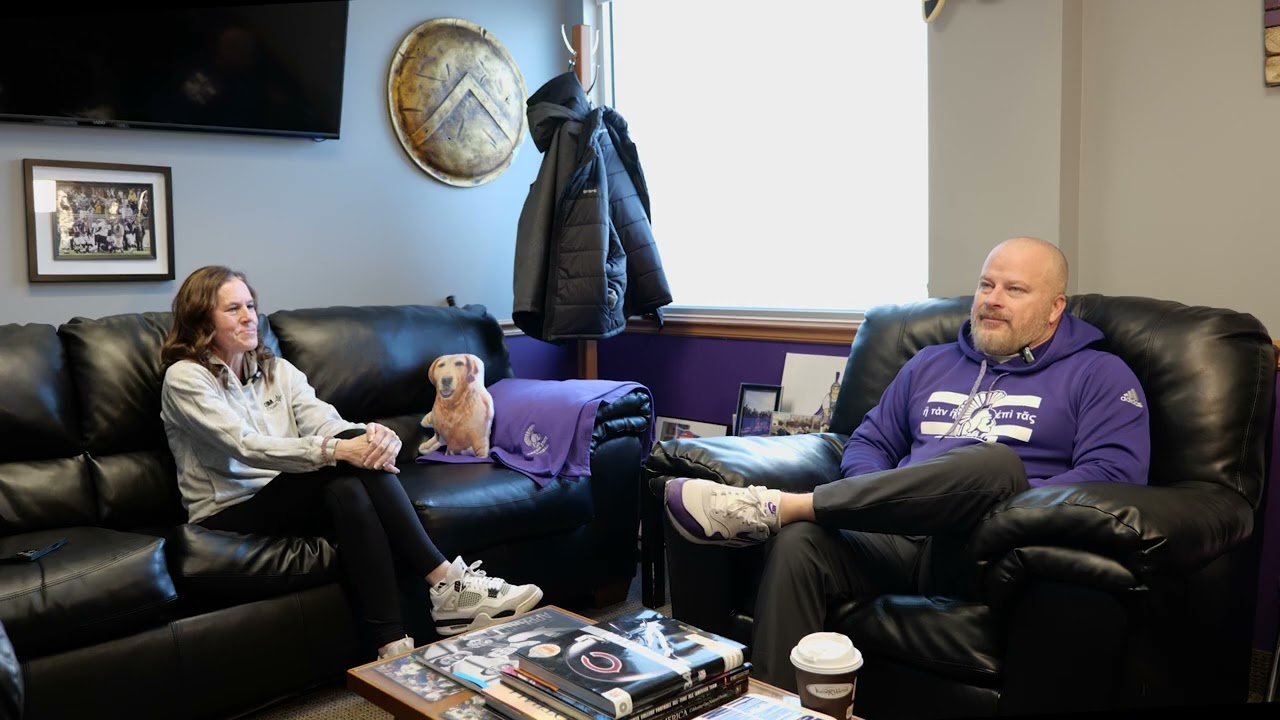
What Legacy Really Means | Coach Brian Curtin, Winona State Football #077
Karissa Dunham sits down with Coach Brian Curtin of Winona State Football to talk about what legacy really means. What does legacy really mean?
Or watch and listen on:


Karissa Dunham sits down with Coach Brian Curtin of Winona State Football to talk about what legacy really means.
What does legacy really mean? It's the people you impact and the standard you leave behind.
Host Karissa Dunham sits down with Winona State Football Head Coach Brian Curtin. A former Warrior himself, Brian shares his journey from student athlete to head coach, the mentors who shaped him including legendary coach Tom Sawyer, and how WSU culture influences the way he leads today. Winona State is Karissa's alma mater too, so a little golf talk sneaks in.
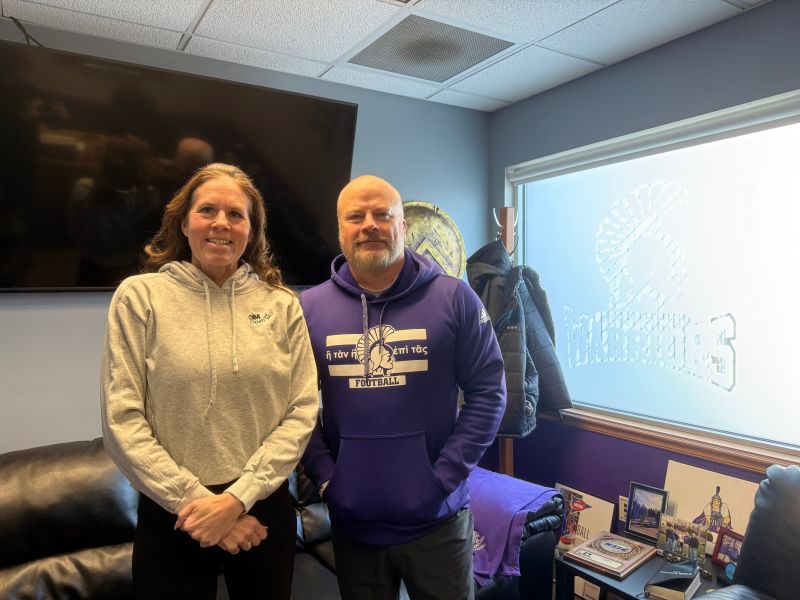
Hey everyone, it's Karissa from Shining Light on Minnesota. I'm super excited. I'm at my alma mater, Winona State University. I have Brian Curtin here. Welcome, Brian. Thank you. Yes. So, we have some exciting news. You're now the head football coach. How has that been for you so far? Kind of sort of since you've started out. It's been good. [laughter] You know, last year I I was a head coach knowing I was going to have to go through the process, you know, minu procedure and things like that. So, um, I feel like it it feels a little more permanent now and you can start looking a little more kind of longterm, you know, down the road a little bit more. You've been, I mean, part of the football program. Obviously, you played played here and then you were student teach or student coaching since 96. I mean, it's been a long time, but you have some big shoes to fill. Tom Sawyer's a legend around here. Yeah, I think, you know, I think, you know, I actually started as a student coach in 95 when I got done got done playing um for coach Hoser. Yeah. And then when when Tom got the job, um I was able to stay on with him and kind of work my way up, you know, through the through the ranks a little bit to getting a full-time job and being a coordinator. and um having a ton of different experience. I think that was one of the things that was great working with Tom is that uh you know I I kind of it helped prepare me for this role because I was involved well kind of knew a lot of the things that were going on. I was able to learn a lot about how to run a program and some behind things behind the scenes things. Yeah. I mean the the world's changed too. I mean the students have changed, the parenting has changed, but [snorts] the football program still stays the same. You've guys have had a lot of titles. You've had some really great records. Tell our audience a little bit about your records and titles and how you guys have overcome. You know, I think through the years we were able to win a lot of conference championships. Um um especially under coach Soy. I sadly I don't even I don't remember exactly how many we won and things like that. Um but we had a you know we had a really good run of football. Um, and the league has become tougher, right? When you added some of the teams that used to be in the North Central Conference come into our league. Um, it's become an even better league and we've been able to win, you know, the South Division a couple times, which is, um, by far the one of the tougher, you know, divisions in in the country. Um, and one of the better leagues in the country, you know, arguably right towards the top. Um, you know, with the MIAA, the Gleak by the league down in Texas and us. I mean, those are some of the best. That's some of the best division 2 football you're going to find. For sure. I mean, the Northern Sun, I mean, that's it's changed a lot over the last few years, too. I mean, having all the players come in and want to play and the whole football in general's changed. So, yeah. Yeah, I think so. I think, you know, it's a it's a big league. It's a physical league. There's a lot of good skilled players um in our league and um a lot of good coaches in the league, guys that have moved up through the ranks and done some things. And um you know just looking at you know kind of coach Sawyer's coaching tree that I don't think a lot of people even realize how many coaches guys that I've worked with that wanted to move around and do some things. Dave Braun the head coach at Northwestern. Y Matt Ants is the head coach at Fresno State. Jason A the head coach at uh at New Mexico. Um you know Zach Barton at San Diego State. And um Brett Alinka that I worked with. um he was coaching the national championship game at Miami and PJ Blazic's been at Wisconsin and Central Florida and places. So um and there's a lot of other coaches in our league that have moved up through the ranks um to major college football. Well, and a lot of the guys that have played football here at [clears throat] Winona State have gone on to do a lot of great things, too. I mean, they're they're not just taking football and being done. They're doing a lot with football, too. From where they've what they've learned from Sawyer and Larry Holstead and all the other players and from yourself, too. So yeah, you know, I think that's one of the things with football, right, is is there's so many advantages to when you're looking for jobs after football. Um, being able to work as a team, um, being able to get along with a diverse group of people and be able to work for a common goal, I think are all things that that translate to the workforce and and football's hard, you know, and I think our guys can do hard things and and that helps them so much in the future as they move forward. Yep. I think I mean the way the world are going and the way everybody's getting healthier too has changed. I mean from back when this is going to age me but when I was in college when you were in college to where people are now and the way they're getting healthier the way they're thinking about food and the way they're thinking about working out and different things too it's changed 100%. I mean it's obviously everybody was healthy or so they thought they were but it's a different life. I think it's become it's become more difficult or you have to be more conscious about those decisions. Yeah. Just because of the amount of one lifestyles become a little bit more seditary and it's you know there's so many more um distractions where some young people it's hard for them to get out of a chair because there's so many between a phone, video games and all these other things. [clears throat] You have to make better choices with food um with the preservatives and all the different things that they put in food. Um, you know, it's amazing when you look back at old pictures compared to today and see what the public looks like as opposed to what it used to, right? Um, and we try to do the best we can to educate our players on those things. And it's it's crazy how many of those guys are so locked into what they put into their body, right? 100%. Well, and I mean, even the training sense [clears throat] of it, too. I mean, from the physical therapy to the OT to the ice and the heat and the cold and everything that goes into it and the way they work out, I mean, everything is changing. It's it's a lot of fun to see and it'll be interesting to see what happens in the future too with it. Yeah, it's it's moved forward so much. My you know my dad played college football and talking to him what he did Yeah. when he played and I think he thinks sometimes they beat their body up more in the weight room than they did on the football field just because of how or just out on the streets. Yeah. So I think people have learned how to train. they've learned about recovery, all the different, you know, all the different things that you can do to take care of your body. And um, you know, our players really have invested in a lot of those things. Yeah. I mean, I know my dad was kind of the same way. I mean, you talk about all the concussion testing and all the the brain injuries and everything like that and what they had, what they didn't have before, and what they have now. Um, and asking people, hey, would you still play football knowing the injuries that you had back then? And I mean, you look at like the Brett Favre of the world and all the other all the other people, but they all still say, "Absolutely, I would. It's still a team sport. It's still it's a life lesson that you take on and you pass on to the next generation." And I think when we look at some of that when have you see some of these some of the long-term, we're talking about guys that have played football late into their 30s. Yeah. 40s and things like that. But I still think when you look at it, the benefit you get from playing the game outweighs any of the negatives. Well, no matter what you get you do, you [snorts] can get an injury. I mean, you get injuries in golf, and golf's not a contact sport. I mean, you get the back injuries, you get the the knee injuries, everything that you do, I mean, you could be walking down the street and get an injury. So, no matter which way you look at it, my dad used to always tell me when it comes to catastrophic injuries, the drive to the game is more dangerous than playing it. Yeah. Well, or the mental part of it, too. I mean, the drive home, the drive there. Yes, absolutely. Just for that age group, there's more catastrophic injuries. Mhm. In vehicles than there would be Yeah. on football field. Well, and it's sad to think now, I mean, with all the the cell phone usage, the texting, the getting on the phones, all the stuff that happens behind the screens, how do you monitor what happens with those players outside of all that? Probably can't. You try to educate them, right? Be smart. you try to um explain to them that they got more to lose than the average student or regular, you know, the regular um person going around. They're higher profile. People know who they are. Um people are going to see you're going to come across more um I don't know the right word, but people's algorithms show up on more people's stuff cuz you're you know that's going to be their interest and things like that. Yeah. So, you know, it's going to be harder for you to hide and put something out there stupid. But, um, and at the same time, I think the the bigger thing, I think our guys are pretty educated about what they're going to post and what they're going to put on social media. Well, you got to be aware other people might be filming you and doing those kind of things. Yep. Well, and especially with the way technology goes, I mean, you have like the meta glasses that people wear or you have I mean, even a perfect instance when you're looking for a job down the road, people still look back to what you've posted in the past to see, hey, will I hire this person? Will I not hire this person based on what they've posted, all your views, everything that you have on there is going to stick with you forever. You know, sometimes I just hope that people in those positions of hiring and things like that. remember what it was like to be 18 19 phones I didn't have to worry about thank goodness right and um sometimes I think it's a little bit unfair and it's like you know people are going to make this I'm like okay just think back right what were you doing you didn't have a phone back then so hey [clears throat and laughter] but yeah I mean it's an interesting world I mean so let's go back a [snorts] little bit tell everybody you are from Illinois and from the Chicago area tell everybody a little bit about your past yep I grew up on the south side of Chicago in a suburb just out of the city called Menloian. Yep. Um you know kind of had there was four boys in the family and one girl. So at least when I look at it it's a big family to me nowadays for sure. Um my dad was a football coach and so we kind of grew up around it our whole lives and um he was a high school teacher, school administrator. Um all my brothers are in education. Um but just grew up there and just kind of playing sports and those kind of things through high school. Um and then I went to a junior college first. Yep. Um then was recruited to come here and um in this profession it's a crazy it's a short story because I was able to stay in one spot, right? Um which you're very fortunate for that. Yeah. You know, it's a choice that you make um through things and it's kind of what I want to do. I felt like that was what was best for my family when you start to have kids and do those kind of things. And um I liked it here. I thought we could There's a lot to do in Winona and there's Yeah, it's a great more than when when I was in school, I think. Um [clears throat] especially for adults, there's some more, you know, elevated dining and different things that are a little bit nicer that didn't, you know, exist when I first got here. But it was Jefferson's, it was Yeah. Brothers. There's some really nice some nice places in town. Um but it just being able to stay, you know, working for um coach Sawyer who a lot of his um a lot of his philosophy and a lot of his things that he did and why he why he coached football fit with why I wanted to coach. Um same with Larry Holstead, you know, and I think when you have that kind of alignment, you feel like you can get things done. And at the time for a lot large part of my early part of coaching um Daryl Krueger was our president and he had a plan. He was extremely supportive and things like that. So I a lot of things fit back then um and then you just fall over the place. Right. Well, it's it's really easy to I mean I know when I walked on campus when I played golf here under coach Newberry with Larry Hilstead and Krueger and all of the people I mean it's it's easy to just say hey this fits. This is a great fit. These are great people. the lines are already set for you. You just you fall you fall into it. You have the lakes, you have the river, but you have the campus and you know what they expect. You know how how it's meant to be and it's all just laid out perfectly for you. I think the biggest thing for me is with with coach Sawyer, Larry Holstead, like that kind of alignment. The biggest thing for me in all of that was that they treated people the right way and they did things for the right reason. I think that's something that um coming from, you know, a family of educators and things like that and you, you know, when you're young and you see people want to come and talk to your dad that were students for him five, six years ago and you see the impact that they've had, your hope is that you can do that, you know, move forward and do those things. And I think the fact that those guys um just kind of aligned with what I wanted to accomplish made it easy. Yep. I mean, I know when I mean my dad played baseball, basketball, football, he had part of the football stadium named after him, the Midwest Wireless um field. It was Cell 2000 Field. He had a really good relationship with Sawyer and Holstead. And I know I've known them both for a really long time prior to even coming here, too. And it's just one of those that whenever people came in the door, no matter whether they were a player, a student, a teacher, whoever they were, it was the warm welcome feeling like they always wanted to talk to them. Where a lot of coaches you go, even with Krueger, like you don't even know who those people are. You might see them and it's just like, "Hey, great coach. I'm going to come in here, do what I need to do, and leave, and I'm out the door." But people are always in there wanting to talk to them and wanting to get their advice and just always there with them. Yeah. It used to make it hard to get our work done sometimes. I know, right? [laughter] in that kind of stuff. But, you know, I I think that's something that that I don't want to say is unique to this place, but it's something that that I value and and um and try to continue. Yeah. You know, so you have some kids also that are out there. Yep. And they're growing up pretty fast. Yeah. What do you think's next for the You have some recruits and you have some exciting things coming up for this year. Tell everybody about about the team coming in. Yeah. I think, you know, we had a decent year last year, right? We started to kind of turn some things around. Felt like we were turning a corner and we're a young football team. Our quarterback's got two years left. Um, we brought we have some some good young ones behind him. Um, you know, our leading receiver last year was a true freshman, which isn't ideal. But it's exciting. He's got a lot of room to grow. Yep. Got a lot of really good players on the defensive side of the ball. So, you know, we just need to plug in a couple more pieces. you know, so that that we can continue to grow. But um this recruiting class has been going really well. We got a couple guys um [clears throat] in in the transfer portal that uh are here already, right? Um and we'll continue to work uh through this second semester. A little difficult cuz we started school really early. We start school, I think, before just about anybody else. So that transition becomes a little bit more difficult for us. But we we'll continue to look for some some pieces and um we're excited about where we're going. The last two recruiting class have been really good, which is good. I mean, that that starting [clears throat] I mean, having the younger quarterback, having the homecoming game a lot of times before people are even hardly even in the school. I mean, there's it's exciting to see a younger team, too, to just grow up through the ranks and see them get established and see what's expected and how how they're going to grow with it, too. Yeah. I don't know how exciting it was for last Saturday, you know, LA Saturday's last last fall when right, you know, you got guys that were just playing high school football again, but you know, the year prior, but you know, they jumped in. They did a nice job, you know. Um, but we just tried to, you know, really emphasize to those guys is they're not going to get better just cuz they're a year older. They got to work at it and they're in they're working hard right now. Yep. Defensive line, how are they looking this year? Good. You know, I think last year we had probably three of our top four pass rushers hurt, right? Um within the season, you know, about midway we had 27 guys out with injury. So, um getting those guys back, you know, we're excited about that. Um but that should be really good group. I I still think our linebackers just where they're at are going to be the strength of that defense, right? Um right along with the defensive line. You know, the culture in that defensive line room has been so good for years. really push each other, hold each other accountable, um, and do some things. And, and now that linebacker group is kind of that way. And the more you can get that feed into your football team, the better you're going to be. Yep. [clears throat] What do you think? I mean, from from the last couple years to this year, I mean, mental health has been a big thing, too, for for a lot of the players and getting out there. And how do you how do you bring that into the into the field? You know, it's hard. You just I think the biggest thing is trying to equip your players to be able to handle hard things, right? Um I just life is hard. Yes. But I think sometimes you just have to you have to look at things and like what's really important, right? You know, and I think some of so much of stress and so much of mental health and all that kind of stuff is self-created by procrastination, putting things off, not taking care of things, not having a plan, not taking some time for yourself, not taking care of your body so you can be think, you get wore out. You get Yeah. It's funny. I used to teach, we used to have to teach and I had, it was an online fitness class. And one of the things that I had all my students do was they had to keep a diary every day. Yep. What did you eat? What was your activity level? How did you feel? Right. At the end of the semester, you know, I'd give them stuff on how to, you know, what to do and how to eat and all this kind of stuff. But like at the end of the semester, they had to write a paper. Yeah. About what they learned from their journal. And it's really weird that when they worked out and they ate well, they felt great. Imagine that, right? You know, and I think I think some of that helps. Does And I think getting ahead of things helps. Now, there's always things in life, right, that you can't control and do that kind of stuff. But if you can focus on the things you can control, y understand life happens, but you got I saw a former player's son online doing a like a devotion at a church or something and and he was talking about social media and mental health and and all these kind of things and he made a comment that just stuck with me. What people put on social media is their highlight film. And you think about as an athlete when you put your highlights out there. Yep. You don't put your drops. No. You know, you don't put your mistakes out there. You put all that. And I think some of these kids see other people highlight films and thinks that that their life and compare themselves to that and and it's not, you know, and I think the more we can prepare our guys, have them do hard things, show them how to overcome hard things, the better off they're going to be. Yep. Um, you know, I I just sometimes I get frustrated. We had a speaker come in and talk about how this is the most stressed generation, all these kind of things. And I'm like, I go back to my dad's generation s look at the depression era or like my grandparents era. Yeah. Look at the news to see if your your your birthday's picked to be sent to Vietnam, right? Or like you said, my grandpa lived through the depression and y fought in World War II. You know, I think we we're just we're entitled more to handle hard things and some of it is probably parenting. Some of it is I think social media does play um a part in that. You know, sometime, you know, you see the stories of people that that are bullied and things like that that when they go home, it doesn't stop because of that. And so, I mean, there's everybody story to tell. You know, all of our coaches we've gotten um mental health certified. Yeah. Um and really it's just how to identify things, right? Absolutely. I tell people all the time, I'm not equipped to fix your problems. I'm not a psychologist, but I can listen. Yep. I can listen. And if it's really bad, I can get you to someone that that needs it cuz it's it's a real thing. And it's happened with guys on our football team and we've done it. And it's just, you know, you got to be able to listen, you know, and I think the biggest thing for a lot of these guys and we talk about in co with our coaches a lot is they got to know you care. And if they know you care, you know, you that can help them in those tough situations, you can push them because they know you want what's best for them and all those things, but they first got to know you care, right? So, I mean, you look at the past generations, like we said, the depression era, the Vietnam era. I mean, they didn't have phones. Yes, it might not have. They weren't able to talk about it, though. They kept it in like talking to a lot of the veterans, talking to a lot of the people in the past. I mean, they still keep it in to this day. Like, there's so many things that have been built up inside of them. Or even when we grew up, we didn't talk about it. We just dealt with it and kept it in and handled it. And because they have phones now and things are out there a little bit more, it's on the it's on the forefront a little bit more. So, and I don't know that's that's always the healthiest way to deal with things is to keep it in. You know, one thing when I was in college and my mom passed away and Yep. I tell you guys all the time when they come in dealing with things like that. Here's how I dealt with it. I don't want you to deal with that. Yeah. you know, and um but I can listen, you know, and I think those are all um how someone feels is real to them. You know what I mean? You got to figure it out and try to help people get through it. Everybody handles things differently, too. And that's and how you deal with it is how you're going to deal with it. Like, you can't tell somebody how to deal with it either. And that's the hard thing, whether it's death or whatever it may be. It's and some of the guys that we've had that have struggled the most are those guys that you would, you know, like they're too proud. They're they're they shouldn't talk about like things. You hide your emotions and and they really struggle, right? So, I mean, finding the way to get it out, I think it's going to be different for everybody, whether it's hitting the gym or just doing you have to have a release of some kind, whatever it may be. A healthy release is better than none. Yeah. What's your driving force? What's your What's your why? you know, I I just I want to develop guys, you know, on the field, off the field, you know, um to prepare them to be successful after they get done playing. You know, I want them to be productive members of their society to be able to give back. You know, we do a lot of community service that maybe we plant that seed so that when they go back to their community, they want to do those those things. um you know we try to help them where when when things happen in life that they can be the rock for their family and those kind of things but first you have to be able to take care of yourself you know it's like one of those things that with our coaches I you know you try to get I don't know how to best say this like right cuz work life balance as a coach isn't really there's not no matter where you're at I want to make it the best it can be for a cash flow pro coach so that they can be a make them do those things cuz if you can't be a great dad, how you going to raise men to be you want to say kids come first but at the same time that that's a fine line the balance work life is and I you know I would argue that I grew up son of a coach and you know besides looking up to my dad all those guys that he coached when I was young were guys that I looked up to and I looked up to those guys I can't think of a better way of growing up than being around a bunch of people like that and that have a you know work ethic and those kind of things and when My kids were younger. I was My kids are always exposed to the people in our football. Yep. Which is important. You need to have they need to have role models just like everybody else. What do you think is important? I mean, obviously you have the kids that are looking up to them as well. Do you think that your kids will or your your son will get into the in the same role? Well, he's playing for us now. He was a freshman last year. Y he's going into education. Is he? But I don't you know who knows what'll happen being at a high school and be a high school coach or something like that. But I don't know. Yeah. I don't know. My daughter's a nurse, so she went a different path. Yep. And nursing is is tough. My daughter's going into nursing. Has a nursing degree right now, too. It's it's an interesting field the world we live in right now. But yeah. Yep. She enjoys it right now. So, yeah. Yep. So, what do you think is what kind of community service and what do you think is exciting that you guys do out in the community so our viewers can see and know and help out? We do it. you know, we do through the years, we've done a lot of things at the the elementary schools. Um, if it's, you know, reading in the school, um, if it's back, you know, supervising recess and things like that where our guys are out there playing with the kids. Um, you know, hopefully this semester we'll be able to get back in the schools a little bit more. Um, we worked a wrestling tournament last weekend for the a youth wrestling tournament at the high school. We've done the state championships at uh in Rochester. We we've worked those. Um we do um take down after Ashley for the arts. Yep. Um kind of when we're in camp, but just a lot of different things, you know, we've helped with uh spring clean up in town. We do that every year. We kind of basically start at the lake and work through downtown and just clean up, you know, in the spring when all the snow melts and there's just junk all over the place and get the get it cleaned up. um trying to do those kind of things. Um but a lot of different things like that. We I get calls and ask questions, you know, ask if we can help all the time. Um we auctioned off four hours of work for Habit, I think it was Habitat for Humanity or one of those organizations where this spring we'll have a group of 15 guys go clean up someone's yard that I think someone paid either $2,500 or $1,500 for. So, um really anything that we can we can do. How how difficult is it or how fun is it? Either way you can look at it when you have friends or old teammates that have kids or young gentlemen that are on the team and then you have to deal with them on the sidelines or you get to deal with them on the sidelines. I mean, you grew up with them. Yeah, it's it's fun. I mean, you I think everybody know like it's a community. guys have a I've have a good relationship with those guys and I think I try to coach them just like anybody else. Um sometimes does it hit a little different, you know, when it's done or you know when they do great things. Yeah, probably when you've known [snorts] some of them since they were born. But um yeah, it's it's been good. Yeah. So, you have a fun season coming up. You've had some seasons in the past. What do you think is your ultimate goal for next year? Oh, you know, it's going to sound like coach speak, right? We just want to continue to get better, right? Um and I think if we get better, we'll compete for championships and do those things. And I think we're on that track. Y um you know, we have a couple changes coming and um continue to add players and develop the ones we got and do those, you know, all that stuff. um but really just continue to get better um so we can compete for championships because it's every game in our league seems like it's a play here or a play there. They're all close, you know, and then that kind of stuff. So, one hit away or one pass away or just something. Yeah. You know, so I think we're right there. We just need to continue to, you know, to add some pieces and develop what we got and and um play clean football and we'll be we'll be good. What's your most famous motivational team huddle or quote that you've heard when you've been out there playing or that you've given? I don't know. No. Or is there been a moment out on the field that's really struck you that said, "Hey, this is this is going to be a moment that I've had that's going to stick with me for a long time." You know, I was just talking about the other day and I it's kind of it's one of those things like when you talk about mental toughness um and all those things and I used to show it all the time and some of the transition between VHS to DVD to dig, you know, I I got to find a way to have it. But in 2003, I think it was, we were playing Duth here. Yep. And had a ch you know, if we win, we go to the playoffs and win the conference. if they win, they're going to the playoffs to win the conference. And we're up late and one of their guys runs a double move. Um, and Nick Jagger kind of spins around or whatever. The guy catches it and goes, I think Nick tackles him on like the six yardd line. Yeah. Or five, whatever. And they need a touchdown, but like they're right there. First and goal, the clock's running down. in the very next play, instead of a guy that made a mistake or got beat on a play, you know, with his tail between his legs, they run the quarterback. Nick comes out of the from the safety spot and just kills them. Ball comes out, we recover and game over. And I it sticks with me one because it was a big time game. Um got us in the playoffs and all those kind of things, but it's the thing that you talk to your players and you're trying to get it all the time. You know, we used to we say always say fight or forget it, drive on. Absolutely. Good or bad, you just got to move on. Yep. And that those two plays in a high pressure situation were just empath, you know, it was just that in a moment that you can just see it and it was uh something I think that always sticks with me just because of the the mental the situation, the mental toughness, the mental toughness and all that kind of stuff. You got to kind of just forget about it and move on and make it work on the next play. Yeah. Yep. How exciting is it having having your son on the field and having him follow in your footsteps and how how have those roles been? It's been good. Yeah. You know, I think I think he was a little nervous about it when cuz he was getting recruited. He'd been offered by the previous head coach and all that kind of stuff. Yeah. And then when I got the job, I think he was cuz he's known some of these guys forever, right? He was afraid that that would change. Yeah. And then he came on the recruiting trip and everything. All our players treated him in the same way. You don't want to get treated different cuz your dad's the coach. So then I think he felt really good about it. That's good. He's got a great group of friends. He came in with a really good class. Good. And it looks like the the school still stayed the same. I mean, for the most part, obviously, it does some growing and changing somewhat. Yeah. I mean, there's been a lot of upgrades. People come back sometimes, don't recognize the place, right? You know, they're starting to dig a hole for new dorms right right across by the tracks over there. But, you have to I mean, it's a growing campus. Yeah. Um, but you know, I just I think some of the changes that were made in the late 90s, early 2000s, closing the campus, getting rid of the streets, doing all those kind of things, and we just been able to build um from there, upgrade a lot of the existing buildings like Pesture, they kind of went floor by floor. Y um you know, they've done some things to Sheen. They've done some things to some of the buildings and then along with some of the new that they've built. Um it's been it's been great. But you have to I mean for the technology, for the size, for where it's at. I mean, Winona has has three colleges here in town. You have to keep up with everything, too. So, yeah, Winona is a great town. What What else do you guys do? What do you do outside of football and everything like that with family? Play some golf. Y there's a lot of nice golf courses around here. There are Cedar Valley. Yep. Cedar Valley, Tolo Mountain, the Bridges, you know, Westfield, the nine-hole course is hop the bridge, go to Lacrosse and play all those, too. Yep. Yep. the Jewel up in Lake City. One of my favorites. Yep. Um I get up there once or twice a year to play. You're gonna come up to the cities and play TPC. Bring some guys up there. Be great. But the crazy thing like there's so much in this area, right? Not just in Winona that for some stupid reason when I was in college, I didn't maybe it wasn't there, but I didn't realize, right? Like going to Lansboro and tubing down the river, you know? Um and a lot of just cool small towns with great restaurants. former player Matt Brown in Harmony, which is a great restaurant. A lot of fun. You go out there Wednesday night in the summer and they got open mic night and I do not sing, but I can sit and listen. You had him and you had Joe and you had all those guys. They were all singers now and I'm like, "Yep, where was this back in the day?" I mean, we had the underground and you guys weren't singing then. Nope. [laughter] I still I'm not singing. Nope. But there's a, you know, there's a lot of guys doing um some different stuff that way. Yeah. Um but in Winona there's like I said there's a lot of different um places to go eat and some of those things um that that have been great that you know you kind of see pop up you know some of the new buildings downtown with apartments and things like that that you can live in that are so much nicer than I I remember having options. Yeah. I mean I knew the apartments across the street. I knew the campus. I knew some over in St. Mary's. And I mean you just know the little things like the brothers and the Yep. the underground and Yeah. I think there's lots of great things and and the crazy part was like when when CO hit that year and we didn't play. Yeah. I did things in town that I've never had time to do for sure, you know, and I people have co was hard and all this fish. I'll go get out and on the water more time on I've never I've been on the Mississippi a little bit but never where you know you camp you set up camp on an island for a day and hang out and just things like that like my kids were like we got to get a boat debt and like you realize this isn't what my life is usually like right I have a little bit more free time maybe it really solidified you know why you live here I remember absolutely one of my good friends from college we were sitting there like July 4th sitting on a some lawn chairs sitting on the island like we live here. Yeah. You know, this is not what I used to remember. The bluffs and the things like that are are beautiful, but yeah, something about sitting on one of those islands down in the water, they just everything looked more grand. It was it was uh it was pretty eye opening for me. Yeah. Yep. How was the season going through co and how how did all that make the next year? It was tough in that. I felt like in Minnesota they really or in our state system we didn't get back to normal for a long time, right? It wasn't just the next year. I mean, it was a few years after that. I mean, like where we couldn't get our guys in the way. We just weren't around them, right? and you wanted to make sure that they were doing all right and you know checking on them where they were and um but when we were able to, you know, start the practice and start to do some things, I felt like it added a sense of normal. Yeah. Minus the masks that you're constantly saying pull the thing up and you know, whatever. But um it ju the biggest impact it had on all of it as far as football goes is we have guys that just finished that were in that class at 2000 right or 2020 I guess 2020 y not 2000 really old but then we're really old at college play college football but I mean you're talking guys walking out here with master's degrees and different things and it shows one their love of the place their love of the game and all those kind of things to kind of put life off, which you got your whole life to be an adult, I guess, but going into a seventh year of football and things like that, you don't want to miss your senior year of football when you're going to supposed to be getting all your, you know, moving on and playing playing your So, things are going to start to get back to normal, but it was as far as guys being here for four or five years, but we get we had grown men playing, [laughter] right? Yeah. You're going to come back and you're going to have a full beard and you're going to be old just like me and let's go. I'm losing my hair. Yep. [laughter] Well, and it's funny when you look back and you're like, "Okay, what was I like back then and how how was I?" And it's it's it's a different world. It definitely is. Yeah. But you still keep in contact with a lot of the people that still I mean Susie and Erica and all the the guys and Yeah. It's it's interesting. All the Welches and all the seeks and Yep. Yep. All All of them. Yeah. Yeah. I was at the coach's convention. I couldn't I was I got in late, so I was at the hotel and I couldn't get Amazon Prime in my room. So, I couldn't watch the Bears Packer playoff games. And I text there's probably about 20 of those from [laughter] that. And that was my only way I knew what was going on in the game. Yeah. you know, half the Packers fans, you got the Bears fans, and then when it got started to get a little weird, Travis Walsh and some of the Vikings fans were just like dropping like football stuff [laughter] in there. Of course, it wasn't trash talk anymore. It was some this and just football and then it started going, but yeah, you still keep in touch with a lot of Yeah. Well, a lot of them. I mean, it seemed like for a while it was all like the Plane View Elgen Millville team. [laughter] There was a lot of them from that era, which was fun. You had a run of a lot of brothers. Yeah. Yep. You did. Yep. The Welshes and you had the Jeepsons. Yeah, there's a lot of them. [clears throat] The Samps. Yeah, it was a lot of fun. I mean, those days seems like yesterday. But yeah, it was Well, we appreciate having you on. If you could leave anything with our viewers, with the players, what do you think that that would be? You know, I just think I think the biggest thing is just to know that they're going to be as they work through this, they're going to be prepared for life, right? Like you can do hard things. Yeah, you can overcome tough times. Um, and I really think this game prepares you to do that. Yeah. And once you're a warrior, you're always a warrior. It stays in you. Yep. Yep. You're always a team. Well, thank you for being on today, Brian. I appreciate you having us out. And it's fun seeing some of the graphics and things that we've done here, too. And I'm definitely going to take a walk around and take a look at the campus. And yeah, we appreciate it. Thank you. Yeah. Keep shining light. [music]

Karissa leads business development at Sun Control of Minnesota and hosts Shining Light on Minnesota, sitting down every week with the business owners and leaders who are building something good across the state.





