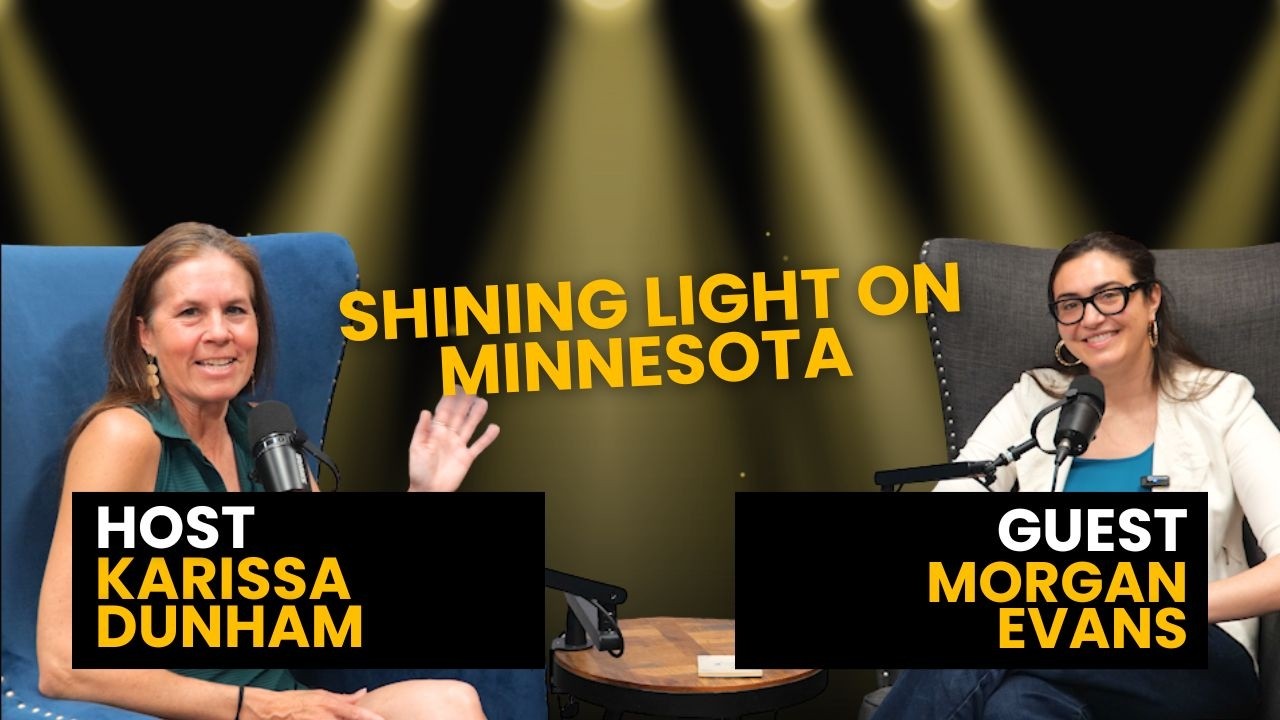
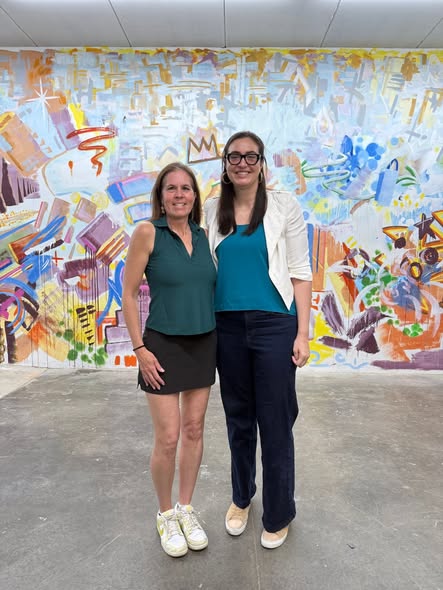
Hello everyone. I'm Karissa from Shining Light on Minnesota. I'm very excited to have Morgan Evans here today. Welcome, Morgan. Yeah, thank you for having me. Yes. So, let's kind of dig in a little bit and tell everybody how did you get into medtech and what brought you to the Twin Cities in Minnesota? Yeah. So, um I was a huge nerd that thought I wanted to be a doctor. And I'm very grateful I learned this before spending a lot of money on med school, but I don't know how to emotionally distance. Yes. And so I did a rotation in heart and lung transplant which intellectually was super fun but you know as you can imagine a lot of loss and death and just tough um and so doing that transplant uh rotation realized there's a lot of people that needed solutions to buy time and that's like where medtech has a lot of really cool innovations and I've been hooked ever since and so um what brought me to medtech I started uh in the Bay Area for about 5 years in a startup there then went to business school in Chicago and then when I was recruiting coming out of business school I said I will live anywhere in the world but the Bay Area and that's kind of like me when I want to move out of here I'm like anywhere but Minnesota like I'm good like anywhere exactly like just cuz you feel like you've been there and done that right you want something new and uh I was recruited to work at Medtronic which is one of the largest med companies and did mergers and acquisitions for them and then I married the native motan oh boy then I had kids so the roots got really quick. Yes. So, let's tell everybody a little bit. You're a mom. You're an an entrepreneur. You've got a lot of things going. You're a leader as well. Tell some people or tell our listeners a little bit about some of the things that you have done and been a part of. Yes. Yeah. Um, you know, I I try to describe it as I have two loves, right? One is innovating really cool things like products primarily to help humans. The second is business model innovation. And the two kind of naturally come together. Exactly. But they show up in a little bit of different ways sometimes. So where I spend majority of my time by far is running a company that's really looking to diagnose a common cause of stroke in the young and help characterize when it's a problem because it's present in one in four of us. Yeah. And obviously we can't go around assuming a fourth of us have strokes cuz we don't. Um so that's where I spend a majority of my time. my my clinical co-founder is out of Northwestern Medicine, a cardiologist by training that does this day in day out. Um, and have really loved building in and digging in. And it's actually funny that you start with like a single product or a problem, right? And as you peel back the branches out 100%. And so we have five different products now all in that same kind of um mission around helping to prevent stroke. So yeah, that's the main one. And then I I own a couple other businesses or or co-ound them. So one's a services business that helps other medtec startups. So serves um almost 100 startups on an ongoing basis. So that would be the business model innovation showing up. Um you know I was part of a group that just bought our first business which is again put into the second category probably as well. So yeah. Amazing. So when you got into cardiology and the lung transplant and all of that world, did you have a reason that you wanted to get in there or were you just kind of like drawn to it just because it was interesting? I mean, everybody has their stories to tell, but of course, you know, it's fun. Um, so first of all, kudos to my parents have been always big advocates of just supporting whatever passion we had, right? And um, my mom at the time, my my grandfather had a pacemaker. Mh. Um, she is a busy working mom, right? So, I grew up in that household of showing that like you can make it all work thanks to having people model it for me. And so, she just brought me with with her to one of my grandfather's appointments. Um, and I just started asking a bunch of questions. And this is like I think I was eighth or ninth grade. She's just like, "What is she going on about? All this stuff like where's you know what what's all this parts of the heart now and the stints and how are you understanding all of this?" Right. Yeah. And so like it's funny cuz both my parents did their part in trying to embrace my my inner nerd. U my mom found actually the the science the um sales representative that was in the room with us asked if I could shadow him. Yeah. And then my dad, a good family friend, ran a vet clinic and was like, "Can she go watch vet surgeries as an internship, which, you know, I think I was doing anesthesia recovery, which basically was watch surgeries and the pet kittens as they wake up, you know. I mean, that was it was a rough job, but yeah, and just kind of breathe life into it and just keep asking and being curious and and I've always been passionate about things that intellectually interesting. I mean, these are for-profit companies, so hopefully they do well as well, but you're doing good in doing it, right? So all can be true. I mean you're in a surgery room and you're dealing with cauterizations and things like that. And that's people don't they understand the patient side of things. They don't understand the medical side of things. Yes. So let's talk a little bit about your device. Yeah. Yes. Yeah. Yeah. So um the the main one that I mentioned um Agitated Solutions is the company and basically it's a way to provide a contrast in the heart um that's very standardized can be done with one person um and visualize all these things better and so what people don't realize is and this is where it was aha for me when I dug in um one of the clinicians we worked with actually at Mayo Clinic was like oh yeah when I read these I can tell when the bubble queen did them right yep and I'm like you can actually tell from reading an image without the person in the room who did it. And if you get an X-ray or an MRI or any sort of other diagnost for a while, so I I understand. Yes. Yeah. Everybody is their own way. Yeah. And so the step one of that is really standardization. Um the products available in Canada. We started there first just cuz it's a different regulatory path. Um and then are in the middle of a clinical trial here in the US. Um the second product that we came up with, as I mentioned, the peeling back the end, right? Um was they manually count bubbles today as a way to say this is a problem or not, which is a pretty archaic way of doing anything, right? It's like handwriting these days almost. It's kind of starting to go away. We can type now or just voice or anything. Yes. Exactly. And so um basically it uses um a IML which yes it's a buzz word and sexy but it is true to analyze images to kind of number one standardize the read of them again same theory being we need the same things read consistently correct but also like a computer can genuinely see stuff differently than a human eye can especially watching a video clip which is what a lot of we look look at and so again trying to use that as a way to better predict which patients are at risk well Because a lot of times people don't realize, but the human eye when you're looking at something time and time and time again, it gets to be monotonous. I don't care how many times you could even look at a word and it could be spelled incorrectly and you just see it the right way or the correct way that it's supposed to be just because your eyes are tired and you're tired and doctors and clinicians put in so many hours. That's the other side of things. They get tired. Like it's it's kind of a it's a world. It's a whole world. Yeah. And even just like the very simple process of like if we try to play and pause a video clip as a human like that is actually quite difficult to get it to analyze and to see those things right versus a a computer that can just or software I should say that just flows through and can frame by frame perfectly analyzed like even that I mean it's it's so simple technology it's amazing where it's going at the same time you kind of start to wonder how much is the computer missing like you want to obviously have those clinical trials You want to make sure you're not missing a section every single time. And that's where like, you know, my my side of industry, we like to whine and moan about like, oh, the FDA is this or they ask this questions, but they do serve a really good purpose for those reasons, right? Like if I'm going to go and say something that could influence clinical decisions, right? I hope I got it right. Right. I want to have enough background information whether it's here or wherever you're doing it at. Yes. Exactly. Exactly. So, let's talk clinical trials for a little bit. I mean, you've done a lot of those here and you've done them in Europe and Canada. What do you think is kind of the easier or best way for people to get FDA approved and to follow the process? Obviously, it's a lot. You can't just go to Europe and say, "Hey, it was approved over there. Now, I'm going to bring it and it's going to be magically approved over here. They they need their their process." Yeah. And and it's funny because each of the geographies sometimes look at it differently. Sometimes they look at the same. And even if everybody is reaching similar conclusions on what's required to study this in humans, the timelines can be very different. Um, and so for example, in the past, a lot of people used to go to Europe because it was faster and um, a little bit more interactive and how you could get feedback and kind of work through cuz often people forget, but you're bringing brand new things no one's ever done before, right? So then this whole definition of what is safe and what does this look like when you're not going to perfectly have answers is sometimes interesting. Trial and error. Yeah. Yeah. And let's hope that that's not on humans, right? But like at some time it may have to be. And so how do you protect all that downside risk to do the right thing? Um and then Europe changed its regulation. That was a big thing in our industry. Um and I would say that people kind of drastically underestimated the amount of work that that all took. So then a lot of people that would have gone to Europe first went to the US first or you know for us we went to Canada first just because again of it and just came down to how we were classified um same work same rigor you know of what we're trying to do but um sometimes it's just different geographies require different things right well I think the other thing people don't realize is in the United States in the medical world we're ahead of a lot of places we have so many medical advances and technologies and trials and everything like that where people think, hey, you know, Japan and China, they're so far ahead in technology, but in the medical world, that's where we're at. Yeah. And it's hard because I mean the statistics on the amount that the US spends on healthcare is not great. We all know that, right? However, because we spend that amount as a health care system on healthare, every company of innovation in the world wants to come here. Absolutely. Right. Oh, yes. Of course. So, it's part of the challenge and you're going elsewhere and they're wanting to come here. It's just kind of a how can we get it done quicker, but they're wanting a piece of the pie, too. Yeah. And they're brilliant brains here. Um I mean, we've been very fortunate. I mean, even in the trial that I'm working in now, I mean, we've got NYU and Mayo Clinic and Northwestern, Jackson Heart, and and then um a Canadian center as well. Um but yeah, it's it's it's a tough balance though sometimes between the bigger the name sometimes is always the fastest. No, it's always I mean, everybody's like, I want to go to Mayo. I want to go to I'm like I lived in Rochester. I'm from there. You know I there's other hospitals that are just as good. I'm up here in the cities. Let's just you know it's the name is behind it. Yes. Just like anywhere else or the United States are behind it but yeah it doesn't always mean it's going to give you the answer you want or the time frame that you want or Yeah. Yes. Yes. So what have been some of the newest trials that you've gone on or where are you looking to explore next? Yeah. So as I mentioned the kind of current one I'm doing um with Agitated Solutions so basically studying the contrast side has been a big one um very time consuming and I mean you know roughly half the money that we're raising right goes just to doing that clinical trial um we've started uh looking at others that are all around again can we better predict um stroke and and because the good news is what we're looking for basically it's it's a hole between or a flap between your two sides of your heart. Y I mentioned it's present in one and four people. The reason for that is that it's present in every single baby in the womb because their heart beats not developed yet. Their heartbeats but the lungs don't function. And so then when you're born that should close in some people it doesn't. Um and right now that can be if that flap is there blood can go from one side to the other and cause a stroke from that. And um the problem though is we know how to fix it which is they go and they plug it essentially. Um, but it's only indicated to prevent secondary stroke, meaning you have to have had a stroke, then show that you have this, then get the hole plugged. And so, a lot of what we're trying to figure out is admittedly maybe the the people that would be indicated after you've stroke is a bigger group than those that are like, whoa, this is really high risk. Let's do it before they actually have the stroke in the first place. But that's a lot of what we're trying to study in combination with the software and the contrast, which is kind of fun. Well, and it's one of those things, too, like if you don't know that you're not going to have a stroke, you're not going to go in just to get tested to find out, hey, am I one of those four people? Am I, you know, one of those ones that needs to get a plug before I need to get it? It's always when they're sick, they're going to come in and they want to know what's wrong, like or figure things out. And just in general, I think the field is evolving a lot in like I mean, there's whole body MRI clinics pop up, right? or like if you can af and or you can have one at your home. I mean, you can just whatever it may be. Let's just go in and get the MRI of the whole body scan and know where you're at. Whatever you want. The the kind of more preventative health that kind of movement where it's interesting. There's a couple people looking to do this. It's just like, wouldn't you want to know if you were one of the four that had it and then, you know, maybe you watch it differently knowing that. Same goes with cancer research or anything. I mean, I kind of long story short, my mom has Alzheimer's, dementia, my dad died of Parkinson's and cancer, and now all my kids, my daughter had a very rare disease, and she's like, "Mom, you know, do you think that any of that could have come from you?" I'm like, "Well, I'm going to go and, you know, I'm going to check my labs more frequently and get them more in depth, and I'm going to do what I need to do and do all the research and try to see. I mean, I'm young enough. I'm making smarter choices health-wise. Like, let's prolong it and see what we can do to kind of help that out." And why wouldn't you? Yeah. And it's interesting too how I mean and I feel like I'm like talking negatively of our healthare system more than I would like to because there's a lot of positive innovators but so much of this also is us trying to advocate for our own health and trying to figure out how do I be more proactive or where would I think about this and you know it comes from us asking the curious question often instead of our healthare system is so overworked that well it's like okay I want to get in there and get you know my yearly done but it's going to be two years out or it's going to be so far out so okay like I'm going to eat healthier. I'm going to do what I can do. And yeah, I mean, my mom just got a pacemaker put in. So, it's one of those things, you know, that's on the forefront of everybody's mind is their health. When they start seeing people get terminally ill or just having major things happen, they're like, "Okay, you know, I'm young. What can I do? What can I do to make sure my kids don't go through that?" And everything like that. Yes. One of my uh favorite books, and it was actually just gifted to me by a good friend as well, is Die with Zero. I don't know if you've read this, but the whole premise being like the return on investing of investing in your health, like you will never regret spending money on those things. Absolutely. Right. Yes. So, mom side of things. Yes. Wonderful. Congratulations. Thank you. It gets to be busy. People don't understand. I mean, no matter what world you're in, when you're a working mom. Yes. It's all the things. And all the attention and all the exhaustion. Yes. How has it been? I mean, there's not there's not a work life balance. I mean, as much as people want it, it's work is here, balance is here. It just kind of flip-flops. But it all works out. Kids are resilient and they look at you like you're their superhero. And yeah, first of all, thank you for reiterating that cuz I've got two littles, so my daughter is not quite 18 months. My son is four. And when you're like in it, you're like, "Oh gosh, am I am I doing it wrong? Is there that?" Because I know myself. I'm not going to be a good mom if I'm not fulfilled as well, which is mentally a lot of best first and then if you're good, then I can feel that better. But you're exactly right. Like it's this pendulum that you're like, well, we were pretty heavy in work this week, so let's try to swing back the other direction and you hope that it nets in the right spot, right? But there is no such perfect middle. Perfect middle. No, not at all. And uh it's a lot of iteration too of Yeah. you know, maybe I'll try to get out of the house earlier tomorrow so I can be home in time for this thing. You know, try to try to figure things out and you just go with the flow and things happen. I mean, I I've been, you know, I was a single mom, had three kids. We have a blended family now of seven. Um, still not married, but it is a catch 22. Like, and you just make it happen. You you do what you do and you the kids will know and they'll understand, but at the same time, you be there as much as you can for them, too. But you your guilt in the mom world is like, "All right, 90 hour work week this week. Like, let's do this, you know, like late nights, early mornings." Yeah. And I know it's not intentional, but of course, like I'll have traveled for work or something. You come home and like usually my husband and I, we switch off like who does which kid at what bedtime cuz they go to bed at 7:30 right now, you know? And I'll come home and my my four-year-old will be like, "I want daddy to put me to sleep tonight." And you're like, and you only seem to do this when I've been traveling, so like hint. You're always a mom girl, but I get it. Like, you're now you're now rocking. Got it. Yep. Yes. Um, but you know, I mean, they're they're resilient, I hope, too. But it does hurt a little. Oh, yeah. I know. It's It's And it does. It grows. They grow and change with it, but it's just the whole you're wanting them to be excited and be like, "Mom's home. Mom's home." And it's like, "I'm good. I've got this." It's like I'm already like a little adult and an adult, but I'm not. Yeah. Yeah. So, you're now in Minnesota doing all the things for Medtronic. Some of the clinical trials obviously you've done in Canada, you've done in Europe, and you've won some awards. Let's talk a little bit about those and what that meant to you. Yeah. So, first of all, let me start by saying like I'm one of those people that get a little uncomfortable by the recognition. And it's um I'm grateful for it, but I actually had another mentor of mine, a gentleman by the name of Mike Nathan that was kind of like, hey, you got to flip the the way you view it, which is if you getting awards makes your companies thrive, move faster, get funding better, get better. That's the advantage of it, right? Not like, oh, Morgan wants to pound her chest and feel cool about herself. It's not like a why me or like I'm awesome, I'm doing this. But it took a bit to like recognize that and for that reason as well, right? Like I might get the award, but it is because of the team behind you that helped do it. So yeah, I mean um Minnesota has an amazing one which is 40 under 40. Um that was great recognition, an amazing event put on. Um the the recent one uh is a national one which is uh 40 under 40 and cardiovascular business. Um which that one given what I'm working in was exciting. Yeah, it's not necessarily all business people. It was like clinicians and and things like that as well. Um and then got a female founder award for Inc. as well. So, um Amazing. Congratulations. Nice little recent win of a few. So, it is, but it's hard. I mean, I know I just recently won an award myself and I'm just part of me is like, you know, why me in this little tin shop world? Am I winning against all these contractors, you know, in Minnesota based or whatever it may be through finance and commerce and I'm like, you know what? No, Sun Control is doing this like we're getting the name out there. We're making it. We're doing it as a team. Like it's it's an us thing. Yeah. Yeah. And that's the thing is it does feel I mean someone has to be the one accepting it. But I mean we have a really lean and mean team and the amount that we've done with just practically very little resourcing is like so and that's the stuff that it's like definitely not me that did. So people get you to where you are today. Yes. 100%. Yeah. Yeah. So, who have been some of your major mentors along the way? Yeah. So, I actually one of them just moved back to Minnesota and my heart is very full. Um, so Jodie Hubler, um, is is a main one. Um, Amy Langanger, who's on my boards as well. Um, you know, just people that have embraced me being me. And there was a period of time that I think I felt the need to make myself smaller or to fit more neatly in a box because of perceptions and what people said and um it's a male-dominated world and this is the way you need to do it and you have to do it and well and the fact that I even have more than one thing. I mean the number of people mainly older white men that would be like pick one. Yeah. Stay in one lane. Pick your lane. Yeah. And I've always been like, well, show me where a ball is being dropped and then I'm happy to do that, you know, but I do multitask very well and all those things. And so, um, you know, they've been just really inspirational to me, very supportive, and also giving I was just telling her this, Jod, last night, like giving tough love, but with solely positive intent, right? Yep. And it's kind of weird to think about, but sometimes like it's hard for them to give that feedback, right? Hard for you to receive it. hard for you to receive it. But that's what like you want to grow. You need that to grow. It's not like it's not all sunshine and rainbows wherever you go. And it's not all perfect world and everything's great and happy until it isn't, right? Like let's learn and let's grow. Let's figure I was just talking to Amy about a specific topic and you know, you frame it up like a question of being like, "Oh, I'm having this challenge. Can you help me think about it?" And I was thinking this was like the other person, how do I manage their challenge? Right? and she totally flipped it was like in how well why are you in the middle of the conversation in the first place where's your spot in the lane uh and it was fair feedback you know but it's it's like I appreciate when they ask the question you didn't you didn't ask that you needed it so what have been some of the obstacles you faced along the way yeah um I've had to learn the lesson a couple times of it's not just the what but the how and what I mean by that is um finding team and um partners. I mean, startups are hard. Yeah, they are hard. They are very hard. And people assume it's these rainbows, sunshine, everything goes up into the right perfect. All the processes are already set before you get there. And you're not wearing a million hats and trying to figure a million things out. And Yeah. Yeah. And and I've I've come to appreciate positivity in it. And um I've had to learn that kind of the hard way of just putting people that are in the trenches with you that may or may not have the solution but are confident we're going to find it. Yeah. Yep. And just that mentality I think has made all the difference in the world. Yeah. For sure. Um but you know it's tough to learn that the people. It always comes down to the people unfortunately or fortunately depending on how you look at it. Whether it's a barrier or it's someone bringing you in to help you out and Yep. And so, you know, I I feel like that's an area I've grown a lot. And actually, one of my mentors jokes, but you know, in some areas I've been way ahead of my time and some I'm way behind and and the people management tends to be one that takes me a little bit more time. So, but that's I mean that's okay. Everybody has their their abs and flows and like once you get there then you're going to be excelling in that where there will be other people that'll be like, "Hey, I need help with this." Yeah. Yeah. Exactly. Or have the phone a friend that I'm not your person but I'm calling her. Yep. I've got this like you don't want you don't have to wear all the hats all the time. That's why you have a team around you. Yes. Exactly. So people always think and this is kind of how we are too. Obviously you're now Minnesota based from the Bay Area. Clinical trials when they're done you send teams there. It's not like you have hey I've got a group I'm going to just phone a friend and can you guys run this clinical trial for me in Europe or can you guys do this for me here and there? Tell everybody a little bit about that cuz we do the same thing. I mean, yes, we have different locations, but installs can be handled anywhere through our team and we'll send them out if we don't have those locations. Yeah. I mean, it's interesting in general because our like my world is so like you're in this stage, then you're in that stage, then you're in this stage that the whole debate of what if that is an internal hire versus a partner. And in the trial, it's both. So, um I have a wonderful woman that runs our Clint and rag, Pamela. Um we love our trial sites that are local. So, Oh, absolutely. Yes. when you have those to help out, it's amazing. So, we have one in Rochester, for example, um adding one here in the Twin Cities and and you know, Exactly. we go and support, but those when you don't. Yep. And then, you know, it's thankfully we're not a massive one. So, a number of sites or patients, so we can send our people just to go out and come back. Uh but it does take a village. Like, we still have contract partners. Um just part of that is best practice too of like you want to have is this something we need to do or is this something somebody else can help us out at too. Yeah. Yeah. But it is a little bit of a jigsaw puzzle sometimes of like well what's the highest quality always first right especially in the work we do. Um followed by like path of most efficiency and maybe that's capitalally efficient too but sometimes not. And are the people I'm going to have doing the trials going to give me the information I need too if I'm spending all the money or is it going to be worth it? Am I going to have to do it again back here because I did it there and do it a second time? Yes. Yes. And that's where it's nice to not have to and that I will say that's where like part of the strategy for us was we were able to go into Canada. Canada did not require a clinical trial to be able to like be in market. So we were able to use it before we started our trial. I want to say at least in 300ish patients. So, not that there's like kinks per se, but like we're like, "Oh, okay. We have to inform people do this or do that a little more deliberately than we may have thought, right?" And that's the kind of stuff that it's nice to dry run a little bit or, you know, before you get into the thick of it, too. So, well, a lot of times I feel I mean, from what I've known from the medical industry, the real world is starting to kind of come around, which is nice, too. like once you've done the trial somewhere else instead of saying hey yes I know the FDA is the way they it is but if I've done it there the real world information can be used to help guide that when you get back or doing anything exactly and there um so for example that's part of our strategy so the and I mentioned some of the regulatory pieces but the contrast that we have in the US is regulated as a drug in Canada and the rest of the world it's a device and that's part of why we were able to get it faster so typically you would need two randomized controlled trials in the US to get something approved as a drug. Right. Well, we're doing one, right? And then this whole new regulation and kind of embracing of real world allows us to use real world evidence essentially as the second. Absolutely. Um, now it's still a little ugly and trying to make sure you get what is enough robustness around the data that they're like, okay, I can take this as meaningful, but recognize it's being used in the real world. And so sometimes there was enough trials done. It was enough information. Yeah. Exactly. But it it it's not black and white. So, right. And it never probably will be, but but it makes sense, right? I mean, that's and in a trial trial's done. Everybody's sick somewhere and everybody has to have it done. Yeah. And sometimes things do better in a trial than they would in the wild, if you will, because of the fact that someone's not like babysitting very slowly every little thing. So it is actually a really good in my opinion way to kind of represent actual use too. So yeah for sure. I mean especially when it comes to heart lung transplant too. I mean everybody and the way the world's going. I mean you hear about things more technologies getting it more and more at your fingertips. I mean through the ultrasounds and the X-rays and being able to look at those as a normal person and understand them and it's really everybody wants to be their own Google doctor and all of that too. Like I know what I'm talking about. It's like but do you like I do I I actually asked a clinical friend I'm like do you get the like chat GPT of like a patient comes in being like I have diagnosed myself with the following and they're like well my 30 years of practicing medicine and my medical degree would say probably not your doctor Google Chad GBT and then like I've seen like yeah let's take your image and pop it in somewhere and have them try to read it for you. Sorry. Like that's no or pulling words apart and trying to understand things like let's wait till the doctor talks to you. Like but it is good I think at least as consumers to better understand and to at least know the questions to ask cuz I don't educate themselves too on what's going on or like understand tradeoffs and risks and all those things because sometimes people don't again everybody's busy right there's a lot to do and they don't always break it down in the way we need it to be broken down. So, well, and sometimes I mean layman's terms like when you go into a hospital like my mom will bring me she doesn't understand I mean obviously where she's at but or she'll bring my brother and it's like okay let's dumb it down now for you a little bit there and I know what questions to ask going into it. It's like you want to have that person with you if it's not you to get those questions out to the doctor because they don't know what you are looking for, what you want or how what you're understanding what you're not. They're just kicking it out versus what they know. Yep. Exactly. Yes. So, what exciting things do you have coming up next, do you think? I mean, you've got the trials, you've got all the all the things. So, um we're hoping that uh the trials wrap up this year and then, you know, you package everything nicely and say, "Hey, what are your thoughts?" So, that takes some time, but you know, really getting it in our backyard and getting, you know, these technologies out um is really exciting for us as a company. Um the services business I mentioned is that was like where I kind of Avoidtech is is the company but um you know it's it's really started to kind of hum and take off and it's been really fun because a lot of my learnings as an entrepreneur I try to sit here and be like gosh I just I w there was I wish I had known something or done this differently. Does anyone else struggle with this? It's such a fun sandbox to then say, well, you know, there's a hundred other startups over here that [ __ ] is helping. Like what of this can be transferred? If I'm seeing this before you even get there, are you seeing this too or I don't want you to see this? Please learn from my Yes. Like I would happily do that because then it's a positive flywheel, right? Like um you know, we want to get a thousand technologies into humans as a business, right? So if we can help other entrepreneurs do it better and faster and less money and fluid like it's just a really good flywheel and hopefully they pass that on to the next entrepreneur as well. So I'm enjoying the kind of like viewing this as an ecosystem as opposed to a singular well we all win together like let me help you help your people too cuz the more patients we can help the more people and the more research we can get done in all sorts of amazing different spaces you know so it's part of the fun of it. Well, and there's so many people that are anti-clinical trials and anti all the research because they're like, "Oh, the research isn't helping." Like, but it is because look where we are today. Every day, like you learn stuff every day. You're outside, you're looking at things, you're reading things, you know, if we don't get the research, we don't do the trials, we're never going to know all the things, you know, and it's hard. I mean, it's all should be a balance of risk and benefit, right? I mean, if it's a high-risisk thing, like you're going to put a pacemaker in someone that if not done properly, they could die. I hope they study that a little bit more, right? Yep. Or if someone has brain surgery or they need a lung transplant, let's hope it's going to be the right fit for you and it is get a new band-aid out in the market like cool, but you probably don't need to. I mean, that's more of just like will consumers buy it, which is a very different world. Yeah. So, but it at the end of the day, it's there's a reason and a plan for everything. Like you've just got to help and progress and make make generation and make the world a little bit of a better place. And that's the goal, right? Like make it better for our kids and, you know, my my four-year-old and 18-month-old, right? So that they've got a better world left behind for them. It'll be interesting to see what in the medical world, I mean, or in any world, but the medical especially when when they get older and when grandkids get older and things like that, too, when people start having those way technology is going. I mean, robotics and AI and everything taking over and it's it's already there. People don't always see it, but it's there more than a lot a lot of people know. Well, and it's cool because sometimes it takes our side just a little bit longer to catch up with like what you see in an iPhone, right? Like they can iterate so fast. And again, for all the reasons we mentioned, it's a little slower in the medtech side, but in particular, like it used to be you were a pharma company or a biotech company or a device company or digital health company, all the different and they're like the all the silos are kind of becoming uh combined and fluid and it's really cool to see all the things that come out of that. Like even just you know your Apple Watch, right? And like I know there's a lot of literature on this and and news on it, but like being able to detect aphib, like atrial fibrillation, right? So that would have been normally something just as like a convenience tool that's now doing some wellness products, all the health stuff. Yeah. So it's cool to see it all intersect. I mean, from that to people getting the Whoop to see where their heart rate's at, the mood rings, like the sleeping patterns, just everything the way it's all transcribing is is fun. Yeah. Yeah. And just better optimization of all of our health never hurts. Nope. Right. As long as you do it the right way and follow the right advice. Yeah. Yeah. Like I don't recommend not doing your own testiles or trust test trials. Yeah. Or like going to some foreign country for some very experiment. Yeah. No under medical advisory. Yes. Exactly. So what do you think has been one of your biggest successes that you've had? I mean I know you have a lot of businesses. You're a mom doing all those things. Yeah. Um I mean obviously I've talked a lot about Agitated Solutions and and I am really proud of what we have done and built there and I do think you know on the consultancy side with AIO I genuinely didn't think I was building a company and I know that is like a weird statement but I thought I was creating a holding company of people and I had two startups at the time and I was just using them to do my own things right and I was smarter smarter not harder and I was trying to innovate not just in like there's these five things that have to be done, but how do we do those five faster, better? Because when you have two of them, you have like a computer system, like let's get this and get those processes. Exactly. And it was funny because it was right before my son was born, literally like two months before, boy. That I like took my head out of the sand and I was like, "This is actually a business, right? I should run it like a business model. Let's Yeah. and, you know, brought in some help and professionalized it and um and and that's part of why I I really enjoy the business now. And I I don't run it on a dayto-day. I mean, I still I fought very hard to self-fund it and wholly own it because I didn't want the first answer, you know, if you take investors, the first answer is raise rates. Yep. Absolutely. Let's let's jack this one up and let's And then you turn around, you're like, I mean, yes, but we're serving like starved startups that are all trying to change the world and help help people, right? So like that doesn't seem quite the way to do it. Make it x amount so they can't get to that point. Yeah. Like so it's been interesting to just um and I'm really proud of the way that business has innovated to a be a successful business cuz like you know you have to have margin to have mission. Correct. but also to really stress test and push ourselves to be doing it better and cheaper and differently often at that company's shorter term loss but hopefully obviously longer term benefit. So it's been a really fun thing that I'm also proud of which is good. I mean, it's good to have those those babies, the things that you just didn't know that were there, like the little nuggets, and now it's like flowing and be like, I did it at the time when I least would have expected to do it, like two months into the having my my child and be like, "Okay, let's go." Yep. Yep. Yep. Yep. And twice I tried to take maternity leaves and learned that mentally I'm not made for them. N worked a lot less. Yeah. Right. But, you know, that's part of what you still work like you still do what you do. Yeah. Yeah. I mean, I can only just sit and binge watch TV and Right. Yeah. There's only so many hours in a day and too many things. Your brain starts to go and I'm like, "Okay, I should be doing this and I should be doing that." Yeah. And my husband was like, "I think you need to like cuz you know, then the the to-do list in the house gets too long, right?" He's like, "No, please apply that brain elsewhere." You go do that. I don't worry about all the other stuff. We're we've got this. Exactly. Exactly. Do you have any trips or travel plans that are not work that are coming up? Yeah. Actually, so my husband and I are doing our 5year anniversary actually at the end of this month. Thank you. Um yeah, so we we were supposed to get married in 2020 and as a lot of people that had to had to reschedule that one, but um yeah, so headed to San Diego fun for that. Um and then some fun uh work trips and because my kids are so little. Yep. Right. You know, we do little weekends, but um I'm not at the point yet we're getting especially my daughter. Love her, but she just, you know, is walking. So to sit still for a flight is not a stage of life we're in. No. And you do enough traveling. I mean, I do enough traveling. It's one of those things you you see it, you're not you just know like it's it's a busy age. Like they want to get up and move around and see all the things and touch all the things and do all the things and Yes. Yeah, but it was funny cuz I recently realized that like we were so just like chaotic with my daughter on the flight and at the end of the flight I was like wait I didn't have to tell my son to stop kicking the seat or to speak at a reasonable level. So there is light at the end of we can get there. We were getting there soon. Yeah. And by that time you're going to be like I kind of miss those days like all the exploration and the excitedness for everything. Yeah. How fun. Yes. Well it was great having you on today. If there was anything or any advice that you've been given to your younger self, what do you think that that would have been? Yeah, it's a great question. Um, I'm just a big believer in in take the risk, take the jump, but do it in a mitigated way. And for me, uh, younger self, you know, I did it relatively earlier, I think, than most, but just trying to find the mentors to surround you. And for sure um and I think there's so many people that you hear that just don't take that very first step because they're more worried about the downside than protecting the downside if that makes the whatifs. Yeah. Yeah. And just do it. And that kind of circles back to outlook like how people look at things too. Like% you have a positive outlook, you go and do things and try things like things will keep moving forward. If you always look at the negative in life, you're not going to get to that next step. So just take that first step. Yeah. the entrepreneurs that are like ah you know what if it doesn't work and I'm like you're clearly hirable you have a job now but what if it does like why not look at it that way like why not worst case go back you can get there you're going to find it if yeah if not that job will still be there 100% if not that one may be a better one yes exactly and you'll have learned a lot doing it right so it makes you better for it yes so if people want to help fund or help any in any way they can what can they do I love this question so I will say we need more early stage investing in medtech and a lot of people get nervous because they're like I don't understand medical right and I get that right like it is but that doesn't change the fact that we need people still needed making the bet yeah and so um you know we're not allowed to solicit uh officially of course but we are always invest um and so you know people could could reach out to me uh through the Agitated Solutions has a website Um, again, not soliciting, but um, but you know, I would just encourage folks as well, just want to find out more. Yeah, exactly. If you'd like to get more information, they can reach out. Um, and I just, you know, people can make money in these businesses and really have impactful work that they've done doing it. And so, both can be true. And if you're nervous about it, go go ask your cardiology friend if they think it's a good idea, you know. Well, and then sooner or later, there's going to be somebody that's going to need heart help or they're going to have, you know, a f or they're going to need a pacemaker or they're going to need surgery and stints put in or balloons put in or whatever it may be. Like there's always somebody in your life that's going to need that or have that and yeah, why not do it? Yeah, exactly. It's a good use of funds, right? I know. Any advice that you would give to our audience? Um, you know, I think uh the phone a friend is often a very underappreciated resource, but I would say that's one of the things I'm good at and encourage people to, you know, not always be so transactional in asking for the help, but in building the network and give first and then it'll come back around. Yeah. Karma has a way of working itself outward wonderful way. Yep. Well, we appreciate having you on today. How can people find Agitated Solutions in EVO and all of those places? Yes. So, uh, Agitate Solutions is online. So, it's www.agitsolutions.com. Yep. Pretty straightforward. Uh, same thing with Avio, um, aviomemedtech, uh, consulting.com. Um, actually, I don't even know if there's a consulting in there. I should know. But I'm sure if you Google Avoidtech or chatg, you can find it. Or just put your name in, they'll find you that way, too. LinkedIn. Let's be friends. Yes, exactly. People always forget about I'm like, "Yeah, just you could just Google like obviously Google search is out there, but yes, just bring in the Morgan Evans and they'll find it too." LinkedIn is an easy place to get a hold of me, too. So, wonderful. Well, we appreciate having you on today. We look forward to seeing and hearing about all the things in the future and anyway people can or want to get a hold of you. If they can't find you, they can get a hold of me. Yes. And thank you again for the opportunity. It's been a lot of fun and I appreciate all the things that you're modeling for others, other moms in different stages of the life as well. Yeah, I mean it's everybody has a story to tell and any way that we can get the word out there and just help people and hear their story and get to know them on a deeper level. That's that's my why. Like I'm around so many people. Let's let's do this. Let's all win together. Yes. Well, thank you. Let's keep shining light. See you guys later. See you.