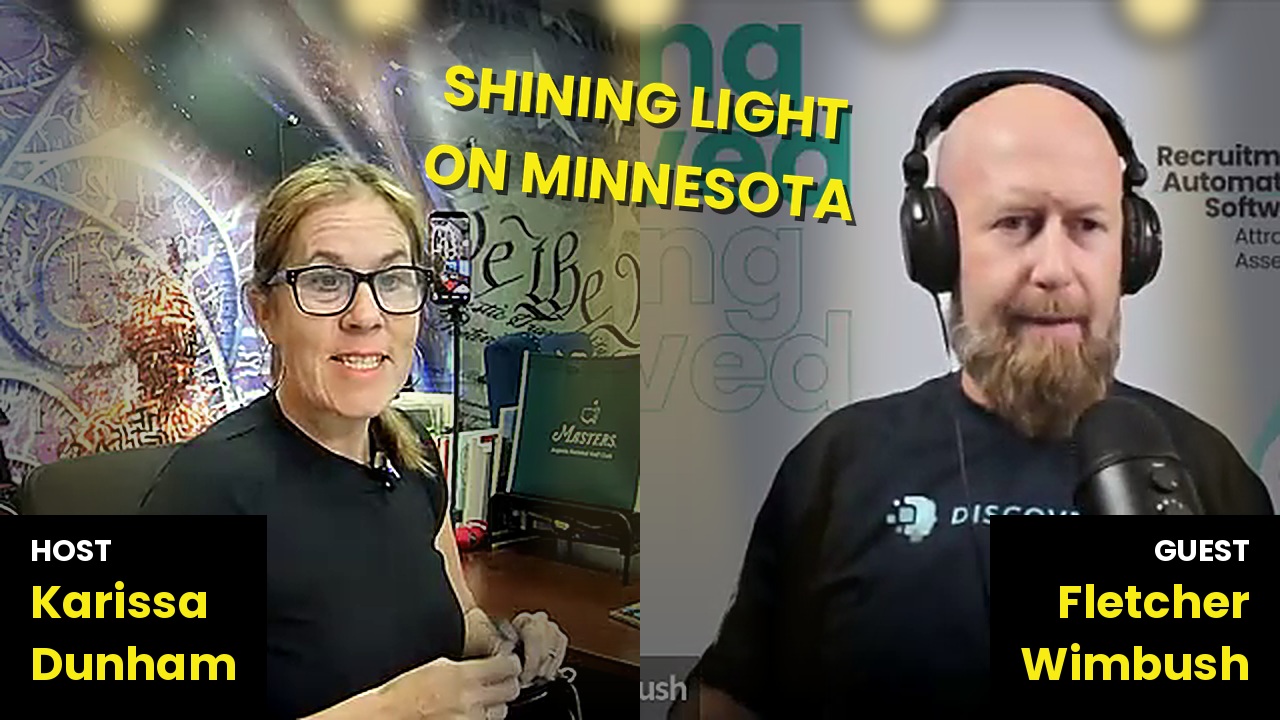
Why Hiring Is Broken and How AI Is Fixing It | Fletcher Wimbush, Discovered.ai #102
Fletcher Wimbush, CEO of Discovered.ai, explains how structured, fact based hiring and AI are changing who gets hired and why.
Or watch and listen on:


Most hiring still runs on resumes, gut feel and staffing models that fail both employers and job seekers. Fletcher Wimbush explains how structured, fact based hiring and AI are changing who gets hired and why.
Host Karissa Dunham sits down with Fletcher Wimbush, CEO of Discovered.ai, to talk about talent assessment and recruitment automation.
Find Fletcher: discovered.ai and fletcherwimbush.com
This episode is brought to you by Sun Control of Minnesota, Elite Tinting & Graphics and Bravo Protection Products.

Hello everyone. I'm Karissa from Shining Light on Minnesota. I am beyond excited. I have Fletcher Wimbush with me. Welcome Fletcher. Thanks for having me. You bet. So, let's talk a little bit about Hire Talent and Wimbush and Associates. What got you into the talent agency and where did you start off? Well, I my father was a business coach and a consultant and he created um a number of assessment testing tools that he used to help coach his business clients. But very quickly those became tools that they said, "Well, this was very enlightening. I learned a lot about myself. Well, I want to like put my future hires through it, you know, so I can learn more about them." And u I mean at seven years old, I think or you know very young age, I was like a guinea pig. I'm like taking these like 350 question assessments and you know meant for like adult executives. Um and you know I think I was like his baseline I guess. I don't know. Um no. Um and you know just having a father like that and having been exposed to these ideas I I you know obviously I I I mean I probably could have you know gone run the other way but I really leaned into it. I um was naturally a leader. I was captain of my football team, student body president, just always like the lead at my job, right? You know, sure. Yeah. You know, um, you know, I think my personality lends itself to that. And so at 16, I was like, you know, this who you get on your team, whether that be your uh social or nonprofit organization or your business, you know, is all the difference in the success that that organization is going to have.
And as a human being, maybe being a high D, you know, on the on the on the personality scale, I mean, winning and being successful feels good, right? You know, like people want to win and they want to be successful, right? Yeah. I don't think as humans we want to be losers or like not be successful or fail, right? No, that doesn't feel good, right? No matter what your personality is, but as a D, I'm like really driven towards that, right? You know? Yeah, for sure. And so that became my core belief in business in leadership that you know we get that in the right the right people in the right seats and the the right people on the team and you know I really took off from there and I got to you know implement these ideas in uh my early career and 13 years ago I took over the business and ever since been able to help you know uh over 2,000 organizations improve their outcomes. Yeah. What makes your hiring talent different from other hiring agencies? And I mean, I know there's there's so many of them out there, but what makes you guys stand out? Well, we're not really a hiring agency. So, uh, our product today is called Discovered. Uh, can be found discovered. But it's a recruitment automation platform. So, it's a tool that helps indivi individual uh small businesses, owners or operations people, office managers or in larger companies, recruiting teams and HR teams source talent from uh heavy research and just identifying the right people and doing cold outreach like a recruiter might do.
Yeah. to uh creating cultures of referrals and and employee referral programs because those are your best source of hires to being platinum partners with Indeed, LinkedIn, Zip Recruiter to source candidates from posting jobs and having more of an inbound influx as well as a whole number of other tools to then evaluating those candidates through a whole host of different assessment mechanisms um and tools to help the humans when it goes comes to their part. So automating scheduling and then also helping the hiring the interviewers, hiring managers, recruiters, everybody involved do a more structured, less biased, more predictive interview process and then ultimately uh really helping support and facilitate meaningful references from previous direct supervisors all the way through till hire. So that that's really what it evolved from. I mean in 13 years ago we were an assessment company from born from that we did spin out an executive search firm. Our clients said we like what you're doing. You like the ideas you're sharing. Will you do it for us? I I am not a fan of traditional staffing and recruiting models. They're mostly done on contingency and I think they're bad for the world. Frankly, I'll just say it, you know, I'll make bold bold statement. It's not good for the talent, right? Like who wants to work as a temporary worker? I mean that's right. Or come in and just work for a year here or a year there and then be okay where where next am I going?
Yeah. Exactly. I mean again it kind of goes back to this core belief I have is people we want to be successful as human beings. We we all yearn for that right and and then being treated as a temporary person. That's not not a very rewarding you know feeling. So A players won't put up with it. So staffing agencies cannot bring you A players. No. Right. Not very easily. Not it's not highly likely. And contingent recruiters working more in the executive or higher more skilled space. They are This episode is brought to you by Sun Control of Minnesota, your window film professionals. Did you know that Sun Control of Minnesota does window film, safety security film, wall graphics, vehicle graphics, architectural films, and so much more? Protecting what you love since 1978. heavily incentivized 20 to 30% fees, but they don't get paid upfront. So, they only get paid if they convince you to go work for that company over there, and then that company writes them a check for 20, 30, 40, $50,000. Well, do you think that recruiter has anybody else's best interest in mind other than their own? No. No. Absolutely not. No. Right. Why would they? Yeah. Why why would I want to make sure that this job is be a place where you're going to thrive and be successful? And why would I care whether or not the company gets a great hire? I just want the company to hire you. Yep. You just want to find a win of the right solution at that time until the next one comes around.
Yeah. Exactly. And now the the the the companies are, you know, really partially at fault to this because they're they they sort of attracted to this model. So, they really like this model, but they're really shooting themselves and everybody else in the foot while they do that. And um you know, then they blame the recruiters, right? You know, the person didn't work out. Well, like you didn't pay me to figure out whether or not they were going to work out. You paid me to bring you somebody you were willing to hire, right? It's it's a crazy situation because a lot of times employers will go into and when they're looking for someone and they're like, "Okay, I'm going to cut and copy and paste from somebody else's hiring and take that job description and plop it right on mine and just change it a little bit just to make it mine and say that's good." But that's not ideally what they're looking for. Yes. Exactly. And it's a and actually that's a good point. So, you know, there's a step in the hiring process called the job analysis. Very boring name. Yeah. very boring process but it is the single most important thing you can do and it's I would guess 90 to 99% of people who make hires don't do this step not very well at least right so you know really sitting down to understand what problem this person will solve how they will do that and how success will be measured in clear measurable terms so that when you and I are sitting here in a year from know I can be like Karissa you you are awesome high five you it you check this box that box and it and or maybe in fact you can come to me and be like Fletcher I am a rock star because all my metrics are right here I can tell you how well I'm doing at the job right amazing yep right and people overlook that and uh now the other but it g if you go through that exercise not only does it really create a lot of clarity for the person you're about to hire but it creates a lot of clarity for for you and everybody else involved in the process because I've gone through this mental exercise.
So when I look at the resume and when I meet you and I begin to have conversations, naturally my questions are going to be aligned with trying to determine whether or not you have the attributes that are actually aligned with the things that I need you to produce or be assessing you to determine whether you have a track record of success doing the things I want you to be successful doing here. Um, now you can formalize that into candidate scorecards and structured interviews. Uh, but even if you don't do that part because you did the exercise that your mind's eye will naturally point you better in the right direction. You're going to make significantly less hiring mistakes. Well, and you don't want to have those that turnaround either as an employer or be an employee who was like, "Okay, that wasn't quite a good fit for me. They didn't want X, Y, and Z, and that's what I can produce." They just saw my resume and said, "Hey, great. give you a try and see what happens next. Well, yeah. Well, again, it's not good for that employee. Like, I thought you could bring X, Y, and Z to the table, but I because I was fuzzy on what I expected and I didn't actually really assess you very well, right? Then I just put you into an environment where you can't be successful and it doesn't you might be really phenomenal person and very talented at something, but not maybe this because I I I kind of I messed it up for you.
Right. Right. job seekers are, you know, they they they do have their own culpability in these mistakes, but again, they they have a different uh you know, they're coming from a different place, right? They're coming from a place often of like kind of desperation. Yeah. And so, yeah, I I want, you know, I want that job, whatever it takes. And so it is the employer's responsibility to make sure that they're hiring people who have the best chance of being successful. And that obligation is not just for me as the employer so that I win. No, it's because I have an obligation to you because putting you in a role where you're not going to be successful. It's it's my fault. I'm really messing up your career by doing that. Absolutely. And I think that AI has a big factor to do that too. So many people nowadays, hey, create me a resume. Hey, create me what kind of an employee I'm looking for and not actually putting what you want or who you are as a person in there. When you get into that interviewing process, it's like, okay, you don't match what's on your resume or vice versa. Like, I'm looking for XYZ, and your resume says you can do it, but you've never had experience because that's an AI crime. 80 87% of résumés include an embellishment or outright lies on them. Um, and we're actually co-authoring a uh literature review with Bowling Green State University here, and we've reviewed over a thousand peer-reviewed scientific journal articles across multidisciplinary uh sectors.
So, not just looking at the IO psychology where typically this research is done, but all the business, all the tech, I mean, just everything we could get our hands on. And so it'll be really interesting to kind of see uh the evolution of evaluating resumes and and that I so I I what another tip on this is I mean first of all I don't interview looking at somebody's resumes. So right interviewers look at people's resumes and then they make a bunch of assumptions about somebody but you have to start with the assumption of I can't trust what's on this document. that document was used for one purpose and one purpose only to get the initial conversation going. Um, and then I can sort of forgive the candidates. Now, if it's like a really blatant lie like, you know, I'm a doctor and you're not actually a doctor, right? Now, again, there's a big difference there. Yeah. Yeah. You know, but people, you know, naturally, you know, have some probably good reasons to fudge resumes. I mean like I do do you really want like 50 years of my career, you know, on a document, you know, are you going to read 5D? I started off in junior high and I did this and I worked my way up and I'm now 72 years old and here's my whole life. Yeah. No. Yeah. Yeah. So, okay. So, naturally, that's a cut off resume. You're giving me the last 10 or 15 years of your career. So, that's an embellishment. Yeah. Technically, you know, right?
um or so, you know, those are the kinds of things um you know, we got to be able to look past, but you know, again, as an interviewer, it's our responsibility. We are the adults in the room. We're the ones that have, you know, are making the ultimate decision. And so, we need to be, you know, smarter and not fall into the trap of just believing what we see there. Yeah. How many times do you see nowadays, I mean it used to be more poignant where if you went from job to job that was okay, but now you have these big gaps because you had things like COVID happen and you have life lessons and the way our culture is now. It's okay to not work for a while and then find another job where it used to be. Why do you have this gap? Yeah. Well, I don't know. I'm not going to be of a popular, you know, uh, uh, person, you know, on this, but, you know, if I'm an employer, and I would say this of most employers, especially small employers, you know, when when we when I go out to hire somebody, I want to hire somebody who's going to be with me for a long time, you know, right? Five, 10. I mean, the people in my leader, become someone that moves up too, not Yeah, exactly. I want to develop and develop people. I want to grow them, you know. I I now I'm also of the mindset I often hire ver based on character and aptitude and potential and then we develop people internally especially because of what we do so unique.
Uh there are some sometimes there's attributes we're looking for where they need to have some requisite skills or experience. Uh but you and we need to check those boxes in those cases. Uh but but again character, integrity, aptitude, people, skills, emotional intelligence are all more the most important attributes. So um but at the end of the day, yeah, I'm not hiring somebody to be here for three months or a year or two years. That doesn't do me any good. It takes a year just to get somebody up to full productivity. Maybe in a frontline job, it's three months, but that's a long time in a frontline environment, right? If it takes me three months to get a sue chef to really be ingrained in my systems, you know, that's three months of pain, mistakes, wasted time. And you're paying that person like is it worth even paying them for that or do you just doing an internship? You know, internships can be more beneficial than anything. But exactly. So now also if I see somebody I I hire based on evidence facts and if somebody is not keeping a job and the most common is it's more like you know few months to maybe up to two years and you look at that and over the last 10 years that's the track record then there is zero evidence that person is going to last more than the longest job on their resume. Right? And you can say you can argue all you want about that. Like it's the job market. It's culturally acceptable these days.
Whatever you want to say about that, I'm going to stick with the facts. Yeah. This person has shown zero evidence they're ever going to make it past two years. So requisite, I want this person to be here for 5 to 10 years. I want them to grow with me. I'm looking for long-term, you know, relationships with the people I bring into my organization. Do they check that box? Answer is no. Then we're not moving forward. On to the next. Yep. What do you see that's changed in the last year with your systems in place, everything like that? Obviously, you have AI that's a little bit more integrated now, but also helping people move up. Like you had someone, let's say they starting fast and they want to move their way up. What is more of the role that you're seeing these days versus maybe a year ago? Well, anybody who's all in on AI is winning and is going to accelerate their career. Um, and it's and all the organizations that I, you know, like leaders, CEOs that I'm friends with, it's a mandatory prerequisite. We're even beginning to create tools and assessment mechanisms to help evaluate candidates for their AI skill set. AI has been around a long time now at this point, accelerating even faster. If you're still just using it for searches or, you know, silly stuff, writing emails, like you're changing a picture, whatever it may be you want to do. Not good. Not good enough, guys. Like, um, so, you know, love it or hate AI, but it's not going anywhere.
And if you're not on the bandwagon, then you're don't have a place in my organization. Right. So, you started off back in the day, you had 25 businesses originally when you were young. Yeah. What kind of drew you into working with your dad? Was it just knowing the grind and knowing that business or was it more he's getting to the age where he needs more help and he's growing? Yeah. Well, I mean, I always wanted to work with him. He told me no like probably 10 times. Yeah. Um, so luckily I mean I had another family member who had open who were opening these delies in front of Home Depot all over the country and uh he he was a crazy entrepreneur and he gave me and my best friend a basically a blank check and you know some direction and sent us off all around the country doing this. Uh so it was a phenomenal uh experience to you know take sort of ownership of something that we got to do and really from cradle to gray from like every aspect of opening a business all the way through to running it and then we would sell the businesses. So we saw like the full life cycle in a very condensed you know period of time and did it a bunch of times you know you know small very small businesses but like we got to do all of it from meeting with the planning commissions and the y the going sitting zoning all that stuff zoning all that stuff right yeah um so you know that was phenomenal experience I would not be who I am today without that I went then went on to uh become a a leader within a large privately held uh commercial dish machine company I was a professional dish dishwasher for about 5 years.
Um, and so then that gave me a different light because I got to work for a large organization that was really, really wellrun and had really great systems and processes. So I I was winging it as like a 22-year-old with, you know, a good mentor and a good guidance there, but as an entrepreneur like, you know, we were not like nothing. You're playing by the seat of your pants and you're just doing it. Yeah. Exactly. You know, which I got a lot of creativity and I got to do things kind of, you know, the way I wanted to in many ways. But so then I got that unfortunately my father passed in March of 2013. And so um you know I was it was at a crossroads you know uh I was very successful in my career. I turned the worst performing business unit into one of the top out of a hundred business units in the whole country in a business unit that had been failing for 30 years. Yeah. In this in the commercial dish business. So using the things that we talk about today that we share like you know and in learning I learned lots of stuff from them too. Um so you know I I gave up my paycheck and I made no money for many years and uh on the quest to do this episode is brought to you by Bravo Protection Products in Plymouth, Minnesota. Keeping your car looking new mile after mile. Hey, did you know that Bravo Protection Products also does window film, safety security film, wall graphics, vehicle graphics, and so much more?
I know I not only love them taking care of my new car, but I also get a lot of services done there as well. You should too to evangelize the ideas that my father shared with me uh growing up and um you know, carry on that torch and uh I will do this till the day I die. Yeah. What have been some of the life lessons that he's taught you that's helped you in your business today and growing and going forward? Extreme ownership. I think I mean that's the number one like personal responsibility. Uh you know it you you always gota any challenge any mistake any problem you always got to look at your role or take full ownership of it. And you got to do that like internally. This is not just me telling you, "Oh, Karissa, oh, I sorry, I screwed up." You know, no, it's No, it's on me. I take ownership. No. Yeah. Yeah. Yeah. But, you know, you got to actually believe it, right? Because sometimes people say that and they don't really mean it, right? You know, right? Um, and it's hard. I mean, it's actually human nature to blame outside forces for your failures, mistakes, y things like that. Yeah. It it is, you know, it's just is part of our like DNA to sort of like it's a defense mechanism, right? Yeah. And it's really hard sometimes when you make a really bad mistake to like totally own that. Right. Right. It's it's a big one. And just to say, hey, you know, I screwed up. You learn you learn the most things from your failures, though.
Those are the where those are what gets you to where you are today, too. I mean, I always say fail forward. Yes, absolutely. Fail fast and fail forward. So, you have a lot going on there. What kind of advice would you give to employers that are looking for people and how would they like get into the process of getting the right employee? Yeah, I think no, nobody teaches us how to be great at hiring in business school or even any of the HR programs that kids go through. So, they just want someone and they want to get it in there and they want them to be longterm and that's all they know. Like, this is who I have and what I have. So, so nobody's taught these things, right? and they're at best hopefully they've had other mentors that have given them some great tools but I think you you know have intentionality create systems now we evangelize a fact-driven system I mean it's like any system though like you could be an EOS you could be scaling up you could be Sandler sales you could be spin selling you could be challenger sale I don't know like pick your system right you know but pick a system because structure is the the key because when you have structure and then something doesn't work, it's much easier to tweak and to say to inspect, right? But structure statistically moves the needle. So structured interview, structured hiring process, structured, you know, evaluations of candidates.
So that's where you get assessment testing tools. They're structured. They're unbiased structured tools that don't care what you look like. It doesn't have any emotions. Does it's just looking at the facts. And then you know same if you get good at interviewing you take the emotion out by leveraging structured interviews using candidate scorecards. So uh that the all structure solves a vast majority of the problem and then really you know getting good at executing the pieces of your process. Yeah. I mean it's important. I I see a lot of employers out there whether it's corporate, small business, large business, they have all these assessments, right? They've got like the disc assessment. They've got the R3. They've got whatever ones they have and they put them in place and make everybody do them, but once they have them, then they don't do anything with them. They don't implement them into the everyday. It's like great, I know you could be a leader, you're independent, you're whatever you are, but yeah, then there's nothing going forward with it. Yeah. So, repetition, right? you know and I I teach a lot of interviewing techniques and um you know those processes it's always you know we introduce the ideas to people then we ask them to go out and actually use those ideas but and and with full expectation hopefully they will fail forward but it will be very clumsy it will be awkward uncomfortable to ask some of the questions uh that we teach and then we come act and then we debrief and then you know people are te then people ultimately teach each other and then they role play and it's an ongoing thing.
So I mean I learned this from my time in the commercial dish machine business. I mean the thing that they did really good was they taught us something, we practiced it, they brought us back, we you know debriefed, we taught it, we reddigested, relearned and then we did it over and over again and we did it every quarter or on every sort of cadence and we just that repetition and intentionality there. So that's how you get good at the thing, the one thing, you know, the systems, you know, that's being uh disciplined and intentional to say we're going to follow a system, we're going to follow a process, and then each little micro skill in that or technique in that it's about being, you know, that's the follow through and the consistency to carry it forward, not just it's a flash in a pan idea, right? How many people do you see that say, "Hey, you know, I don't have the processes set, but I'm going to say yes, no, and I'm going to acquire all these businesses." Yeah. And then try to back skill after they've done it. Like say yes now and figure it out later, but then they're like, I'm off more than I can shoot. Uh well, when people come to us, they've always, you know, have gotten to the point where they've realized that they're they're not that good at this, right? I I have too many hats and I'm not wearing the hats that I need to wear, the ones I'm good at. Right. Yeah. So, that's when people come to work with us, right?
You know, sometimes, you know, we talk to people and they're like, you know, pretty cocky about it and it's like, well, there's not much we can we can do there. But how many, you know, 30, 40, 50, 60 year old something leaders that we that I talk to on a regular basis, they all tell me the same story. I thought I was good at this. I thought I had it down and now I'm realizing I don't. Yep. Correct. It's it's the it's the world we live in. But then they look and like, "Okay, I'm going to pass this down to the next generation and the next generation has something to do with it." Well, I don't know about that. So, I'm a, you know, I'm a millennial. Uh, they said that about us. And yeah, I mean, we are too. We have multiple like it's father, son, nephew. It's it's a familyun business handed down. But you do see that with some generations, too, where they're just like, "Hey, I'm going to go and do something totally different. I'm going to go into medical." And Yeah. Well, that's fair. That's fair. I mean, in a family business, I mean, that's fair. I mean I gravitated to what my father's work and you know uh I I mean there's nothing wrong with that if somebody's like not interested in the family business but I mean again if it's a uh just you know an employee or anybody who if the person says I want to work in this business um you know I don't care what age they are I mean the uh people want to be successful right and they could be 20 and they could be driven and motivated and you know really good at their job, committed, reliable, good attitude, good integrity, good personal responsibility.
Those are core things that as human beings we all possess or all have the potential for. And it doesn't matter what generation is. And maybe uh you know the millennials have a slightly different outlook on life in the world than Gen Z's or boomers or whatever. That doesn't actually change our work ethic is they still want to go and they still have what's built in them to do it. Yeah. Absolutely. Yeah. The whole that generation's lazy or dumb or bad or whatever. I mean, they've been saying that they just wanted to work smarter, not harder. They just know an easier way to do it and hey, let's do it. It it actually might be the older generations who's stuck in their way saying you got to do it my way and unwilling to like be open to new ideas. Let's bridge that gap and make you both work smarter and figure it out. Yeah. Yeah. What do you think's coming in the future for you and in your business? More AI, man. Uh I mean, just every day I use it more and more and more to lead my business to move it forward, move it faster. Um I mean I uh you know, all in on on AI. Um you know, I think it's that's that's really it. You know, so focused on that. I mean, you know, soon as chat GBT like three came out, you know, we we've been on it and doing it and that's been, I think, an, you know, an advantage for us. Um, you know, we're very, you know, very native feeling like it's very comfortable for us to to use it in everything.
I use it in every aspect of my life, both personally and professionally at this point. So, I think you kind of have to at this day and age. It's getting to the point where if you don't have it or you're not using it, you're going to be the one that's losing out. I mean, you yes, you still have to be able to communicate, but you also have to be able to I mean, you could run P or like a ROI, anything in there, run any report you want, have it done in seconds where it used to take a week or two just to get back and try to figure out the accountants trying to figure it out and it's it's all right there. And we're still here having human conversations. I just got off a three-hour meeting with my CEO peer group, you know, like I crave those human and we're still learning from each other and so none of that's going away. You have people that run those machines, too. If you don't want to have all the communication, you still have to be able to run the computers and the robots and the chat bots and AI and everything like that, too, and help train them. Yep. Yep. So, your sub your subject matter expertise, you know, having the subject matter expertise in a domain really makes it those tools so much more powerful is my feeling. I mean, as well, as far as your autom automation software goes, how do you see that that changing in the next year or so? I mean obviously it's more AI driven that you see.
Yeah. Well, I think in time uh in many classes of you know uh hiring you know uh hiring will probably be fully automated by AI you know it's less biased more predictive better at it and more efficient and that provides a better experience for the candidate as well as for the organization and people will just be showing up on Monday for work. Yeah. Yep. which is I mean it's a good way to do it instead of going through the whole process of I've got to meet the person, I've got to talk to the person. That's still important. Yes, you have to meet them and make sure you fit in well with the organization. But I mean a lot of other things and I already we already do a lot of things now. I mean, you know, from a recruitment marketing so we we always build out a recruitment marketing stack for clients who want to do it. Uh it's we don't charge them for it. It's part of our package fees. We charge like virtually nothing for our product. Um, but because we can do that because of AI, right? But that's usually real humans recording video telling their stories about why this career, this company has helped them advance their life personally and professionally because that's at at the end of the day that's it. You right. You're either advancing the your employees lives personally and professionally or you know both to some degree or another. It may not be equal. Um, but you got to advance both of those things.
And when you do that, they're advancing your organization's mission, vision, and goals as well. And so all we do is record those testimonials, those conversations, and then we share that. So when somebody applies, this episode is brought to you by Elite Tinting and Graphics, covering the Northshore with wraps and window film. Did you know that Elite Tinting and Graphics does window film, safety security film, wall graphics, vehicle graphics, and architectural film? I know I use their products. You should, too. Excuse me. Yeah. They get a video of the CEO with five of their employees, all saying the same thing, but in their own from their own perspective. In their own way. Yep. Their own way. And then we might ask the candidate to jump through some hoops, but we're helping you get to know us in a way that we may not have even been able to do if we did this a humanto human way. Right. Well, I think it's important too for people when they are, let's say, they're seeking a job to know that everything that they put out there on the internet is going to be seen and probably viewed by the employer, everything like that, too. So, you have to be careful. Yeah. What you're doing out there in that world, too, which is kind of a catch 22, but yeah. Yeah, that that happens, too. Yeah. So, yeah. I mean, it's important to say who you are, show who you are, be courteous professional, but also carry that with you everywhere you go to.
But, you know, and that and that also might mean you're not a fit too, right? And you and again, I mean, this is where I mean, yes, job seekers have some culpability in the mismatches, their desperation to get a job. They're kind of unwilling to do anything to get the job. But, you know, are you cutting off your nose despite your face when you do that? like, you know, I I definitely am like, don't take a job that's not a good fit for you, especially if you know it. Like, I mean, I guess you really don't know it. Like, fine, you know, I get Well, I can put this aside because I want that job or I can say that this isn't me even though it really is me just to take that position. Yeah. Yeah. And I mean, this is a human affliction and a human challenge. You know, getting to know yourself as a human being is is a very challenging, you know, journey. And u I I've had plenty of my own. I mean, I feel like I was lucky. I was, you know, uh, I mean, I started going down the wrong path when I was 12 and, you know, I think finally kind of got it all figured out maybe by the time I was 14 or 15. Um, which, you know, was I learned everything I needed to know about myself, which set my life trajectory uh, on the right trajectory ultimately. I was going down the wrong trajectory. By going down the wrong path, I figured out how to go on the right path and but that has created so much clarity for me for the rest of my life.
Correct. You know, that that was really helpful and you know that was not an easy time for me. Depression, anger, you know, all sorts of issues. Yeah. Jail. I mean, like not good stuff, right? You know, but it's helping you figure out who you are as a person. People go through those no matter who they are, they go through their ups and downs just to figure out who they are today, too. Yeah. You know that if someone comes on and say they say that life's always been perfect and everything's perfect, you know that there's more to the story than So, who have been some of your I know you've talked about your father. Who have been some of the other really good mentors for you that have helped form you in the agency today? Yeah. Well, uh I mean my my stepfather he was my so I had two father figures and he was the one that got me into the the deli Home Depot deli business. So he was a big mentor for me early on. Um you know in being enabling me and giving me an opportunity that probably no not many young people would have ever had. Um you know you know um other than that I mean I I'm a part of EO entrepreneurs organization. And so, you know, I've found a tribe and, you know, being able to be around other CEOs and um, you know, th that has always been a really influential part and without that tribe, uh, you know, I definitely would not be where I'm at today. Yeah. What kind of advice would you give to Well, for well, first to the employers that are looking for employees, what kind of advice would you give to them?
Uh, don't settle. Serious. I mean, that's my best advice, you know. uh try to get your emotions out of it. I know it's tough when you're short-handed, but you know, when you settle, it's a slippery slope. Um especi especially in environments where there's a lot of frontline employees and in environments where there's a lot of turnover. It turnover is directly tied to the number of headaches you're going to have. So if you can reduce turnover, so okay, I'm desperate. I need a body. So I'm just going to settle. So then I'm going to hire him and then I'm only going to find out that I'm going to turn him over. So like it's a slippery slope and it's a downward spiral. Um but so instead of saying, "Well, I'm going to fill that job on Monday, why don't I wait a week and like actually find a better person, follow a better process, use statistics, statistically proven techniques, and find uh find somebody who's less tremendously less likely to turn over and eventually dig myself out of this hole." And um that you know that that pays dividends over the long-term in the number of headaches. And the headaches are not just problematic employees that are flaky and don't show up. They are work comp claims. They are other employment related claims. Your wage and hour, your discrimination, your harassment that are almost always exaggerated or completely bogus. Yep. What about for the employee who's looking for work but just doesn't know where to start?
Don't settle. That's an easy one, right? Both ways. Yeah. So, I wrote a book about this in COVID. I make no money from this. I donate to workforce development programs. Uh, I get a lot of people coming to me for career advice and, you know, I don't make any money on helping people get jobs. It's not my business to help people get jobs. Obviously, I know a lot about this, you know, um, you know, so obviously my close friends and things, I'm always here for them, but like I, you know, the number of inbound inquiries I get unfortunately are more than I have time for. So, I wrote a book on it. So every time somebody asked me I said here's the book you know here's my book y but the the key thing in the book is you know know yourself we talked about this is get clear about your personal mission vision core values and what you want out of life that is step one right because then you that gives you the direction that you need in order to seek out the opportunities that are most likely to help you achieve that and then be happy when you've done it right because a lot of times people just they're they're in a job and they're not happy and it's like okay I'm now searching for happiness instead of ideally what I want but if you don't know who you are and how to get it how can you be happy because you don't know what that is or what that looks like exactly yeah yeah well amazing how can people find you if they want to get in touch with you or they want to hire you or look for any of the automation systems or anything like that that you have yeah so our website's discovered.ai AI.
So like you found him. Um and uh I am blessed with the mo, you know, unique name. Thanks, Mom. Um y Fletcher Wimbush. Um you can Google me. Uh I own like the first 100 pages of Google search there and then you can find me on LinkedIn and connect with me there. I mean, if you're a business owner, um you can bend my ear all you want. Uh I don't charge for that and I mean maybe eventually I will, you know, if you really need some serious help. Uh but no. Um, you can find me at fletcherwimbush.com if you're looking for a speaker or presenter, somebody to put on workshops or training sessions within your organization. I love doing those. Um, and if you're a job seeker, you can hit me up on LinkedIn. I'll send you my book and and read the book. You got to read the book because they can't settle. Yeah, exactly. Well, thank you so much for being on today. We appreciate having you on and we'd love to have you on again in the future just to see where you're going and what what this AI stuff is driving you into. Awesome, Karissa. Thank you for having me. All right. Thank you so much. Pleasure. I appreciate you. See you. Keep shining light.
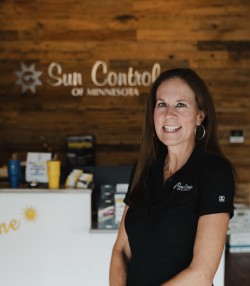
Karissa leads business development at Sun Control of Minnesota and hosts Shining Light on Minnesota, sitting down every week with the business owners and leaders who are building something good across the state.