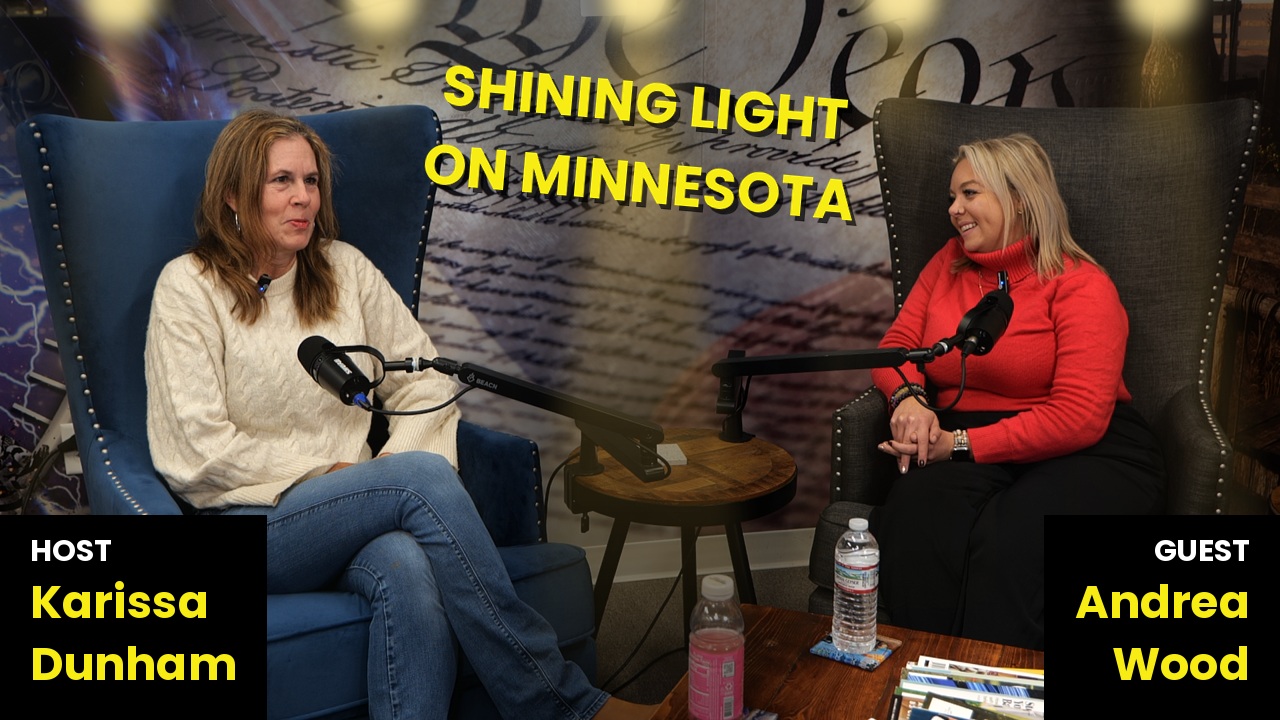
Hello everyone. I'm Karissa with Shining Light on Minnesota. I'm very excited. I have one of my dear friends, Micah Jane, here today. And online we have Rodney. So, welcome both of you. I'm so excited. Yes. Thank you. So, Micah, let's start off by telling everybody a little bit about what you do and how you became friends and your story and talk about the ASL world. Okay. So, I am an American Sign Language interpreter. I slaughtered that interpreter cuz I say that word so much it does not roll off anymore. It just gets slaughtered. Um, but basically, um, before that I was a medic in the Minnesota Army National Guard. Did a tour in Iraq as a medic from 09 to 10. Um, so that actually plays a big part of why I view my profession the way I do. Yes. Um, and I ended up I left the military as a sergeant. So I was an E5. So that also changes my perspective on it cuz I'm not just a little pawn. I was a leader by the time I somebody by the time I left. I was a leader. Like even though I didn't get to do too much cuz I have a leg injury. But so that's what I do. And um after some stuff that happened in my profession, I was like there's got to be a better way to handle this. legislation's not going to change it. We need to change how we do this. And so that's how we kind of got my company called Bridge Interpreting Partners. Amazing. And the acronym is BIP because it sounds magical. Y um so when I talk with interpreters I that's what I lead with.
I was like BIP because it sounds magical and I am magical. Yep. I've got this. Here's my here's my cape. Y and then we met through the chamber. Yes. And we connected because my veteran status and you come from a veteran family. And then I'm also the secretary for the Minnesota Veterans Chamber of Commerce. Amazing. And so it just kind of we just kind of meshed that way. It all we all just kind of came together. Yeah. Like we've known each other for years now, right? Yes. We're besties. Yes. So let's bring Rodney in a little bit. Let's talk about the new exciting app that you guys have going. Yes. Oh my gosh. Okay. So I'll first before we get to the app, I want to talk about why the app. So the standard agency model has been oh, I need an interpreter. let me call this random agency. They're going to charge me a flat rate. They're going to send me an interpreter that I may or may not know. May or may not be qualified. And I don't actually know if they're supposed to be in the room. I don't know anything about them. And then I'm paying this agency. Fingers crossed it works. And for a long time, that's what worked. But now the interpreters are not getting paid properly. Correct. Businesses don't know who their interpreters are. Sometimes the interpreter is just not qualified to be in the room, but the agencies are sending them. And so I was like, "This this has to change. It's got to change." And so let's talk a little bit really quick about how they couldn't be a right fit.
Like if you're a female in the female world and let's say you have to go to a doctor's appointment, you're going to have a male with you or different things like that. Okay. So just that that example I brought up the other night. So well, first of all, as a someone who uses an interpreter, you have to in about 48 hours at minimum advance request that that third person be in the room with you, your interpreter. And if you don't know who your interpreter is, you might, as I said the other night, I was like, you might be beefing with that lady. Like, you might be beefing with that interpreter. Like, you two do not mesh well. Or it could be a guy. He doesn't that accepted the job, didn't fully understand that it was a gynecological gynecological appointment. So now you have a male interpreter in your room while you're getting checked out in a very intimate way. And so there wasn't that much filter and control over it cuz sometimes that it slips through the cracks. sometimes that way or I have a one situation where it's young girls in leotards y and they one agency was sending male interpreters and the male interpreters were like I didn't realize what was happening I just thought it was sports right and so now the facility will have more control because they can say I want these interpreters versus just send me any interpreter now I vice versa if you're female you have to go into the male locker room if they're doing something to help intertwine and it just doesn't or like you're the female at a male's prostate exam.
That's awkward for all parties involved. So, it just gives more control over who your interpreter is. Or let's say, as I was just talking about my friends who you know, husband is deaf, wife is hearing, you go to marriage counseling and you know this interpreter that's in the room right now, you know, they're a gossip, but you have zero control over that and so now you're stuck. But now with the app, it gives more control over who's in that room with you, who the interpreter is, but also it gives the interpreters the autonomy that they have to accept or reject a job or be paid appropriately. And they're not negotiating with me on rate because I'm like, you're $10.99, you know you're worth. I don't like one interpreter might be worth more than the other based on life experience or certifications. So when people get on the app, they can not only find their interpreter, they can pick who they want, they can put stats about them, too. So they can kind of figure out who drives with them, who doesn't, too. Yes. So, and like Rodney can go into more detail on that, but we basically call it the Uber for interpreters. Yeah. So, you go in at, let's say one day you have a client that needs an interpreter. You go in, you're going to put in date, time, place, and it's going to guide you to what you need. And then at the end, you can put in the details like this is what I need. and it'll get sent out to the interpreters based on the information you put out.
And then I can't remember the exact way we're filtering it. Rodney can explain it cuz he built it. But it filters and you get to see the interpreter's face. So you'll know who they are when they get there. You'll see their professional name cuz not every interpreter wants their actual name on there cuz they don't want to be Googled. I don't want you looking at my You don't need to know like I have nothing to hide. I'm fine. But sometimes people just want a little extra privacy and that is fine. So then you'll see their professional name, their credentials, so their degrees, certifications, and then for a section there's a bio section. So not every interpreter wants to be that recognized by their gender identity or their sexual orientation, but I'm a golfer, I'm a book reader, like hobbies, whatever you want. So you can put that in that bio section and then if I wanted to say, well, I go by she, her, I can put that in there. If I don't want to do, I don't have to do it. And it's just a little snippet of who you are as a person and why. So, if I say 10 years with the Minnesota Army National Guard did a tour in Iraq, then people go, "Oh, that explains it why she's why she can do a two-hour play and not be tired." Got it. Like, it makes it makes sense now. So, and then the interpreters themselves can say, "I don't do legal, so they'll never get requested for legal." Or, "I don't do religion." So, they never get requested for religion.
And the interpreters themselves can control their schedule better. It's just all around, it's just amazing. Personally, my opinion, it's amazing. So, so Rodney, let's talk a little bit about the timeliness and how the app came about and how you got into it and a little more of the logistics on the app. Yeah, sure. So, when when the project came to me, it was referred to me by a mutual business partner of ours. And um when the the concept came to me, I was fascinated by it because one, you know, when when you're living every day and you're living your life and everything else, you don't think of what other people go through. And it's kind of remarkable. It's been a huge learning curve for me um to be able to identify with, you know, different points of view, different perspectives because when when Micah came to me, she she didn't want to, you know, she didn't want a directory of interpreters. She she didn't want the standard, you know, you can go f figure out and find it. She literally said, I want the Uber of interpreting. And I said, that's fascinating. And so actually part of my research was I wanted to see how these apps actually ran. So I became a lift driver for a bit just because I I wanted to understand you know look as a designer and and you know as the coder and as the person who leads the team to build these I want to understand every aspect of of what we're trying to build.
And so, um, it was funny because Uber actually rejected my car insurance for some reason and then like Lincoln Continental. So, you don't want to be like Uber, you want to be like Lift. We want to be like Lift. Yeah, we'll accept your insurance. So, I was like, okay. So, Lyft cranked me up and got me going. And I'll tell you, that was a that was a learning curve in itself. I mean, y'all should do a podcast on that. That's right. Um, but what it allowed me to do was really dive into what we're trying to accomplish. You know, connecting parties, making sure that we can have that fluency that's so important. So basically instead of creating a directory, we literally created a private marketplace, you know, operating system that helps businesses, um, individual clients, corporate organizations, uh, and independent sign language interpreters coordinate realtime assignments that are available. So when someone literally posts that they're looking for something um it's seen by all the different interpreters and then they can of course say okay that makes sense to me. So our system when it takes in the data we then basically coordinate and give an idea of where it's going to be. We don't let the uh the sign language interpreters we keep their information very private. So we're not going to tell you where they are. We might tell you how far away, you know, a range of something of where somebody is, but the sign language interpreter will actually know where it's going to be and everything else.
And then our system will literally time schedule them, including their estimated drive time. So, they'll actually know, okay, it's going to take me 15 minutes to get here. The sign language interpreter in turn can set it up so that they can charge, you know, a travel fee if it's too, you know, anything over 20 miles or anything over 10 miles. You know, I I want to get paid a little gas money for it cuz as we know, gas prices are gas prices, right? Yes. So, it it was important that you know, this episode is brought to you by Sun Control of Minnesota, your window film professionals. Did you know that Sun Control of Minnesota does window film, safety security film, wall graphics, vehicle graphics, architectural films, and so much more? Protecting what you love. Since 1978, Michael wanted to make sure that we had an environment that was conducive, but it was very liberating to the interpreters so they could actually run their own businesses. Obviously, we have to have fees. We have all those built in so the end user sees the the fees. It's very transparent and you know the system itself then collects the money and then divvies it out. But um overall you know our goal here was basically the problem that we found is it was very hard to coordinate interpreters with the right situations. This technology allows us to not just do that but get even further in. Uh we built in um when we first started building it um I always like feedback.
We do complete customized coding. So, however you want it, we build it. And the the project was so fun for me because like Michael was like, "What can we put in a um you know, a planner?" I'm like, "Yeah, let's let's do this." Yep. Absolutely. So, we we put in a planner. It shows weekly. It shows monthly. It shows all the things as it's filling up with the with the appointments. um it won't show them if they're too far away from one appointment with the other appointment that's already scheduled. It may not show that interpreter that job because the system doesn't think they can get there in time. Um if it's a favorite, they can mark favorites. So if if the consumer or the client marks this interpreter as a favorite, when that request goes back out, that's the only interpreter at the beginning that gets notified. they get first right or refusal because that's a regular client. So we wanted to really make this as you know trying to keep it from being too complex but easy to use and you know utilize all the technology that we have today because today we're so full of technology and different things that we can do. It's remarkable. Yeah. Especially with AI and chat world and everything else that's out there. And we use AI in our coding. We don't have AI coded but we use AI um you know as we're coding and everything else. So it takes a lot of the busy work down. It also takes the pricing down when I mean systems like this systems like this used to cost millions.
And um you know it allows us to turn around and be cost effective to our consumers. We keep fewer people on staff. Uh we have senior developers. Um but all the base you know coding that that a mid-level coder does kind of the busy work. We have AI do it and we just go behind AI and make sure it's all done right. So that's really brought that price, you know, down dramatically um just because of that. And it's it's increased our efficiency. It it's it's challenging on debugging, right? Because when you code everything from scratch and you coded it, when you're debugging it, it's a lot easier than trying problems or mistakes that other things make. Um but, you know, that's part of the the learning curve. But yeah, we love that. It it was just a a great place for us to be able to connect clients, businesses, independent interpreters, companies, you know, organizations, um, and then operations, users, and and the company and everything all in one place. One unique portal that was just fun to use. Yeah. Yeah. Well, and I was going to say one of the highlights about working with Rodney is I tried working with another company and they were developers. Yeah. Period. And that's what they did. Yeah. That's it. And so out of the box, they just wanted to do what they know know how to do. So trying to explain things. I don't speak technology. I speak interpreter. I can interpret technology.
But do not ask me what I just interpreted. Even like the money part like when you're interpreting like how much you used to get paid versus what's now and bringing in how are they going to know when you're out there like who you are. You're from a crowd just like you did at the um Renaissance Festival and everything like so. We'll talk about that. Yes. But so talking with Rodney because he's had such an exper he had what 30 years of experience in sales but he was he's been doing coding forever just for fun. So when I said hey this is what I want. Is this a thing? Do you understand what I'm saying? He's like yep I know exactly what you're talking about. So, one of my ideas was now let me go driving drive. I was like, one of my ideas, and I think it was originally there, I just didn't have the right words for it was basically because 3M is a huge company and I do not have the contract obviously cuz they're huge. But let's say 3M has deaf 10 deaf employees or 10 employees that use sign language to communicate. Coordinating every interpreter for them is insane because there's going to be issues. So what we did what we built in corre if correct me if I'm wrong Rodney is basically the company will create like the parent account and then there's the individual like so they're like a portal and you can assist who. So then let's say um client uh employee ABC they each have separate meetings around the same time.
Well employee employee A can go in and say I have a meeting at this time this date and their favorites pop up. Employee B pops in and their favorites will pop up. So instead of having to rely on a person who has no idea in HR who these people are, they have control over it and then the payments go through the parent company's account. So it's all out of all their I explained it right. Okay. And to the parent company then has proof that they're, you know, ADA compliant, making sure that they're doing everything that they can, you know, for their employees. So it's it's a it's a really neat tool. Yeah. So then let's say you know one of the deaf schools we have two deaf schools in the state and you know some teachers prefer this interpreter versus this interpreter and another interpreter like another deaf teacher likes this and so forth and so on or a teacher has to a deaf teacher has to have an a meeting with um a sp a parent that speaks Spanish and the deaf child. Well typically right now what you have to do is you have to get an ASL English interpreter and a Spanish English interpreter. Well, they can go in and they can look to see if any of the interpreters triilingual so that they can just do one interpreter versus two and it's much easier because there's more controls for them and then they'll know and then they'll favorite that teacher or that interpreter for the future. How do the interpreters find the system?
Just go to my website. There you go. Right. Find you. Bipasl.com. Bipasl.com. BIP because it sounds matchable. I heard there's a great podcast too. Oh yes. I would know what that would be. Yes. So, let's talk a little bit because people don't understand when you're out interpreting or you're trying to get a group of people together like you're going to the Renaissance Festival. How do people know who their interpreter is? I mean, obviously now on the app, they'll be able to see the people and know how long until they get there, everything like that, but let's talk a little bit about your last experience. Oh my gosh. RunFest. So, we that was actually on I I don't do dream boards or vision boards. I'm not that person. But my business partner and I um we met in Iraq. He was the nurse. I was the medic. And so we had a meeting and in our first meeting I said these are my two things I want. One I want the Renfest and they've been doing it wrong. I want to do it right. Two I want to get on the Jason Jason show. This one's not there yet. We're getting there. We're getting there. But Renfest, we got it. And it was so funny is they just randomly sent me an email one day and I was like no. So we went through the process with them and they picked us cuz they said you're passionate about it. I was like yes I am. I am because this has been a dream. This is my goal. my goal. And so we did Renfest, we had about 20 interpreters.
And Renfest was great. They advertised where the interpreters were at. And after and so after the after it was done, not the after the shows were done. We did what's called an afteraction review, which is something we did in the military. And one of the interpreters said in the thing, it'd be great if your app when it's developed has an internal messaging system. I was like, cuz it's going to do that. And so then that way at big events like Renfest, the interpreters can communicate with each other. Hey, I need this. Um, this deaf client, anybody had free time right now, somebody wants to go get a tarot card reading, which happened or the there's downtime. Somebody wants this show, which was not on the list. And so there's stuff like that where we made it visible too while we were there because we had a table and we had bags like that showed who the interpreters were. Amazing. But but let's say you do something smaller. Um we had a conference, we've done conferences or conference or something. Yeah. You know, like grandma is going to her granddaughter's wedding and we don't know who the interpreters are. We just know we booked them. But there's a picture of who they are and it gets sent to whoever booked it. So that person knows these are the interpreters. So then grandma who needs the interpreter to go to granddaughter's wedding can see who they are cuz we send you we send you their picture.
Amazing. Yeah. Not in a creepy way either, but professional picture. So, you know, I mean, you have to know when you're going into Thanksgiving meeting and who they're going to be. Just like if you're going into a doctor's office, you want to know, okay, this is me and this is my doctor, not just going in to meet whomever. Yeah. And then one of the things, and this was pre Rodney, so we cannot give him credit for this, but he loves it, is the logo, the logo that we created. Well, we I say me. Um, so I You and BIP. Me and Bip. We um Well, okay. So, we got to back up. So, I wanted I wanted the acronym to be BIP. Mhm. Because bippity boppity boo. Um so then I made you're going to laugh. I made the words fit into the acronym. Of course you I did it so wrong. But I was like and then from there only night just up thinking like how can I do this? I have to make this work. And then I was like okay now one thing I don't like is logos that don't mean much. Right. Right. When I see a logo I want to know what it means. And so then I created the logo which is a bridge with the sign partners cuz interpreters are the bridge to communication the gap. Yep. And but the best part is is the designer goes I threw a little an extra for you. He goes look at the pole and the pole has two different colors or two different shades of blue intersect likeing going like so it's um looks kind of like the candy cane vibe just to show the two different worlds coming together and I was like oh that is so cool.
So when you go out places, if you see just the logo, you're like, I know who those interpreters are. I know what company that is. Right? So, and then if you hear BIP, you're like, I know what company that is. Bippity Cinderella today. Not going to lie, I identified as Cinderella when I was a kid. So that was my favorite. My daughter, when she was younger, she used to want a tattoo of Cinderella on her cheek. I'm like, "Honey, you're 3 years old. You're not getting a a a tattoo of Cinderella on your cheek. Maybe when you're older, if you decide you want it, that's your lane then. But until you're 18, until I can control this. Yeah. So, yeah. So, I know. Did that answer your question? Yes. Yep. So, yeah. But yeah. So, that was pre-Rodney, but he still likes the logo. So, working together, what have been some of the great successes that you guys have come across or found that you've built together? I think I think just re revolutionizing the space. Yeah. Yeah, I I think I I think hearing impaired is one of those areas that um it doesn't get all the publicity that I really think it should.
you know, the the more the more we really look at different type of impairments and how it how those people adjust to the world, you know, it's nice to be able to build a technology around, you know, connecting, you know, clients and interpreters and and everything else into one place where, you know, you I never thought of all these issues and all these challenges that people have and I it's it's awful, you know, what some people just have to go through as they're trying you know, navigate life. It's not like life isn't tough enough by itself, but you know, to be able to I would say, you know, in essence revolutionize the space. I mean, that's that's powerful. That's that's what made me excited about it. Yeah. Well, and so I think we kind of forgot about this part. So, in the state of Minnesota, and I have a point. So, in the state of Minnesota, 20% of the um of the population identifies as deaf and heart of hearing. And nationwide, that's about the same number. It's roughly 20%. Now that doesn't mean everyone is sign language dependent. So they don't have to completely rely. Some are signup supported which means it's in a big group. I need an interpreter so I can stay on top of the workshop. Sign different too. They learn different. They learn at their own level and their own way too. So yeah. So I mean I have two clients right now and I'm going to be we have a code of professional conduct and our tenant number one is confidentiality.
Absolutely. And so I'm going to try to describe it as vaguely as possible, but they are like successes. And this is something I would love to actually add in later on. Not today, Rodney. Not today. He's already taken notes like, "Okay, next. Do I have to plug my ears and yep, try to understand?" Yep. But both of them, due to their syndromes that they have, which are both rare, by the way, I was actually talking to somebody else the other day and I said, "Have you heard of this syndrome?" and they have been in this space for not interpreting space but in the um SLP speech lang no speech language pathology thank you they've been in that space for 30 years and they're like I've never heard of either of those I'm like okay then never mind but so I'm not going to come across as probably again we're good yeah right but both of them are very rare syndromes and both of them they have a hard time with verbal communication so spoken spoken language in general so both parents advocated to add in sign language well both of them had home signs So, what we did is we created a spreadsheet and I took I took the ASL parameters. Those are five parameters which are um they're all like right there mushed in front of my face. Hand shape, palm orientation, u mouth morphe, um location, and movement. That's the five parameters. So, I took it broke down every sign into those five parameters as best as I could of what it should look like versus what theirs looks like.
And then I put a video of um his name is Bill Vickers and he puts out amazing stuff on YouTube. So if you ever want to look him up, go for it. And we noticed both clients just their language improved. Amazing. Because their sign language improved, their capacity for spoken language improved. And so it's not even just people who identify as deaf and heart of hearing, but people who are have autism or these other ways. Autism is a big one. I mean, as you know, there's I've worked with a lot of children that just Yeah. they're non-verbal and that's the way to communicate and that's or parents even infants these days like trying to get their kids before they start speaking to learn sign language just to get them to communicate beforehand too but autism is a big one. Yes. So it's not even just those that so it's not just that 20% is just part of the number. It's growing and the number of interpreters is not growing. So that need for the transparency, that need for the autonomy, that need for and this is where my I think my military came in and Rodney I think you would agree where I was like we are not utilizing our resources very well in any way, shape or form. Why is it I live in Ham Lake and I'm driving down to Egan when an interpreter who lives in St. Paul is driving up to Malaca, right? That makes no sense. That's a waste of resources. Let's see where the interpreter is that's closest that'll suit you.
And so that's where the transparency of the app came in. Um, our fees instead of a flat rate, it's interpreter rate plus 20%. And my end goal, which Rodney, we actually had a good laugh about this. I said, "My end goal is that we make so much money that I drop it down to 5%." Cuz I never want that fee to be a barrier, right, for um, somebody to get an interpreter to have that access. And Rodney, he goes, "As a parent of is okay if I say it?" It is. As a parent of some of a of someone with in a wheelchair, so the ADA has been a big part of their life. As a parent of someone like that, yes, love that. As a business though, that's not a good idea. You have to make some money. Like you have the best of both worlds. Like you can see of both worlds. Like as somebody that doesn't want to pay the fees, but as someone that wants to take in the fees, I get it. Like I get both sides. The devil and the Yeah. But no, that is my end goal is that cuz I never because that has been the biggest barrier for accessibility and I never want that to be a problem and I never want interpreters to feel guilty and lower their rates cuz they want that accessibility. Interpreters have always not made what they make today or they're going to be making you know it's it's always amping up and ramping up. Um let's talk a little bit about that and how those fees have changed a little bit yet. Okay, so I don't even know where to begin on that one.
So, for a long time, the fees, and Rodney, if you want to jump in at any time, you can help me out with my wordage. The fees have been kind of as a 1099 contractor, you have the right to choose your rate. You have the right to choose your schedule. You have the right to do a lot of things. That's why you're 1099. That was not what was fully happening. What was happening is you go to work for an agency and they say, "Hey, this is what we think you should this is this is what we're willing to pay you. This is what we're going to pay." And they word it in such a way that you think this is all I'm worth. And so we've been staying stagnant for a really long time while they were making this huge overhead and then interpreters like I can't pay my bills. So instead of working 20 to 25, which is physically, mentally, and emotionally sustainable, we're now working 40 hours a week and we're burning out. Well, now we have a shortage. So, now we're burnt out even more. This is not okay. So, I was like this. So, I got tired of negotiating my rate. Um, I don't know. Should I Yeah, I don't know if I want to say but I was informed that one of the agencies I was with at one point was behind our backs doing DEI pay. Yeah. So, I as a white straight female was being paid less than a bipac. Um, right. LGBTQIA male. Y even though I may have had more skills and certifications, they had to meet their quota.
They they were doing that which is again violation of the 1099 aspect. So here I am trying to negotiate to make $40 an hour when I have my NIC which is really hard to get my EIPA 4.0 hard to get. And I got them both on the first try where I have a bachelor's degree and I was a combat vet and all these things wrap into this amazingness and I worked VRS right out of ITP which is VRS is video relay service and ITP is interpreter training program and it's not easy to get into that sector right out of college and I did that for three and a half years. So I had the skills of at least 40 an hour, right? But an agency was telling me no and I'm like you don't get to tell me no. I tell you no figuring this out like who do you think you are? That created a passion and passion drew into what we built and the section we built in there was we believe that uh an interpreter should be able to mark their own fees. Right. Okay. It's their service. It's it's their you know it's their credentials. What's your worth? It's how much am I worth like as a person. Exactly. And so we also have a space for credentials so people can have and publish those credentials. But we also have a feature because we the truth is if you're putting your pricing out and you're not getting appointments, there might be a reason for it. I was say there's obviously if someone's not certified and they're at the top end all of I want to get paid X and there's a person that's certified that wants half of what you're wanting to make, there's a little bit of a a gap there.
There is. And so if if you know for some reason you're not getting calls, the system shows you where other people are priced, what their certificates are, you know, cert certifications, so you know where you lie in regards to everybody else. So you can see, am I am I way overpriced? Maybe I'm, you know, maybe I'm $5 overpriced. Maybe I'm $20 overpriced. And that's why I'm not getting any calls, you know. And so, you know, when when I accept, if I'm accepting I'm the highest price, they're not going to pick me, right? Right. Unless we have some type of relationship. So, it allows the interpreter to realize, okay, maybe I should adjust my price, but it's not us forcing them to adjust price. It's them. It's It's a marketplace. Yeah. We're literally letting the market filter out the interpreters, and we're literally we're just letting the interpreters do their thing. We're letting the market decide Not what they're worth, but letting them know, hey, for the state of Minnesota, this is the reason maybe you're not getting your calls or maybe this is the reason you're getting all the calls where someone else isn't getting any. Yeah. For the state of Minnesota, $100 an hour is not sustainable, right? Especially if you don't have any certifications, Yep. Whereas I get you think you're worth that and that maybe you are. I understand that. But but or what the standards are. And I think in their system, we're even allowing the businesses to rate the interpreters.
Yes. And system much lift. Um because when I drove for lift So how was your lift experience? Was that good there? Let's take a 5minute break on that one. It was actually amazing to me. Um because it was amazing to me how many people took to work. Mhm. And like 40 minutes away from their house for a fast food job, working at a restaurant, fast food. And I'm just like, how do they sustain their income? You're paying more on a lift than you are probably making a fast food. It's remarkable to me. It's just um it's fascinating. But that again, that's a whole another podcast. Yeah, that's a whole another conversation. A whole another conversation. We'll have that on the next episode. No, I'm kidding. Totally kidding. Next episode with Rodney. You know, I could rate the the passengers and they could rate me. Yep. Absolutely. And so I think when there's a rating system involved, I think both people being aware of that, they go, "Okay, you know, and I I always let riders know I'm going to give you a five star cuz I wanted a five star. I know I'm not doing it that long, but I still want five star." Yeah, absolutely. I have a five star. Good job. Good. Perfect. So, what happens to the people that are not rated well or get the bad ratings, things like that? Do they still stay interpreting? They just have a different rating, different pay. Well, the rating is going to be low.
But if we're, let's say, I keep getting comments that they showed up wearing bright yellow and they are, they look like me, Casper the friendly ghost, and they're wearing bright yellow and that's a they're not professional. Oh, they're not professional. I get I think we have like a three comment rule like if I see consistently a theme three times. Then what we do is we take a mentoring opportunity which is something that I want we want to add it we want to add that into the company is I'm going to take you aside and mentor you and we're going to train mentors so that we can take you aside and say hey we got these comments about you let's talk about it what's going on and maybe they're going through a feisty divorce. I don't know what that's like. Okay. No nobody does. Nobody does. Or maybe like they just they're like I don't have the money to go buy new clothes or I was never taught Yeah. So then, okay, let's take this time, let's talk it through. And you know, we don't want interpreters to violate our CPC in order to get those five stars. We want them to get those five stars while staying true to our CPC. But we also want to know if the interpreter needs a little extra mentoring support. That is how we that's how we curb the burnout. Correct. And so that's built into the system. And interpreters can actually rate each other, but not to be like, oh, rate each other, but this person I'm going to rate.
Yeah. But like, hey, they were great, but we do not mesh well as a team. So then we're going to try the system, I believe, tries to avoid teaming them or or let's say I worked with an interpreter. I was like, listen, they said that they could handle this play. They cannot handle this play. You're just not quite stepping up. It's not Yeah. Like when you do a concert, you are you are basically part of the show. This interpreter did not know how to be part of the show, right? It gets back to me. Yeah. I go, "Okay, let's do some mentoring. Let me grab this interpreter who's phenomenal at concerts and have them mentor this interpreter." And so that's kind of what we're trying to do. Amazing. Built into the system. And so that's how I'm is Does that make sense? Do you want to add to that, Rodney? and and and you know to the rating system too. It's the only time one interpreter can rate another interpreter if they work together on a particular project. So if you're helping and you're mentoring or you're reach out and say I don't like you. I'm going to keep you keep getting all these jobs and I'm not getting any. So I'm going to rate you a one. You know we are not doing mean girls over here. Exactly. Unless we have a moderator system built so we can see all the comments. We can see all the the stars. we can see if someone was just really agitated and really rough. Uh, you know, there are all types of situations.
I mean, you know, there if if if you're putting yourself in a situation, you're you want you want everybody wants the best out of it. We just want to make sure that we're trying to give everybody transparency to be able to say what they think. um you know if if we start getting too many let's say a client a company who's who's pairing us is getting a lot of complaints we have to address that. Mhm. Correct. Um you know we we might not share the comments. We're going to keep it internal but we're going to look at it and say okay well this is a problem cuz we we've gotten the same comment from three different interpreters on the same company and this is this is something that at this point we have to get involved in maybe it's just not a right fit. you know, there's there's we want a good healthy relationship for everybody. Yeah. Um, everybody involved in this. And so, you know, it was important to put a good rating system in there. Not not so much to like veto people out, but, you know, everybody should get rated. I wish we could rate just people walking down the street these days, right? People do. They judge you. Trust me. Judging five stars that use that shade down that crosswalk so well. I saw you trip and fall as you were texting and walking. Yep. You're two stars. So, you know, we have we built that in and that was important to us and that's also built into the communication.
The other aspect of communication that's important is when when I when I was driving up to find someone, I'd roll down the window and I'd say their name, they'd say my name, and then I know, okay, we're connected. They had a picture of me. I didn't really have a picture of them cuz they put one on. But, you know, I wanted to make sure that some stranger wasn't getting in my car that at least didn't have documentation. Well, if you think of like your kids or you think of somebody else, you don't want you want them to be in in a comfortable situation, too. You don't want them just like this is some random guy just saying he's an interpreter getting into your car or this is some or vice versa, this is some young girl that's getting into your car cuz she is an interpreter, but she might not be. Yeah. Yeah. Well, and he touched on this. So, the interpreters right now, we don't really get to have a say on what on how the account went. So, let's say I'm interpreting for Acme. Oh, wait. That is an actual place. Just kidding. Um, yeah, don't let me don't do that. Like Burger King, they have somebody there. Like, I'm interpreting for XYZ company, right? And I go and the manager, I do my spiel of, "Hi, I'm the interpreter for today. My name is Micah Jane. Have you used an interpreter before?" And they say, "No." I say, "Great.
Let me talk you through how this process works." And that's typically what I do when I first meet somebody and I say, "Speak directly to your client, your coworker, whoever they are." you know, um, do not you don't need to say ask him, ask her because that's that's what I'm doing. I'm your hand. Like when you're speaking, I'm your hands. When they're speaking, I'm their voice. It's just going to keep going through. Talk at your normal pace. I do my normal spiel. And sometimes during the process, especially if they've never used one before, I will give them a little, oh, hey, this is the interpreter here. Do you mind just speaking directly to them? Thank you. But let's say we get through the whole thing. I go back, same guy, we're having the same problems. I'm like, okay, now I'm seeing a pattern. So then I can go into the system. Okay, so last time I was with this client, da da da da da, and now we're having the exact same problem. And it gets sent back to the back to me, the company, and I go, okay, let's see what I can do on our end. And my business partner with his beautiful law degree, he comes in. This is where he shines. And he will contact the company and say, hey, can we do some training on how to use interpreters? this is what the process looks like and hopefully m hopefully relieve some of the stress on their end and so that we're not getting that employee in trouble but we're showing them how to properly use the interpreter so that we're not grumbly with them the deaf their deaf coworker or whatever isn't grumbly with them so that we can make it a smooth process.
We also have for the interpreters another part of why they get to have that is for the interpreters they we have an we have an anti-bully harassment clause in there. If the interpreter shows up and let's say for Shiggles it's the deaf client be like hey girl what's your number like let's hang out or that doesn't happen very often I'm too old for that now but um hey we have people asking for our chatbot taking her out on a date it's funny our chatbot's name is Sunny and they're like hey I want to take Sunny out for coffee I'm like do I throw my costume on and pretend I'm like our mascot Sunny now or what do we do meet you next door yeah they do that all the time I mean that that's what shows you're doing it right like things working yet. Yeah. But like or let's say the somebody at the facility, it may not even be the two direct clients I'm with, but maybe some random person at the facility is talking down to my interpreter, harassing them up on stage or whatever it may be. So the interpreter goes back and says, "Hey, this happened at this account." Very unacceptable. My business partner with his beautiful law degree comes waltzing through and says, "Let me get I got you, boo." And he takes care of it. And we've had a few times where he's actually had to step in in certain situations and I'm just like thank you because I'm a sledgehammer and I would just be like listen up here. So like well the military train I am ready to throw.
Let's go. I mean there's good ways and there's always good to have a second person as backup. So it's not always just like I'm me I'm the company's all me me. There's another person that get involved in. Yeah. Yeah. He's a beautiful law degree. He's a nurse admin. So he knows how to handle things and he he's got the military background. He was an officer in the military. So like he's more of the scalpel. I'm more of the sledgehammer. He's more the smooth talker. I'm more the like, can we just not do this today? Let's just get this done. Like let's figure this out. Yeah. And so we're a good team in that aspect. And there's times where most of the time I just kind of go with it. And other times I'm like, "Nope, I'm pushing back on this." And then he comes back, "Yep, you were right on that." I was like, "I know I was right. I've got this. Thank you." So yeah. Who do you think along the way have been some of your mentors that have helped get you into the world and have really helped form you and kind of push you through? This episode is brought to you by Bravo Protection Products in Plymouth, Minnesota. Keeping your car looking new mile after mile. Hey, did you know that Bravo Protection Products also does window film, safety security film, wall graphics, vehicle graphics, and so much more. I know I not only love them taking care of my new car, but I also get a lot of services done there as well.
you should too. Um, I honestly will go back to my So, my journey into this profession is kind of a weird one. I started in the early 2000s. Um, and there was some lawsuits between the deaf and hearing community. Um, mostly the hospitals and so I took time off, did the military thing, came back, but my original professors, Joanne Smith and Barbara Garrett, got it. Phenomenal women, amazing. And when we talk as interpreters now we look back at the history of interpreting. I'm like they are the history of interpreting. This is the heart and soul of they are they they were there at DPN deaf president now. They were there. I mean Joanne Smith is was there before and Barbara Garrett was there. Barbara Garrett used to interpret for one of the presidents. I mean, Joanne Smith just she started up the interpreting program I was in at North Central and she started up an um a program a deaf ministries program in I believe it's Pennsylvania at a Bible college there and just phenomenal women that showed me even though their personalities were different, their teaching styles were different, which is fine. Everybody has a place in the world. Y but they showed me what good interpreting looked like. Yeah, that's who I when I as an interpreter, that's who I go back to. And sometimes as a oddly enough, sometimes as a woman, I also go back to that. Yeah. Right. Like I'm more of a Barbara Garrett style personality, but I really love the Joanne Smith vibes, too.
Well, you can mix and blend both together to figure out what works for you. Yeah. Yeah. And then um right now currently who my mentors are on I don't know if I I don't know if I would say mentors per se but I just had through the chambers through the multiple chambers I've been in the amazing people I have met who have come alongside of me and said I got you let's do this. I would never have met Rodney had I not opened up to one of the ladies in the chamber and I was like I am struggling with all this and she goes I got someone for you. Her name's Autumn. And so Autumn's been running my website and she saw my vision and she goes, "I know exactly who you need." And then she led me to Rodney and I was like, "Perfect." You know, there's times where I've said, "I just need help with this. You need your tribe. You need your people. You need to figure things out." Yeah. And I've had And it's the honestly, it's been the people in the chamber where I've just was like, "This is my family now. These are my people." Um, and one of the things we want to do for our interpreters, and I think I've talked with Rodney about this, is as a 1099 contractor, we cannot offer health insurance. Correct. We can't. No. But I found a workaround. Yep. There you go. How did I find that workound? Let me tell you. I went to chamber meetings and I met some people and I said, "This is what I want to do. Is there a workaround?" And they said, "I have a workaround for you." And so now we can offer.
Right now, it's not BIP offering supplemental health insurance. What I am doing is I'm partnering with another company. I sign a contract. The BIP interpreters, as long as they are contracted with me, meet up with this person. They can get supplemental insurance like dental, health insurance or dental, vision, all of that at a discounted rate. Amazing. So, it's not me providing it. I'm providing an avenue. We're giving you an option to get into it. Yes. Yep. And then eventually we're going to do um major medical, but again, I found a workaround. I'm not providing major medical, but I know somebody who knows somebody who can help you out. I have a contract with somebody and you get a discount and this is what it looks like. It's not your traditional health insurance, but it's this. It's an option. And then one of the things that interpreters are like, "What about PTO? If I go on vacation, I have to stack my like schedule before and after to make sure I have money to pay the bills." I'm like, "Okay, well, I can't give you PTO, right? And I can't give you money for retirement, but what I can do is profit share." So, let's say Rodney is one of my interpreters and Rodney had developed a great relationship with Sun Control. And Rodney's like, "They're asking me for too much work. I cannot handle this load. Let me bring it to you, BIP." And BIP says, "Thank you. Not only am I thanking you, I'm making you the primary." So, every time that contract pops up, your primary, you get first dibs.
And I'm giving you for the first 12 months of that contract a 5% profit share. And then after that it's a 2 and 12% profit share and someone looks at me they're like well why would you do that away all your profit I'm like I'm not just trying to give you money for fun you you developed that relationship I'm not just going to take it from you right plus that's my way of saying this is my workound for PTO this is my workaround for retirement how we get those extra things yes I've I did the my business partner and I we did the work we did the brainstorming to find our workarounds that we can legally still do so that interpreters can do their thing. Mhm. So, what is your driving force behind all of your your go-ahad? Is it Is it your kids? Is it your like what is it? What's your why? Gosh. My why? I think it's that's a very very deep question. Yeah. Yeah. So, part of my why is my kids. I want them to see that not only did I have a dream and a vision, but I went after it and I with everything I've been through and that's a that's that's a podcast in of itself. We'll have that part two along with Rodney's lift part three. Yes. Yeah. But with everything I've been through and um I saw a picture of a trauma tree once and the trauma tree had these roots and all the roots are the t the all the identified traumas people go through and I was looking at the roots. I was like oh funa oh but two.
I had all but two. I was like cool. I'm going to try and keep those two that are not my roots. We're going to keep there fresh. They're going to stay there. We're not going to take them. But I had all but two and I was like, "Oh my gosh." I never stopped to realize in my 43 years on this planet what I have been through. But my kids have been through some of that journey with me in various ways. Um and so I want them to see that there's nothing that can stop you. Just keep going. Be Dory and just keep swimming. Like you got this. And so that's part of it, but also part of it is like being a soldier you are a number, right? But being a medic, I got to see you as a human. You're a person. And I was like, okay, I don't want any other human to feel like a number. And when I started to feel like a number with these the standard agency model, I said, "No, we can't do this. This is so degrading. We have amazing number three, you're up next. Number four, get out." We have amazing talented humans that are interpreting and they are phenomenal. and what they bring to the table should never ever be called be classified as a number or a warm body. They are amazing and we need to give them their dues. And so that's probably the other part of it is my driving force. But also I'm not really good at letting other people be my boss, right? Which is fine. Like you weren't made for that and that's fine.
I'm not I am not a good employee. I am not a good peasant. I'm not a good peon. But I also am not going to take advantage of them. Right. But you know your lane and what you're good at too. So you can bring other people in like Rodney or like other people and say, "Hey, this is what I'm good at. I am I am this is my company. Yes. But I want you to help me here." Or here's my here's my lawyer side. You be the soft side. Like whatever you need, you bring other people in. Yeah. I um I was interpreting in a situation where it was definitely above my status, but they could not find anyone else to do it. And I said, "I'll do it, but just so you know, I am very confident at what I do, but I'm confident enough to know when I'm not getting it. And I will let you know if I'm confused or if I'm lost or I will let you know if I'm struggling." And they were like, "As long as you can do that." So, I want people to be like, I am confident what I do, but I want I'm confident enough to go, I need some support here. I need I need I need help. And I want to be the agency that when an interpreter says, I need some support. I need help. I'm confused. I don't know where I'm going. They know a person to come to. You're going to just pick up a phone and have some random chatbot on the other side trying to figure it out. Yeah. Great. And well, and you saw you met my intern Ella. That was my first So, you do interns and mentors too for people that don't know yet.
Yes. Oh, Rodney, can we talk about that on the app? We can. Let's do that cuz that is maybe if people are looking for internship or internship or mentors or they want to be a mentor or a mentee, then they could add that to it too. So, what I want to do is um so I had an intern, Ella, and she's kind of been the one that helped me wrap my brain around this interns. Internship needs to be catered to each individual intern. Ella was good at networking cuz she was a farm kid. Her dad is very, very active member of his farming community and all of that. She knew how to network. She just didn't know how to talk about our profession, which fixed it. She struggled with the process of interpreting. So, we spent a lot of time working through that and learning vocab that she was like, did not know that that was a thing. Yep, that's a thing. And so, we worked through all of those things where then I had an interpreter after that, phenomenal interpreter, but didn't know how to network. Okay, so let's go to networking. And so, then you've seen that the books smart versus people. Yeah. And so, what we're doing with the app, and I think Rodney can talk more about this, but the ITPS interpreting training programs, you have to have a certified interpreter to mentor them.
So what we're trying to do is we're giving if we want an intern on a job I the agency interpreter are you okay if you have an intern yes client are you okay if there's an intern yes okay then we find intern what we're doing is right away when someone requests a job are you comfortable with an intern click the button yes interpreter has on their profile a little toggle is that what that's called toggle that they can say yeah I'm open to interns and then an intern so I'm hoping to have one next spring and I want to test drive it with them in the spring. Um makes their own profile. Yeah. And then they So when So they're a person still too. They're not just hey I'm just an intern, you know. Yes. Even though I do I will tell you Ella, I was like that's why I'm the certified interpreter and you're the intern and that was our that was the fun running joke. Yeah. But she was cool with it. But it gives them that thing and so then when they're done with the internship they can just smoothly go into our system. But do you want to explain how that works? Yeah. So what we what we basically do is we can assign an intern into different hours. We can document the hours. We can make sure they feel comfortable and as as it gets better and they become no longer an intern, we just trans trans basically just transition them into a regular user. Nice. Amazing. So yeah, but they're going to you can't get an intern unless there's a certified interpreter.
So, it's great for like like aunt is having a birthday party and her daughter. So, I'm going to my aunt's birthday party and my cousin is deaf. Do we want everyone interpreting around them or what we can do is we can hire an interpreter. Click I will welcome an intern. So, you have So, that interpreter is going to charge probably a little extra probably some it's up to the interpreter, but typically they'll say, "Hey, I'm mentoring someone, so I'm going to add $10 an hour." But you're still paying for one interpreter with an intern. Mhm. It's still going to be cheaper than two interpreters. And so then that in turn is getting mentoring, quality mentoring from a quality interpreter in an environment and they're and it's going to be more professional for them because they're putting themselves out there professionally too. So you're going to see who your intern is, what school they went to, there's their information, too. What about on We can also track the amount of time that they've been, you know, under a mentor. Amazing. Good. Because that is Yeah. important. Yeah. the under under the mentorship or the internship for four years. Yeah. I've been studying. I've been working at just trying to figure out just something's just not clicking, you know. Yeah. Well, with my with like my ITP that I went to, I had to do 400 hours. And so, and Ella, my intern had to do 400. Gabrielle, she only I only had to finish up like 200 hours with her, but it would track those hours.
So, instead of them having to do a like, it's tracked right then and there. I went on this day book built in. Nice. Yes. And then um can we talk can we talk about the mileage thing? Sure. And that's on the mobile app when that launches, right? Yeah. So it's it's it's on everything because the app is mobile desktop. Mobile desktop. It's all one. Yeah. It's it's fully integrated. So um yeah. So basically the system sees where the interpreter is, you know, or lives or or is on the next job. And so that's how they calculates the miles of the following job. Yeah. And it also probably knows then what interpreters are nearby. So you don't have to, like you talked about before, I don't have to drive from Egan to Blaine, then go up to Malaca and then go to Brainer and go wherever just to cover it all. If there's somebody closer, it'll say, "Hey, this person's available." Yeah. But also the system will actually know if they're doing a job nearby that they're only they're right down the street because a lot of times you have like hospital row and stuff like that. Oh, yeah. There's all the medical stuff all together. So if they're already, you know, scheduled to have an interpreting session over there, this, you know, the system knows that this person's actually going to be 5 minutes. Hey, you're already at the hospital doing, you know, a 1 hour session. Do you want to do another one 2 hours later?
Sure. Yeah. Correct. Well, and if I remember correctly, the mileage, they can download their mileage, correct? At the end of the year. So they can so they can keep track of their mileage but that's more of a manual functionality because you know being and you know exactly on exactly how many miles varies but they can put a beginning mile end miles. So at the end of the year with the IRS they're going to have you know miles documented as well. Amazing. Because that's one of the So a lot of the stuff that we're putting in the app it's the admin things that are burning out the interpreter. Right. Right. It's the juggling the schedule. um sifting through the gajillion emails of what's available. It's a one-stop shop now. Yeah, it's a onestop shop. I I jokingly told an interpreter the other day, I was like, "My goal is to do everything within reason except for pay your taxes. That's a you problem, but I will do everything else I can to take that mental load off." But when we take the mental load off when it comes to all that admin work, the interpreters then are able to mentally work more or just relax and take that time cuz not all the time are we doing concerts. Sometimes we do some of the saddest we're we're with people on some of the saddest days of their lives. I mean, I got certified and literally my second job in the hospital, the client died. Oh boy. Yeah. I called the agency and at one point the agency sure about this right now.
Yeah. And at one point the agency goes, "How do you find yourself in these weird positions? I don't know. It just happens." Like if it was could happen, it happened to me. And but I also but what I want is the interpreters to be able to reach out to somebody and say, "I just had a patient. My my client died." Y system too. Yep. like I need to debrief with somebody that's in the umbrella of confidentiality, right? Whereas right now if we want to debrief about that there's not a place to go or people I mean you can but we have to be so vague that we can't get it out and then if we go to our therapists we're worried about that confidentiality. So then but an agency as an agency owner I'm under that umbrella. Y so then you can talk to me about it and I want to create that space for interpreters to come back and say hey so I just got certified and I'm 25 and I've never experienced this before what do I do? Thankfully I've But you don't you'll start to know like if those people take advantage of that too and like after every session after every five minutes hey what do I do here? What do I do there? Okay, you need more training and like let's let's work together. Let's work together on this. Let's come up with some tools. But yeah, but yes, but the whole mileage thing is something that I suck at it. I'm gonna be honest with you. I'm the worst at tracking my mileage because I'm just like, "Go, go, go." You're like, "We're like this." Yeah.
I have no idea. Yeah. And 3 weeks later, you're like, "Oh gosh, did I write that down?" Yeah. Write down. Write what down. Yeah. Right. Right in and be like, "I'm leaving. Here are my miles." And then when you get there, here's my miles. And it does all the stuff for you. So, Yep. So the thing like I would be careful like obviously they're going to their job so you know that they're doing it but so they don't try to track some other mileage saying hey I'm going to this place and somebody else is driving or they're just tracking mileage to track mileage and yeah people take advantage of this I will tell you and you know what my business partner if I between them and the IRS okay that's you but also my business partner and I we've talked about this I said I don't think you understand when an interpreter commits to a job and when an interpreter says I'm going to I'm driving this. 99% of the time that's exactly what's happening. We are we hold our ethics in high regard. Y because our ethics don't just protect the clients, but they also protect us. I have to be able to come back and say per CPC tenant 7, I recognize that I did not understand the material and I'm going to do my due diligence to continue my education. Yep. or per CPC tenant number one, right? Or per so far, whatever it is. And I want to be able to always come back to that. And my most that about 99% of the interpreters are cuz people are people and people some people people harder than other people.
But most of the time when an interpreter commits, they commit. And if interpreters showing up, it's they're following the CPC. Yep. If I'm going to be 5 minutes late, you're going to know and this is the reason why. And this is life happens. I get that. Yes. But the general public doesn't know that about us. They don't know. We take an entire class on ethics. When I have an intern, we go over ethical scenarios. They don't know that. They don't know what we do, right? And so, we also have put in the option for them because you don't know, right? We also put in the option, we cannot force it, but we put in the option where an interpreter can go, you know what, just to ease your mind, I know that I'm going to be interpreting your finance committee meeting, and I really want to make sure that you trust me. I did a background check. I'm just letting you know I'm good. Yeah. And we have that option right there when an interpreter sets up their profile. They can do that, right? Which is important to do. Yeah. Right. So, if someone is dealing with a lot of money, they don't want someone in there that can easily Hey, I'm going to quick take some screenshots of this and figure it all out on the back end. Yeah. So, they want to know. They want to know that. I mean, will people slip through the cracks? Always, right? We cannot We cannot make it foolproof, but we're doing the best we can. What what about the clients that get the one ratings or that continuously just aren't a fit?
Like there's they have some history themselves or something happens over and over on their end. They still need an interpreter, but you don't want to put your interpreters out there anymore. Like just because it's honestly I will probably be the one to show up. I'm not going to lie. I have no problem getting my hands dirty. I sub out for my interpreters at already. If they can't find somebody, I'm there. Do I want to be there for 3 hours for something? No, I want to be home in bed or I want to be home with my kids because I've already worked 30 40 50 hours this week between interpreting plus running the company plus the chamber. Y but I'll do it because my we need to have someone needs to be there. But also if the hard conversation needs to happen, we're going to be that one having the conversation. Yeah. And sometimes and it would you'd rather have it be you than someone new whether it's an intern or someone else trying to explain that situation or have it because it's all coming back to you. Yeah. And sometimes it takes somebody with my personality who's very blunt. Yeah. Well, you have to be. And just say, "Hey, we got a problem." Y and often times it's this is the interpreter. I am amazing, but I'm not that amazing. You have to take your turns. I cannot do this if you keep talking over each other. And it sometimes, I'm not kidding, sometimes it just takes that one moment of me, yes, I made a joke, but also we can't do this.
It's not sustainable. And sometimes that's what it takes. Or this is the interpreter. I am working. Please do not compliment me right now. Right. This is not what we're doing. Right. And sometimes it might take that. Right. And it could be both sides. It could be Well, it's like a mom life. I mean, those life lessons need need to come up and be brought up, too. Yes. Yeah. But I have learned how to do that because as a soldier, there were times I had patients who thought that because I was a female medic that they got to sniff me cuz I smelled good. I'm not kidding. That was actually a thing. He's a guy. pick up, right? No, I know. Cracking will come in next to him and be like, "I can smell you, M. Smell you." The guys would come in. I'm not joking. This is a funny story. There's a girl in here. We're good. That's kind of what it was. They would come off from like a 3 4 day mission like this other unit. They'd come into the clinic. They'd literally walk in and go, "Smells like women." Okay. We're like, "That wasn't creepy." Nope. Not at all. Not at all. So, I've learned or when I was working in out in the gym and I lift heavy weights and they'd come over and I'd be like, I do not need a spotter right now. These are my low weights. And so, then I' I would just stand up and say and I just be point like here's my boundary. And so, I had to learn that craft. And so, I just incorporate it into my job as an interpreter, which I mean in everyday life you need to have that like you have to have your boundaries and be able to say when is when and is no and everything else.
I don't strongly suggest though forcing everyone to go through that and not everyone needs to get sniffed. That's going to be our new thing. Rodney will be with you be like, "Oh, hey Micah." Sniff good today. Another podcast. We've got a whole month's worth now. We're good. Yes. Well, next time I see you at a chamber meeting, welcome to each other. You step good today. Yeah, us. So, what do you think is next now? You've got the podcast or not the Yes, we're on a podcast. You've got the app. I mean, you've got all the things lined up. Eyes dotted, te's crossed. I don't know. We don't know, right? Well, okay. So, yes, the soft roll out and the roll out and all that. Yes, the roll out and all of that. Um, I do want to take the I don't know if I should say this out loud, but I do want to take this nationally. Yeah. So, part of the reason she is taking this nationally. We don't know. She is. I am. Well, I don't know if I should say it out loud yet, but I am. I actually have interpreters. I have an interpreter in Iowa, not just Ella, but another one. She's like, "Bring this. We need this. I have an interpreter in North Carolina. She's like, "Please bring this here." Everybody needs it. So, yes. And what it is is just um because what it can do is the app accessibility is on this. Yeah. Yeah. And what it can do is let's say I am down in North Carolina on vacation and I need a break. I can change all my stuff and be like, I'm in this area.
I qualify to work in this state. Boom. I can pick up a shift or two just cuz sometimes actually sometimes I just need to interpret things. Like I was at the Rotary meeting today. I was like, "Do you want me to interpret for you guys?" No. Oh, I really kind of wanted to. Just go ahead. Just do your thing, my buddy. Like, just let me just interpret. Sometimes I understand it better if I'm interpreting it. And so, well, it's a second way your brain processes and it's it's Yeah. When I was in the army, I was taking my medic tests and it's dead silent. And so, you know, you know when it's dead silent. So, you'll see me under the table going, "Okay, so and I was interpreting it to myself." And then I go, "That's the answer. Got it. Got to work this out." One minute. Just let me let me do this. Just a second. I only failed one test the entire time. Amazing. You weren't interpreting and you were just Yeah. It just happened to be the day that Yeah. I was not interpreting to myself and I got really confused about the whole Blackhawk thing. Oh, yeah. I kept thinking about everything else but that. Yeah. Well, I was I was very overwhelmed about Blackhawks that day. I remember that that a question about Blackhawks kept hawks kept popping up and I was like, "What? What? What are you talking about Blackhawks again? Like and for those that don't know, Blackhawks are basically what we use when we're transporting patients and stuff like that in the military.
For those that don't know, unless it's like a huge mass cas mass casualty, then they'll throw them in a shinook and if you don't know what a shinook is, like you can put like three Humvees in that thing. It's insane. Yes. So, yeah. So, that's what that is. So, yeah, I got tripped up on Blackhawks and shinooks and medevac and airvac. So, when you wanted to answer a question, just bring those words up. That's the easy way, right? Yep. I know him now. I know him now. That's another whole another cuz I' I've written in a Chinook and I've written into a Blackhawk and I've driven Humvees. Um it was actually I got to tell you this funny story. It's okay if I tell you this one. So I was interpreting for something and they were doing um basically how to inspect um it's not a semi. It was like the you don't need the class D, you need a class B for it. Class B for it. And so we're doing that class and I'm just interpreting away and the speaker and this is where I'm like I wish you knew my background. The speaker goes and I don't know if it's because I'm an interpreter or a woman or what. He goes let me know if I need to slow it down for you. Not even thinking. I was like I used to PMC up like let's go. I was like I used to PMCS Humvees like let's just do this. And he So then he started talking faster and I was like and I'm like interpreting the crap out of it and I'm like and we get done he goes you really do know what you're doing don't you?
And I'm like yes. Yes, I do. Like I used to not only PMCS Humvees because that was my job, but when I was pregnant with my son Odin, I actually had to teach a class on how to PMCS a Humvey, but I was pregnant, so I couldn't touch the Humvey per my pregnancy profile. And so I had to figure out how to teach how to PMCS a Humvey without touching the freaking Humvey without touching it. So we're going to back engineer Hala to do all this and then figure out. I was like, so if you think I do not know how to interpret this moment, I know how to interpret this moment. This is where if you knew my background, you wouldn't have said that. We'll step it up and we'll test you next time and see if you can keep up with me. So, it's the guy gets we get done and it was like an 8 hour day. They did not give me a team and he goes, "If I ever need an interpreter, you're my interpreter." Oh, boy. I'm calling you back. Thanks. Now, I know, right? Yeah. Perfect. You're like, "Thanks, but no thanks." I'm good. Like, I've got this. Yeah. I'm like, "Thanks." But, hey, Rodney, put me in the app. That's not quite a fivestar. You got have my phone on me, buddy. Would you get a four star on that one? So, you know, we have a rating system. Yeah. Just so you know, we have a rating system. But yes, that will not be a good grade. Sorry. But like I do get used to that though because when you look at me, I don't scream, right?
That and so I I I kind of get used to it, but sometimes I'm just like, if you knew my background, you would not be talking to me like this right now. People take advantage of the persona. No matter if it's male or female or what it is, they just they look at you and they judge you and they think they know everything about you and it's like, "All right, let's let's step up this game now. Let's go." And that's why that's part of the reason why I want that bio in the app is so someone can go in there and say, "Now you know me." Y So now you know how to talk to me. Absolutely. So there's this amazing interpreter I work with. Respect. It's It's a different level. Yeah. There's this amazing interpreter I work with. Um, I I'm not going to say her name because I didn't get permission, but she's a Kota. Her parents put her in deaf plays. When I do comedy, like I'm funny at comedy shows, like I'm a blast, but when I do comedy shows with her, I feel so stupid, right? And so, like, I mean, you need those people, too. Like, yes. So, that's I get better cuz I work with her, but but she's also so amazingly um this episode is brought to you by Elite Tinting and Graphics, covering the Northshore with wraps and window film. Did you know that Elite Tinting and Graphics does window film, safety security film, wall graphics, vehicle graphics, and architectural film? I know I use their products. You should, too.
Um, it's it's called Deaf Heart because she's a KOD, a child of a deaf adult. She grew up in this world and so she's not going to overcharge certain places. She knows she's on the system. She knows everything. Yes. But I'm like, if people saw her bio, they would understand they are what they're getting and what they're paying for are two different things because they should pay this woman more. She is amazing to work with. Um, and I want people like her to shine. Yeah. But it's also people going back that are like my worth should be here, but I'm only here. Like I'm I'm stepping the game down when I really should be stepping it up, but I don't I just don't I don't need it. I'm good. Like, let's just do what we need. Yeah. But like also like let's say Ella, my former intern, when in her bio, she can put in there she was a farm kid that worked on her dad's pig farm in Iowa. And they're ethical park pig farmers. Want to point that out. Um, and when you put that in there, you automatically know this girl knows how to work. Yeah. You get a different standard for Yes. Yes. She knows how to put in in the work. which is something that I go to work and she does and so that's something that's amazing about her but yeah so you've got all this cool stuff going on how do you reset yourself how do you take a step back and be like all right Rodney you need to take over the app lawyer friend you need to do what you need to do I need to just kind of quick reset that's a solid question I know everybody needs a time they You need to figure it out.
Yeah. Um, honestly, I know this is probably not the best, but um, as I mentioned, I'm going through a divorce, and so typically that first 24 hours when I don't have my kids, I binge watch a show. That's fine. That's good. I mean, it's just it's letting the brain go. Like, this is something funny. Like, I want to turn on a comedy that's just dumb. I've seen it a million times just so I don't have to think. Yeah. It's the not thinking part of it. You can shut your brain off and be done at the end of the day or done at whatever you need to do. Yeah. And if I can't do that cuz my schedule's been packed lately. I think I'm on day 10 of straight work. Yeah. Um either networking. I get it. Chamber or even just interpreting and some of it is all at the same time. And now you have Well, you don't have to do the app stuff, but when you have all that stuff too, people don't understand the ties Rodney has to go through. Like I'm creating this non-stop, but I'm also trying to live the life so I understand it so I can help fe better. So you're doing all the the stuff on his back end, too. Yeah. But sometimes I will try to find a concert Yeah. and just rock out at the concert. Um so I just And I got to put a plug in for her. Gayen Lee um is amazing. And if you don't know who she is, I strongly encourage everyone to look her up. She needs to be made she needs to be more known than she is. She has brittle bones disease.
Um she plays her vi she plays the violin like a cello. Wow. Um, so she holds it this way and she holds her Do I know anything about violins? No, I do. But yes, she holds her bow not like a cello, but a bass would hold their bow. Y do you know what that I don't know what that means. I just interpret it like when she talks about it. And I just interpreted for her LA this past weekend at called Farm, which was um Folk Alliance Region Midwest Conference. And she was their keynote speaker um and then she was on the disability panel and stuff like that. And so I got to interpret for her. And so it's interpreting for stuff like that is what also rejuvenates me because it's just it's just pure joy. Working with her as a whole is just pure joy. Um and she's so when she's in the Twin Cities, if she can get me or if she can get an interpreter for my company because what she what we call she calls it the disability tax. I call it the ADA tax. Same thing here. It's the same concept. But um she's like but you're she's like this is what I want. you're trying to get rid of that disability tax. You're trying to make it more accessible. And so we work a lot together. I interpret her play called Invisible Fences. She It was so funny. She talked about it and her and as a keynote speaker and she goes, "And Micah Jane over here was the interpreter. She's amazing. Not thinking." And I never do this. I'm always really good staying my role.
I come out of my role. I go, "Yes, I am. Yes, you got it. Boppity. There it is." And she just giggled. We both both just giggled on stage. But um but working with someone like her sometimes is just a good reset. Invigorating. Yeah. I look forward to those things so that when I have a tough client and not because they're difficult, but it might have been emotionally tough, I can handle it. Yeah. Absolutely. Cuz everybody has that and in your world like you don't have anybody. I mean, you do have people to turn to, but with confidentiality, it's one of those things. Okay, how do I get this out without getting it out? How do I reset? What do I have to do to just let my day go? Whether it's kids, life, whatever it is, everybody has to have a reset. Yeah. And there's a comedy group I love interpreting for. Um I they've broke me a few times. Like I'll be on stage interpreting and they just break me and then of course you know they all but they're called the disableds. And um one of their comedians is deaf but he voices for himself. And so it's funny watching his bits because if you know anything about deaf culture, you know how funny they are. I mean, hearing culture can understand it, too, but deaf culture, like you're just dying. You know exactly what he's saying. And um so sometimes interpreting for them, I just crack up and do this, right? I will drive 2 hours to go interpret for them for very little pay just just for the fun.
Just for the joy of it, right? So yeah. So sometimes I do that. It's either binge watch a show. Right now I'm on the Lincoln Lawyer. Oh, that's a good show. I'm on the season 4 right now. Um or the Lincoln Lawyer. Oh, I love that needs to come back and have more seasons. Yes. I will tell you, I love Lincoln Lawyer because I'm normally really good at going, "Oh, well that's the murderer or that's what happened." And this one I'm my 18-year-old watches it with me. He goes, "You didn't get it. I didn't get it. We didn't figure it out." I'm like, "We figure it out. This fantastic. I didn't figure it out." Um, but yeah. So, yeah. That's what I do. What about you, Rodney? How do you reset? How do you get through your day and just get on to the next when life's being difficult? So, you know, I I'm I'm an empty neester, which is nice. Um, at the same point, you know, we always want to be there for our kids. I work a weird hours sometimes. Um, being a coder, you have something in your head or you'll you're trying to figure it out all day and then the middle of the night at 2:00 in the morning, it hits you. And I work through the night plenty of nights. I trust me, I get it. You run into your you crank up the computer and you start coding and then your wife walks in and looks at you very strange. But that's exciting for you. Like people don't understand when you're doing it. Like I got this.
It's finally clicked. I'm here. And it's like, okay, it's time for bed. Nope. I got to get this done cuz I've been thinking about this for the last two weeks. My sons is a coder. And you know, he he he calls me occasionally and asks for advice. And one time he said he said, "Dad, when when do you just delete it?" I said, "What part?" He said, "The whole thing." Uh, no. I said, "Depends. If it absolutely if you've if you've tried to fix so many times you've just jacked it up, it might be better be better to delete it. But if you delete it, then when you rewrite it, you're going to do it differently and better because you will have mentally found another way to go or better or you you know your UI changes and it and you find a better way for you know the user interface to look or feel. And so I said it's it's it's just a disease unfortunately. your brain just keeps running. So, we we don't get a whole lot of wind down time, but I I do try and take breaks occasionally. And um I have a an amazing wife and she's But your reset is doing the coding when you think of things. It's like, hey, I've got this. Like, I'm good now. Like, I can get my mind off it for a little bit, too. I mean, it's just it's the world you live in. Gaming, too. So, yeah. Nice. So, how can people find you? Like, what what is the magic sauce? Obviously, the podcast and they've got the BIP, but what else? Yep. Well, we are on social media.
Um, I am really bad at making videos, but I try. But we are on social media, LinkedIn. Um, if you go to the RI website or the Mr. website, you can see that we as a company are um organiz organiza organizational members. Yeah. Um, what was that word again? No, I'm kidding. No, we're a member. We're a member. We're members. company member there. You can find us there. You can even Google us. Um and we'll pop up. Um Autumn, the amazing Autumn fixed that for me. So yeah, that's how you can find us. We're also going to Do you mind if I talk about that? We're also going to do a Kickstarter. Um, and this is why Ronnie's amazing and he I think did me a little solid and he's letting me do payments to get this taken care of because I but I hate debt and I would like to be able to pay him in full y for the whole shebang because we're doing it in phases, right? And so that so we're doing that kickstarted because I want to be able to have the money so that I can turn around and pay my interpreters in a timely manner, right? I'm not worried about fault. I want to get it forward and get it moving yet. I don't think it's fair to make interpreters wait for the vendor to pay me because their contract is with me, not the vendor. My contract is with the vendor. The worst is the paid one paid like. So, I want to make sure there's enough money for me to pay them. So, we're going to get a Kickstarter going so that we can pay off Rodney, maybe have a little extra in the cushion for maybe to pay somebody to do my marketing videos cuz I'm not good at it.
Um, or to phase two and phase three. The all of the above. Those are already in the works. Trust me. Yeah, we do have phases we're expanding. Yes. Yes. And so I want to be able to do that. So I think you're going to put the link for the Kickstarter. I will put the link in with it with out on the It'll be in our newsletter. It'll also be out on the post. So yeah. So I hate doing this, but if you want to support a womanowned and veteranowned business, please do that. Y Rodney knows my I hate it. I hate being identified as a woman and a veteranowned business, but also I'm a person, but I need your support. Like that's the biggest part. I'm telling her she needs to do that. Yeah. Yeah. I hate it for people. I get it. For people to know. Yeah. I know. I want you need to support like at the end of the day, everybody needs support. It doesn't matter who you are, what you do. Yes. Get started. But I don't want people just to support me for that reason. I want them to support me. Yes. For that reason, but also this is a freaking awesome thing. This is what we're doing. This is amazing. It's going to change the landscape of interpreting. And this is it's going to be amazing. So, if you just want to support her for that reason, she takes, you know, million dollar checks all day long. Here's my Venmo. Here's my app. Here's my ministry. Just give me some cash or just drops a million dollar check.
I don't know what I would do. It overwire. We'll take it. It's all good. It'll all just come rolling in. Yes. Be modest about this. I'm not. I'll help you. The ethics are coming back in now. Like, oh boy. Well, I'm like, do I have to do dinner with somebody now? Like brain just send the money like am I supposed to just wave thank you. Yep. Yes. Like what you like my brain is like what do you want from me now? Like what are you expecting? Yeah. But then that's why I go to Rodney and Autumn and they're like just take it. Just take it. The truth is you feel obligated. That's the truth. That's the world we live in. Yeah. The truth is you're doing an amazing thing with this. And I think I think the more people that hear about it, the better. We have a referrals, you know, system built in that you know interpreters can refer other interpreters. um you know businesses and clients can refer other people because I think I think the more the word gets out and what we're doing I think the better it is. I mean, you know, the platform has been designed to scale. All of a sudden, overnight, it went to the entire nation. It wouldn't make a difference, right? So, you know, it's it's just a matter of finding the interpreters to sign up and then, you know, the the clients that are, you know, needing the service to start booking appointments, you know, we built it skilled properly. Yeah. Which that again, that goes back to the Rodney's perspective of business.
I don't think I could have found a better developer, honestly, other than Elon Musk. Like, I don't think I could have found a better one. I I don't know if you could yourself, though. Oh, right. Yeah. Valid. Valid. He's the entrepreneur. He's not Yep. Yeah. So, basically, you're better than Elon Musk now. Thank you. Appreciate that. You're welcome. There's the pedestal. Roden, how can people find you now that you've got the pedestal on the bottom set? Yeah, it's um my my website is optimize.com. It's optimis.com. Um, you know, we're pretty easy to find and um, I'm all over the internet, too. So, yeah. And he's up all the night coding, so if you need to get a hold of him, you know, how and where. Yep. And then we should plug in Autumn, too. Autumn is gray matter marketing. Y um, and we can give you her information. B, so basically, she's doing the website the she's doing all all the front-end website development. Y she she's a full website developer and she's she does great with marketing and all that fun stuff. Yes. So she's amazing. So yeah. Oh, thank you, Autumn. Yes. Yes. And Autumn is how we got connected and Autumn just had a baby which is part of the reason why she's not here. Yes. Amazing. She's she's just amaz like I can I tell this one quick story about her? I was having issues with the website just recently and so we're on a phone call and she goes, "Hang on, contraction.
Okay, good. Let's keep." And then she just kept going and I was like Okay. But I can't You just gave birth to your son and you said hello or your daughter and Yeah. But I got to get this done. Just one second. Yeah. Let me just So she had a contraction then she finished and I was like okay but I can't like I can't judge because with my last baby I was making fetuccini alfredo while on the phone with the nurse line going hang on contraction as I'm like opening the can. So those little things you understand the multitasking get it in a female and veteranowned business. Yep. Right. And ASL and interpreting. Yes. All of it all together. If you want to know how uh cool I am, no pain meds on my on any of my births. Thank you. There you go. Once again, female. Yes. So, well, thank you so much for being on. If you could tell our guests or anybody up that's out there listening any advice, what would you give them or what would you tell them? Be dory. Just keep swimming. Like don't sometimes Yes. Take the time to grieve what you've lost. And I've had those moments in my life. Don't cry. Don't cry. Um take the time to grieve it, but don't stay in that grief. Keep going with you. Um just keep moving forward. It's going to go with you, but at some point it will not completely overtake flow, right? Yeah. And there's day I mean there's days there's the other day no matter what. The other day I did just cry over, you know, some of my spilled Alfredo sauce.
No, I'm kidding. No, some days I do. But you never know when it's going to hit. But yes, like if you've lost a part of who you are, whatever that looks like, that's a reset. Crying is crying is good for you and it's natural, too. So it's all So just keep moving forward. That will go it will go with you. It will. So yes, be dory and keep swimming. What about you, Rodney? What advice would you give to the people out there? I love the Be Dory one. That's fantastic. But yeah, right. Just remember it's swimming. Just don't worry. Swimming, keep swimming. Y um but the truth is, you know, life is hard, life is tough. It's all about your attitude and being positive. I believe in uh what I call the the first sale of the day, which is you wake up in the morning and and in your routine you have looking at the mirror and selling yourself on what an amazing day you're going to have because when everything's come tumbling tumbling down, you got to get out there with the best foot forward. And so I always say make the first sale of the day and that's selling yourself that you're going to have an amazing day. Um and you know it always takes a village folks. So it does get some friends. Get some friends. Find Rodney. Find Micah and they'll be in your tribe too. We're good. But also, if you make cookies from scratch, that counts as a breakfast item. Yeah, absolutely. Just saying. No question. It has all the necessary ingredients.
Not coming over for breakfast. By the breakfast, I mean cookies. We're good. Yeah. I had a peanut butter cookie that I made last. I do smell like it now. It's the cookies. No, I'm going to smell like peanut butter cookies. All right. Well, thank you guys so much for being on today. Well, we look forward to having you on again over the multiple sessions we're going to have. Yes. and have a great week. Keep shining so much. See you later.