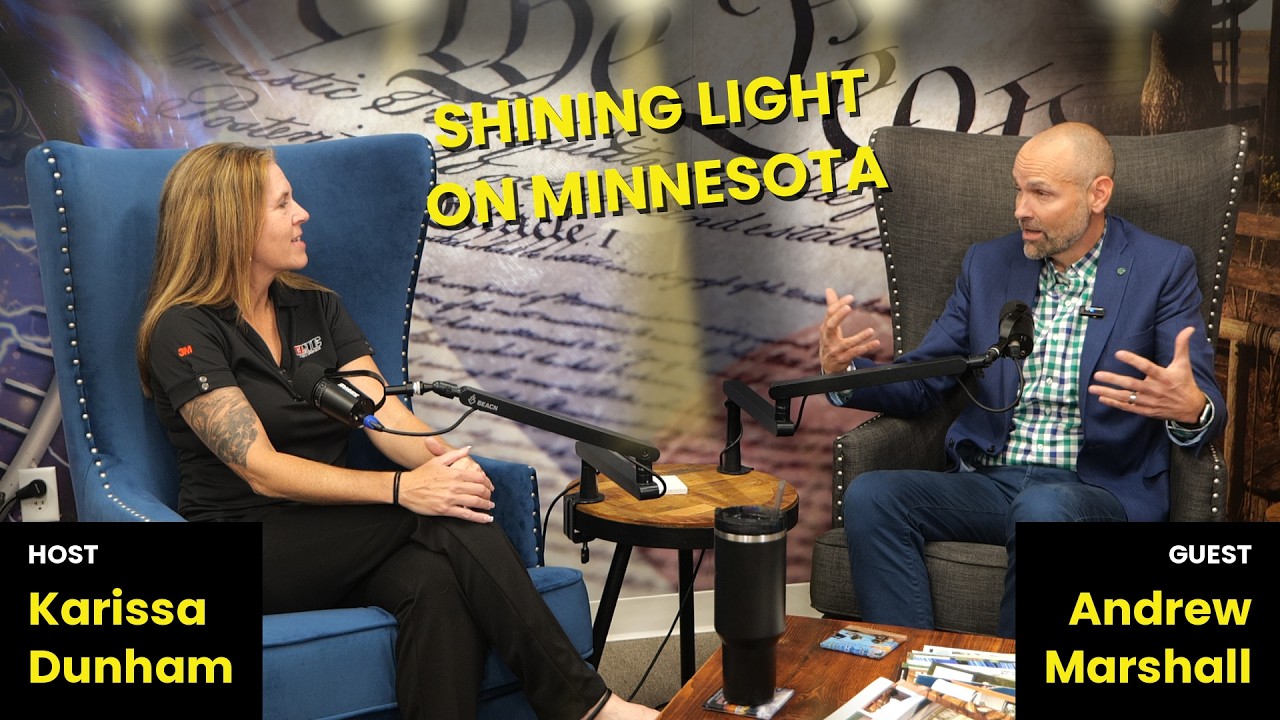
Hello everyone. I'm Karissa with Shining Light on Minnesota. I am very excited. I have Andrew Marshall here today. Welcome Andrew. Good morning. So you are in at Medica. How did you or what made you decide to get into the healthcare role? Oh my goodness. Uh kind of loaded question right off the question. Well, so, uh, my grandfather was a surgeon in a small town, uh, Crosby, Minnesota. So, growing up, uh, I saw how people responded to him. Uh, I was a celebrity in town if I ever needed stitches. But, uh, I decided that I wanted to be, uh, a doctor or a surgeon, be on the care delivery side. When I was young, I didn't necessarily see myself as in relationships on the insurance side, uh, not for-profit insurance side. uh but you know through my journey wasn't ready to do maybe all of what I needed to do from a study studying aspect etc in college. So kind of moved away from the care delivery uh journey and just found myself in healthcare uh on the insurance side uh by you know finding a an internship and then really getting connected to the people in the work. Amazing. So one of your kind of slogans and I've everybody kind of hears about it and knows it is the medical part before you get to the actual doctor's office. What does that mean to you? Yeah, there's just so much happens in people's lives that impact their health. Uh, and sometimes they know about it, sometimes they don't, but before you get to the doctor's office.
So, food is such a great example. So, the the side of uh certainly society that doesn't have access to food or or healthy food and what that means for their health conditions before they ever show up at the doctor's office. I also think about the broad, you know, mental health aspect of things and um maybe, you know, we're paying more attention to that as a society now. Uh but I think still a long way to go and and recognizing how all those pieces impact your physical health as well. Yeah. Because when you travel overseas or you travel anywhere else, you're getting a totally different pasta. You're getting a totally different food because it's more organic. It's made naturally. It's not, you know, everything all the pesticides and everything in that we have here either. So, it's it's a different ballgame. Uh and they're also moving a lot more too. You think about uh just biking, walking, everything they do, walking, etc. Everybody's walking to a local restaurant, etc. So, just a lot of different aspects uh in different spots. Well, I think here too, I mean, it seems like it's more convenience, like fastest way you can get it, the cheapest amount possible. Doesn't matter if it's real chicken, fake chicken, whatever it is. Let's just get it and move on to the next. Everybody's go go go here. Yeah. And the most inexpensive ways often to uh to eat are not healthy ways to eat, right?
And you start to get to uh the the pockets of of people uh that don't have access to the right types of food. We start to give them uh that access, remove that food insecurity, and then we start to see the positive impact on the health side. Yeah. Well, part of the food thing, too. I mean, when people are at a grocery store and you're seeing $20 grapes or you're seeing, you know, I'm going to get a tin of blueberries that are what they are for $9 or you can get something quick and easy. A lot of times people will do the quick and easy route because it's already prepackaged and made up, too. So, yes. So, you are in leadership. What are some of your strengths in leadership and what brought you to the leadership role? Oh, it's always a little bit tough to talk about yourself. Uh, right. Strengths and leadership. uh you know I I would say that I've learned uh over the years or I've understood that I'm pretty self-aware uh and uh also have a a relative uh stability or sense of calm uh you know as things uh go up and and down. If you go back, I think to my childhood, what got me interested in leadership was uh probably just being hyper competitive and then recognizing that leadership creates an avenue to win and correct and the definition of winning is is all over the place. It could be it could be a sale, it could be a project, etc. Um so, you know, combining those things uh just on this leadership journey.
This episode is brought to you by Sun Control of Minnesota, your window film professionals. Did you know that Sun Control of Minnesota does window film, safety security film, wall graphics, vehicle graphics, architectural films, and so much more? Protecting what you love since 1978. Um, thinking about what I respond to when I'm led and then trying to incorporate that into the work that I do. So, u you know, I've been blessed with leaders that are accessible, right? You get you can uh reach out to them. Their ideas are accessible. They're willing to talk through them. and not just micromanage and be there and just drive it exactly their way or the highway. Y accessibility is is being present, meaning they're not just in a meeting, but they're actually in the conversation. Uh which got a lot harder when things became, you know, more virtual over the past 5 years. So they're accessible. Uh you know, I blessed with leaders that are accountable. So you know, they own the the good and the bad of a decision and all the work that needs to happen around that. And then I think the most important one for me in leadership is is authenticity. You know, it gets to the concept of of vulnerability. Meaning, you know, are you is your whole self showing up uh you know, with the people that you work with in the work that you do. Um does the person on the other side of that actually think you care about what happens to them?
Right. Um so combining, you know, I guess those are all A's, the three A's. Accessibility, accountability, and authenticity. That's what I've responded to and I've tried to uh pour that back into to how I show up for others. Amazing. And you guys do a lot as a team too out in the communities and giving back things like that. What are some of the fun things that you guys have done? I know you've done some like polar plunges and things like that for Special Olympics. Yeah. Uh Medica does a fantastic job just in investing back in these opportunities and and I'll say with my role, you know, uh in my role, my job is to grow the impact of our mission. And part of that is growing the business, having more people carry Medica cards. Yes. Uh the other part of that is investments in the community uh where we can uh help amplify really organizations that are already doing incredible things. So I'm spoiled. So I get to uh you know, it's a lot of fun from things like, you know, I got to do a ride along with the Hennepin Healthcare EMS team. being in the emergency vehicle, riding through Minneapolis, seeing them uh you know, the care that they deliver, and then you get to understand the impact that that has, right? There's the Medicaid member that's receiving care from this individual at Hennepin Healthcare who who is also a Medica member, and you start to realize in different ways how you're connected uh to important work.
Uh but to your to your question, you know, we've uh had an opportunity to invest in in Washburn Center for Children and you know, place more therapists in schools through our investments. Uh help connect Washburn and Annunciation when that tragedy happens. Yeah. To help get immediate care. Um you know, food, we were talking about food, connecting with Fairview Health, who's had this incredible Fair Table Food as Medicine program for a great program. Uh and then the work with the goodacre who you know uh supporting local farmers uh in in the work that they do and then providing food for for programs like food is medicine. So really across the board uh just getting a chance to to touch great work happening in the community. How do you feel that Medica stands out versus other insurance carriers like United Health, things like that? I mean I know there have been ups and downs and they've always kind of stood their ground and have had a pretty prominent role. Yeah. Yeah, you know what I'll say is uh Minnesota is a really strong health care uh state or healthcare environment. I think highly of everybody that we work with and we compete with. I think in particular in this community space, everybody is doing really great work. Uh I think of, you know, Medica, what would make Medica stand out or what makes stand out, you know, I'd point to the mission uh to better your life with care in the moments that matter.
really gets to kind of shaping things aside not there's not a shareholder we're thinking about you know we're completely independent uh we're focused on you know that end stakeholder and and I think you see that show up in the decisions that we make and then the care that we place around the member around the community around you even the transactions that we have so um and I think the last piece I would say is in that mission uh better your life with care in the moments that matter We recognize we don't deliver care, right? Uh, you know, the providers do. So, you're putting them in touch with the care that they need. Yeah. Just helping facilitate the right relationship. And, uh, for me in the 20 years at Medica, I think that's uh been a really important um differentiator is is just saying like, hey, you know, we're we're part of a payer provider system that needs to work together, not fight each other, right? Uh, and the members need to see that. And when we're doing that really well, it means better health, better outcomes, and and a better experience in a really complicated environment. Yeah, absolutely. It sounds like I mean, listening to you talk, your dad has been one of your mentors growing up. Who have been some of your other stronger mentors that have really helped form you into the leader in the role that you have today? Oh, that's uh that's a fun one. Uh so, my grandfather for sure.
Yeah. My my mom and dad. I was blessed with just a fantastic childhood where uh I got to see them do important things and continue to do important things uh in the community. Um you know I'm the youngest of three siblings so have seen my brother and sister uh do the same and I think um you talk about that you asked me about leadership qualities or different pieces and that self-awareness. I feel like I've been able to take different choose from different ones that you see and you like of what they've done well, but I you know I can point to um there's dozens of things I've taken from leaders along the way. I I had a 10th grade basketball coach y uh who uh you know taught me that uh I'm really led well when somebody says I'm not going to accept less than the best that you have to offer. and uh how he showed up uh in those uh in those transactions. Um you know being led by you know again a grandfather who wanted to give back and and and wanted to wanted to be seen uh that way and then um you know parents who have always said like you can do anything you want. I'll never forget I was driving that was my early 20s. I'm driving down Highway 62 by the airport and all of a sudden air one of president was in town. Air Force One takes off flies in front of me. I was on the phone with my dad. I was like, "Dad, that's so cool." I just saw Air Force One right in front of me. And he's like, "Well, you could you could be in that someday if you wanted to." And it's just really random the limit.
Yeah. But just continuing to reinforce that your only limitation is going to be yourself. Yeah. Well, I think it's important too. I mean, I've talked about this with people before, but when you're on a team, when you're younger and having that coach that or somebody in your life that finds the good aspects of your life, like, "Hey, you should be a leader. you know, you're really good at this or pointing out the good things that you really have inside of you. Because when people are younger, a lot of times it's it's negative. It's like you got to go to college, you got to do this, you got to find that instead of, hey, you're really good at this, you know, you should try doing that or finding finding some good points. But then on the other side, being able to say, hey, I really can do this if if I put my mind to it and I really want it bad enough. Yeah. Well, and you know those leaders along the way and I can think of of a lot of them that have said like not make mistakes but fail forward forward. Yeah. And I think maybe that's one thing that's shaped me in in my life and in leadership both at home and at work is I I have failed a lot. Yeah. Um Absolutely. And you know I've always had people that were there that have said all right like what are we gonna learn from it? How do we move forward? Uh, and I'll specifically, and I'd give Medica a ton of credit in in and my support network, but uh, you know, 16 or 17 years ago, I had an unhealthy relationship.
y uh with alcohol and and needed some help and and stepped away from work and and Medica supported me in doing that and my support network was there and uh so I you know 16 years of sobriety later look back on the leaders and the building blocks that said hey this thing doesn't define who you are let's surround you and and and support you and uh and invest in you and and keep I keep thinking about that as as I look to to find ways to show up for people with the insurance industry the way it is. I mean, I know a lot of in industries and a lot of other people out there like they want you to use it. Yes. But if you use it too much, then you're going to get dropped. It's kind of a catch 22 that's out there. But how important does Medica work? I mean, I know they work with you as as clients, as people. They want you to find the care that you need. They want to be a big part of you and continue on your journey. Yeah. I think well a big thing in healthcare and it's uh as we've talked about obviously incredibly complicated and it doesn't it shouldn't be like we need to do better in that space but fundamentally everybody has access to healthcare that doesn't mean it's affordable um in in those types of things but I think first and foremost it's about helping people understand where they can find healthare yes and that it's available readily available and and how they can use it and and how they can sustain it right they can't be um pushed off of of of healthcare, right?
They've got opportunities there. Um, but what I think uh I think your question about like how does Medica show up uniquely uh in that environment. Uh I think it's about again creating uh affordable options uh and and opportunities then to connect with the provider side through those solutions. So, it's not just about how we're paying for coverage, but it's about how we're facilitating an avenue for people to have longer term better outcomes um through a relationship with their their provider. Amazing. Well, I see that people these days, too, they're going more towards the functional health and they're trying to do anything and everything to stay healthy longer and stay on that healthy track no matter what it is. Trying to find all the ins and outs like, hey, I'm going to buy an MRI machine or hey, I'm going to, you know, get my labs checked every now and again. How does Medica support that in getting your physicals and staying on top of things, things like that too? I think the industry has has done well in supporting preventive care. So typically your preventive care is paid for um you know when you go in uh I think you know interestingly and it's almost a much broader question related to how do we consume health care as a society, right? And it's growing and changing too, right? Growing and changing. Yeah. And I think, you know, part of that is you get get to the food piece, you get to the the activity piece.
Um, and then you get to kind of the economics and, you know, there's an argument to be made that says, you know, we've created an environment where it's not about healthcare, it's about sick care, where the the finances and the different pieces revolve around bigger dollars. Uh so I think what our goal is is to flip that a little bit and say all right how can we get out on front of the the the health or the welfare side with providers from you know unique reimbursement models to incentives for members to all of those different things uh that can help flip that equation a little bit. In the end I would say that though it's incumbent on all of us like right being healthy has to be an outcome that people are interested in uh and they have to want it. I mean, if you don't want it and you're just out there doing the same things you've always done, you're going to get the same outcomes you've always had. It's kind of like a you made that mistake once, shame on you, make it twice, you know, shame on me. Yep. Let's figure this out together. Yep. You've had a lot of roles. I mean, you've done a lot with Medica. What do you think's next for your role? And what do you what do you want to see changed? And what do you want to like grow into? Oh, wow. Uh, I love what I'm doing at Medica. I've really settled into the impact that I can help make through the work that we do at Medica. You know what's next?
I'd love to see the work that we continue to do in the in the community. Yes. This episode is brought to you by Bravo Protection Products in Plymouth, Minnesota. Keeping your car looking new mile after mile. Hey, did you know that Bravo Protection Products also does window film, safety security film, wall graphics, vehicle graphics, and so much more? I know I not only love them taking care of my new car, but I also get a lot of services done there as well. You should, too. Get get amplified. Uh, you know, Medica has a fantastic foundation who's done incredible work for for decades. You know, Medica's 50 years old. We started this community giving or community engagement program a couple of years ago and we expanded outside of Minnesota to other states because wanting to keep our foundation dollars in Minnesota here. Yep. And then have you other dollars available in places like Nebraska and Wisconsin and St. Louis but through that we've said all right we could do this community engagement thing here uh as well. So in some ways still in its infancy. I mean we're probably three years in. Nice. Uh but being able to see again the impact of the work through Washburn and and and other other places say we can continue to do this and um it has such a huge impact on those we serve beyond those who carry right our insurance card. What I'd like to see five years from now I I'd really love to see a a couple of things.
One um a continued strong connection between those investments in the community and what differentiates uh Medica. I think um continued connection between Medica and and providers and others in the healthcare ecosystem as part of that so people can see stay aware and be be known and be more available too. You maybe remove a little bit of the um stereotypes around healthurers. I think not for-p profofit health insurance is really important and I'd love for people to see why that's different and what shows up there. Uh, and then yeah, I' I'd love to see us serving more people and be bigger because then we're growing our mission. For people that don't know, what does that mean, the not for-profit part of it to you? I think the biggest part is that we don't have shareholders. So any dollar that a not for-profit healthure earns gets reinvested back in the business. Now, that doesn't mean no profit, right? A business has to earn some profit, be able to grow and run. Um, but you're talking, you know, between zero and and 2% margins versus something much larger on the for-profit side. Yeah. So, you have, I mean, you've got the Midwest, you've got things growing and changing, and being part of a community is a big aspect. What do you want to do next in the community or what have you not touched yet that you would say, hey, that might be a really good fit for us? You know, I'd love to see and we've been investing here, but I I'd love to see um us be able to continue to have a larger impact on on mental health.
Yeah. You know, when we're out there with employers or just, you know, in your neighborhoods, you're just continuing to see and hear the impacts of where we are as uh as a society on on how people show up day in and day out. And in healthcare, there's still a pretty big gap. there's a large gap an access standpoint the number of providers available to you know what it costs to access those providers and then I think really understanding what that means in terms of the total cost of health care for all of us as the result of that. So uh I'd love to to see us continue investing there but doing so in a way that is maybe driving helping drive toward a a broader vision longer term for how we really integrate mental well-being into healthcare. Well, we've changed, I mean, society as a whole as far as putting that kind of on the forefront now and making people more aware like people do have stories to tell. People are going through things. So, letting them know that it's okay and there are resources out there to help them and that want to be a part of seeing them succeed and getting out there and making a happy life instead of just existing. Well, that's one place too where I guess co had a positive development because the virtual environment that people were able to seek health care in that came to the forefront for for mental health and that just has gotten a lot pe a lot lot of people a lot more access and people more inclined to show up for their visits because they don't have to walk through a building or a parking lot and and the stigma involved.
Uh well, part of that with mental health is the hardest part is getting in that door. I mean, no matter what you do, it's I could sit in my car for 20 minutes and I just don't think I can go in or I just don't want to get in the car to go to that meeting because I'm going through things. Yeah. Well, and the other aspect to that too is, you know, it's deeply personal obviously, uh, you know, and people come in with a lot of anxiety around it, but then even if you get up the courage to do it, on the other side of the screen or the table is a person you've never met before. And you know it it I've talked about it a little bit as is like finding a good restaurant. You can go to a lot of restaurants. Some have a different opinion. Your friend might find that one to be awesome. You might say not not for me. And that's a barrier as well for people because you think about they get the courage to to do it and go. They finally get an appointment. They get in and maybe they just don't vibe with the person on the other side and now they probably going to have to pay a few hundred for that visit and then feel like they're starting over. So those are the types of things I think we can impact differently in the accessibility range is just helping to connect people to the right provider correct in ways that work for them. Nice. So we have I mean you've talked about the providing you've talked about the care.
What about the fun aspect what do you like to do for fun nowadays? Wow. Uh so I'm blessed with three daughters uh uh 15 14 and 11. So they are deep into activities. So, it's half jumping into those activities, half just trying to figure out how to be a parent, which is, you know, exhilarating and terrifying. On my own, I love to run. Mhm. I think there's something really important about running for for my mental health. Uh, and it just it teaches me something. So, I like to run marathons. Yep. And uh I would say that that training journey is always important because uh maybe I I mean a little bit of an instant gratification like I just want to see the result of the thing I'm building right away. So that process always teaches me that it takes you know each individual day to build up to something uh big. So uh love to run and just be outdoors. And it's fun in Minnesota uh as long as it's not going from 90 to 40 overnight, right? or 20 below all in one one little season. What do you tell your daughters when they are well they're getting older and thinking about life and school and choices and what they want to do and just giving them the positive influence that is around? What are some of the big things that you've helped guide them into? Oh, I would love to hear how they answer that question. Go home. Okay. She asked me a good question here, right? Uh uh so I would hope that if uh if they're asked or or you know if they're thinking about it, they'd see their mom and dad talking about like how they show up.
Like how do you show up at school? How do you show up for your friends? Um how do you show up in areas that are important to you? How do you show up when something goes wrong? I think it's just a a big aspect of like owning uh what your part uh in things are. Uh, and as they continue to grow up, it like they're going to be on phones, they're going to be in social media. I haven't tried to to to deny that. But helping them understand though that like connection being connected isn't necessarily human connection, right? So, especially as things like AI and those other uh technological pieces, you know, provide innovations. Yep. Uh that those uh don't mean anything unless there's a human connected. Yep. You have to have a you have to have your own human touch to it and be you. Yeah. Yeah. I think the last piece is Yeah. You're going to fail. It's okay. Like, you know, um lean into that, right? Uh and just know that whatever you're doing today doesn't necessarily need to be the thing that you're doing tomorrow. Correct. But at some point, you need to find a connection, something you're passionate about, that intrinsic piece that keeps you coming back. Yeah. Well, and a lot of times you can mix that passion with what you want to do in life. you can find the best of both worlds and kind of intertwine it. It's it's ever changing, ever evolving. But having something that you can say is your own is very important for for kids, for anybody really.
I mean, I've as talked to multiple people and it's like, what do you like to do for fun? Nothing. It's like, what are you passionate about? They don't have anything. It's like, all right, let's let's dig a little bit deeper. You know, what's what's your why? What's your driving force? What gets you up every morning? Things like that, too. Well, you ask about things you're passionate about, too. Like, I deeply love sports. I grew up with sports. Um, just love the, you know, the psychology of how teams Yes. come together. Um, and my daughters are into some more of the individual sport. So, trying to make sure they're getting some of that aspect too of of team, right? Like you can take a collection of talent um that isn't led in the right way and they're going to not accomplish things that uh a collection uh over here that's led in a different way. Yeah. I mean, a lot of I mean, a a large number of people that have been in sports and athletics and things that are involving multiple people, whether it's a club or an organization. This episode is brought to you by Elite Tinting and Graphics, covering the Northshore with wraps and window film. Did you know that Elite Tinting and Graphics does window film, safety security film, wall graphics, vehicle graphics, and architectural film? I know I use their products. You should, too. you can see them succeeding in a different way than people that have never tried it or never been brought to their awareness of it before.
I mean, it's a different aspect. It's kind of following rules, starting things young, having that whole leadership, but also I've got to do this on my own to help the team, but also to figure myself out. Well, and uh well said. And there's such such an aspect too in u you know I've learned this over the years that you see in others what you're not talented at and recognize that you have to find ways to connect with people that help round out your skills if you're going to be successful and whether that's in T-ball or high school basketball or you know in your in your profession you're not going to be great at everything right um and I think there's an important really important humility in that that I hope um my kids see and people experience as part of part of sports. You're not going to be the best at everything and be a star in every aspect of it. But in work and in life, I mean, it's it's important too to find what your lane is, what you're good at, and be able to kind of delegate and help everybody else like, "Hey, I'm not great at the HR side of things or I'm not great at the billing side of things or the sales part of things to be able to say, hey, you're phenomenal at closing. Let's work together and, you know, figure this out or do different things like that, too. How do you delegate in your life what's what your roles are and what your hats are to your rest of your team?
I think that's something I'm still learning and working on. Uh, you know, there's certainly an aspect of leadership in that accountability piece that says you want to have, you know, um a certain, you know, role and confidence in uh the entirety of the output. at the same point, you know, you you recognize that broadly, short-term and long term, you're not going to be successful unless you allow people to do the things that they're great at, right? Um, so I think that's something, you know, each day I work uh work hard to make sure uh that I'm that I'm leaning into. So, u you know, like what types of things do you do you delegate? I I think you try to create an environment. I have a good friend of mine at work who has this philosophy that he tells his team like proceed until apprehended. Nice. Um, and I think that's the right way to go about things. So, in terms of delegation, it's, you know, with the team, it's like, hey, you you proceed until you're apprehended. I'll come and tell you if there's something I need to uh need to need to be more involved in. But then at the same time, you've you know, developing relationships with the team and uh so they feel comfortable saying like, hey, I need you out of this like we need some space to uh to do our own thing. And uh that's not something I've been perfect at, right? For sure. And I don't think a lot of people are. I mean, that's a hard one to see and understand.
Yes. Y So, you've had all of that. What do you think, you know, going through your life journeys and failing forward, things like that, what would you have told your younger self or what kind of advice would you give yourself today to say, "Hey, it's all right. I've got this." Oh, that uh nothing nothing is as bad as it seems. Uh and there's nothing that's unrecoverable. Y uh I think so often whether it's thinking about a big project or even losing a job or whatever it is uh like we're made to feel like that's the ultimate failure and you can't come back from it. So you know I've been through some some tough things that you know cost me a lot including you know people that were close to me. Um but you know it's cliche but sun came out the next day the world moved on. Y it's just an amazing network was was there to to say like, hey, what are we going to do and what are we going to do? We're going to dust ourselves off and and get and keep going. So, I think that's that's the biggest thing that it's like again uh nothing is uh nothing is unrecoverable. Yeah. Well, and it's taking things one day at a time. Everybody always says you you know, you only live once. Well, you live every day. Like every day is a new day. You can start over, start fresh, you know, find something good in the day and stay positive, too. I mean, there's a lot of people that dwell on the negative things going on, and it's just a very heavy world right now that we live in.
But if you can find that one good thing that went through on the toughest day, you'll be all right. Well, and uh as you you're right, and as you were saying that, I thought of something too. Uh I think there's this aspect, and this is definitely something I would like my girls to be thinking about is nobody's paying attention to your stuff as much as you think they are, right? And if they are in the moment, they're certainly going to forget about it. Um, so I just I think we spend so much energy trying to think about uh what our our failure or how we showed up in a meeting or whatever uh how somebody on the other side is going to react or what do they think of that or comparing yourself to others no matter what it is. Whether it's online, whether it's in person, you're always comparing. Yeah. Um, and through I would even say through my journey of of sobriety as much as anything else. Just understanding like I'm not that important. Like people don't care that much about what's going on with me in in every moment. And that's awfully freeing when you recognize that you kind of live your life and do normal things and make normal mistakes and it's not that big a deal, right? That the world's not going to end if something happens. I mean, you learn from it, you grow from it, but you find out more importantly who you are as a person. like in those darkest of moments, it's like, okay, who am I?
How did I get here? And where am I going to go next? I mean, those are kind of important questions, but also kind of who who your tribe are, who your people are that can help bring you up because it's important to have some some people in your corner, too. Yeah. That are willing to challenge you, like bring you up like, "All right, it's time to go." Like, we got to figure this out. We'll figure it out together, but I want to see you make the first steps because even a small step now could be the biggest step that you're taking for the rest of your life. So, it's really important to do that, too. Yeah. Well, we appreciate having you on today. How can people get into Medica? How can they get the insurance? Where can they find you? Things like that. And where can they find you in the community? Oh, that's uh a lot of different places. So, you know, of course, Medica.com is a great resource for people uh to get connected with Medica. uh if you're part of an employer uh you know talk to your HR work with HR work with your broker uh or consultant uh that are out representing the different organizations uh in the market uh if you're in the 65 plus Medicare space you either have a broker or call us directly there's a lot happening in that space and it changes every year too um you know from a Medicaid perspective there's certainly community leaders and workers you're connecting with but also uh we've got great community engagement folks at Medica.
Pick up the phone, give us a call, leverage.com. Nice. Thank you so much for being on today. We appreciate it and we can't wait to see what happens in the future with Medica and with with your life and everything that you're out there doing in the community. Well, thanks for all you do, Karissa. Just really appreciate the opportunity. Thank you so much. Keep shining light.